Playa Hermosa Central Pacific: Costa Rica's Top Surf Beach
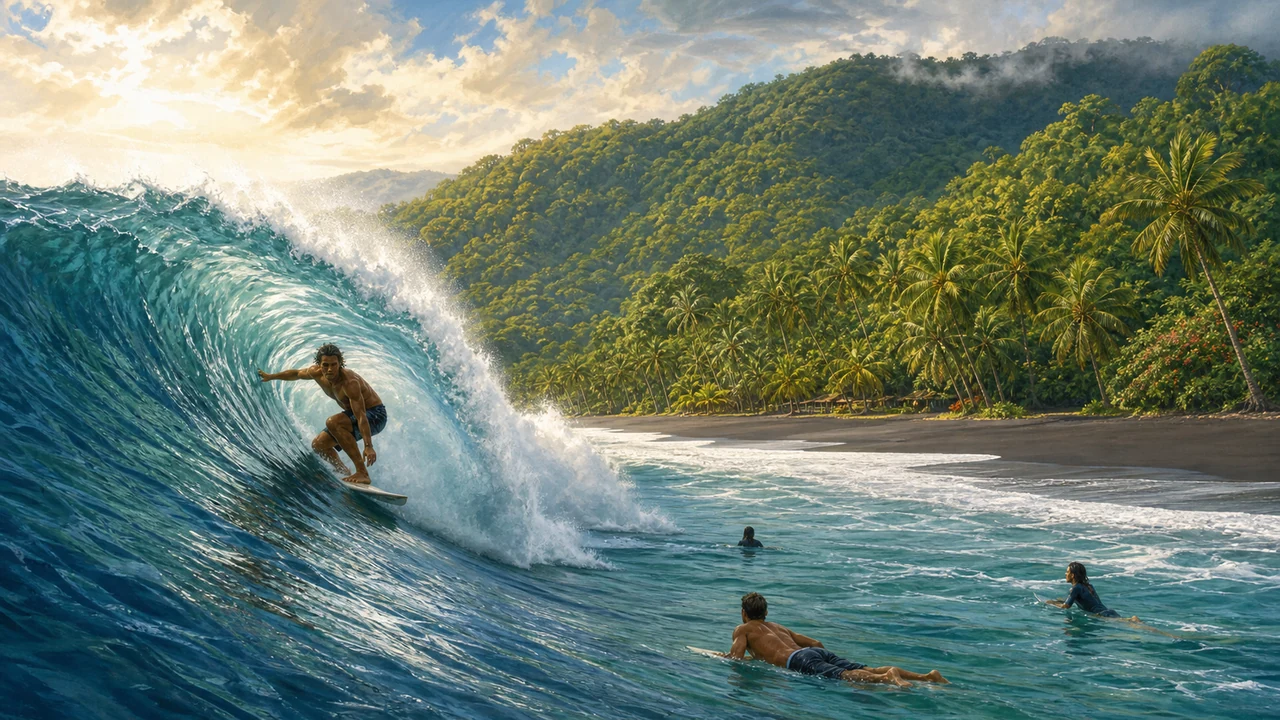 Playa Hermosa in the Central Pacific — not to be confused with its calmer namesake in Guanacaste — is one of Costa Rica’s most celebrated surf beaches, stretching roughly 10 kilometers of dark volcanic sand just south of Jacó along the Costanera Sur highway. Where the Guanacaste Hermosa Beach draws families with sheltered, calm water, this Central Pacific version delivers relentless open-ocean beach-break, powerful shorebreak, and a reputation that draws surfers from around the world.
The beach sits in Puntarenas province, easily accessible from San José (about two hours by car) and from Jacó (about 10–15 minutes south). That combination of road access and wave quality has made Playa Hermosa a regular stop on the Central Pacific surf circuit and a favorite among both visiting surfers and Costa Rican pros.
The Waves: Powerful, Consistent, and Demanding
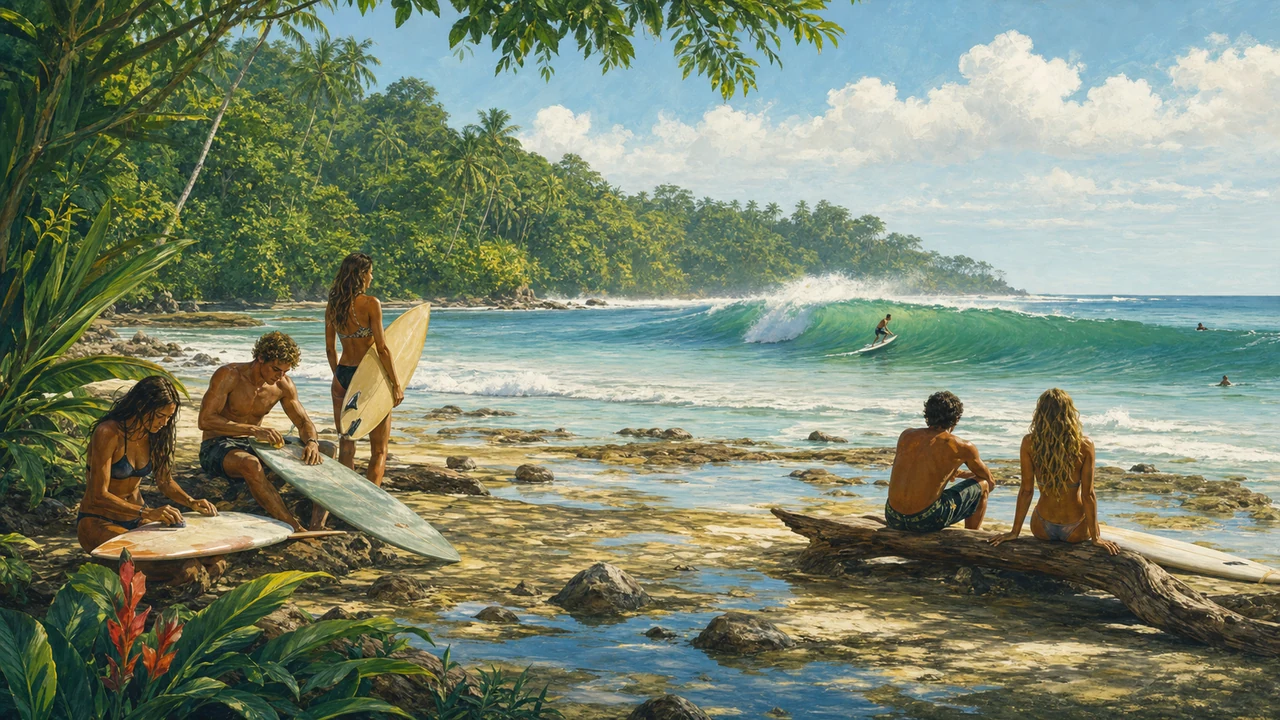 Playa Hermosa’s waves are generated by open Pacific swell hitting a gently sloping sandy bottom, producing powerful beach-break surf with fast, steep faces. The beach picks up swell from multiple directions, so rideable waves are available most of the year. Southern hemisphere swells, arriving predominantly from May through November, push the surf into its most consistent and powerful phase — head-high to double-overhead sets are not unusual during peak season.
Because the waves break hard onto sand, wipeouts here demand respect. Intermediate and advanced surfers will feel at home; total beginners are better off starting at Jacó’s more forgiving breaks before tackling Hermosa. Rip currents can be strong, especially after sets, so ocean awareness is essential. The beach has no permanent lifeguard service at all access points, so check conditions locally before paddling out.
Several surf camps and instructors based in Jacó offer guided sessions at Playa Hermosa for intermediate surfers ready to step up their game.
Surf Competitions and International Profile
 Playa Hermosa’s consistent and photogenic break has made it a natural competition venue. The beach has hosted national championship events and drawn international competitive surfers, cementing its reputation on the broader Costa Rica surfing calendar. The Billabong World Surfing Games Costa Rica and other international events have put Playa Hermosa surf competitions on the global radar.
The competition history also means the beach has an established surf culture — local shapers, board rentals, and surfers who know every section of the break. Arriving during a contest period gives visitors a chance to watch top-level surfing in a relaxed, open-air setting with no ticket required.
Dark Volcanic Sand and Natural Setting
One of Playa Hermosa’s most distinctive features is its dark, iron-rich volcanic sand — a striking contrast to the white and golden beaches found further north in Guanacaste. The dark sand beach of Costa Rica’s Central Pacific absorbs heat quickly, so footwear is advisable during midday. Early morning and late afternoon, when the light is golden and the sand cools, are the most pleasant times to walk the beach.
The shoreline is broad and mostly undeveloped compared to Jacó, with a stretch of vegetation and coastal forest backing the beach in several sections. Carara National Park lies just a short drive north, and the transition between dry and wet forest ecosystems makes the entire stretch between Tárcoles and Jacó ecologically rich. Scarlet macaws — residents of Carara — are occasionally spotted flying over the coastline.
Sea Turtle Nesting
 The Central Pacific coastline around Playa Hermosa supports olive ridley sea turtle nesting, with turtles arriving to lay eggs primarily during the rainy season (July through November). Nesting activity tends to be lower-key here compared to the major arribada beaches further north, but it adds an important conservation dimension to the area. Responsible visitors who encounter nesting turtles at night should maintain distance, avoid lights and flash photography, and follow any guidance from local conservation volunteers.
The broader Central Pacific zone also sees occasional leatherback and green turtle nesting, and the ocean waters offshore support populations of marine wildlife including dolphins and various seabird species — a reminder that Costa Rica protects more than 25% of its territory for conservation.
Getting There and Services
Playa Hermosa Central Pacific is reached via the Costanera Sur (Route 34), which runs south from Jacó. Several small access roads lead from the highway to the beach. The village of Hermosa has basic amenities — sodas (local eateries), small grocery stores, and surf shops offering board rentals and wax. Accommodation options range from budget surf hostels to mid-range beach cabinas; larger hotel options are a short drive north in Jacó.
The nearest fuel station and full supermarkets are in Jacó. For medical care or emergencies (dial 911), Jacó has a clinic, and the main hospital for the region is in Puntarenas city.
Getting to Hermosa without a car is possible via public buses that run between Jacó and Quepos along the Costanera, stopping on the highway near the beach access roads. Shared shuttles from San José are another option and can be arranged through tour operators.
Combining Hermosa with the Central Pacific
Playa Hermosa sits in the heart of the Central Pacific tourist corridor, making it a natural add-on to a broader trip. Jacó Beach is the nearest town with nightlife, restaurants, and shopping. Manuel Antonio National Park lies roughly 65 km to the south and is one of Costa Rica’s most visited parks, combining beaches, wildlife, and rainforest in a compact area. Heading north, Carara National Park offers world-class bird watching and the chance to see scarlet macaws at dawn.
For surfers, the Central Pacific beaches as a whole offer a progression of breaks — from the mellower whitewash close to shore at Jacó for beginners, to Hermosa’s powerful beach-break for intermediates and above, to more remote point breaks south toward Dominical. Check the Costa Rica activities and sports section for guided surf tours, fishing charters, and other adventures available along this stretch of coast.
Playa Hermosa Central Pacific rewards surfers who come prepared and curious travelers who appreciate a raw, relatively undeveloped Pacific coastline. The dark sand, the heavy shore-pound, and the steady stream of surfers walking the beach at dawn make this one of those places where Costa Rica’s surf culture feels most alive.
Frequently asked questions
Is Playa Hermosa in the Central Pacific safe for swimming?
Playa Hermosa is an exposed beach-break with strong rip currents and powerful shorebreak. Swimming is possible during calm conditions, but the beach is better suited to experienced surfers. Always check local surf reports and swim between flagged zones if lifeguards are present.
How far is Playa Hermosa from Jacó?
Playa Hermosa is about 8 km south of Jacó town center along the Costanera Sur highway (Route 34). The drive takes roughly 10–15 minutes.
What is the best time of year to surf Playa Hermosa Central Pacific?
Surf is consistent year-round, but the peak swell season runs from May through November when southern hemisphere swells push up reliable 1–3 meter sets. December through April brings lighter but still surfable conditions.
Is there a Playa Hermosa in Guanacaste too?
Yes—there is a separate Playa Hermosa near Sardinal in Guanacaste (North Pacific), known for calm, family-friendly waters and a Blue Flag rating. The two beaches share a name but are very different in character. This page covers the Central Pacific surf beach south of Jacó.
Are there surf competitions at Playa Hermosa Central Pacific?
Yes. The beach has a long history as a competition venue, having hosted national surf championships and international events. The consistent and powerful beach-break makes it one of Costa Rica's premier competitive surf venues.