Costa Rica Coffee History: The Grano de Oro Story
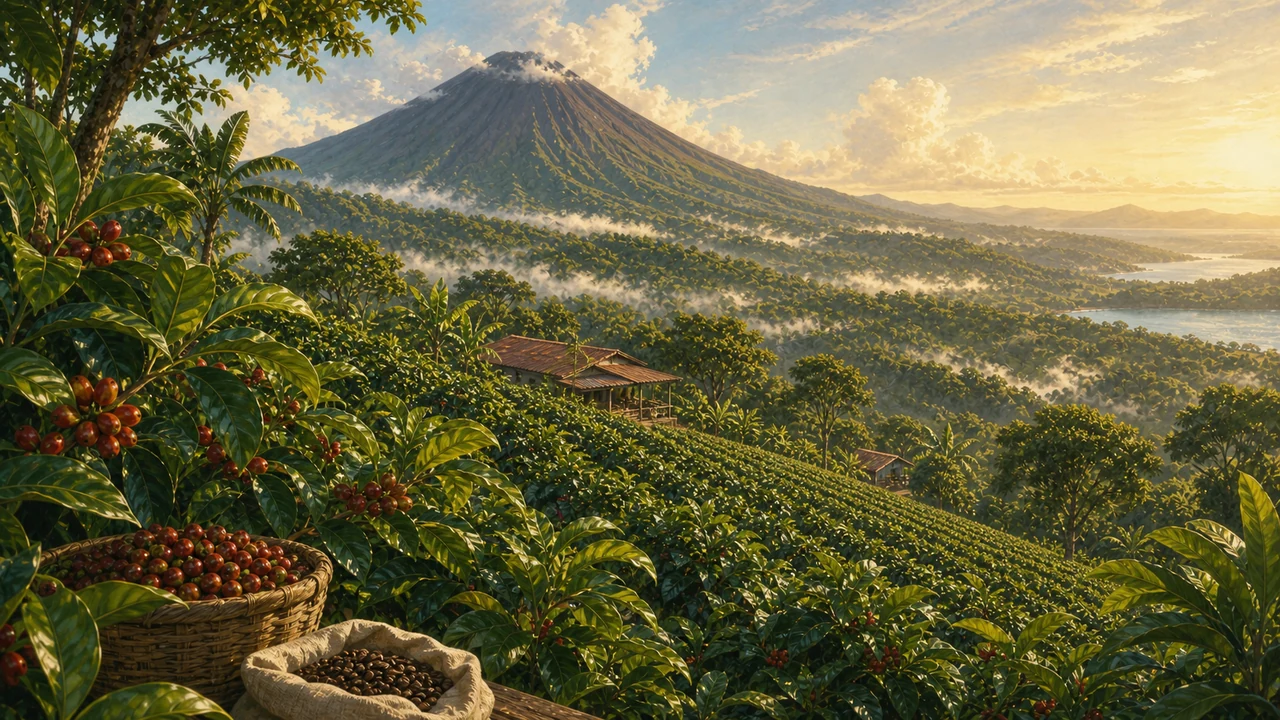
Coffee transformed Costa Rica from an isolated colonial backwater into a self-confident republic in the space of a single century. The grano de oro — the golden grain — gave the country its export engine, its ruling class, its public institutions, and an architectural legacy that visitors still admire in San José today. Understanding this history is essential context for anyone who wants to grasp why coffee holds such a central place in Costa Rican identity, distinct from the present-day coffee market and industry and the visitor-facing coffee tourism experiences.
A Colony Nobody Wanted
Costa Rica’s colonial period was defined by neglect. When Spanish explorers arrived in the early 16th century, they found no abundant gold, no large indigenous labor pool, and a geography of rugged mountains and dense rainforest that made administration expensive. Disease and fierce resistance from indigenous communities defeated multiple colonizing expeditions. The name “Costa Rica” — Rich Coast — was an aspirational label that early experience quickly undermined.
Spanish attention shifted to the far richer prospects of Peru and Mexico. What remained in Costa Rica were small, scattered settlements struggling for basic subsistence. Crop cultivation was limited to what settlers could grow themselves, primarily for local consumption. Sugar cane and tobacco emerged as modest commodities, but nothing approached an export economy.
The founding of Cartago in 1563 by governor Juan Vásquez de Coronado gave the colony its first real administrative center. Over the following 150 years, three more towns took shape in the Central Valley: Heredia (then Villa Vieja, 1717), San José (Villa Nueva, 1737), and Alajuela (Villa Hermosa, 1782). Population grew slowly. The Central Valley’s mild climate and volcanic soils were assets, but without a marketable export, they could not propel the colony forward.
Coffee Arrives and Changes Everything
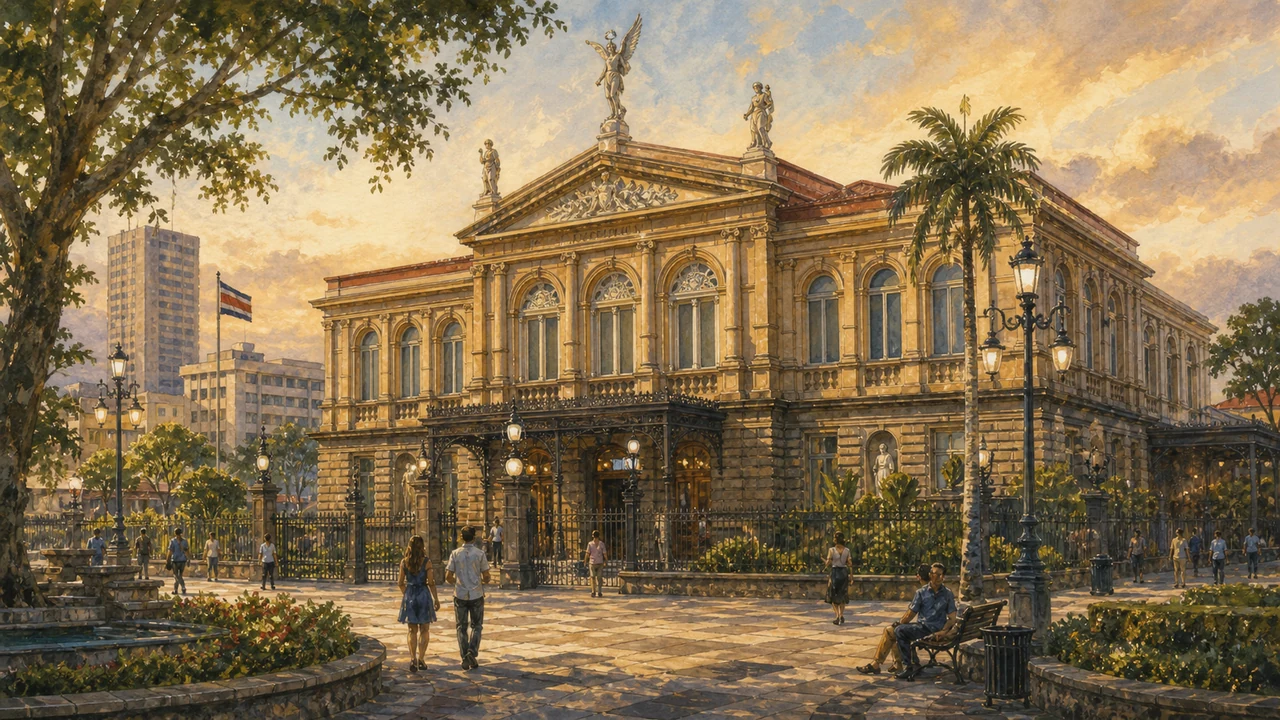
Coffee plants reached Costa Rica in the early decades of the 19th century, arriving via Cuba or Panama. The government of the newly independent republic (Costa Rica declared independence in 1821, almost without conflict) recognized the crop’s potential and actively encouraged cultivation — distributing seedlings, granting land to those who would plant it, and exempting coffee growers from certain taxes.
The volcanic highlands of the Central Valley proved ideal: rich, well-drained soils, moderate temperatures, and the combination of distinct wet and dry seasons that arabica coffee requires to develop complexity. By 1829, coffee had become Costa Rica’s leading export, and the country had found its engine.
The decisive commercial breakthrough came in the 1840s. Until that point, Costa Rican coffee was shipped to Peru and re-exported to Europe under Chilean or Peruvian labels. In 1843, the merchant William Le Lacheur arrived in Puntarenas, short of cargo for his return voyage to England, and struck a deal to carry Costa Rican coffee directly to London. The experiment succeeded, and direct trade with Britain followed. With European markets open and prices rising, Costa Rica’s 19th-century coffee export boom accelerated with remarkable speed.
The Cafetaleros: Coffee’s Ruling Class
The wealth generated by coffee did not spread evenly. Processing coffee cherry into exportable green beans required capital-intensive infrastructure — wet mills (beneficios), drying patios, warehouses, and eventually roads and oxcart routes to the ports. Those who could finance these assets controlled the supply chain, and the class that emerged to do so became known as the cafetaleros.
The cafetalero oligarchy of 19th-century Costa Rica was a network of interconnected families — the Montealegres, Mora Fernándezes, Aguilar Barqueros, and others — who owned the beneficios and extended credit to smaller farmers who lacked the capital to process their own harvests. A smallholder could grow coffee and deliver cherry to the local beneficio, but the terms of that transaction — price, credit conditions, timing of payment — were set by the mill owner. Over time, this system concentrated land and wealth in relatively few hands.
The cafetaleros were not absentee aristocrats, however. Many were active entrepreneurs who invested in roads, shipping contracts, and commercial relationships with British and German trading houses. Several traveled to Europe, absorbed liberal political ideas, and returned with ambitions for a modern state. The tension between their role as an economic elite and their self-image as progressive nation-builders ran through Costa Rican politics for much of the century.
Their political influence was direct. Multiple presidents of the mid-to-late 19th century came from coffee-wealthy families or were intimately connected to the export trade. State policy on land tenure, taxation, infrastructure, and foreign relations consistently reflected the interests of the coffee sector — not always at the expense of ordinary citizens, but rarely indifferent to elite priorities.
Roads, Ports, and the Oxcart Economy
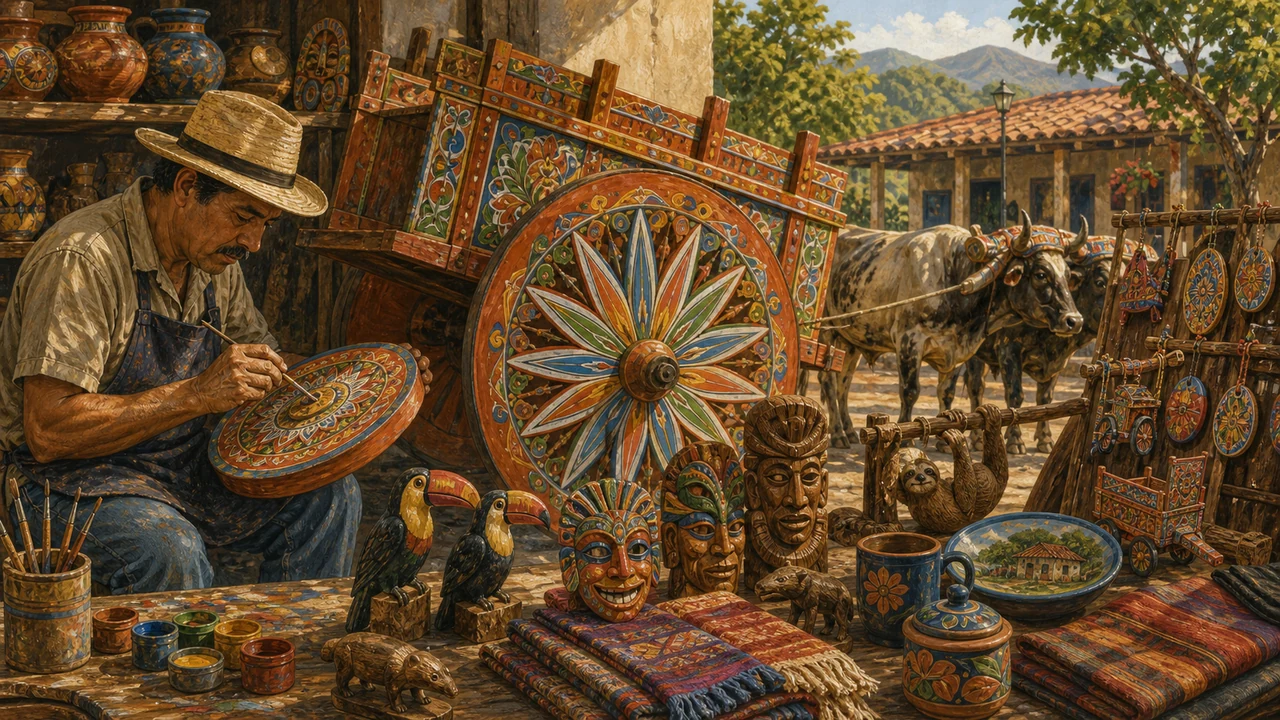
The practical demands of coffee export drove Costa Rica’s early infrastructure. Getting coffee from the Central Valley to the Pacific port of Puntarenas required crossing mountains with no paved roads. The solution was the oxcart — the carreta — which became so central to the national economy and culture that it is now recognized as a national heritage symbol.
Artisans in the Central Valley, particularly in Heredia and Cartago, developed elaborately painted oxcarts that carried coffee down to the coast. Each region developed distinctive geometric painting traditions that allowed a cart’s origin to be identified at a glance — a functional system of regional branding that evolved into an art form. The brightly decorated oxcart is today one of the most recognizable symbols of Costa Rican identity, and UNESCO recognized the craft of oxcart making and painting as an Intangible Cultural Heritage.
The need for better port access also drove early rail investment. By the late 19th century, banana interests were pushing a railway through the Caribbean coast — and coffee growers saw the opportunity to route exports east rather than struggling over the mountains to Puntarenas.
The National Theater: Coffee’s Architectural Crown
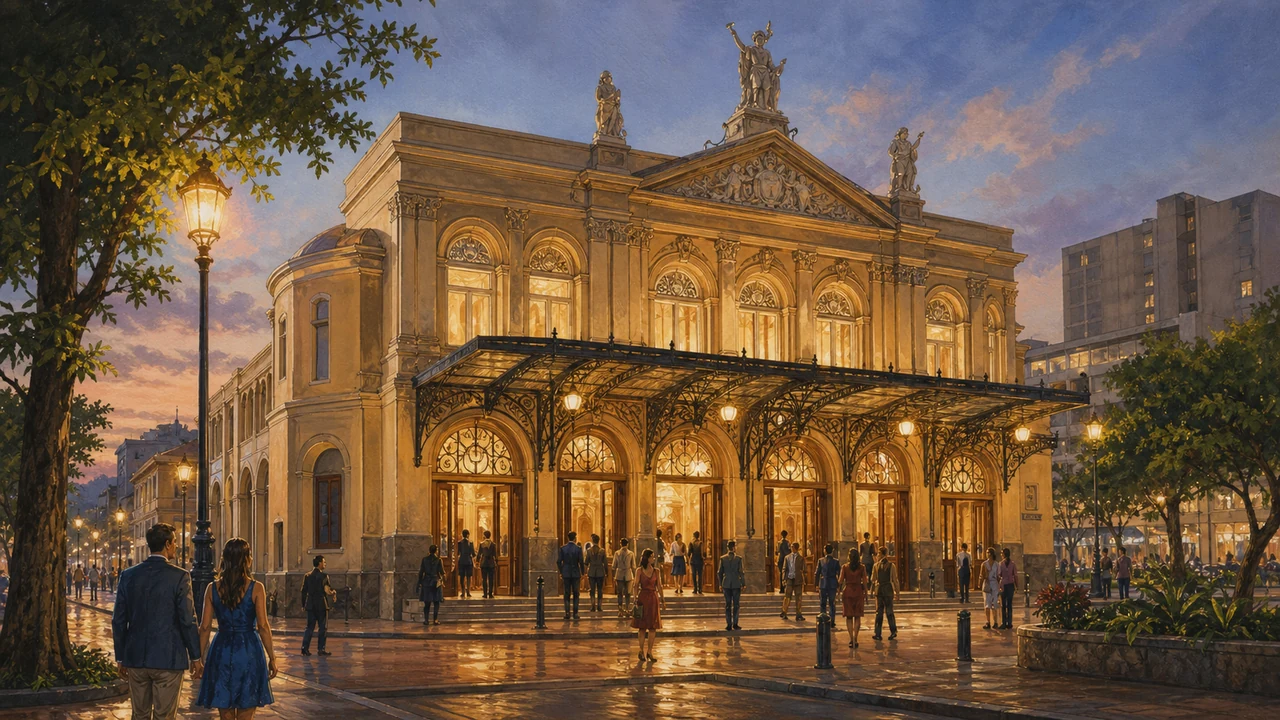
The most visible monument to coffee’s role in building Costa Rica stands in downtown San José: the Teatro Nacional, the National Theater, completed in 1897. It is one of the finest neoclassical buildings in Latin America, and its origin story is inseparable from coffee.
In the early 1890s, a renowned European opera company toured Central America. Costa Rica was bypassed — the country lacked a venue considered adequate for such a performance. The slight stung the capital’s elite. The cafetaleros responded by agreeing to fund a proper theater through a tax levied on each bag of coffee exported — a voluntary self-assessment by the export class that amounted to a declaration of cultural ambition.
The building was designed in the European Baroque-Neoclassical style, with an ornate façade, gilded interior, painted ceilings, and a main hall modeled after the Paris Opéra. The allegorical painting inside depicting an idealized coffee and banana harvest — showing elegantly dressed workers and overflowing crates of export produce — became one of the most reproduced images in Costa Rican art. It captures the mythology the coffee elite had built around themselves: prosperous, civilized, worthy of European comparison.
The National Theater funded by the coffee tax remains a working cultural venue today. Performances of music, dance, and theater run year-round. Visitors can tour the building’s interior even without attending a show, and the café on the ground level — fittingly — serves excellent Costa Rican coffee.
Social Legacy: Equality and Its Limits
Costa Rica is often described as a more egalitarian society than its Central American neighbors, and coffee’s particular development path contributed to this reputation. Unlike plantation economies built on enslaved or coerced indigenous labor, Costa Rica’s smallholder-dominant coffee sector created a broad class of farming families with genuine land tenure and a stake in the economy. The cafetaleros needed growers, not servants.
This did not mean equality. The credit and processing dependency that bound smallholders to beneficio owners was a form of structural control, and land concentration increased as the century progressed. But compared to the hacienda system in Guatemala or the sugar economy in Cuba, Costa Rica’s coffee economy produced a rural middle class large enough to give the country genuine social depth.
The revenues of the coffee era also funded public education. Costa Rica expanded its school system significantly in the 19th century — a pattern of public investment that laid the groundwork for the country’s high literacy rates and eventual democratic stability. When Costa Rica abolished its army in 1948 and redirected military spending toward education and health care, it was building on a tradition of state investment in citizens that stretched back to the coffee republic.
From Republic to Modern Identity
The coffee boom of the 19th century did not last forever. Fluctuating world prices, competition from Brazil and Colombia, and the diversification of the economy into bananas, then manufacturing, then ecotourism gradually reduced coffee’s share of national income. But its cultural weight never diminished.
Costa Ricans still call coffee the grano de oro. The painted oxcart still appears on tourist merchandise and national emblems. The National Theater still anchors downtown San José. And the country’s most celebrated export — its reputation for environmental stewardship, democratic governance, and quality of life — traces its roots partly to the institutions and social patterns that the coffee economy made possible.
For visitors, this history adds a layer of meaning to every cup poured through a chorreador, every farm tour through the Central Valley, and every bag of beans carried home from San José’s airport. The Costa Rica coffee pillar explores the full breadth of this story — history, industry, and experience together.
Explore why Costa Rica draws travelers from around the world, or read our Costa Rica travel tips to plan the itinerary that fits you best.
Frequently asked questions
Why is Costa Rica called a 'coffee republic'?
The term reflects the extraordinary degree to which coffee shaped every dimension of 19th-century Costa Rican society — its economy, its politics, its architecture, and its class structure. A small group of coffee-wealthy families, the cafetaleros, effectively governed the country for decades and financed its public institutions through coffee revenues.
What does 'grano de oro' mean and why does it apply to Costa Rican coffee?
Grano de oro means 'golden grain' in Spanish. The phrase captures how coffee functioned in 19th-century Costa Rica much as gold had for Spanish colonizers: as the engine of wealth, the means of social advancement, and the resource that drew international attention and investment to an otherwise overlooked corner of Central America.
How did coffee fund the National Theater of Costa Rica?
The National Theater in San José was financed largely through a tax levied on each bag of exported coffee. The tax was proposed and accepted by the coffee-exporting class itself in the 1890s, reflecting their desire for a cultural institution worthy of a prosperous republic. The theater opened in 1897 and remains one of the finest examples of neoclassical architecture in Latin America.
Who were the cafetaleros and how much power did they have?
The cafetaleros were the landowners, processors, and exporters who controlled Costa Rica's coffee economy from roughly the 1840s onward. They were not a single family but a network of interconnected clans who owned the beneficios (wet mills), extended credit to smaller farmers, and controlled export contracts with British and German trading houses. Several presidents came directly from this class.
When did coffee first become important to Costa Rica's economy?
Coffee was introduced to Costa Rica in the early 1800s, and by 1829 it had already become the country's leading export. The critical turning point came in the 1840s when Costa Rica established direct trade routes to Britain, bypassing the Peruvian middlemen who had previously handled shipments. From that point, coffee revenues grew dramatically and reshaped the country's development trajectory.