Costa Rica Coffee Market: Industry, Exports & Specialty
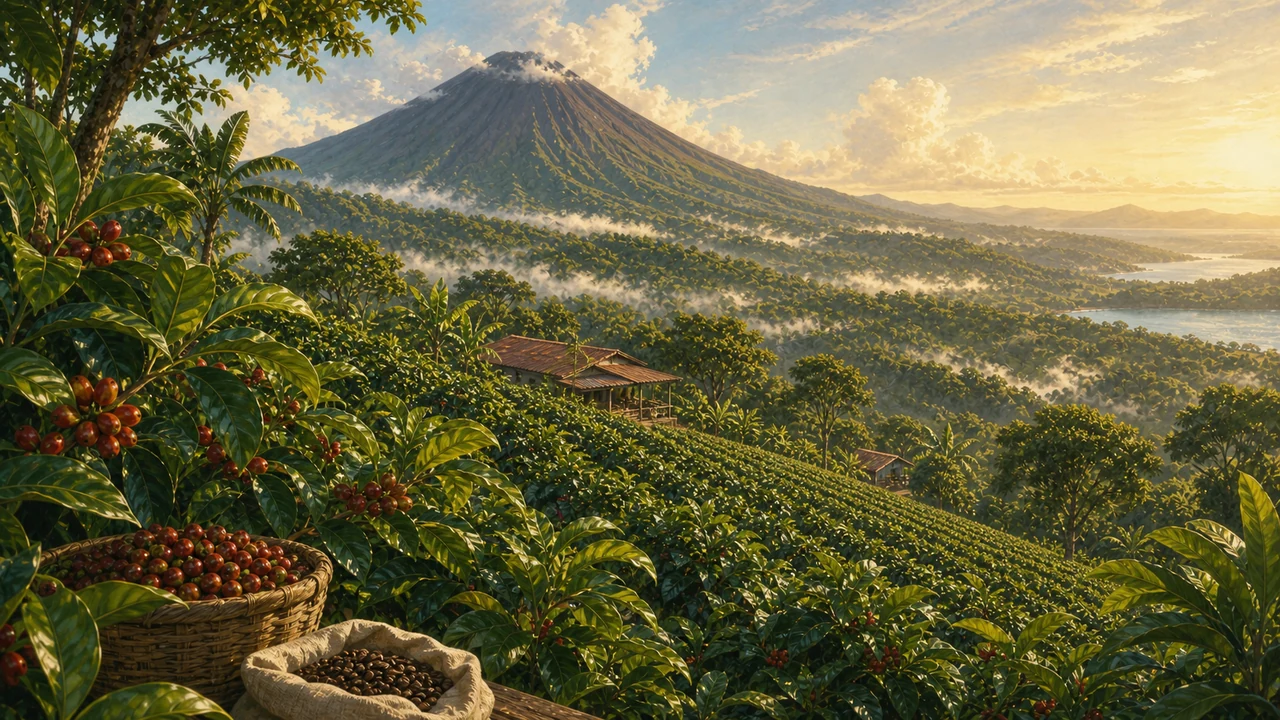
Costa Rica’s coffee industry is one of the most rigorously governed and highly regarded in the world — a small-country export that punches well above its weight on the global specialty market. The combination of volcanic soils, precise altitude bands, a legal mandate for arabica-only production, and strong institutional oversight through ICAFE has positioned Costa Rican coffee as a premium commodity sought by discerning roasters from Tokyo to Toronto.
Coffee has been central to the country’s economy since the early nineteenth century. By 1829 it was already the leading export, and the trade routes that opened to European markets helped finance the infrastructure of the young republic. That deep economic history is inseparable from Costa Rica’s modern identity — and from the Costa Rica coffee pillar that continues to shape rural livelihoods today.
The Arabica-Only Law and What It Means
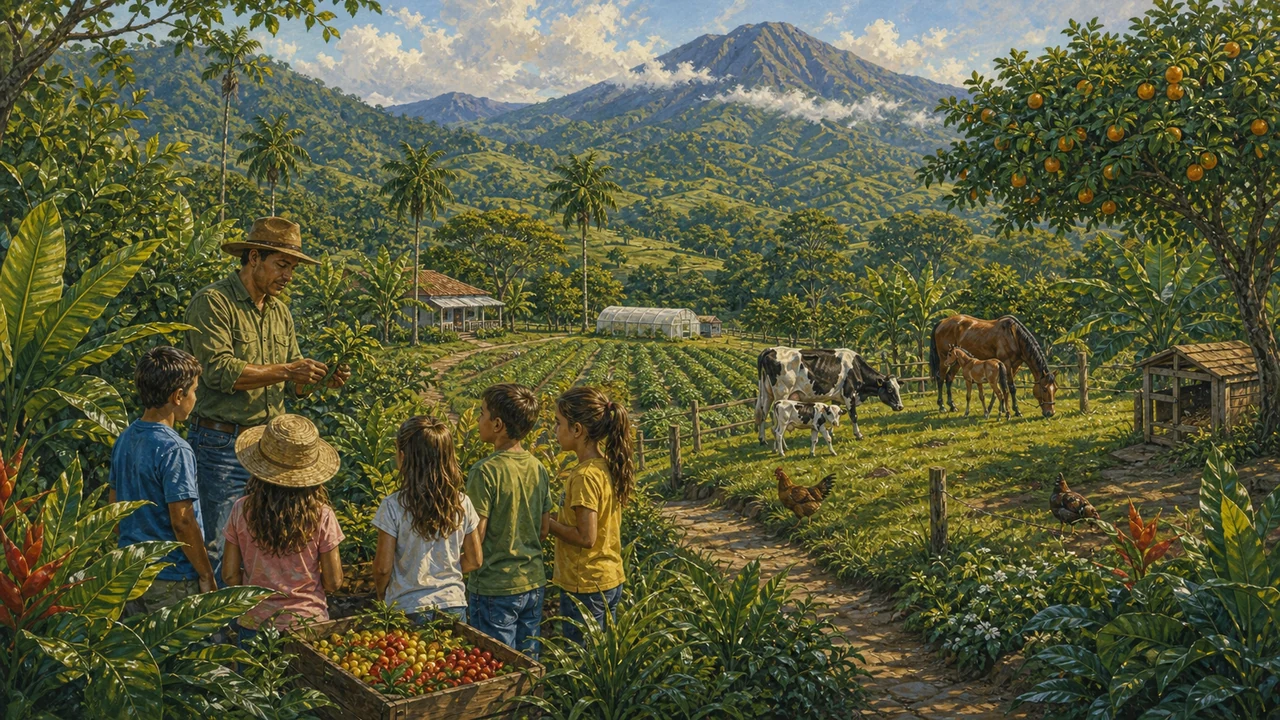
Costa Rica is one of the few coffee-producing nations in the world to have legislated crop quality at the national level. A 1989 law banned the cultivation of robusta and other lower-grade species, requiring that all coffee grown on Costa Rican soil be 100% arabica. The practical effect has been significant: Costa Rica arabica-only coffee legislation is a market signal that buyers anywhere in the world can rely on without additional verification.
The law removed the temptation — common in higher-volume producing nations — to blend cheaper robusta into export lots to inflate yields. Instead, Costa Rican producers were channeled toward quality-focused investment: better varietals, careful harvesting, improved wet-milling, and extended drying. Over time, the constraint became a competitive advantage.
This commitment to quality also underpins the export reputation discussed in more detail on the Costa Rica coffee history page.
ICAFE: The Regulator Behind the Brand
The Instituto del Café de Costa Rica (ICAFE) is the institutional pillar of the industry. Established by law, it operates across the entire value chain — registering farms, licensing processors and exporters, setting technical standards, mediating disputes between producers and buyers, and funding research into varietals, disease management, and sustainable practices.
ICAFE coffee quality regulation extends to cup-quality monitoring: the institute maintains cupping labs and can reject export lots that fail to meet national standards. This backstop is rare in the coffee world and directly supports the credibility of Costa Rican coffee on international markets.
ICAFE also collects and publishes production and export data, giving the market reliable statistics and giving producers benchmarks against which to measure their own performance. For farmers — most of whom operate on small family parcels — the institute provides an institutional voice they would otherwise lack in negotiations with multinational traders.
Export Economy and Key Destinations
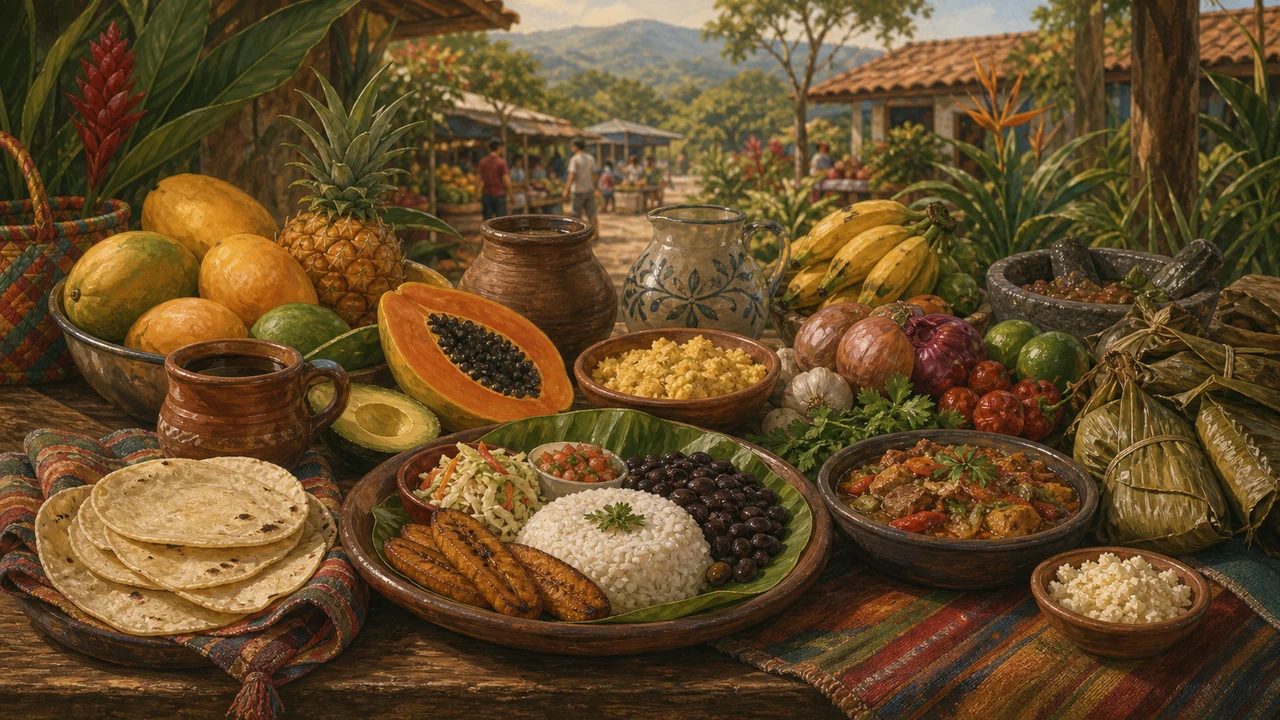
Coffee remains one of Costa Rica’s most important agricultural exports, alongside pineapples and bananas. The United States, Germany, Belgium, and Japan are historically the largest receiving markets, though specialty-focused importers in South Korea, Canada, and Scandinavia have grown substantially in recent years.
The Costa Rica coffee export economy operates through a layered system: smallholder farmers deliver cherry (the raw fruit) to beneficios — wet-processing mills — which are often cooperatives or regional companies. The beneficio processes the cherry into green coffee, which is then sold to exporters who aggregate, grade, and ship to international buyers.
Cooperatives play an outsized role. Organizations like Coopedota and CoopeTarrazú, based in the celebrated Tarrazú region, have built internationally recognized brands and achieved certifications that open doors to premium market segments. Because cooperatives pool production from dozens of members, they can invest in processing infrastructure and marketing that individual smallholders could never afford alone.
The Specialty and Micro-Lot Movement
The most dynamic segment of Costa Rica’s coffee market today is the specialty micro-lot coffee movement. Driven by third-wave roaster demand for traceable, single-origin, harvest-specific coffees, the micro-lot sector has transformed how many farms think about their product.
Where a traditional cooperative model aggregates coffee from many members into uniform export lots, micro-lot production involves separating and tracking the harvest from individual farm sections — sometimes even individual varietals or processing experiments. The resulting bags can command prices many times the commodity price, making even a small yield economically significant.
Costa Rica has been a natural fit for this model. The country’s eight officially recognized growing regions each produce beans with distinct cup profiles — bright citric acidity from Tarrazú, chocolate-forward notes from the West Valley, delicate floral tones from Tres Ríos — giving buyers the terroir differentiation they seek. Farms that invest in precision processing (honey process, natural dry process, extended fermentation) can access even more rarefied market segments.
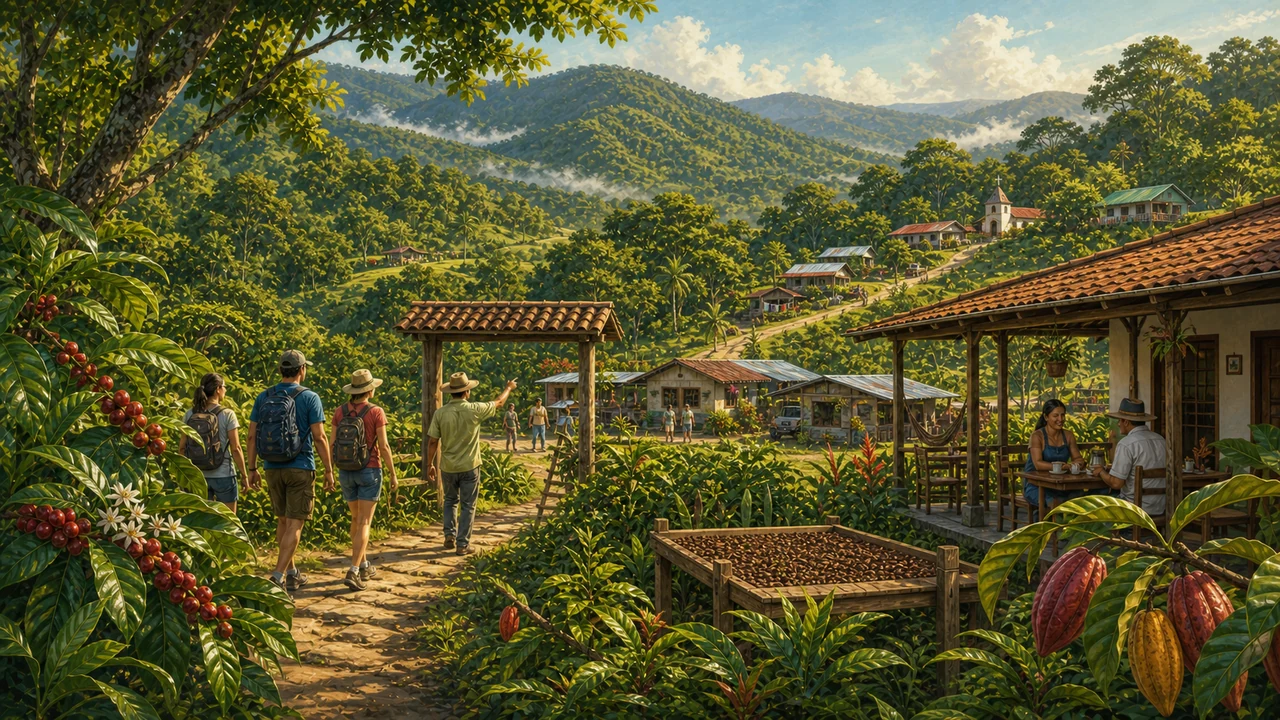
The micro-lot boom has also energized agritourism. Visitors who want to experience a working harvest and cup directly at the source find that many farms in the Central Valley and Tarrazú now welcome them — an experience covered in depth on the coffee lovers page.
Fair Trade, Direct Trade, and Producer Welfare
Fair-trade and direct-trade coffee from Costa Rica represent two distinct pathways to better producer prices, and Costa Rica has significant presence in both.
Fair-trade certification — most commonly through Fairtrade International or equivalent bodies — guarantees cooperatives a minimum floor price regardless of commodity-market fluctuations, plus a social premium for community investment. For cooperative members in regions where alternative employment is limited, this price floor provides crucial income stability. Several of Costa Rica’s larger cooperatives hold fair-trade certification and market specifically to fair-trade-conscious consumers in North America and Europe.
Direct trade goes further in customization. Specialty roasters — often smaller businesses with strong café-focused retail — travel to farms, build personal relationships with producers, negotiate prices independently, and provide detailed feedback on each lot. The result is a closed loop: producers learn exactly what roasters want, and roasters get the specific flavor profiles their customers demand. Direct-trade specialty roaster partnerships in Costa Rica have helped certain farms achieve prices that make quality-first investment genuinely viable without depending on volume.
Both models exist alongside conventional commodity trade, which still accounts for the majority of export volume. The interplay between all three channels shapes the economics facing Costa Rican coffee producers on a daily basis.
Sustainability and the Road Ahead
Costa Rica’s commitment to sustainable tourism and environmental stewardship extends naturally into its coffee sector. Several farms and cooperatives have pursued Rainforest Alliance certification, which requires environmental management plans, worker welfare standards, and biodiversity conservation on farm land.
The country’s volcanic highlands — the same terrain that makes Costa Rica’s volcanoes so dramatic — provide the rich, well-drained soils that make shade-grown and agroforestry-based coffee production both practical and ecologically valuable. Shade trees provide habitat corridors for migratory birds, reduce chemical input needs, and help farms adapt to shifting rainfall patterns.
Climate-resilient coffee farming in Costa Rica is an active research priority. ICAFE and academic partners at CATIE (the Tropical Agricultural Research and Higher Education Center) have ongoing programs developing varieties with better tolerance to leaf rust (roya) and changing temperature ranges — a challenge facing the entire coffee belt as growing conditions shift.
For visitors who want to go beyond the cup and understand the living industry behind it, Costa Rica offers tours, tastings, and farm stays that illuminate this entire story — from volcanic soil to export container. Explore the activities and experiences Costa Rica offers to plan a trip that weaves coffee into a broader itinerary.
Frequently asked questions
Why is Costa Rica coffee only arabica?
Costa Rica passed legislation in 1989 prohibiting the cultivation of robusta and other lower-grade coffee species. The law was designed to protect the country's premium reputation in export markets and ensure consistently high cup quality. All coffee legally grown in Costa Rica must be 100% arabica.
What is ICAFE and what does it do?
ICAFE (Instituto del Café de Costa Rica) is the national coffee institute that regulates the entire industry — from farm practices and processing standards to export licensing and market promotion. It also mediates pricing between producers, processors, and exporters, and funds research into disease resistance and sustainable farming.
What are Costa Rica's main coffee-growing regions?
The country has eight officially recognized coffee-growing regions: Central Valley, Tarrazú, West Valley, Tres Ríos, Orosi, Brunca, Turrialba, and Guanacaste. Each produces beans with distinct flavor profiles shaped by altitude, soil type, and microclimate. Tarrazú is internationally the most celebrated.
What is the difference between fair-trade and direct-trade coffee from Costa Rica?
Fair-trade certification guarantees a minimum floor price and community development premiums paid to certified cooperatives. Direct trade goes further — specialty roasters travel to farms, negotiate prices above market, and build ongoing relationships with specific producers. Both models benefit smallholders, but direct trade typically commands higher premiums and stronger quality feedback loops.
Can I visit a coffee farm or mill in Costa Rica?
Yes — coffee tourism is well established. Many farms and beneficios (wet mills) offer guided tours, especially in the Central Valley and Tarrazú. Tours typically cover harvesting, wet and dry milling, and cupping sessions. For the visitor angle, see our coffee lovers guide.