Costa Rica Surfing: Best Breaks & Regions Guide
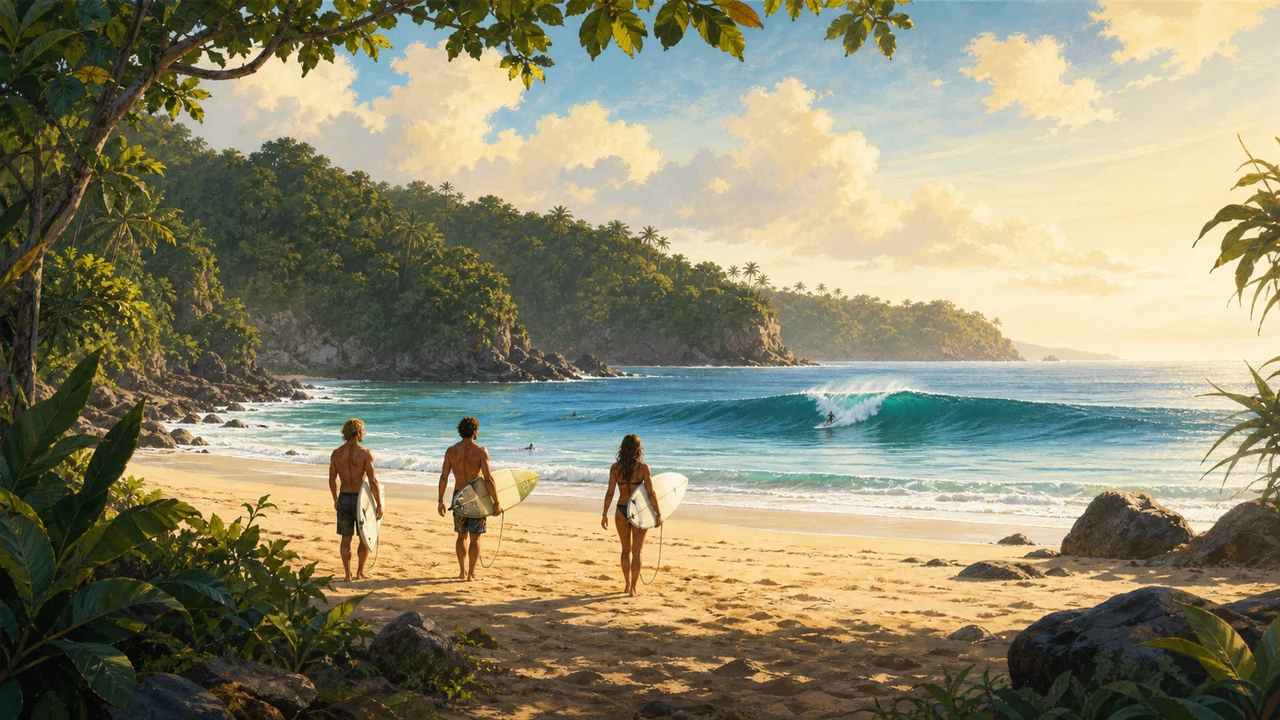 Costa Rica is one of the world’s premier surf destinations, with two coastlines — Pacific and Caribbean — delivering waves nearly year-round. From the world-class reef breaks of Puerto Viejo to the mellow beach breaks of Tamarindo perfect for first-timers, the country spans every level of surfing ability. Add warm water, reliable swell windows, and a laid-back pura vida culture and it is easy to understand why surfers have been coming here for decades.
This hub covers Costa Rica’s main surf regions and their signature breaks. For a deeper dive into surf history, competitions, and wave science, visit the surfing in Costa Rica guide. To explore the beaches themselves, browse Costa Rica beaches.
North Pacific: Tamarindo and the Guanacaste Coast
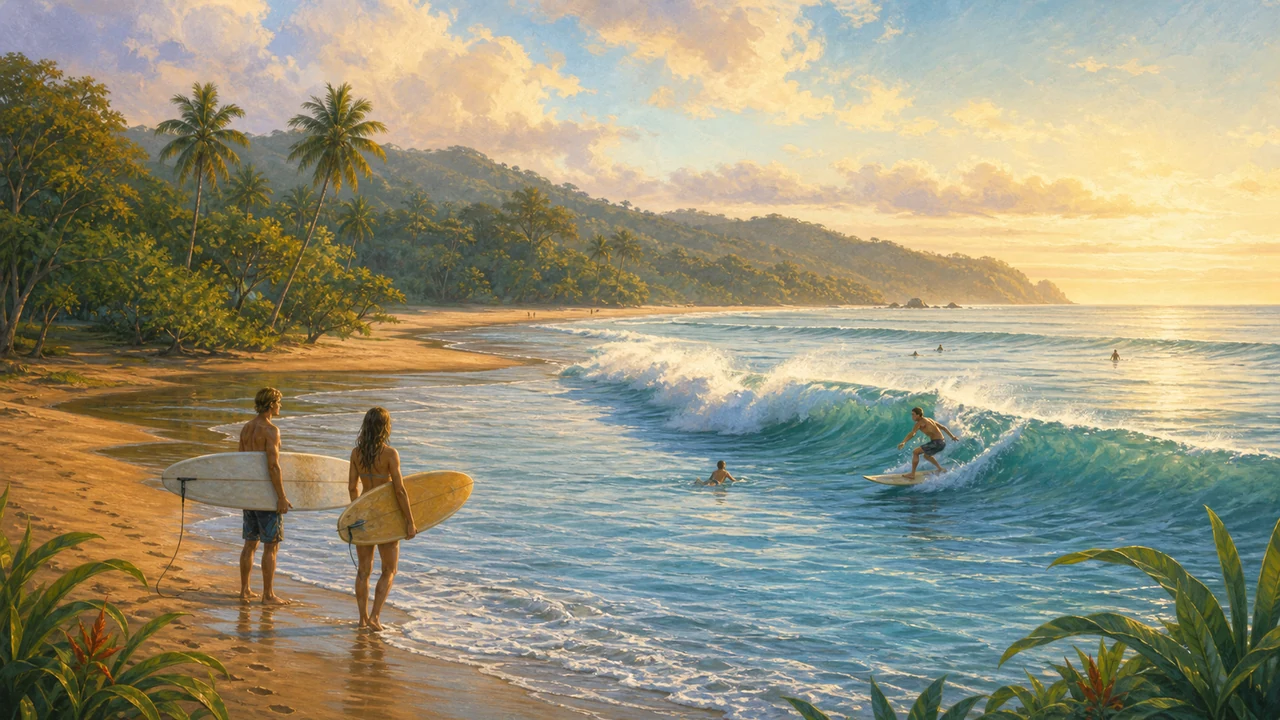 The Guanacaste region anchors Costa Rica’s North Pacific surf scene. Tamarindo is the most accessible entry point — a long beach break with multiple peaks that handles beginners in smaller surf while still producing punchy sections when swells push overhead. The town has a full complement of surf schools, board shapers, and rental shops.
Just north of Tamarindo sits Playa Grande, a powerful beach break that can hold bigger swells and is known for long right-hand walls at low tide. The area around Las Baulas Marine National Park borders this stretch of coast, so leatherback turtles nest on the same sand where you’ll be waxing your board in season.
Further north toward the Nicaraguan border, Witch’s Rock (Roca Bruja) and Ollie’s Point in Santa Rosa National Park are accessible only by boat. These remote spots produce some of the cleanest, longest point breaks on the entire Pacific coast — ideal for intermediate to advanced surfers looking to escape crowds. The journey itself, crossing the Gulf of Santa Elena, is part of the experience.
Inland from the surf, Guanacaste offers volcanic landscapes, wildlife, and one of the sunniest microclimates in Costa Rica — making it a natural base for a multi-activity trip.
Nicoya Peninsula: Nosara and Santa Teresa
The Nicoya Peninsula concentrates several of Costa Rica’s most beloved surf communities within a relatively compact stretch of coastline.
Nosara (specifically Playa Guiones) has built a reputation as a surf and wellness hub. Guiones is a wide, consistent beach break that rarely closes out completely — its forgiving nature makes it popular with surf camps, while more experienced surfers enjoy the powerful sections that form on bigger swells. The bay’s orientation means it picks up swell from multiple directions, extending the reliable window throughout the year.
Further south, Santa Teresa offers a completely different character. The break here is faster and more powerful, with multiple peaks spread along Playa Carmen and Playa Santa Teresa. The area draws a more experienced crowd, though surf schools operate year-round for those working toward the next level. Surfing Santa Teresa’s shifting sandbars rewards patience and local knowledge — conditions can change dramatically between tides.
Malpaís, adjacent to Santa Teresa, adds a handful of reef and point-break options for surfers willing to explore.
Central Pacific: Jacó, Hermosa, and Dominical
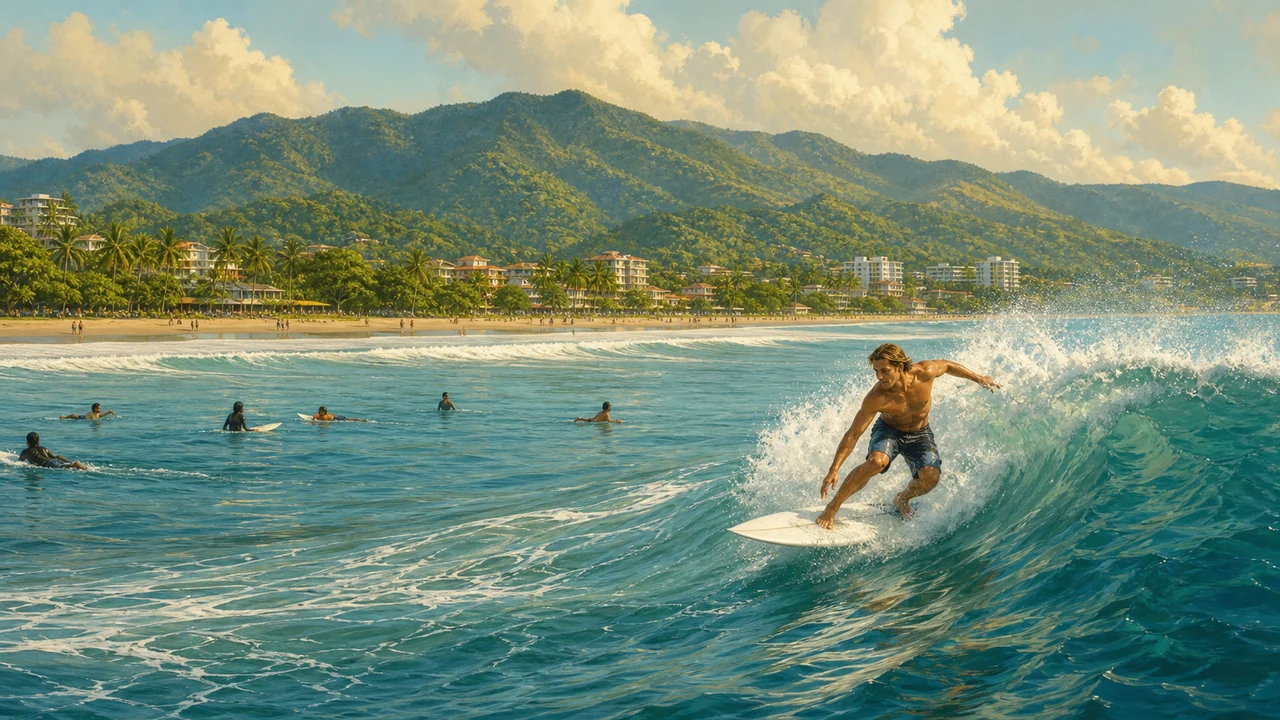 The Central Pacific coast is the closest surf zone to San José — roughly a 90-minute drive — which makes it the most frequently visited by both Ticos and international visitors.
Jacó Beach is a high-energy surf town with a long beach that catches swell year-round. Waves here are generally beach-break peaks suitable for intermediate surfers, with enough variation to keep advanced surfers entertained on bigger days. The town’s infrastructure is the most developed on the Central Pacific, which means crowded lineups during weekends and holidays.
A few kilometers south, Hermosa Beach is a darker-sand beach that consistently holds bigger surf than Jacó. The shore break is steep and fast — Playa Hermosa is a regular host of professional surfing competitions, drawing elite athletes from across the Americas. It is not the place for beginners.
Continue south and you reach Dominical, a relaxed village with a beach break that handles large swells well. The offshore topography funnels energy into the bay, and experienced surfers find excellent barrels here. Dominical also serves as a jumping-off point for Uvita and the Marino Ballena National Park area, making it a natural base for combining surf with ecotourism & nature.
South Pacific: Pavones
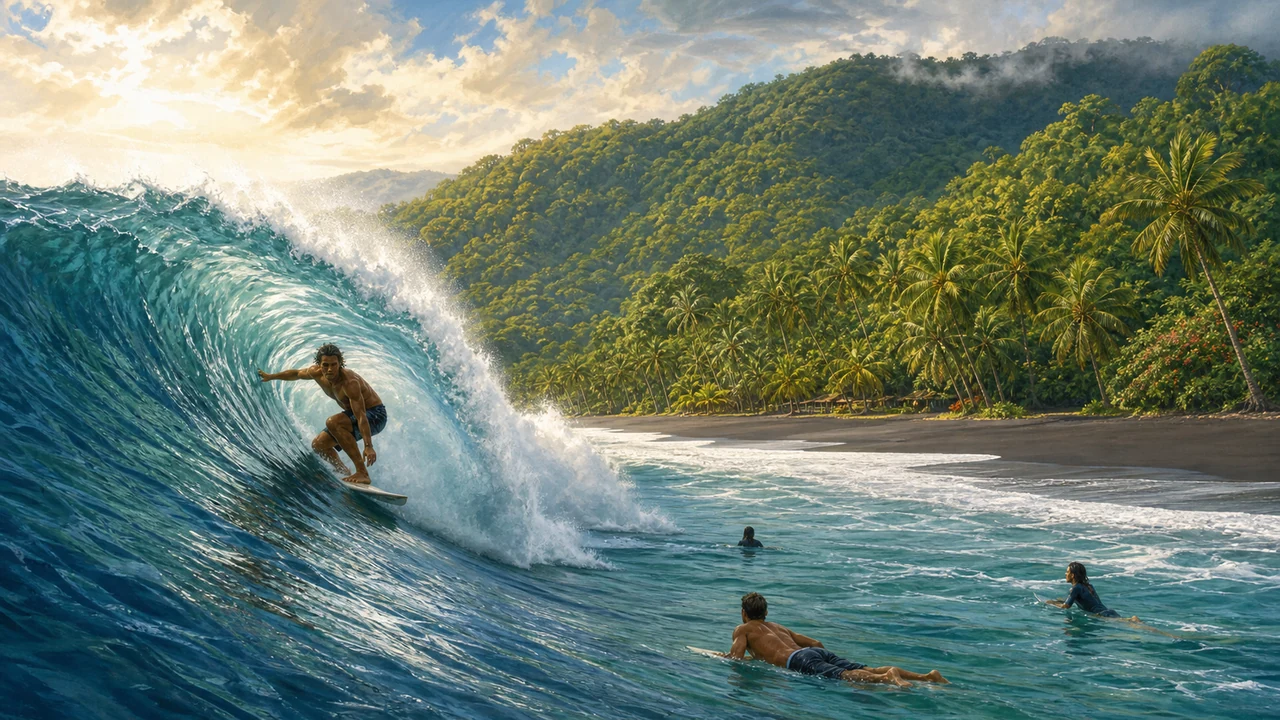 Pavones, near the Panamanian border in the Osa Peninsula region, occupies legendary status in global surf culture. On its best days it produces one of the longest left-hand point breaks in the world — a wave that can carry a surfer for more than a minute on a solid swell. Accessibility has always been the trade-off: rough roads and limited infrastructure mean Pavones attracts dedicated surfers rather than casual visitors.
The remoteness is also the appeal. Getting to Pavones typically involves a combination of driving through Corcovado National Park-adjacent terrain and smaller roads that require high clearance during the rainy season. Those who make the effort are rewarded with uncrowded waves and the raw beauty of the South Pacific zone.
Pavones works best from April through October when south swells from the Southern Ocean wrap around the Osa Peninsula and line up perfectly against the point.
Caribbean Coast: Salsa Brava and Puerto Viejo
The Caribbean coast is a fundamentally different surfing experience from the Pacific. The vibe is Afro-Caribbean, the food is rice-and-beans cooked in coconut milk, and the wave is Salsa Brava — a heavy, shallow reef break that is not for the faint-hearted.
Salsa Brava delivers thick, barreling rights over a coral reef just offshore from the town of Puerto Viejo de Talamanca. When Caribbean swells arrive in earnest between November and March, this wave rivals reef breaks found anywhere in the tropics. Surfers with solid tube-riding experience come specifically for these conditions. The reef is unforgiving — falls here mean contact with sharp coral — so only competent surfers should paddle out on larger days.
Puerto Viejo and neighboring Cahuita offer calmer beach-break options nearby for those who want to surf without the intensity of Salsa Brava. The Cahuita National Park coastline provides a scenic backdrop, and the surrounding Caribbean community is one of Costa Rica’s most culturally distinct corners.
Beginner vs. Advanced: Matching Surfer to Break
- Beginners: Tamarindo, Playa Guiones (Nosara), Dominical, central Jacó — all have surf schools and gentle enough waves for learning on foam boards.
- Intermediate: Santa Teresa, Playa Grande, Jacó on bigger days, Tamarindo on solid swells — offer variety and challenge without extremes.
- Advanced/expert: Witch’s Rock, Ollie’s Point, Playa Hermosa, Pavones, Salsa Brava — powerful, fast, or reef-heavy waves that demand solid water-reading ability.
When evaluating your options, consult local surf shops. Conditions vary significantly by swell direction, tide, and season, and a local shaper or instructor will give you the most accurate read of the day’s conditions at any given break.
Surf Seasons at a Glance
The Pacific prime surf season runs May through November, powered by north-west to south-west swells that wrap around the peninsula. The Caribbean peaks November through March with north swells generated in the Atlantic. That said, Costa Rica receives surf year-round — even shoulder months produce rideable conditions at most breaks, and off-season surfing in Costa Rica often means uncrowded lineups at popular spots.
Water temperature stays warm across both coasts year-round, so a shorty wetsuit or boardshorts are generally all you need. The sun is intense — reef-safe sunscreen and rash guards are standard kit.
For more on Costa Rica activities & sports, including windsurfing, fishing, kayaking, and more, explore the full activities section. If you are planning your trip, Costa Rica travel tips covers logistics, entry requirements, and practical advice for getting the most from your visit.
- Costa Rica looks for medal with half team
- Surfing in Costa Rica — main guide
- Billabong World Surfing Games Costa Rica
- World Championship Surf
Frequently asked questions
When is the best time to surf in Costa Rica?
The Pacific coast gets its biggest, most consistent swells from May through November — the rainy season — which is also considered the prime surf season. The Caribbean coast, particularly Salsa Brava in Puerto Viejo, peaks from November through March when powerful north swells arrive.
Is Costa Rica good for beginner surfers?
Yes. Several breaks are specifically gentle for beginners. Tamarindo on the North Pacific has wide, rolling waves ideal for lessons. Dominical and Jacó on the Central Pacific also have surf schools with certified instructors and forgiving beach breaks.
What is the most famous surf break in Costa Rica?
Salsa Brava in Puerto Viejo de Talamanca is arguably the country's most famous wave — a heavy, reef-breaking right that rivals Caribbean swells worldwide. On the Pacific side, Witch's Rock (Roca Bruja) near the Nicaraguan border is legendary among experienced surfers.
Do I need to rent a board or can I bring my own?
Board rentals are available in every major surf town, and quality has improved considerably. If you have a preferred shape, bring your own — airlines generally allow surfboard bags as oversize luggage. Check current airline policies and fees before you travel.
Are the breaks crowded?
Popular spots like Tamarindo and Santa Teresa can get busy during peak season and school holidays. Heading out early morning or exploring less-publicized breaks nearby often rewards you with far fewer people in the lineup.