Surf Seasons & Conditions in Costa Rica
Costa Rica delivers world-class surf conditions on two separate coastlines, making it one of the few countries on earth where you can chase productive swells virtually every month of the year.  Understanding the seasonal patterns — which coast fires when, what drives the swells, and how water temperatures shift — transforms a good surf trip into a great one. Whether you’re a first-timer looking for gentle rollers or an experienced surfer chasing heavy reef breaks, knowing the rhythms of Costa Rica’s ocean is the first step.
Pacific Coast: Peak Season (April – October)
The Pacific side is where most surf travelers spend their time, and for good reason. From roughly April through October, Southern Hemisphere groundswells travel north across thousands of kilometers of open ocean and hit Costa Rica’s west-facing beaches with consistent force. Pacific coast swell heights during this window regularly reach overhead to double-overhead, and the most powerful days at exposed reef breaks can go bigger.
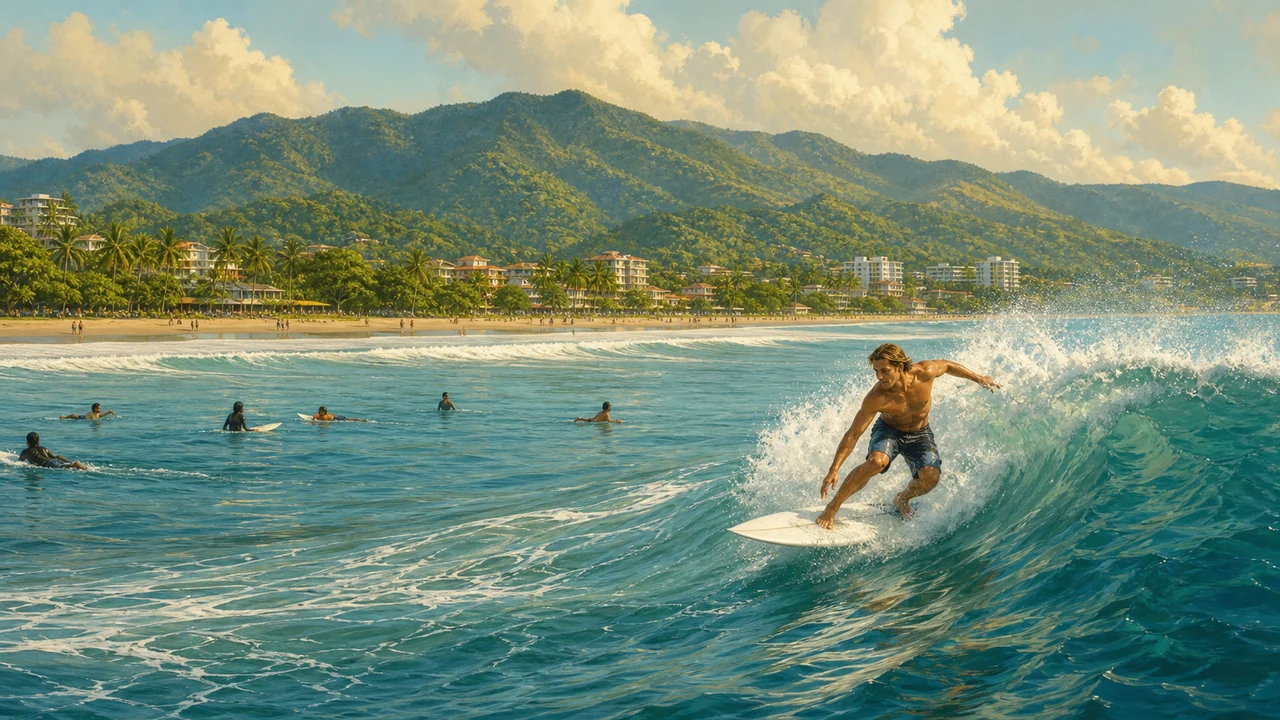 The Guanacaste region — home to legendary spots like Witch’s Rock and Ollie’s Point inside Santa Rosa National Park — absorbs the biggest, most consistent groundswells of the season. These right-hand point breaks can hold surf well above head height and produce long, peeling rides that draw experienced surfers from around the world. Access is typically by boat, which keeps crowds manageable.
Further south along the Central Pacific coast, spots around Jacó and Playa Hermosa shape the same swells into punchy beach-break waves with a different character: hollow, fast, and punishing at Hermosa, with a more forgiving sandbar environment at Jacó that suits intermediate riders and learners.
The Nicoya Peninsula’s tip — around Malpaís and Santa Teresa — captures south and southwest swell beautifully during this season. Surfing Santa Teresa and Malpaís in the dry-season swell window has made this stretch one of the most talked-about stretches of coastline in Central America.
Pacific Coast: Shoulder and Off-Season (November – March)
November through March is technically the Pacific dry season, and trade winds pick up from the northeast. Swell energy drops compared to the April–October peak, but the ocean doesn’t go flat. North Pacific swells generated by winter storms in the Northern Hemisphere can push surf into exposed northwest-facing breaks in Guanacaste, and some of those sessions rival anything the green season produces.
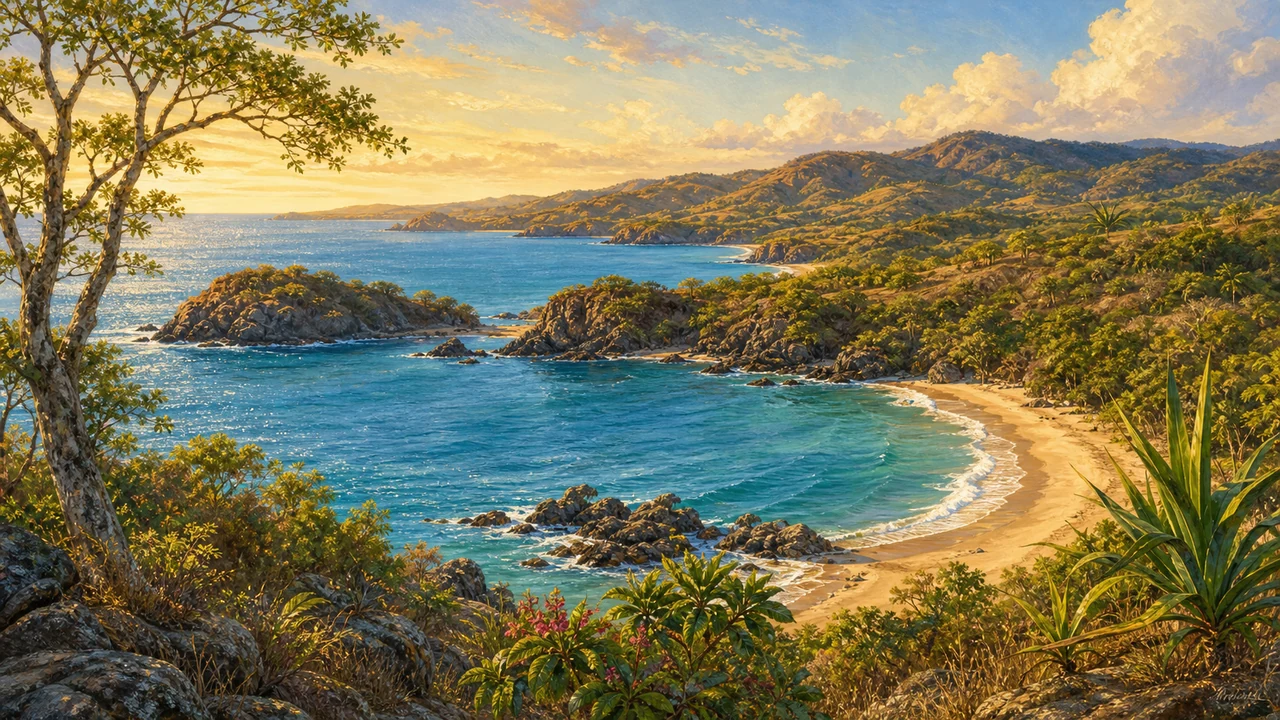 Beach conditions improve for non-surfers during these months — cleaner skies, less rain — so the dry season often draws the largest crowds of general tourists. Surfers planning a pure surf mission to the Pacific are better served by the May–September window, but intermediate surfers exploring the country alongside other activities will find workable waves year-round.
Water temperatures on the Pacific during both seasons hover between roughly 25 °C and 29 °C (77–84 °F). Upwelling events along the South Pacific coast — particularly around Dominical and the Osa Peninsula — can briefly cool water by a few degrees, but boardshorts and a rashguard remain the standard kit throughout the year.
Caribbean Coast: Flip-Season Surf (November – March)
Costa Rica’s Caribbean coast operates on an almost perfectly inverted calendar from the Pacific.  November through March, when Northeast trade winds churn the Atlantic and NE groundswells roll down from the north, is prime season on this side. The focal point is Puerto Viejo de Talamanca, specifically the reef break known as Salsa Brava — arguably the most challenging wave in Costa Rica and one of the heaviest reef breaks in the Caribbean basin.
Salsa Brava during its peak NE swell season breaks fast and hollow over a shallow coral reef, producing short, powerful rides that demand experience and confidence. It is not a wave for beginners. The Caribbean also has gentler beach-break options at spots like Cocles and Playa Chiquita for those who want to surf the region without committing to the reef.
The April–October period brings calmer Caribbean conditions and heavier rainfall; most dedicated surf travelers target this coast in the November–March window when swells are most consistent.
Water temperatures on the Caribbean side are slightly warmer than the Pacific on average, sitting in the 27–29 °C (81–84 °F) range, with minimal seasonal variation.
What Makes Costa Rica’s Waves World-Class
Several geographic factors combine to give Costa Rica exceptional surf quality on both coasts.
- Open-ocean swell exposure. The Pacific coast faces directly into the primary Southern Hemisphere swell window, with no significant landmasses between Costa Rica and the Antarctic. Swells arrive with full energy intact.
- Peninsula and headland geography. Coastal features like the Nicoya Peninsula and the Osa Peninsula refract and focus swells, creating well-organized peaks rather than disorganized, wind-blown chop.
- Mixed reef and beach breaks. Both coasts offer a range of bottom types. Reef breaks produce fast, hollow, predictable shapes; sandy beach breaks offer more forgiving conditions for learning and intermediate progression.
- Consistent tropical climate. Warm water year-round, no wetsuits required, and abundant sunlight between swells mean downtime in Costa Rica is never wasted.
This combination of factors is exactly why the country has repeatedly attracted international surf competitions and why the Costa Rican Surf Federation has invested steadily in developing competitive talent alongside the tourism infrastructure to support large-scale events.
Planning Your Costa Rica Surf Trip
 Best months for an all-around Pacific surf trip: May through September. Consistent swell, green and lush scenery, and fewer crowds at the breaks outside of the peak July–August school-holiday window.
Best months for Caribbean surf: December through February for the most reliable NE groundswells at spots like Salsa Brava.
Beginners: Head to the Central Pacific beach breaks near Jacó, where dozens of surf schools offer half-day and multi-day instruction programs with gentle, sandy-bottom waves and experienced coaches.
Advanced surfers: Target Witch’s Rock and Ollie’s Point in Guanacaste or Salsa Brava on the Caribbean — two very different wave personalities, both world-class by any standard.
For a deeper dive into everything from equipment rentals to surf camps, see the main surfing in Costa Rica guide. You can also explore Costa Rica’s beaches by region to pair your surf destinations with lodging and travel logistics, or browse Costa Rica activities and sports for complementary adventures — from whitewater rafting to diving — that round out any active itinerary.
Traveling to Costa Rica is straightforward: international flights arrive at Juan Santamaría Airport (SJO) near San José or Daniel Oduber Airport (LIR) in Liberia, the latter being the most convenient gateway for a Guanacaste surf trip. Review the Costa Rica travel tips page for entry requirements, transport options, and practical advice before you go.
Frequently asked questions
When is the best time to surf in Costa Rica?
The Pacific coast peaks from April through October, when powerful Southern Hemisphere swells push consistently overhead-to-double-overhead surf. The Caribbean coast flips the calendar, offering its best conditions from November through March when NE trade winds and Atlantic groundswells light up reef breaks around Salsa Brava.
Which coast is better for beginner surfers?
The Central Pacific — especially beach breaks around Jacó and Playa Hermosa — offers the gentlest learning conditions. Waves here have sandy bottoms, longer rides, and reliable shape without the heavy reef energy found on the northern Pacific or Caribbean. Surf schools operate year-round at both spots.
How warm is the water in Costa Rica?
Water temperatures vary by coast and season but generally range from about 24 °C (75 °F) to 28 °C (82 °F). Most surfers are comfortable in boardshorts or a light rashguard year-round. A 2 mm springsuit can be useful in the cooler upwelling months on the South Pacific.
What makes Costa Rica waves world-class?
A combination of geography, ocean exposure, and coastal geology conspires in Costa Rica's favor. The Pacific coast faces directly into Southern Hemisphere swell windows; the country's peninsulas and headlands refract swells into consistent, well-shaped peaks; and both coasts have a mix of reef and beach breaks suited to all levels.
Do I need experience to surf in Costa Rica?
Not at all. Costa Rica has an exceptional network of surf schools and instructor-guided sessions at beginner-friendly beach breaks. Experienced surfers will find world-class challenge at spots like Salsa Brava, Witch's Rock, and Playa Hermosa. The range is part of what makes the country a top global surf destination.