Costa Rica as a Host of International Surf Competitions
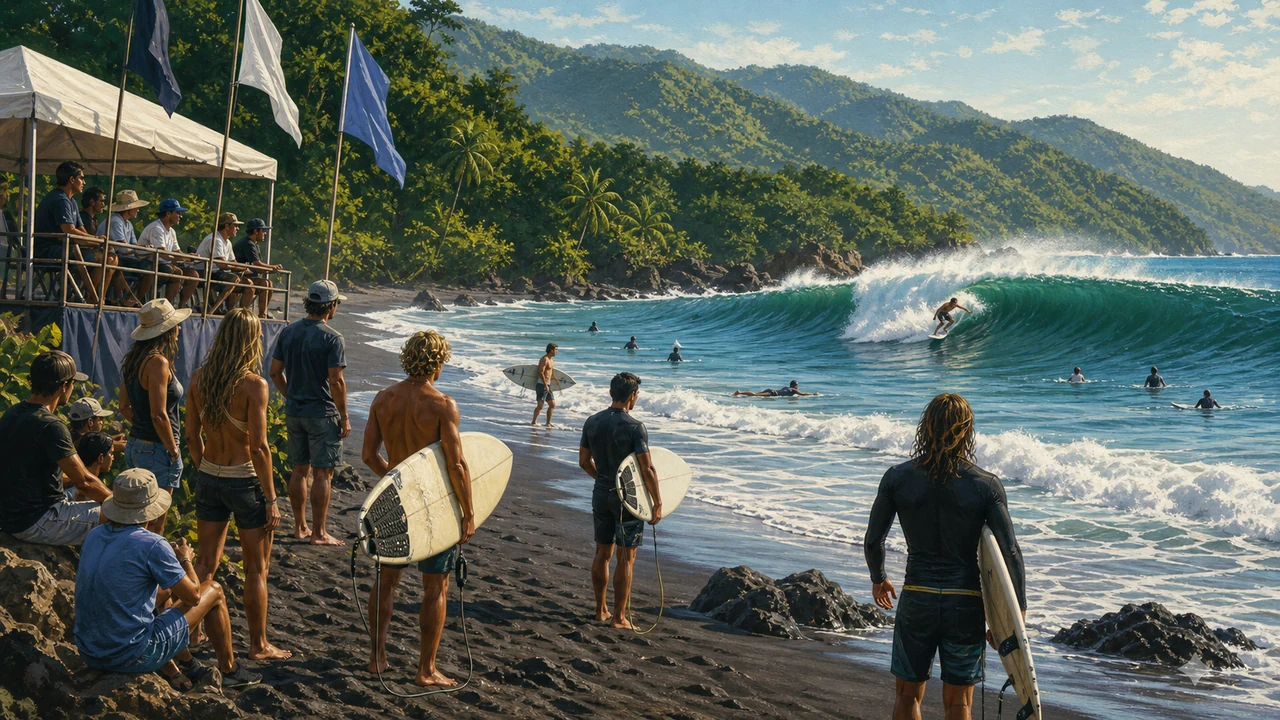 Costa Rica has earned its place on the global surf competition circuit, drawing the world’s top governing bodies and professional athletes to its Central Pacific shores again and again. The country’s reliable swells, tropical climate, and passionate local surf culture make it one of the most compelling competition destinations in the Americas — and an outstanding choice for any surf traveler who wants to experience firsthand the waves that elite competitors call world-class.
Why the World Comes to Surf Here
Several factors combine to make Costa Rica a recurring choice for international governing bodies such as the International Surfing Association (ISA).
Consistent year-round Pacific swells arrive from multiple directions, giving contest directors the flexibility to wait for ideal conditions during competition windows. The Central Pacific coast — particularly the Jacó corridor — receives strong south and southwest groundswells between May and November, reliably producing the powerful, shapely waves that high-performance judging demands.
Water temperatures stay warm throughout the year, eliminating the cold-water disadvantage that can plague northern-hemisphere venues and allowing athletes to surf in board shorts regardless of season. Combined with the country’s compact geography, strong road infrastructure, and proximity to Costa Rica’s international airports, the logistics of bringing dozens of national teams together are far simpler here than at remote island venues.
The Costa Rican Surfing Federation (FSC) has built a track record of organized, well-managed events over many years, a reputation that carries significant weight when international bodies evaluate candidate host nations. Costa Rica has consistently sent complete national teams to ISA world commitments, demonstrating the kind of institutional commitment that earns trust at the governing-body level.
The Host Breaks: Playa Hermosa and Jacó
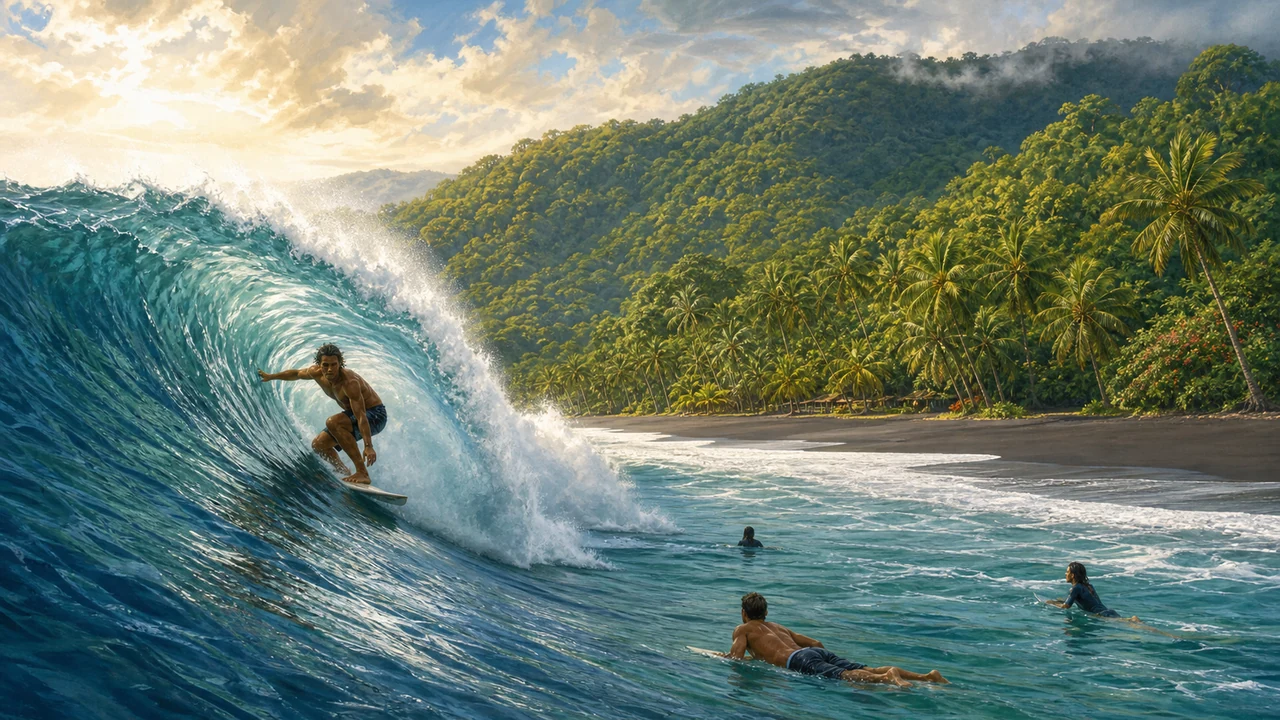 The epicenter of international surf competition on the Central Pacific coast is the stretch of coastline between Jacó and Playa Hermosa, roughly 90 kilometers west of San José.
Playa Hermosa — not to be confused with the beach of the same name in Guanacaste — is a dark-sand beach break immediately south of Jacó town. Its shore-pounding waves are fast, hollow, and demanding: exactly the conditions that reveal the difference between good surfers and great ones. When a significant south swell is running, multiple peaks fire simultaneously along the beach, allowing competition heats to run efficiently across side-by-side arenas.
Jacó itself serves as the logistical hub. The town has grown substantially as a surf destination, with a wide selection of accommodations, surf schools, board rentals, and restaurants catering to a heavily international crowd. A boulevard running along the beachfront provides a natural gathering space for spectators and the kind of festival atmosphere that competition organizers seek when building a global broadcast event.
For surf travelers, arriving just before or after a major competition window is often ideal: you get the same high-quality swell, less crowded lineups once the event concludes, and the energy of a town that takes surfing seriously.
What Major Events Mean for Surf Travelers
 When the ISA or another top-tier body stages a world championship in Costa Rica, the ripple effects for everyday surf travelers are significant and lasting.
Global exposure for Costa Rica surf breaks — competition broadcasts reach audiences across dozens of countries and multiple languages, putting Playa Hermosa, Jacó, and the wider Central Pacific coast in front of surfers who may never have considered the destination. The result is a sustained increase in surf tourism that benefits the local economy for years after the event.
Infrastructure improvements tied to competition preparation — upgraded roads, improved beach facilities, expanded hotel capacity — remain in place long after the final heat. Jacó in particular has seen deliberate investment in tourism infrastructure tied to its identity as Costa Rica’s foremost surf competition town.
Local surf culture deepens as well. Young Costa Rican surfers gain direct exposure to the world’s top athletes and coaching methods, and the FSC builds organizational experience that strengthens the country’s position for future bids. Surfing in Costa Rica is not merely a tourist attraction — it is a serious competitive sport with national teams, federation structures, and international ambitions.
The Broader Surf Tourism Picture
 Costa Rica routinely ranks among the top ten surfing destinations worldwide, a distinction reinforced every time an international event chooses its shores. Surf tourism represents a meaningful share of the country’s annual visitor arrivals, with hundreds of thousands of surfers from abroad making Costa Rica beaches their primary destination each year.
The Costa Rica activities and sports scene revolves heavily around surf — from beginner lessons at gentle beach breaks in Tamarindo and Dominical to the powerful reef and beach breaks that attract experienced chargers. The Central Pacific corridor anchored by Jacó and Playa Hermosa is the natural home of competition surfing, but travelers who want variety will find that world-class surf breaks extend the full length of both Pacific coasts, from Witch’s Rock in the north to Pavones in the far south.
Non-surfer travel companions are equally well served. Costa Rica’s extraordinary biodiversity, ecotourism and nature experiences, and relaxed Pura Vida culture mean that a surf trip rarely has to be a single-interest itinerary. It is entirely common to spend mornings chasing waves and afternoons in a national park or on a rainforest canopy tour.
Planning a Surf Competition Trip to Costa Rica
If attending or watching professional surf competitions in Costa Rica is your goal, the Central Pacific coast is your destination. Key practical points:
- Getting there: Fly into Juan Santamaría International Airport (SJO) near San José and take the well-traveled road west to Jacó — roughly a 90-minute drive. Shuttle services and rental cars are both readily available.
- Timing: The July–August window aligns with peak Central Pacific swells and has historically been the preferred period for major international events. Check with the ISA and the FSC for current competition calendars.
- Accommodation: Book early when a major event is scheduled. Jacó fills quickly during competition weeks, and nearby options in Herradura and Playa Hermosa itself provide overflow capacity.
- Beyond the event: Allow extra days on either side of the competition. The same swell that powers the contest will be breaking across uncrowded peaks up and down the coast.
For general planning guidance, the Costa Rica travel tips page covers entry requirements, currency, health, and logistics. See also the surfing in Costa Rica overview for a complete picture of the country’s surf geography and what to expect at each major region.
Frequently asked questions
Why do major surf organizations choose Costa Rica for world championships?
Costa Rica combines consistent Pacific swells, warm water year-round, world-class beach breaks, and strong organizational infrastructure through the Costa Rican Surfing Federation (FSC). Its central location in the Americas also makes it logistically accessible for national teams from North and South America.
What is the main surf competition beach near Jacó?
Playa Hermosa, just south of Jacó on the Central Pacific coast, is the primary competition venue. Its powerful beach break reliably produces long, punchy waves that challenge elite surfers and draw global audiences.
When is the best time to watch or surf at Playa Hermosa and Jacó?
The prime surf season on the Central Pacific coast runs from May through November, when consistent south and southwest swells arrive. Competition events have historically been staged in the July–August window to take advantage of peak swell activity.
Is Jacó a good base for surf travelers visiting for competitions or training?
Yes. Jacó offers a full range of hotels, hostels, restaurants, surf shops, and rental services within walking distance of Playa Hermosa. It is roughly 90 minutes by road from San José's Juan Santamaría International Airport (SJO).
Can beginner surfers enjoy Costa Rica's competition beaches?
Playa Hermosa is best suited to intermediate and advanced surfers due to its powerful shore break. Beginners will find gentler conditions at Jacó Beach itself or at nearby breaks further north toward Herradura.