Water Buffalo in Guanacaste: Agro-Tourism & Dairy Farming
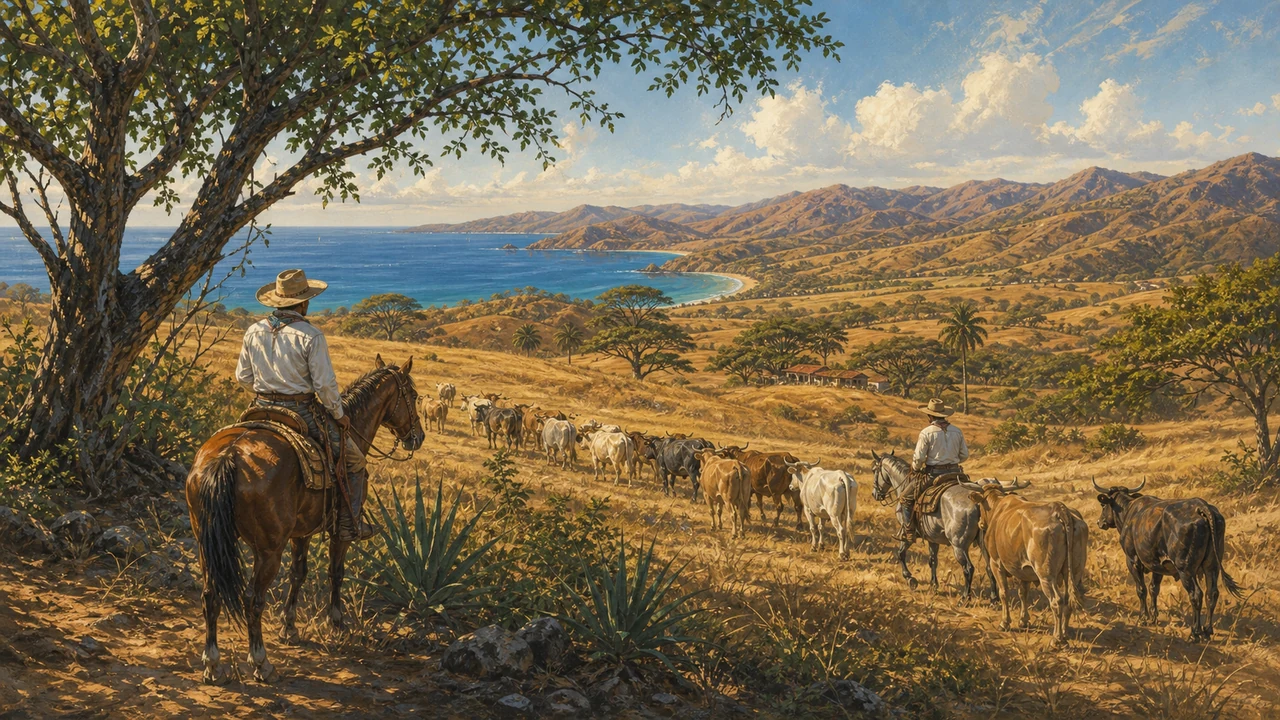 Water buffalo in Guanacaste, Costa Rica are more than a curious sight on the roadside — they are the heart of a growing buffalo agro-tourism and sustainable dairy farming movement in one of the country’s driest and most storied provinces. While most visitors associate Guanacaste with sun-bleached beaches, volcanic peaks, and classic Brahman cattle ranches, a handful of forward-thinking farms have introduced the Asian water buffalo (Bubalus bubalis) as a multipurpose animal perfectly suited to the region’s humid lowlands and seasonal wetlands.
Why Water Buffalo Thrive in Guanacaste
Guanacaste’s landscape is deceptive. Outside the dry season the province receives significant rainfall, and its river floodplains and seasonal wetlands (locally called terrenos húmedos) can be challenging for conventional cattle. Water buffalo, by contrast, are biologically adapted to marshy, waterlogged terrain — their splayed hooves distribute weight on soft ground, and they are naturally drawn to rivers and wallowing pools.
Ranchers discovered early on that water buffalo grazing in Guanacaste wetlands produces a faster and more thorough regeneration of native grasses and riparian plant species than traditional cattle. A single buffalo consumes significantly more grass per day than a typical zebu or lechero cow, which paradoxically benefits the pasture: the more aggressive grazing cycles stimulate root growth and quicken the turnover of vegetation. On farms that have converted portions of their land from degraded cattle pasture, the results have been measurable and encouraging.
Buffalo are also remarkably sturdy. They rarely need the same level of veterinary intervention as high-maintenance dairy breeds, and they tolerate heat and humidity that would stress European cattle. For Guanacaste, where the dry season pushes temperatures high and the wet season floods low-lying fields, water buffalo as a sustainable farming alternative makes practical and ecological sense.
The Bolsón Wildlife Refuge — A Pioneer Operation
 The Refugio de Vida Silvestre Bolsón, located in the Bolsón locality of the Santa Cruz canton, is one of the trailblazers of water buffalo ranching and ecotourism in Costa Rica. The property encompasses more than 50 hectares of terrain, including expansive humid grounds and secondary forest, where a herd of water buffalo lives alongside traditional livestock.
The ranch’s model is deliberately multipurpose. Buffalo were brought to Costa Rica primarily from Trinidad and Tobago — a region with a long tradition of water buffalo husbandry — and integrated into an existing cattle operation. The goal was never to replace conventional farming wholesale, but to layer in a conservation-minded practice that would benefit both the land and the visitor experience.
Managers at Bolsón have used the buffalo herd to accelerate the regeneration of wetland habitats on the property. The animals’ grazing patterns, combined with their affinity for water, help reintroduce native plant species to areas that had been overgrazed by cattle. This aligns with Costa Rica’s broader commitment to ecotourism and nature — a philosophy that treats the land as an asset worth stewarding rather than depleting.
Buffalo Dairy: Rich Milk, Artisan Cheese, and Niche Products
 Water buffalo milk is nutritionally distinct from cow’s milk. It is higher in fat, protein, and calcium, which makes it prized for artisan cheese production — most famously mozzarella di bufala, the Italian classic that has inspired cheesemakers worldwide. Costa Rican buffalo farms have tapped into this niche, producing fresh buffalo mozzarella and other creamy cheeses that find their way into upscale restaurants and specialty food markets.
Buffalo mozzarella production in Guanacaste remains a boutique operation — the herd sizes are modest compared to industrial dairy farms — but the quality draws attention. Visitors who tour working buffalo ranches often leave with fresh cheese, a tangible souvenir of an unusual agricultural encounter. Buffalo meat, which is leaner and lower in cholesterol than conventional beef, also appears occasionally on farm-to-table menus catering to food-curious travelers.
Beyond dairy, buffalo are used on some farms for light draft work — pulling carts along farm trails — a practice that has naturally evolved into a tourism attraction. A slow ride on a buffalo-drawn cart, passing through wetlands and forest edges, is the kind of unhurried, off-the-beaten-path experience that defines rural tourism in Guanacaste.
A Quirky Agro-Tourism Experience
 There is something undeniably memorable about standing next to a fully grown water buffalo. The animals are massive — adults can weigh over 1,000 kilograms — yet calm, sociable herds raised from birth around humans can be surprisingly gentle. At Bolsón and similar operations, visitors have been able to interact closely with individual animals, including riding buffalo that have been habituated to human contact.
This quirky, hands-on encounter is part of what makes buffalo agro-tourism in Costa Rica worth seeking out. It sits at the intersection of genuine agricultural practice and visitor education: guests learn about wetland ecology, sustainable animal husbandry, pasture regeneration, and the practical reasons a rancher might choose buffalo over cattle for certain terrain. That blend of the unusual and the educational is exactly what Costa Rica’s ecotourism and nature sector does best.
Tours typically include a walk or cart ride through the property, close-up time with the herd, an explanation of the farm’s conservation goals, and often a tasting of buffalo dairy products. Some ranches coordinate visits through local tour operators; others accept guests by appointment.
Planning Your Visit to Guanacaste
Guanacaste is Costa Rica’s northwest Pacific province, a manageable drive from Daniel Oduber International Airport (LIR) in Liberia — the most convenient entry point for the region. Most buffalo farms are located in the agricultural interior, away from the beach resort strip, so a rental car is the practical way to reach them.
The dry season (roughly December through April) makes rural roads easier to navigate, though the buffalo are arguably most impressive during the wet months when the wetlands fill and the landscape turns deep green. Before visiting any specific farm, confirm current tour availability and hours directly — small agricultural operations run on farm time, not tourism-industry schedules.
For broader context on the region, the Guanacaste province page covers climate, geography, and attractions across the whole area, and Guanacaste adventure highlights the full range of active experiences available nearby.
Costa Rica’s commitment to sustainable tourism means that enterprises like buffalo ranching — which combine working agriculture with environmental stewardship and genuine visitor engagement — are exactly the kind of experience the country aims to nurture. A visit to a Guanacaste water buffalo farm is neither a zoo nor a theme park; it is a working landscape where farming, ecology, and tourism reinforce one another in a way that feels distinctly pura vida.
Frequently asked questions
Are there really water buffalo in Costa Rica?
Yes. Water buffalo were introduced to the Guanacaste province for dairy production, sustainable pasture management, and agro-tourism. The Bolsón Wildlife Refuge near Santa Cruz is among the best-known operations.
What products come from Costa Rica's water buffalo farms?
Buffalo farms produce rich milk that is used for fresh cheese, mozzarella-style products, and other artisan dairy goods. Buffalo meat is also leaner and lower in cholesterol than conventional beef.
Can visitors ride or interact with the buffalo?
Some ranches offer close encounters, including riding calm, people-friendly buffalo and taking tours on buffalo-drawn carts. Check current availability directly with the farm before visiting.
Why are water buffalo good for Guanacaste's wetlands?
Water buffalo graze more thoroughly than cattle and stimulate faster regrowth of wetland vegetation. Their grazing habits are used deliberately to speed the regeneration of humid pastures and riparian plant communities.
How do I get to Guanacaste's buffalo farms?
The Bolsón area sits in the canton of Santa Cruz, Guanacaste. You can fly into Daniel Oduber International Airport (LIR) in Liberia and drive south, or rent a car from San José and travel the Inter-American Highway north.