Costa Rica Science & Technology: Innovation in the Tropics
Costa Rica has quietly built one of Latin America’s most dynamic knowledge economies — a small country that punches well above its weight in high-tech manufacturing, biodiversity research, and renewable energy leadership. Travelers curious about the forces shaping modern Costa Rica will find a nation where cloud-forest conservation and semiconductor-precision manufacturing coexist in the same country code.
A Technology Cluster Built on Talent
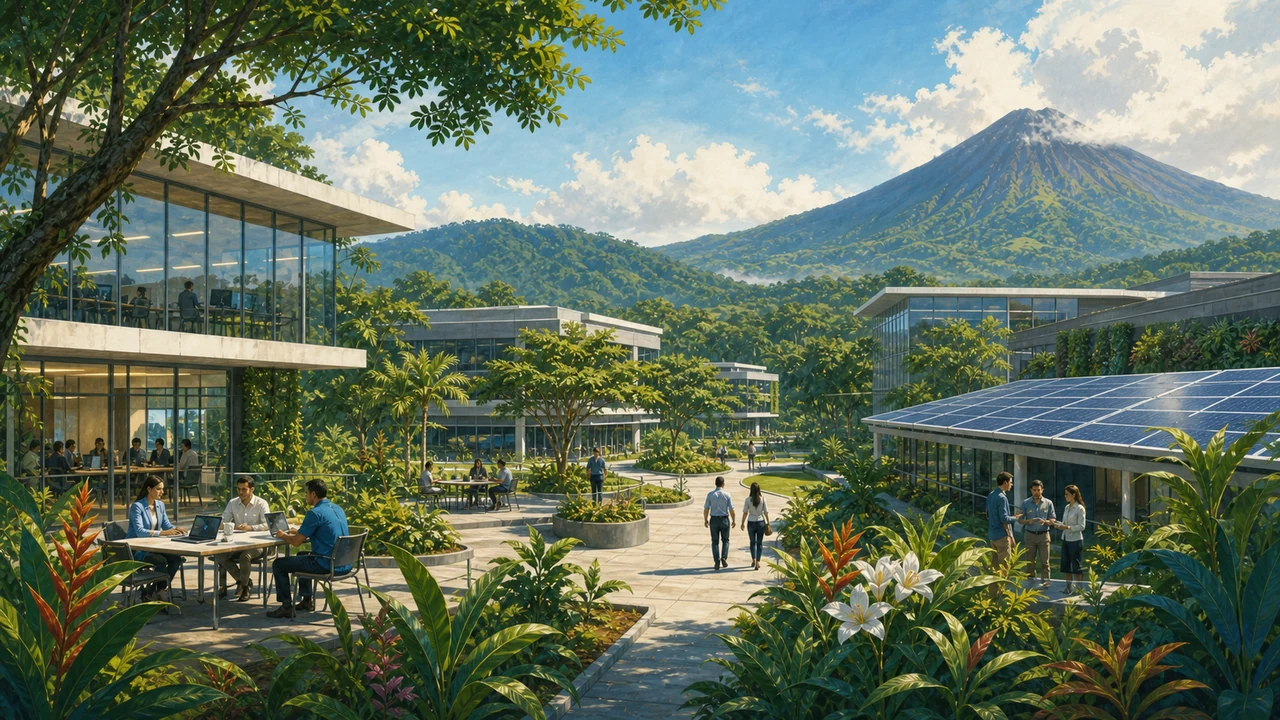 Costa Rica’s emergence as a regional hub for high-technology manufacturing dates to the late 1990s, when Intel chose the country for a major semiconductor assembly and test facility. That decision validated what investors and economists had argued for years: Costa Rica had the educated workforce, political stability, and infrastructure to compete for advanced manufacturing against much larger economies.
The Intel effect rippled outward. A cluster of technology and precision-manufacturing companies followed, drawn by the same advantages. Today the Central Valley — anchored by San José and its neighboring provinces — hosts a diverse mix of multinationals and homegrown firms in aerospace components, electronics, software services, and business-process outsourcing.
What sustains this cluster is education. Costa Rica has maintained one of the highest literacy rates in Latin America for generations, and it channels a significant share of its national budget into public universities and technical colleges. The University of Costa Rica (UCR) and the Costa Rica Institute of Technology (TEC) produce engineers, scientists, and IT professionals who feed directly into the local tech economy.
Free-Trade Zones: The Engine of Export Manufacturing
 The backbone of Costa Rica’s high-value export manufacturing sector is its free-trade zone (FTZ) system, administered by PROCOMER. Companies operating inside designated FTZs receive significant tax incentives, streamlined customs processing, and access to world-class logistics infrastructure near Juan Santamaría International Airport in Alajuela — keeping production close to global air-freight lanes.
Medical devices have become the country’s single largest export category by value, surpassing even coffee and bananas. Costa Rica’s medical-device manufacturing industry produces surgical instruments, orthopedic implants, diagnostic kits, catheters, and a wide range of single-use hospital products. The workforce in this sector is known for its precision and reliability — qualities that global health-care companies need when tolerances are measured in microns.
Beyond medical devices, FTZs host advanced services: software development centers, shared-service hubs for finance and legal operations, and cutting-edge engineering firms. This concentration of knowledge work has made Costa Rica one of the most export-sophisticated economies per capita in the developing world.
Biodiversity Research: A Living Laboratory
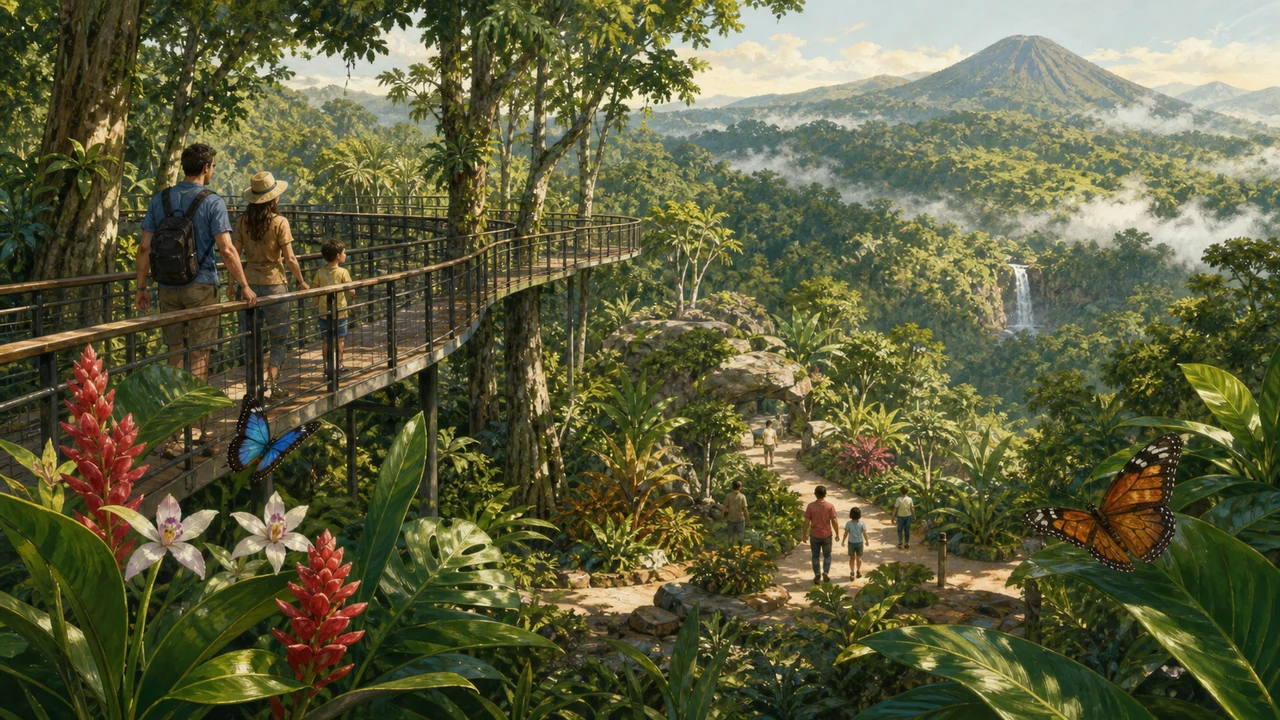 Science and nature are inseparable in Costa Rica. The country protects more than 25% of its land in national parks and reserves, and those protected areas harbor roughly 5% of all species on Earth. That extraordinary concentration of life has made Costa Rica a magnet for biological researchers from around the world.
The National Biodiversity Institute (INBio) was among the most innovative science organizations the country produced. Founded in 1989, it undertook the first systematic effort to catalogue Costa Rica’s estimated 500,000 species — plants, insects, fungi, microorganisms — and trained parataxonomists drawn from rural communities to collect specimens nationwide. INBio’s bioinformatics databases were decades ahead of their time and influenced how biodiversity data is shared globally. Its public-facing attraction, INBioparque, introduced thousands of visitors to the country’s ecosystems and brought citizen science and biodiversity education in Costa Rica into the mainstream.
Field research continues at institutions like the Organization for Tropical Studies (OTS), which operates La Selva Biological Station in the Caribbean lowlands — one of the most productive tropical-biology research sites in the world. International universities maintain long-term study programs here, and graduate students from dozens of countries spend semesters doing fieldwork in the rainforest. Exploring Costa Rica’s ecotourism and nature scene gives visitors a window into this ongoing scientific story.
Renewable Energy: A Model for the World
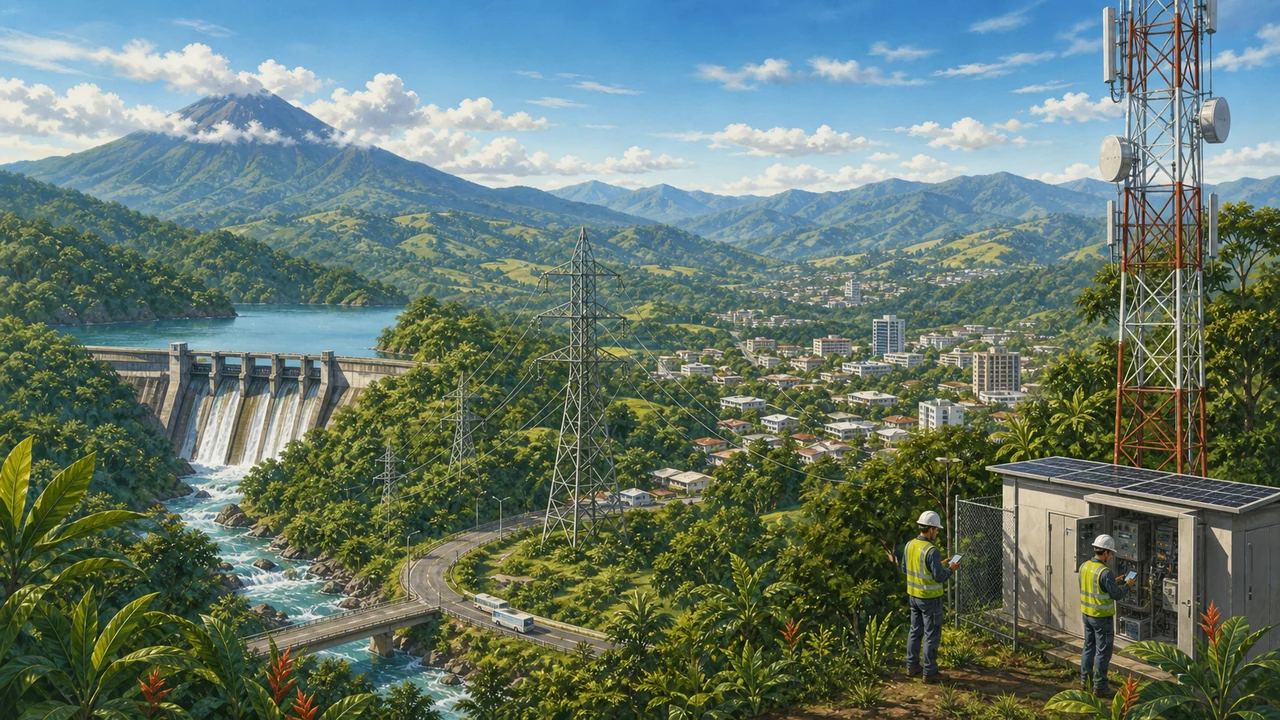 Few countries have attracted more international attention for their energy story than Costa Rica. The national grid, managed by the state utility ICE, draws the vast majority of its power from renewable sources: hydroelectric dams on the country’s fast-running rivers, geothermal plants tapping the volcanic heat beneath the Central Volcanic Range, wind farms on the Guanacaste ridgelines, and a growing solar sector.
For extended stretches, Costa Rica’s 100% renewable electricity generation record has stood as proof that a modern economy can run on clean power. Observers note that the country’s geography — rivers, volcanoes, and reliable trade winds — provides natural advantages, but so does deliberate policy: Costa Rica has invested consistently in grid infrastructure and conservation of the watersheds that feed its reservoirs.
This commitment to clean energy aligns with a broader national identity built around environmental stewardship. Costa Rica abolished its army in 1948 and redirected those resources into education and health care; decades later it made sustainability a national brand and economic strategy. The result is a country where science, policy, and nature reinforce each other in ways that are rare anywhere in the world.
Innovation, Health, and the Road Ahead
Costa Rica’s scientific culture extends into health care. The country operates a universal public health system (CCSS) alongside a growing private sector that has made health tourism in Costa Rica an increasingly important economic pillar. Internationally accredited private hospitals near San José offer procedures at a fraction of North American costs, staffed by physicians many of whom trained abroad before returning home.
Looking ahead, the government and private sector are investing in digital infrastructure, cybersecurity, and artificial-intelligence research through universities and dedicated technology parks. Costa Rica’s emerging startup ecosystem — centered on San José but spreading to university towns like Heredia and Cartago — is developing local solutions for agriculture, logistics, and environmental monitoring.
For travelers, this scientific dimension adds a rewarding layer to any visit. Whether you’re touring a biodiversity reserve, learning about renewable-energy policy, or simply noticing how ecotourism and high-tech manufacturing share the same small nation, Costa Rica’s innovation story is part of what makes this country genuinely unlike anywhere else.
Frequently asked questions
Why do high-tech companies choose Costa Rica for manufacturing?
Costa Rica combines a skilled, bilingual workforce with political stability, free-trade zone incentives, and a central location that puts it within a short flight of major North American hubs. The country has decades of experience hosting precision manufacturers and has built a deep supply chain around that expertise.
What is Costa Rica's role in medical-device manufacturing?
Costa Rica is one of Latin America's leading exporters of medical devices, including surgical instruments, catheters, and diagnostic equipment. Many globally recognized companies operate manufacturing plants in the country's free-trade zones, attracted by the trained workforce and favorable trade agreements.
How does Costa Rica generate its electricity?
Costa Rica consistently generates the vast majority of its electricity from renewable sources — primarily hydropower, followed by geothermal, wind, and solar. The country has run on 99%+ renewable electricity for extended periods, making it a global model for clean-energy grids.
What was INBio and why did it matter?
The National Biodiversity Institute (INBio) was a pioneering Costa Rican research organization that catalogued the country's extraordinary biodiversity and pioneered bioprospecting agreements that shared benefits with conservation. Although INBio transitioned its collections to national institutions, its legacy shaped global thinking on biodiversity informatics.
Is Costa Rica a good destination for science and research tourism?
Yes. Visitors interested in science can tour research stations in places like La Selva Biological Station in Sarapiquí, visit INBioparque near Santo Domingo de Heredia, or explore university campuses and botanical gardens. The country's biodiversity makes it a living laboratory.