Central Volcanic Range: Poás, Irazú, Turrialba & Barva
The Cordillera Volcánica Central — Costa Rica’s Central Volcanic Range — towers over the country’s most densely populated region and puts four extraordinary volcanoes within easy reach of San José. Poás, Irazú, Turrialba, and Barva each offer a distinct experience: acid crater lakes, sweeping twin-ocean views, steaming fumaroles, and misty cloud-forest trails — all accessible on day trips from San José without overnight stays or long internal flights.
This range is the geological backbone of Costa Rica’s Central Valley, the same ancient volcanic activity that built the fertile highland soils underpinning the country’s world-famous coffee industry. The Costa Rica volcanoes pillar page gives an overview of both the Central Range and the Guanacaste Volcanic Range System to the northwest.
Poás Volcano — Costa Rica’s Most-Visited Crater
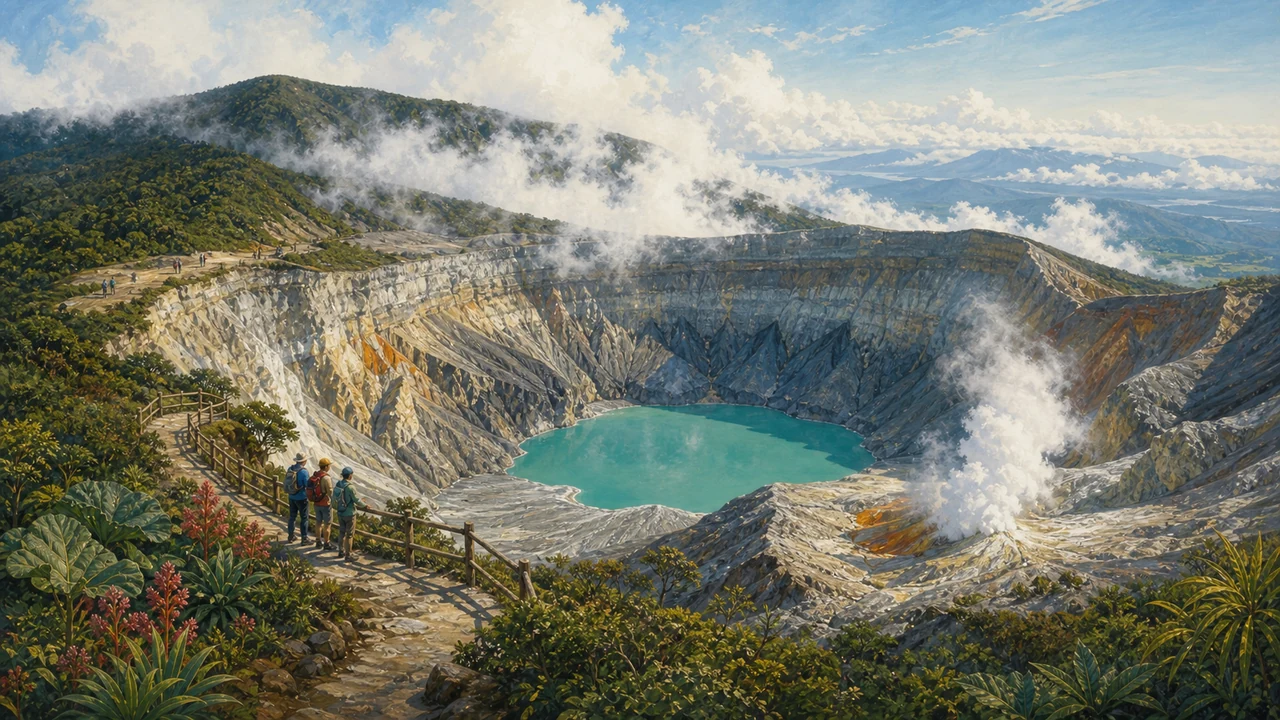 Poás Volcano sits about 37 miles (60 km) northwest of San José and is one of the most visited volcanoes in all of Central America. The main crater holds one of the largest active geothermal lakes in the world — a hyper-acidic, turquoise-grey cauldron that periodically hurls steam and ash high into the air. A second, quieter crater called Laguna Botos holds a cool blue-green freshwater lake surrounded by dwarf cloud forest.
The park is compact and visitor-friendly: a short paved trail leads from the parking area directly to the crater overlook. Early morning visits to Poás Volcano are essential — clouds reliably smother the summit by mid-morning. Tours that depart San José at 6–7 a.m. give you the best window for clear views.
Nearby, the small town of La Paz and the broader Alajuela highlands are home to strawberry farms, trout-fishing ponds, and the popular La Paz Waterfall Gardens, making it easy to combine Poás with a full highland day.
Irazú Volcano — Highest Peak, Twin-Ocean Views
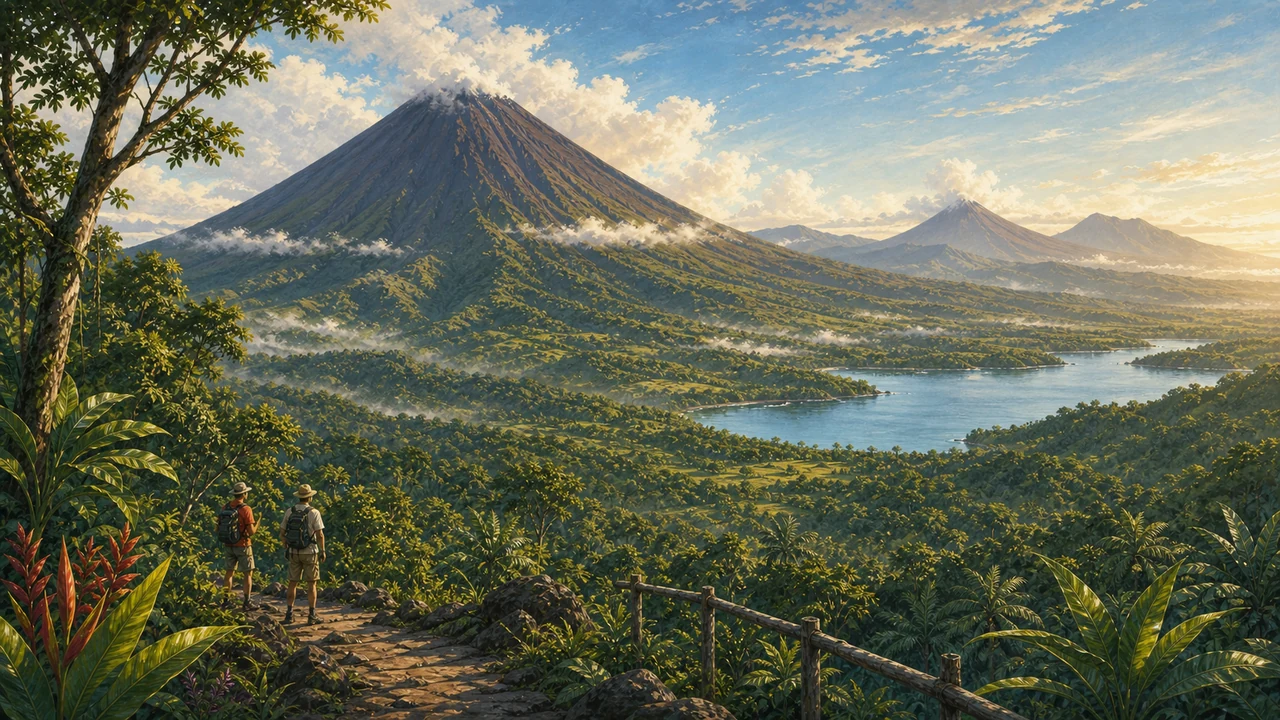 At roughly 11,260 feet (3,432 m) above sea level, Irazú is the tallest volcano in Costa Rica and stands guard over the city of Cartago to its south. Its crater holds a striking Diego de la Haya lagoon — a shallow lake whose water shifts between vivid greens and milky grey depending on sulfur concentration and cloud cover.
On rare clear days, visitors standing at the summit can see both the Pacific Ocean and the Caribbean Sea simultaneously — a phenomenon found at only a handful of places on Earth. Irazú Volcano on a clear day is genuinely bucket-list material, though those views require luck and an early start.
The drive from San José takes around 1.5 hours. En route, the colonial architecture and Basílica de Nuestra Señora de los Ángeles in Cartago is worth a stop. Irazú last erupted significantly in 1994; today the park is open and well-maintained, with paved crater-rim viewpoints and visitor facilities.
Turrialba Volcano — Active and Dramatic
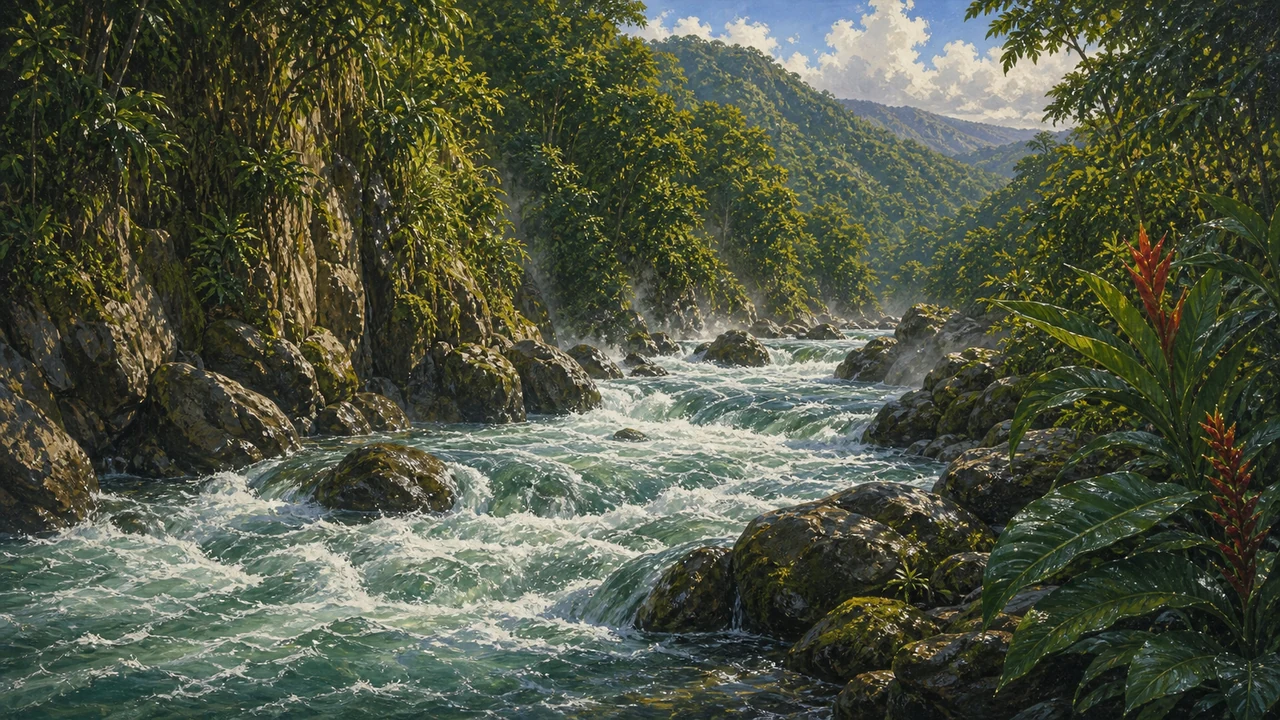 Turrialba is the most volcanically active member of the Central Range and has generated significant ash falls over the Central Valley in recent years. Three distinct craters punctuate its summit, and fumarolic activity — jets of steam and sulfurous gas — is ongoing. The surrounding landscape is dense in cloud forest and agricultural land; Turrialba volcano and the surrounding Turrialba Valley combine high volcanic drama with one of the most productive agricultural zones in Costa Rica.
Access to the summit varies with activity levels — the park authority (SINAC) periodically closes upper trails when eruptive episodes intensify, so always verify current conditions before visiting. When open, guided hikes to the crater viewpoints are among the most dramatic volcano experiences in Central America.
The town of Turrialba at the volcano’s base is also a gateway for whitewater rafting on the Pacuare River, widely ranked among the top rafting rivers in Latin America. Combining a volcano visit with a river trip makes for a spectacular two-day itinerary out of San José. See Costa Rica activities & sports for rafting and adventure options.
Barva Volcano — Cloud Forest Solitude in Braulio Carrillo
Barva is the quietest and most trail-focused of the four. A dormant stratovolcano rising to 9,534 feet (2,906 m), it sits within Braulio Carrillo National Park — one of the largest protected areas adjacent to a capital city anywhere in the world. The summit zone is cloaked in primary cloud forest with dense ferns, epiphytes, and towering oak trees draped in moss.
The Barva sector of Braulio Carrillo rewards hikers willing to navigate muddy highland trails with solitude, extraordinary birdwatching — resplendent quetzals are occasionally spotted — and a pair of small, eerie crater lakes hidden in the forest. The hike from the Porrosatí entrance takes several hours round-trip; waterproof boots, warm layers, and a knowledgeable guide make the difference between a miserable slog and a memorable adventure.
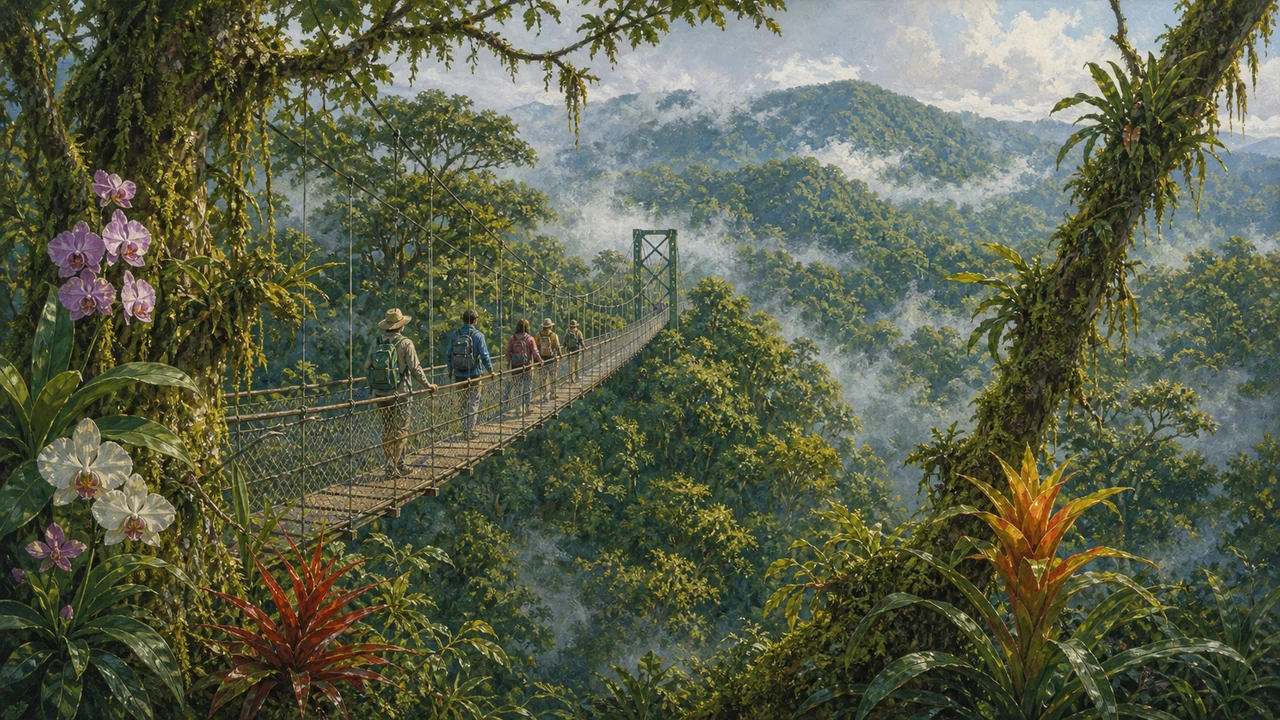 Barva’s location just 45 minutes from Heredia means it’s genuinely accessible as a day trip from the capital, yet far fewer visitors make it here than to Poás or Irazú. For travelers interested in Costa Rica ecotourism & nature, Barva delivers a wilderness experience that feels miles removed from the Central Valley below.
Volcanic Soils and the Coffee Connection
The Central Volcanic Range is not merely a collection of geological spectacles — it is the engine behind Costa Rica’s agricultural prosperity. Centuries of eruptions deposited mineral-rich ash and lava across the Central Valley, creating some of the most fertile soils in Latin America. Today those soils grow world-class arabica coffee at elevations between 4,000 and 6,000 feet, directly in the shadow of these volcanoes.
The belt running through Heredia and Alajuela produces some of the most sought-after microlots in the country. Many coffee farms in these provinces offer tours that pair naturally with a volcano day trip — a morning at the Poás crater followed by an afternoon at a specialty Costa Rica coffee farm is a deeply satisfying way to spend a day in the highlands.
Planning Your Central Volcanic Range Trip
Getting there: All four volcanoes are reachable by rental car or organized tour from San José. Juan Santamaría International Airport (SJO) in Alajuela is the arrival point for most visitors — the airport sits at the base of the same highland corridor that leads up to the volcanic range. See Costa Rica travel tips for practical logistics.
What to bring: Temperatures at volcano summits are significantly cooler than San José — expect 40–55°F (5–13°C) at the highest craters, often with wind and mist. Pack a windproof layer, comfortable walking shoes, and a rain jacket regardless of season. Sunscreen and water are essential even on cloudy days.
Tour vs. self-drive: Organized day tours from San José are convenient and often include entrance fees, a guide, and transportation. Self-driving gives you more flexibility — particularly valuable for early morning starts at Poás or Irazú. Roads to all four volcanoes are paved and generally in good condition.
Combining destinations: Poás and Irazú are feasible on the same day for energetic travelers, though each deserves a dedicated morning for the best conditions. Turrialba pairs logically with the Turrialba Valley and Pacuare River. Barva is best done as a standalone hiking day. Consider the full range of Costa Rica national parks when building a broader itinerary around the region.
Frequently asked questions
Can I visit Poás Volcano on a day trip from San José?
Yes. Poás Volcano National Park is about 37 miles (60 km) northwest of San José — roughly a 90-minute drive. Most tour operators offer morning departures, which give you the best chance of clear crater views before clouds roll in.
Is Turrialba Volcano safe to visit?
Turrialba has had periods of increased activity and restricted access in recent years. Always check current status with SINAC (Costa Rica's national park service) or your tour operator before planning a visit, as access zones can change with little notice.
What is the best time of day to visit Irazú Volcano?
Early morning is strongly recommended. Skies are typically clearest before 10 a.m., giving you the best chance to see the distinctive green-hued crater lake and, on exceptionally clear days, glimpses of both the Pacific and Caribbean coasts.
Does Barva Volcano require special preparation?
Barva is a more demanding hike inside Braulio Carrillo National Park — expect muddy cloud forest trails, cool temperatures, and frequent mist. Waterproof footwear, layers, and an early start are essential. A guide is recommended for first-time visitors.
Are the Central Volcanic Range volcanoes still active?
Poás, Irazú, and Turrialba are considered active, with Turrialba showing the most notable eruptive behavior in recent years. Barva is classified as dormant. Activity levels vary — always check current conditions before visiting.