Electricity in Costa Rica: Plugs, Voltage & Renewable Energy
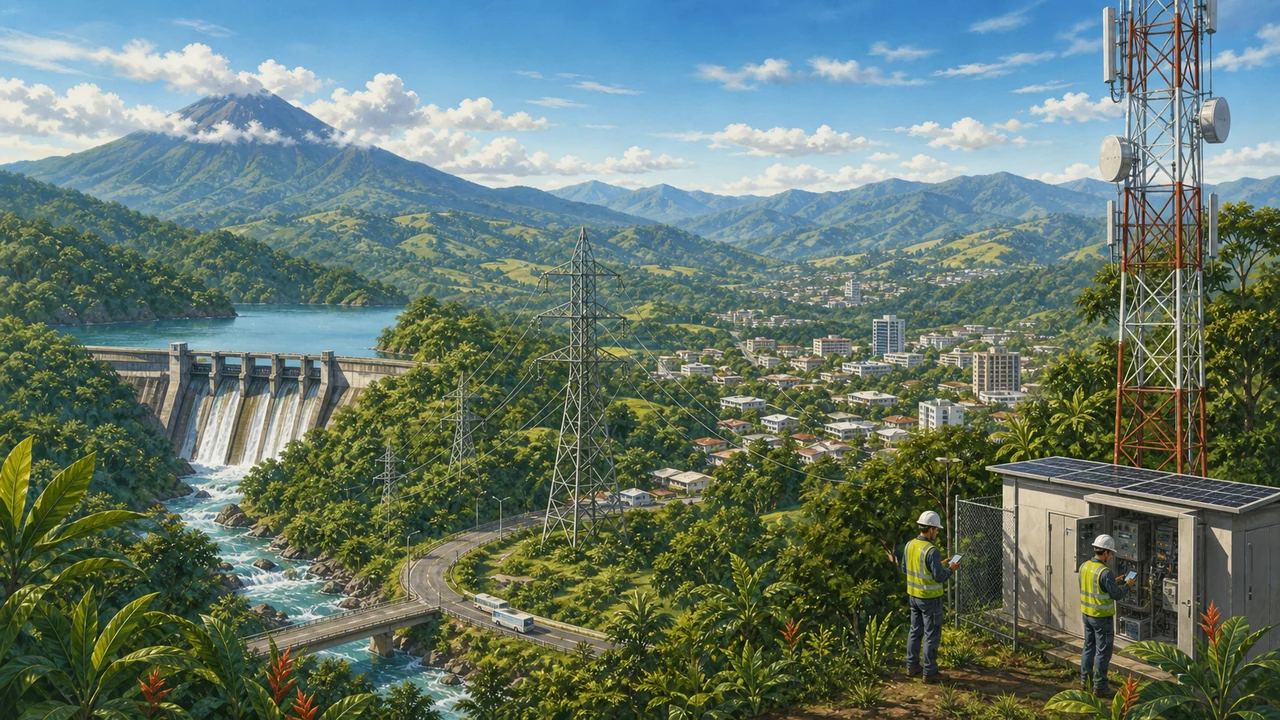
Costa Rica’s electrical system for travelers from North America is about as hassle-free as it gets: the country runs on 120 volts at 60 Hz with the same flat-pin outlets used throughout the United States and Canada. For visitors focused on sustainable tourism, there is an added bonus — the electricity powering your phone charger and hotel air conditioner almost certainly comes from a river, a volcano, or the wind, not a coal plant.
Voltage, Frequency, and Plug Types
Costa Rica’s standard is 120V, 60Hz — the same spec used across North America. Wall outlets are the familiar flat two-pin (Type A) or flat two-pin with a round ground pin (Type B). If you are arriving from the United States or Canada, you can plug in your devices exactly as you would at home.
A few practical notes:
- Older buildings — particularly guesthouses, budget hotels, and homes built before the 1990s — may have only two-slot outlets without a ground receptacle. A cheap two-to-three-prong adapter ($2–$3) solves this immediately.
- European, UK, and Australian travelers will need a Type A or Type B adapter. These are widely sold in San José pharmacies, hardware stores, and airport shops.
- Voltage converters are rarely needed. Most modern electronics — laptops, phone chargers, cameras, CPAP machines — are dual-voltage (100–240V) and switch automatically. Check the fine print on the charger or device before assuming, but the odds are good you do not need a converter.
Surge Protection in Remote Areas

Power reliability varies across the country. San José, the Central Valley, and major resort areas like Guanacaste and the Central Pacific coast maintain consistent service. The further you travel into rural or mountain areas, the more you may encounter:
- Brief voltage fluctuations when heavy rain affects the grid
- Occasional outages in remote Caribbean or southern Pacific communities
- Grounding inconsistencies in older rural construction
A compact surge protector with a USB port is among the most practical items you can pack. It protects sensitive electronics, adds extra outlets, and costs almost nothing in luggage space. This is especially useful if you plan to visit off-the-beaten-path destinations covered in our Costa Rica travel tips.
If you are staying in eco-lodges in remote areas, ask ahead whether generator power is used at night — some jungle lodges run on solar during the day and generator in the evening, which can produce minor fluctuations.
Costa Rica’s Remarkable Renewable Energy Grid

Beyond the practical question of plugs and adapters, Costa Rica’s renewable electricity grid is one of the most impressive in the world — and a genuine source of national pride. The country routinely generates close to 99% of its electricity from clean, renewable sources, putting it in the top tier globally for sustainable energy.
The main sources that power the country:
Hydroelectric Power
Hydroelectricity is the backbone of the grid. Costa Rica’s rugged geography — volcanic mountains, high rainfall, and dozens of rivers — creates ideal conditions for run-of-river and reservoir hydro projects. ICE (Instituto Costarricense de Electricidad), the state utility, manages a network of plants that collectively supply the majority of national electricity demand. You will notice rivers running strong and clear throughout the country; many are both ecological treasures and energy sources at the same time.
Geothermal Energy
The same volcanic activity that makes Costa Rica’s volcanoes so dramatic for tourists also generates clean electricity. Geothermal plants at Miravalles and other sites tap underground heat to produce steady, baseload power that complements the variable output of hydro and wind. This makes geothermal energy in Costa Rica a crucial stabilizing element of the grid.
Wind and Solar
The Guanacaste region, known for its dry-season trade winds, hosts wind farms that contribute meaningfully to the national mix. Solar generation is growing rapidly as panel costs fall, and you will see rooftop arrays increasingly common on hotels, schools, and private homes throughout the country.
Why This Matters for Travelers

Choosing Costa Rica as a destination is itself a small vote for sustainable tourism. When you charge your camera, run the hotel fan, or power up the resort’s kitchen, the energy behind it is overwhelmingly clean. This aligns with the philosophy that has made Costa Rica a global model for conservation — a country that has protected more than 25% of its land area as national parks and reserves while maintaining a modern, reliable energy supply.
Costa Rica’s goal of carbon neutrality is backed by real infrastructure, not just a slogan. The electricity sector is already there in practice; ongoing efforts focus on decarbonizing transportation and industry.
For travelers interested in the broader picture of how this small country punches so far above its weight in environmental leadership, the ecotourism and nature section and the responsible travel pages offer much more context.
Practical Checklist Before You Pack
Before leaving for Costa Rica, run through this quick list:
- Check device chargers for “Input: 100–240V” (dual-voltage — no converter needed)
- Pack a Type A/B adapter if you are traveling from Europe, UK, or Australia
- Consider a small surge protector if visiting remote or rural areas
- No need for a voltage converter for standard North American devices
- Hotel rooms typically have 2–4 outlets; a compact power strip is useful for charging multiple devices overnight
Most Costa Rica travel tips will remind you that the electrical setup is among the least complicated aspects of visiting — far simpler than navigating visas, currency exchange, or rainy-season packing decisions. Plug in, charge up, and spend your energy on the country itself.
Electricity in Costa Rica falls under the broader development and services infrastructure that makes the country a comfortable and modern destination for international visitors.
Frequently asked questions
What voltage and frequency does Costa Rica use?
Costa Rica uses 120 volts at 60 Hz — identical to the United States and Canada. Most North American electronics work without a voltage converter. Verify the label on your device before plugging in.
Do I need a plug adapter for Costa Rica?
Most outlets accept the standard North American flat two-pin (Type A) or flat two-pin + round ground (Type B) plug. Some older buildings have only two-slot outlets without a ground receptacle, so a simple adapter can be handy. European and UK travelers will need a Type A/B adapter.
Is the power supply reliable in Costa Rica?
Power is generally reliable in San José and major tourist areas. Remote regions and rural destinations can experience occasional outages or voltage fluctuations, so a small surge protector is a worthwhile precaution for sensitive electronics.
Where does Costa Rica get most of its electricity?
The vast majority of Costa Rica's electricity comes from renewable sources — primarily hydroelectric dams, supplemented by geothermal, wind, and solar generation. The country routinely runs on close to 100% renewable electricity for extended periods.
Can I charge my laptop and phone without an adapter in Costa Rica?
Yes, if you are traveling from North America. Modern laptops, smartphones, and camera chargers are dual-voltage (100–240V) and will run on Costa Rica's 120V/60Hz supply. Check the small print on your charger brick to confirm.