Drinking Water in Costa Rica: Safe, Potable & Plentiful
Tap water is safe to drink throughout most of Costa Rica — a distinction that sets this small Central American nation apart from the majority of its neighbors and makes life noticeably easier for both residents and visitors. Whether you are exploring the capital San José, relaxing on the Pacific coast, or hiking in the Central Valley, you can generally drink from the faucet without worry.

Costa Rica’s potable-water achievement is the result of decades of investment in treatment infrastructure, a dense network of mountain watersheds, and consistent regulatory oversight. It is worth understanding how that system works before you travel — and knowing when to reach for a bottle instead.
AyA: The National Water Authority
Costa Rica’s water supply is managed by AyA (Instituto Costarricense de Acueductos y Alcantarillados), the national institute for aqueducts and sewerage. Founded in the 1960s, AyA is responsible for building, operating, and regulating the country’s municipal water systems. In parallel, many smaller communities run their own locally managed aqueducts (acueductos comunales) under AyA supervision.
Costa Rica’s municipal water treatment system relies primarily on chlorination, filtration, and regular bacteriological testing to keep pathogen counts well within safe limits. AyA publishes periodic water-quality reports, and independent monitoring by the Ministry of Health adds another layer of accountability.
The result: the vast majority of the country’s urban and peri-urban population has access to water that meets or exceeds World Health Organization standards for potability — a remarkable achievement for a developing nation.
Where Tap Water Is Safe

In practice, drinking tap water safely in Costa Rica covers the following areas:
- San José and the Greater Metropolitan Area — the Central Valley cities of San José, Alajuela, Heredia, and Cartago all have well-maintained municipal systems.
- Pacific coast resort towns — Tamarindo, Jacó, Quepos, Dominical, and the Papagayo Peninsula are connected to treated supplies.
- Caribbean coast hubs — Puerto Viejo de Talamanca and Cahuita generally have reliable treated water, though supply consistency can vary in smaller villages.
- Tourist lodge areas — established eco-lodges and hotels in Monteverde, the Arenal zone, and around Costa Rica’s national parks typically treat their water and will tell you if it is safe to drink.
When in doubt, ask the front desk. Responsible accommodation staff will answer honestly.
When to Use Bottled Water

In remote rural areas or off-grid destinations, the picture changes. Small communities far from the municipal grid may rely on springs, rivers, or local wells that have not been treated to the same standard. This includes:
- Isolated Caribbean coastal villages — some have aging or informal water systems.
- Deep rainforest lodges — check whether the lodge treats its water; many high-end eco-lodges do, but smaller operations may not.
- Camping in the backcountry — if you are trekking in areas like the Osa Peninsula or Barra del Colorado, treat or filter any stream water before drinking.
Bottled water is affordable and available everywhere — supermarkets, sodas (local lunch counters), gas stations, and corner stores stock it throughout the country. You can also find water-purification tablets and compact filter straws at outdoor shops in San José if you plan extended hiking.
Staying Hydrated in a Tropical Climate
One of the most common rookie mistakes visitors make is underestimating how much they sweat in Costa Rica’s humid tropical heat. Even on overcast days, the combination of warmth and high humidity pulls moisture from your body faster than you notice.
Preventing dehydration while traveling in Costa Rica means:
- Drinking at least two to three liters of water per day under normal activity levels.
- Adding more if you are on the beach, surfing, hiking, or doing any adventure activity.
- Avoiding excessive alcohol or caffeine on the hottest part of the day, as both accelerate fluid loss.
- Eating fresh fruit — mangoes, watermelon, pineapple, and cas (a local guava relative) are widely available and hydrating.
- Recognizing early dehydration signs: headache, dark urine, fatigue, and lightheadedness. If you feel any of these, drink water before reaching for anything else.
Children and older adults are especially susceptible to heat-related dehydration and should be monitored carefully.
Water and Costa Rica’s Environment
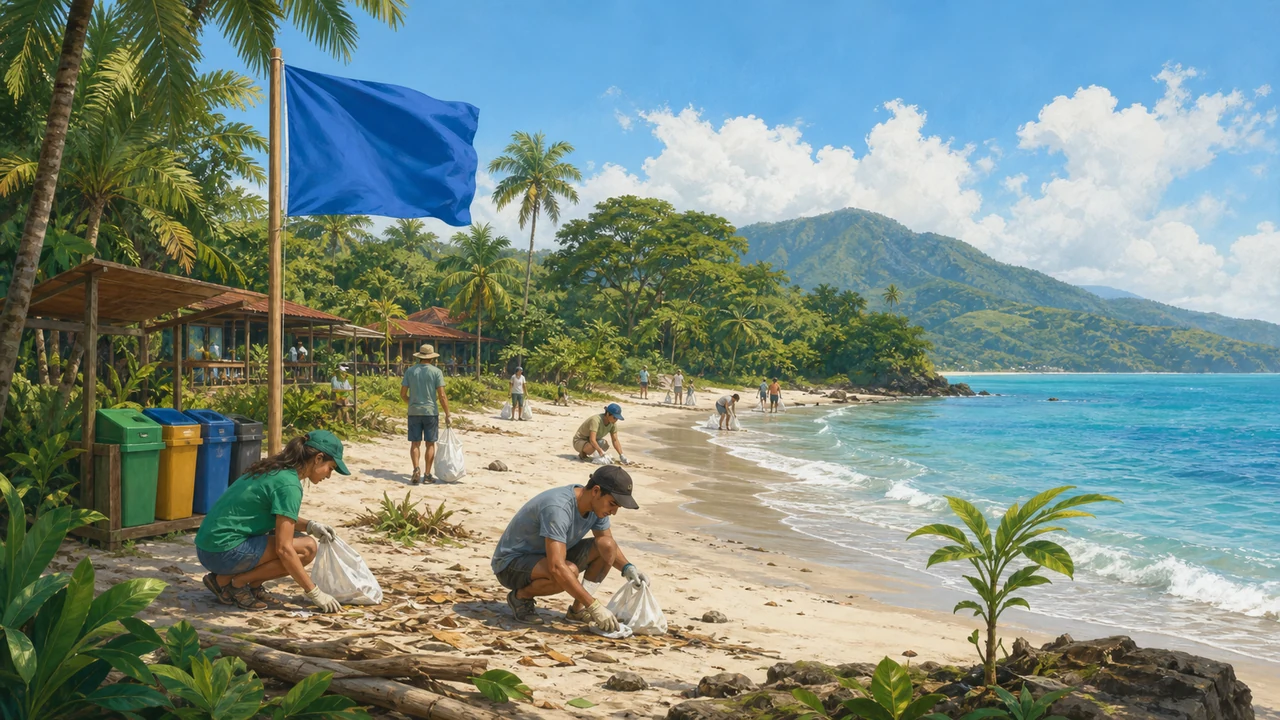
Costa Rica’s ability to provide clean drinking water from natural tropical watersheds is deeply tied to its commitment to environmental protection. The country protects more than 25% of its territory as national parks, wildlife refuges, and other reserves — and many of those protected areas are the headwaters for the rivers and aquifers that feed the municipal water supply.
The Ecological Blue Flag Program (Bandera Azul Ecológica), managed by Costa Rica’s Ministry of Health, awards recognition to communities, beaches, and watersheds that maintain high environmental and water-quality standards. Drinking-water categories within the program reward municipalities that consistently deliver potable water meeting strict criteria — an incentive that has helped drive continuous improvement across the system.
This connection between sustainable land use and safe drinking water is one reason environmental advocates point to Costa Rica as a model: protecting forests is not just about biodiversity — it is about maintaining the rain-catchment systems that keep taps running cleanly for millions of people.
Practical Water Tips for Travelers
A few final points to keep in mind as part of your broader Costa Rica travel tips:
- Ice is generally safe in established restaurants and hotels, which use treated water. Be more cautious at informal roadside stands in remote areas.
- Brushing teeth with tap water is fine in any area where the drinking water is potable.
- Re-fill stations (dispensadores de agua) exist in many supermarkets — bring a reusable bottle and fill it cheaply to reduce plastic waste.
- Health concerns: if you have a compromised immune system or are traveling with very young children, bottled water is a sensible precaution everywhere, even in cities. For more detail on health considerations, see staying healthy, safe and happy in Costa Rica.
- Medical care: should you experience gastrointestinal symptoms during your trip, Costa Rica has a strong health tourism infrastructure with well-equipped private clinics in the San José metropolitan area.
Costa Rica’s potable-water record is a genuine point of national pride and a practical benefit you will appreciate every day of your trip. Drink freely in the cities and resort areas, stay alert in remote zones, and keep yourself well-hydrated — the tropical environment rewards visitors who take care of themselves.
Part of the Development and Services section of tourism.co.cr. For related reading, see traveling to Costa Rica and Costa Rica ecotourism and nature.
Frequently asked questions
Is it safe to drink tap water in Costa Rica?
Yes — in most cities, towns, and major tourist destinations the tap water meets international drinking-water standards and is safe to drink straight from the faucet. Costa Rica is one of only a handful of Latin American countries that can make that claim.
What is AyA and who oversees Costa Rica's water supply?
AyA (Instituto Costarricense de Acueductos y Alcantarillados) is the national water and sewerage authority. It manages the treatment, distribution, and quality monitoring of municipal water throughout the country.
Are there areas where I should not drink the tap water?
Remote rural communities, some Caribbean coastal villages, and isolated areas outside the main water grid may have water that is not treated to the same standard. In those zones, drink bottled or filtered water and ask your accommodation whether the local supply is potable.
How much water should travelers drink per day in Costa Rica?
The tropical climate means you sweat more than you realize — aim for at least two to three liters per day, more if you are hiking, doing adventure activities, or spending time on the beach. Dehydration sets in quickly in humid heat.
Is bottled water widely available in Costa Rica?
Bottled water is sold at supermarkets, convenience stores, sodas (local diners), and gas stations throughout the country. Prices are reasonable, and most restaurants will offer it alongside filtered water options.