The Origins of Tortuguero: From Turtle Hunters to Conservation Icon
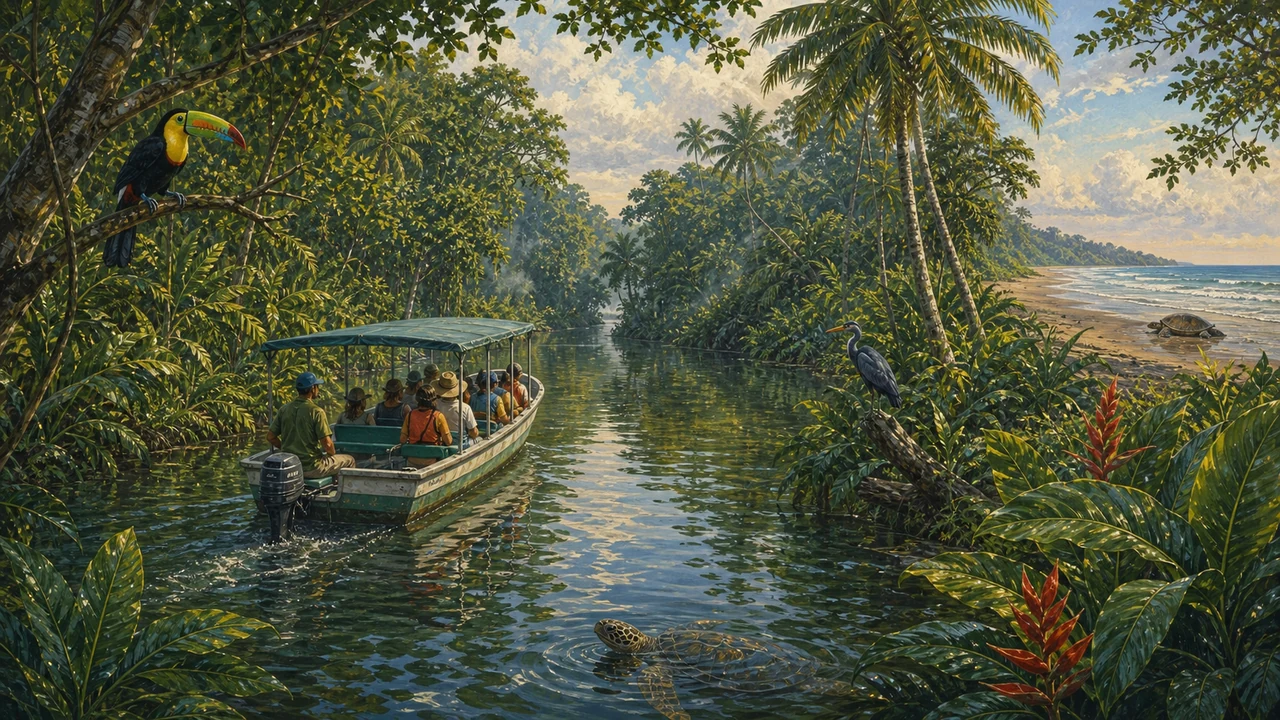 Tortuguero’s story is one of the most compelling in Costa Rica: a remote Caribbean backwater that went from turtle-hunting village and logging outpost to a globally recognized sea turtle conservation and ecotourism destination — all within living memory. Understanding how that transformation happened requires going back to the very beginning, well before the canals, the lodges, and the guided night tours.
Pre-Columbian Roots: A Sparsely Settled Coast
Archaeological evidence from the Tortuguero region is surprisingly thin. The few sites that have been identified — Chaparrón (between the San Carlos and Sarapiquí rivers), Anita Grande, Severo Ledesma, and La Cabaña (between the Jiménez and Parismina rivers) — lie well inland from the coast, suggesting that the Caribbean lowlands were never densely populated in pre-Columbian times.
Researchers believe that inter-group conflicts between family clans and villages, combined with the region’s extreme humidity and the difficulty of preserving food in a tropical environment, pushed early inhabitants toward the cooler, drier highlands. The Caribbean plain was left thinly settled — a pattern that would persist for centuries.
Spanish Colonization and the “Empty Atlantic”
When Spanish explorers pushed east into what is now Limón province, they found no established towns to conquer and no obvious mineral wealth to extract. Hernán Sánchez de Badajoz disembarked at the Sixaola river in 1539 with a small band of soldiers — one of the earliest documented European incursions into the region — but the settlement he attempted to establish never took hold.
 The Spanish Crown was focused on the riches of Peru and Mexico; the Caribbean coast of Costa Rica was an afterthought. Governors referred to it dismissively as the “empty Atlantic.” Without permanent towns, the interior remained essentially unknown to colonial authorities, explored only by soldiers conducting slave raids on indigenous communities for forced labor on the more prosperous Pacific side of the country.
The English further complicated matters by allying with the Zambos-Mosquitos — a mixed-race group descended from shipwrecked Africans who arrived in 1621 and integrated with indigenous communities along the Nicaraguan coast. Together they raided and harassed the Caribbean plains of Costa Rica for generations, discouraging any serious attempt at settlement along the shore.
A French traveler known as the Count of Pergny, writing at the turn of the twentieth century, described the village of Parismina in terms that could just as easily apply to Tortuguero of the same era: a hamlet of roughly two hundred people living on turtle fishing, coconut harvesting, timber cutting, rubber gathering, and cacao cultivation. No port. No road. No outside investment.
A Village Built on Turtles
For most of its recorded history, Tortuguero was defined by a single natural resource: the green sea turtle nesting beaches of Costa Rica’s Caribbean coast. Local residents — a small, mixed community of Afro-Caribbean, mestizo, and indigenous descent — harvested green turtles for meat, oil, and eggs. The animals were so abundant and the village so isolated that the harvest seemed inexhaustible. Timber companies moved through periodically, floating logs down the rivers and canals to the coast. Life was hardscrabble and self-sufficient.
 By the mid-twentieth century, however, the signs of overexploitation were unmistakable. Green turtle populations along the Caribbean were collapsing under pressure from commercial hunting that extended far beyond Tortuguero — vessels from multiple countries were taking turtles in open water and on nesting beaches across the region.
Archie Carr and the Birth of Sea Turtle Conservation
The turning point for Tortuguero came in the 1950s when American zoologist Archie Carr — then a professor at the University of Florida — began visiting the beach to study green turtle nesting behavior. Carr recognized that Tortuguero hosted one of the most significant green turtle nesting sites in the Western Hemisphere, and he understood that without urgent intervention the population would not survive.
In 1959, Carr co-founded the Caribbean Conservation Corporation (CCC) — now the Sea Turtle Conservancy — to fund research and protection at Tortuguero. The program pioneered the use of metal flipper tags to track individual turtles across ocean basins, producing the first data that demonstrated just how far green turtles travel between feeding grounds and nesting beaches. Those scientific findings were fundamental to international conservation agreements that followed.
Crucially, Carr also worked to bring local residents into conservation rather than treating them as adversaries. He understood that the community-based approach to protecting sea turtles was the only model with any chance of long-term success. Former turtle hunters were trained as guides and researchers. Their knowledge of the beach, the animals, and the canals became the program’s greatest asset.
Tortuguero National Park: A Conservation Milestone
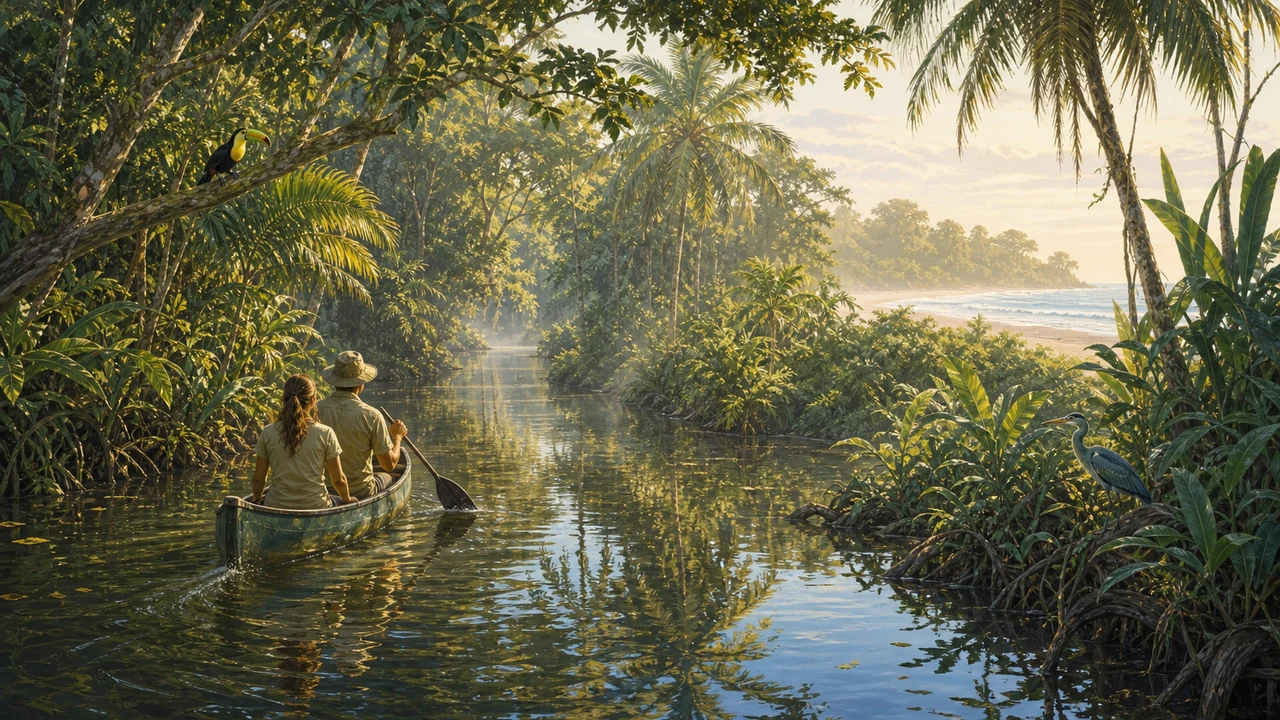 In 1975, Costa Rica established Tortuguero National Park, formalizing protections for the nesting beaches and the vast network of canals, lagoons, and rainforest that make up the surrounding ecosystem. The park encompasses more than 50,000 hectares of terrestrial and marine habitat — a mosaic of lowland rainforest, palm swamps, and interconnected waterways that can only be navigated by boat.
The park’s creation placed Tortuguero at the forefront of a pioneering Costa Rica ecotourism model that the country has since become famous for worldwide. Rather than excluding local communities, the model put guides, boat operators, lodge owners, and researchers at the center of the visitor experience. Today, Tortuguero is regularly cited as one of the clearest examples of how nature tourism and conservation can reinforce each other rather than conflict.
Tortuguero Today: Legacy and Looking Forward
Four species of sea turtle nest at Tortuguero: green, leatherback, hawksbill, and loggerhead. Green turtles — the species Archie Carr dedicated his career to saving — arrive in the largest numbers, with thousands nesting each season between July and October. The Sea Turtle Conservancy continues operating the same research station Carr established, maintaining one of the longest-running wildlife monitoring programs in tropical conservation history.
The village of Tortuguero itself has grown into a small but lively community oriented almost entirely around nature tourism. Arriving visitors still come by boat or small aircraft — there is no road — which keeps the experience intimate and the environmental footprint relatively contained. Lodges range from simple guesthouses to well-appointed eco-lodges, and guided canal tours offer exceptional birdwatching alongside mammals, reptiles, and a botanical richness typical of Costa Rica’s ecotourism and nature destinations.
Tortuguero’s arc — from forgotten colonial backwater to international conservation landmark — mirrors Costa Rica’s broader story. The country that abolished its army in 1948 and redirected resources toward education and the environment found in places like Tortuguero a model for how a small nation could punch far above its weight on the world stage. More than a quarter of Costa Rica’s territory is now protected, and Tortuguero remains one of the most vivid examples of why that commitment matters.
For travelers who want to understand the deep roots of Costa Rica’s national parks system and the conservation ethic that underlies it, there is no better place to start than the turtle beaches of Tortuguero — and the unlikely chain of events that brought them under protection.
Frequently asked questions
Who founded Tortuguero National Park?
The park was formally established in 1975, but its creation was driven largely by the work of American biologist Archie Carr, who began studying and protecting green sea turtles at Tortuguero in the 1950s. His Caribbean Conservation Corporation (now Sea Turtle Conservancy) laid the scientific and political groundwork that led to protected-area status.
Why was the Tortuguero region so sparsely populated historically?
A combination of factors kept the area thinly settled: dense rainforest, frequent flooding, difficulty storing food in the humid climate, inter-group conflicts that pushed earlier inhabitants toward the mountains, and — after the Spanish arrived — slave raids and pirate activity along the Caribbean coast.
What was Tortuguero before it became a national park?
For centuries Tortuguero was a small, isolated community whose residents survived by hunting green turtles for meat and eggs, harvesting coconuts, cutting timber, and collecting rubber and cacao. The village had no road access; canals and the sea were the only routes in and out.
What is the Sea Turtle Conservancy and what does it do at Tortuguero?
The Sea Turtle Conservancy (originally the Caribbean Conservation Corporation, founded by Archie Carr) operates a long-running tagging and research program at Tortuguero. It monitors nesting green, leatherback, hawksbill, and loggerhead turtles and supports community-based conservation and visitor education.
When is the best time to see sea turtles nesting at Tortuguero?
Green turtles nest mainly from July through October, with peak activity in August and September. Leatherbacks arrive earlier, from March through July. Guided nighttime beach tours are required inside the national park — visits are strictly regulated to protect nesting females and hatchlings.