Víctor Cañas: Costa Rica's Master of Tropical Modernism
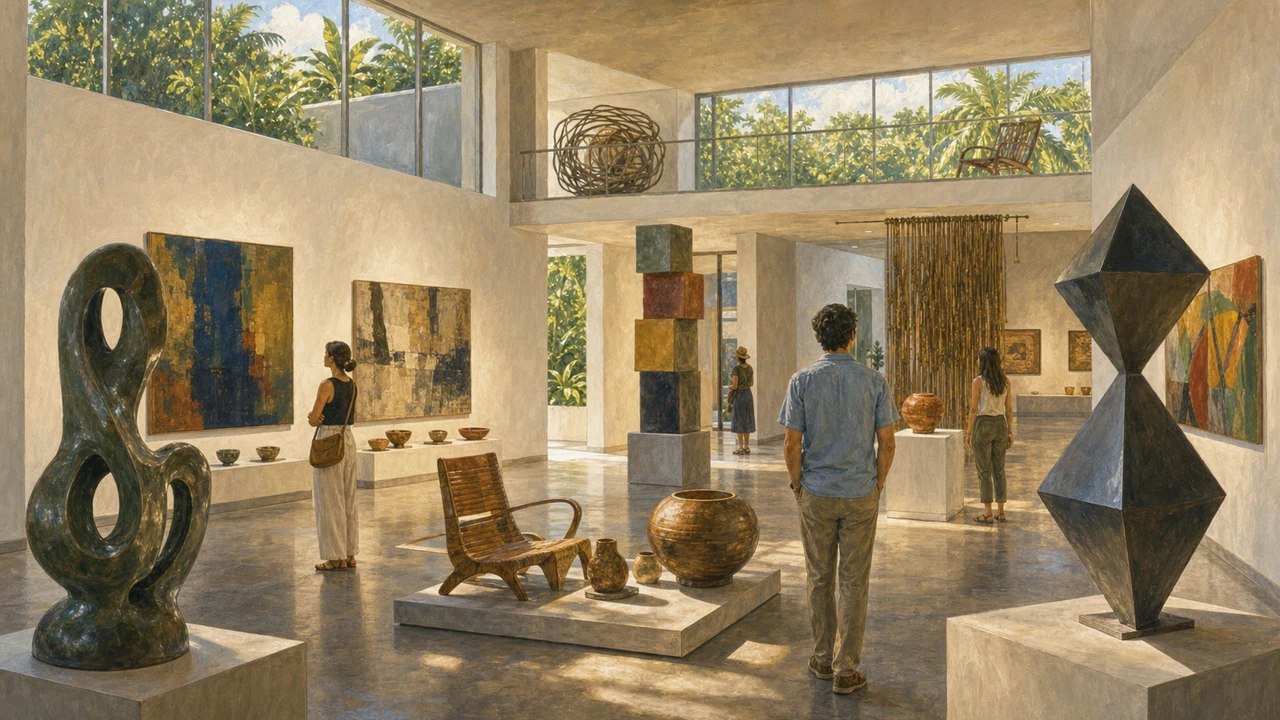 Víctor Cañas is one of Costa Rica’s most celebrated contemporary architects, recognized across Central America and beyond for homes and spaces that treat the tropical landscape not as backdrop but as building material. His designs — clean-lined, light-filled, and structurally precise — achieve what many visitors notice the moment they encounter them: the sensation that inside and outside are a single room, divided only by the breeze.
In a country where the natural environment shapes daily life as powerfully as any human structure, Cañas has built a body of work that answers the land on its own terms.
A Philosophy Rooted in Harmony
Architecture, in Cañas’s view, is “mainly an organized space that gives shelter to a harmonious entity.” That deceptively simple idea drives everything from the siting of a building on a hillside to the angle at which morning light falls across a living-room floor.
His signature approach — blending modernist structure with Costa Rica’s tropical environment — appears throughout his residential and institutional work. Walls of glass open to rainforest canopy. Roof overhangs are calibrated for shade and rain. Natural materials sit alongside steel and concrete without apology. The result is architecture that feels both rigorously designed and entirely at ease in its surroundings.
He describes the ideal built environment as “practical, yet organized, poetry” — a phrase that captures the dual demand his work places on itself: functional enough to live in, beautiful enough to linger in.
Education and International Formation
 Born in San José, Cañas pursued his architectural education abroad, earning both undergraduate and graduate credentials in Mexico before extending his studies to the United Kingdom. Those years outside Costa Rica gave him fluency in international modernist traditions while sharpening his eye for what makes tropical settings distinct from European or North American contexts.
He later returned to the UK to serve as Consul at the Costa Rican Embassy in London — an unusual combination of diplomatic and creative careers that speaks to the breadth of his professional life.
As a visiting professor and lecturer, he has brought his perspective to universities in Panama, Venezuela, Japan, and the United States, among others. Since 1989, he has held a professorship in architectural design at the University of Costa Rica, where he has shaped successive generations of Costa Rican architects.
Award-Winning Practice
The awards attached to Cañas’s name are a reliable index of how his peers regard his work across the region.
His recognition includes:
- Gold medal, Central American and Caribbean Architecture Triennial (Panama) — the top honor at a competition that draws the strongest contemporary work from across the isthmus and Caribbean basin
- Best steel construction, Architecture Biennial, San José — recognizing innovative structural and material use in a building that pushed the limits of what steel-frame residential design could achieve in a tropical climate
- Grand prize in design, Architecture and Urbanism Biennial, San José — awarded on multiple occasions, underlining the consistency of his output rather than a single breakthrough moment
- Honorary member, American Institute of Architects College of Fellows — an international designation that places him among architects recognized for exceptional contributions to the profession
These honors span national and international juries, suggesting that contemporary Costa Rican residential architecture in the Cañas style registers as significant well beyond the country’s borders.
Indoor-Outdoor Living as a Design Principle
 The concept of indoor-outdoor living in Costa Rican homes is often discussed in real estate and travel contexts, but Cañas approaches it as a structural and spatial problem rather than a decorating preference.
In his residential projects, landscapes and interior volumes are designed as a continuous whole. The view from a kitchen, the path from bedroom to garden, the relationship between a covered terrace and the tree canopy beyond — these are deliberate spatial sequences, not afterthoughts. Textures, lines, and forms “blur” across the threshold, as he puts it, so that the boundary between constructed space and living landscape becomes genuinely ambiguous.
This approach has influenced how premium residential architecture has evolved across Costa Rica, particularly in the Central Valley and along the Pacific coast, where hillside homes designed to maximize natural ventilation and views have become a recognizable local building type.
Visitors interested in Costa Rica real estate often encounter the Cañas aesthetic even without knowing the name behind it — the style has been widely imitated, though rarely matched in its rigorous integration of site, structure, and landscape.
Cañas Among Costa Rica’s Architectural Generation
Cañas belongs to a generation of Costa Rican architects who looked outward for technical and formal training while finding their most compelling subject matter at home. His contemporary Bruno Stagno explored related territory from a different angle — Stagno’s work engaging more explicitly with pre-Columbian and vernacular forms, while Cañas pursued a cooler, more abstract modernism. Together they represent the breadth of serious contemporary architecture in Costa Rica.
 Both figures emerged in a cultural context shaped by Costa Rica’s art and culture broadly — a small country that has historically produced architectural, artistic, and intellectual work out of proportion to its size. The University of Costa Rica, where Cañas has taught for decades, has been a consistent incubator for that output.
For travelers curious about the built environment alongside Costa Rica’s ecotourism and nature, the architecture conversation is increasingly part of what makes the country worth studying. Private homes, boutique hotels, and eco-lodges designed by architects influenced by the Cañas school make the integration of architecture with tropical landscape visible even to visitors who are not looking for it.
Experiencing Costa Rican Architecture
Most of Cañas’s residential work is private, as is typical of high-end residential practice anywhere. His influence, however, shows up in the broader built environment of San José’s wealthier suburbs, in hillside retreats across the Central Valley, and in the design sensibility of upscale eco-lodges that have become a signature of Costa Rican ecotourism.
Architecture tours in San José occasionally include examples of serious contemporary residential work; asking a local guide or a real estate professional about modernist examples is the most reliable way to find buildings in this tradition. The University of Costa Rica’s architecture faculty building and campus are also worth a visit for anyone interested in how the country’s design culture has expressed itself institutionally.
For broader context on the country’s cultural life, the Costa Rica art and culture section of this site covers everything from pre-Columbian heritage to contemporary visual arts — all part of the same conversation about what Costa Rica makes and values.
Frequently asked questions
What is Víctor Cañas best known for?
Víctor Cañas is best known for designing contemporary Costa Rican homes and spaces that dissolve the boundary between interior living and the surrounding tropical landscape. His work emphasizes harmony between built form and natural environment, blending modernist geometry with lush local settings.
Where did Víctor Cañas study architecture?
Cañas completed both undergraduate and graduate study abroad, spending time in Mexico and later in the United Kingdom, where he developed expertise across architectural design, construction, and urban planning.
Has Víctor Cañas won international architecture awards?
Yes. His work has received national and international recognition, including the gold medal at the Central American and Caribbean Architecture Triennial held in Panama, best steel construction at a San José Architecture Biennial, and the grand prize in design at the Architecture and Urbanism Biennial on multiple occasions.
Is Víctor Cañas involved in architecture education?
Yes. Cañas has served as a professor of architectural design at the University of Costa Rica and has been a visiting lecturer at universities across Latin America, Japan, the United States, and elsewhere.
How does Víctor Cañas describe his design philosophy?
He describes architecture as 'practical, yet organized, poetry' — spaces that give shelter to a harmonious entity. His buildings treat landscape and interior as inseparable, using texture, line, and form to blur the wall between inside and outside.