Pre-Columbian Gold Museum Costa Rica — Eternal Allure
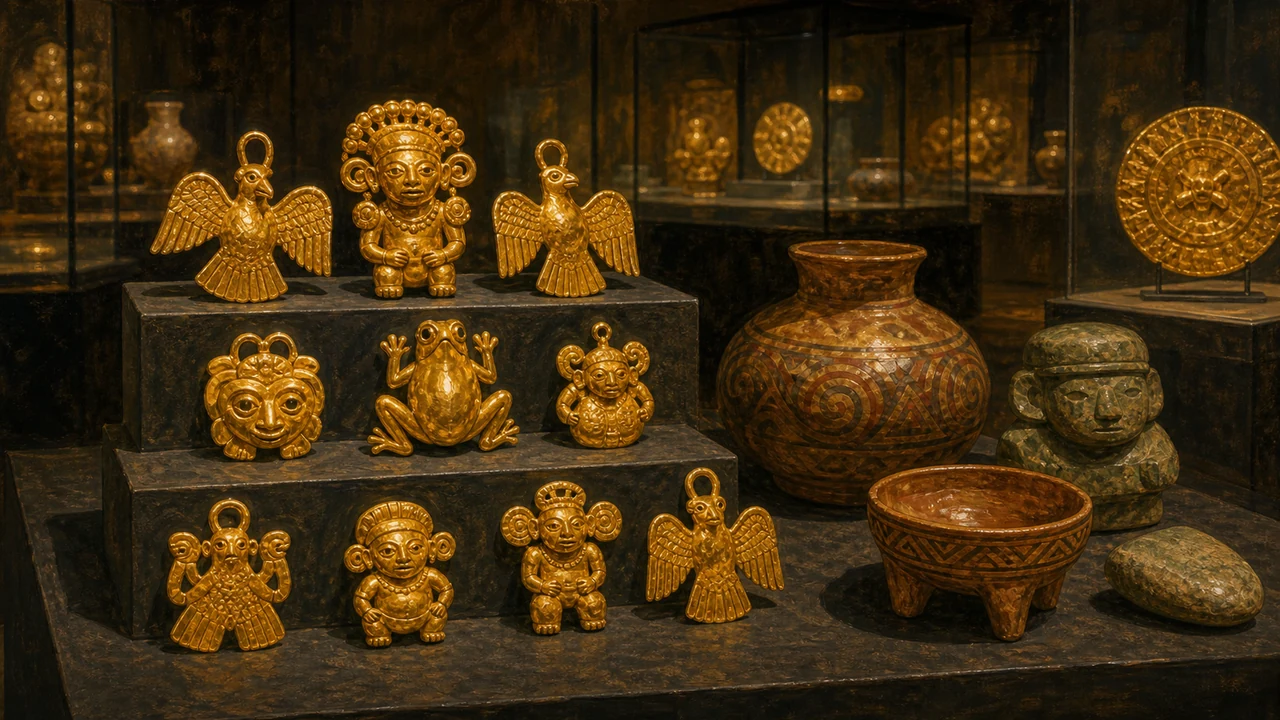 The Pre-Columbian Gold Museum in San José (Museo del Oro Precolombino) holds one of the largest collections of ancient goldwork in the Americas — and seeing it requires descending, literally, into another world. From the classical elegance of the National Theater at street level you step underground, three floors down through a softly lit, inverted-pyramid structure beneath the Plaza de la Cultura. It is one of the most atmospheric museum experiences in all of Costa Rica.
Gold Arrives in Costa Rica
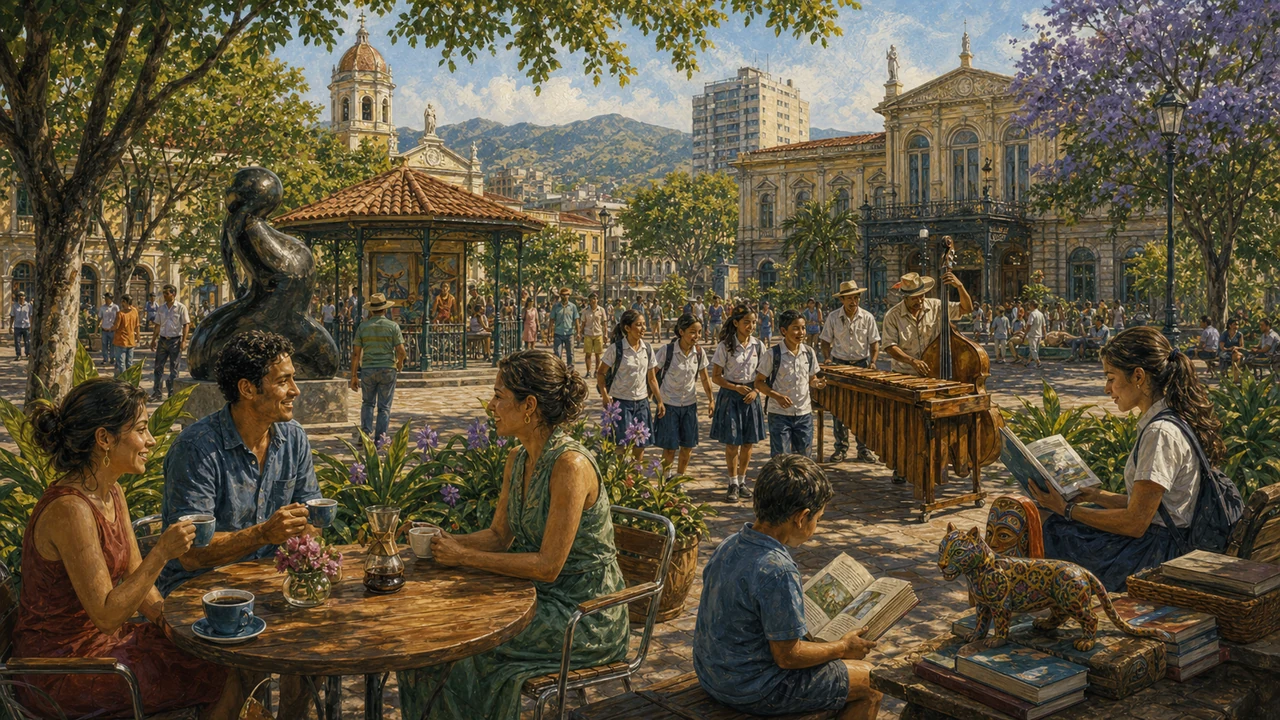 Gold metallurgy reached Costa Rica around 500 A.D., arriving from South America along trade routes that connected the isthmus to Colombia and Peru. Early designs clearly reflect those southern influences — broad, flat pectorals and simple wire ornaments echo Andean prototypes. But Costa Rican goldsmiths were not mere imitators. Within a few generations they absorbed those imported forms and fused them with a local visual language already developed through centuries of jade carving, stonework, and ceramic art.
The result was something entirely new. By roughly 700–800 A.D. the workshops of the Diquís Delta, the Central Highlands, and the Atlantic watershed were producing pieces of astonishing technical sophistication and wild inventive energy — a style with no parallel anywhere else in the pre-Columbian world.
The Lost-Wax Masters
The primary technique was lost-wax casting (cire perdue) — an intricate process in which a goldsmith first sculpted the desired form in beeswax, packed it in a clay-and-charcoal mold, fired the mold to incinerate the wax, then poured molten metal into the resulting void. Once cooled, the clay was broken away to reveal the finished piece. Every casting was unique; the original wax model was destroyed in the process.
What makes Costa Rican lost-wax goldwork remarkable is the complexity artisans achieved within that constraint. Pendants with articulated extensions — bird-mask heads that actually pivot, dangling plaque “mobiles” that catch the light as they sway — required multiple interlocking casts assembled into a single object. Harpy eagle figures with spread wings and braided tail feathers, crocodilian creatures whose jaws open to reveal a human figure inside, tiny golden frogs no larger than a thumbnail: all were produced with a level of craft that modern goldsmiths find difficult to replicate even with contemporary tools.
Animals, Shamans, and Symbols of Power
 The iconography of pre-Columbian goldwork in Costa Rica is a coded cosmology. Animals were not decorative choices — they were symbols of power, transformation, and the spiritual forces that governed life. The harpy eagle ruled the sky world; the crocodilian (often called “alligator” in older texts) embodied the watery underworld; the frog signified rain and fertility. Shaman figures wear bird masks precisely because the shaman’s role was to move between worlds — sky, earth, and the realm of ancestors.
Many of the most celebrated pieces in the collection depict shaman-animal transformation figures: half-human forms melting into jaguar, eagle, or serpent. Anthropologists interpret these as representations of the altered states that healers entered during ritual, when they were believed to literally become the animal spirit. The minute golden peccaries — a herd of tiny wild pigs that must once have jingled from a chief’s belt — reflect the same animist universe with a touch of playful humor that still reads clearly across fifteen centuries.
Gold was not currency in this society. Pieces were crafted primarily for exchange between high-ranking healers and chieftains, and their value was social and sacred rather than economic. Wearing a great pectoral of repoussé gold marked a warrior’s rank; a tiny pendant shaman figure was the calling card of a spiritual practitioner. When a great man died, his gold went with him — which is how so much has survived.
The Museum Itself — Architecture and Experience
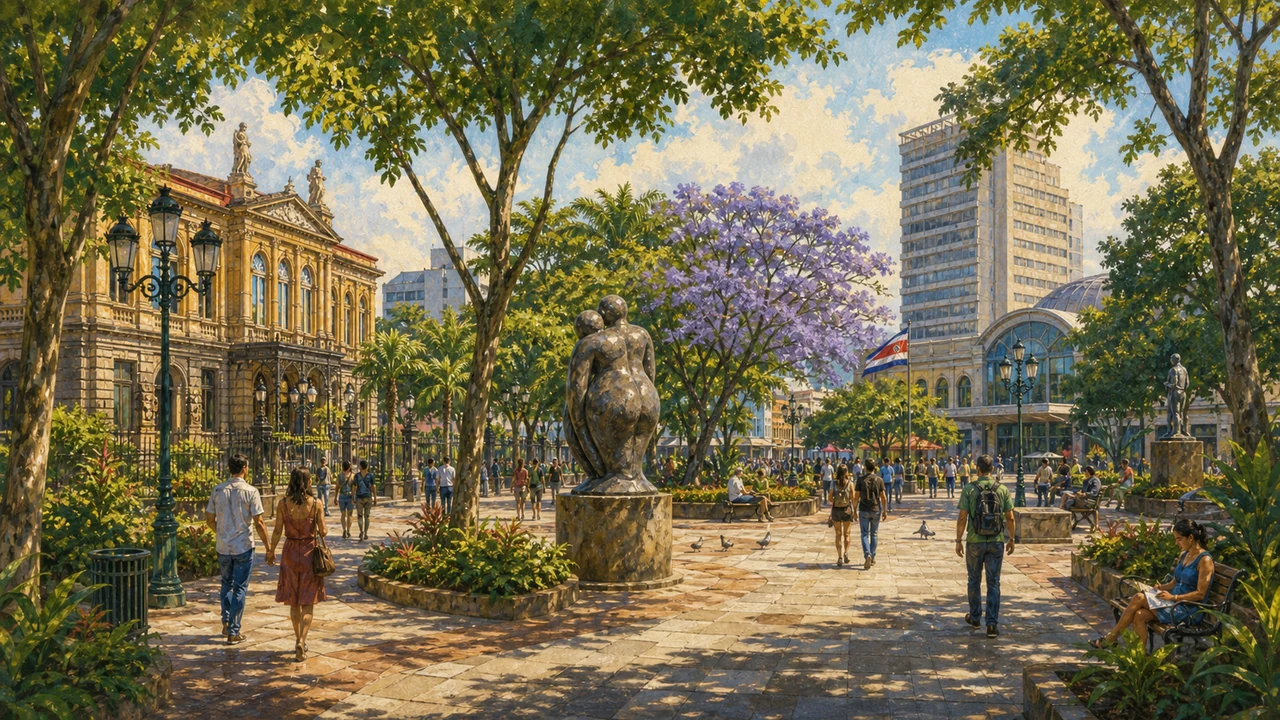 The decision to build the Museo del Oro Precolombino underground was both practical and poetic. Digging beneath the Plaza de la Cultura in downtown San José preserved the city’s main public square above while creating a vault-like sense of sanctuary below — appropriate for treasures that had spent centuries buried with their owners. The structure, inaugurated in 1985 and administered by the Banco Central de Costa Rica, evolves as an inverted pyramid; a sweeping spiral staircase carries visitors down three floors to the heart of the collection.
The galleries are intentionally subdued — neutral-tone walls, careful spot-lighting, interior gardens that soften the underground atmosphere. Each piece is presented against a dark background so the gold catches every photon. The effect is exactly right: these objects were made to gleam, and they do.
The museum shares its underground complex with a coin museum and rotating contemporary exhibitions. Above ground, the Plaza de la Cultura connects to the National Theater — together they form the cultural nucleus of San José’s downtown historic center, walkable within minutes of the city’s main hotels and the bustling Mercado Central.
Pre-Columbian Gold and Jade — A Complete Picture
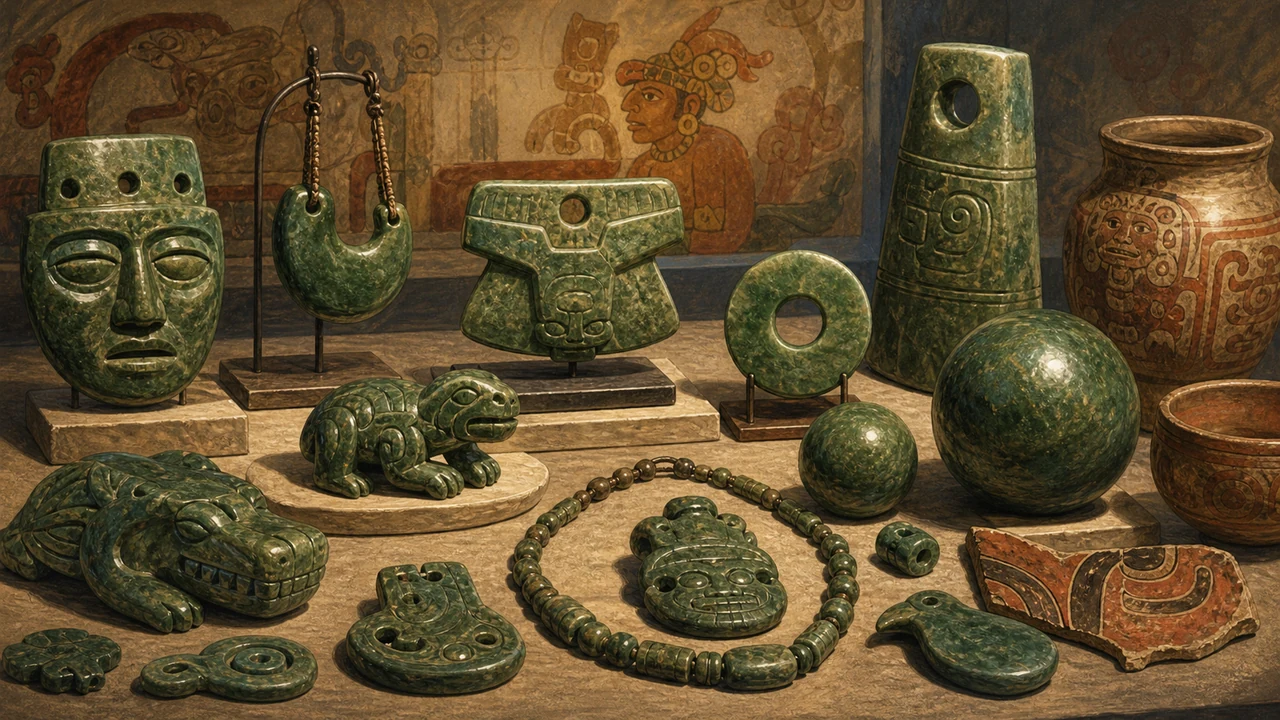
No visit to the Gold Museum is complete without also seeing Costa Rica’s equally extraordinary pre-Columbian jade tradition. Jade preceded gold by several centuries among the indigenous cultures of the isthmus, and the two materials served related but distinct roles: jade was the prestige material of the Atlantic watershed chieftains; gold was dominant in the southern Diquís region. Together they illuminate the full complexity of ancient indigenous cultures in Costa Rica — sophisticated societies with long-distance trade networks, specialist craftspeople, and rich ceremonial lives, all of which came to an abrupt end with European contact in the sixteenth century.
The Museo del Jade, also in San José, houses the largest collection of pre-Columbian jade in the Americas. Pairing both museums in a single morning gives you one of the most concentrated encounters with ancient American art available anywhere.
Planning Your Visit
The Museo del Oro Precolombino sits directly beneath the Plaza de la Cultura, adjacent to the National Theater in central San José. It is open Tuesday through Sunday; check current hours and admission fees on the Banco Central’s official website before visiting, as these are updated periodically. Photography is generally permitted without flash. The museum is air-conditioned — a welcome refuge on a warm San José afternoon.
Most visitors arrive in the capital through Juan Santamaría International Airport (SJO), about 18 kilometers northwest of downtown. From there, taxis, ride-share apps, and the Alajuela–San José bus route all reach the Plaza de la Cultura easily. See our Costa Rica travel tips for getting around the capital.
For the broader cultural context — painted oxcarts, Boruca masks, marimba, and more — explore the full Costa Rica art and culture section.
Frequently asked questions
Where is the Pre-Columbian Gold Museum located?
The museum — officially the Museo del Oro Precolombino — sits entirely underground beneath the Plaza de la Cultura in the heart of downtown San José. The entrance is at street level near the National Theater, and the collection unfolds across three subterranean floors.
What kinds of gold artifacts are on display?
The collection includes animal effigy pendants (eagles, frogs, jaguars, crocodilians), shaman figures with articulated bird-mask heads, repoussé warrior pectorals, and tiny ceremonial plaques. Many pieces are unique to Costa Rica and found nowhere else in the pre-Columbian world.
When was the Gold Museum opened?
The museum was inaugurated in 1985 and is administered by the Central Bank of Costa Rica (Banco Central). It has since been expanded and modernized several times.
How does pre-Columbian gold compare to Costa Rica's jade tradition?
Both traditions flourished among the same indigenous cultures, but jade predates gold by several centuries and carries distinct spiritual meaning. The two collections complement each other beautifully — the Jade Museum (Museo del Jade) is also in San José and worth pairing with a Gold Museum visit.
What technique did ancient Costa Rican goldsmiths use?
The primary technique was lost-wax casting (cire perdue): artisans sculpted a model in beeswax, encased it in clay, fired the mold to burn out the wax, then poured molten gold into the void. This allowed extremely fine detail — articulated limbs, textured feathers, interlocking parts — that still astonishes metallurgists today.