Costa Rica Crafts and Artisanal Traditions
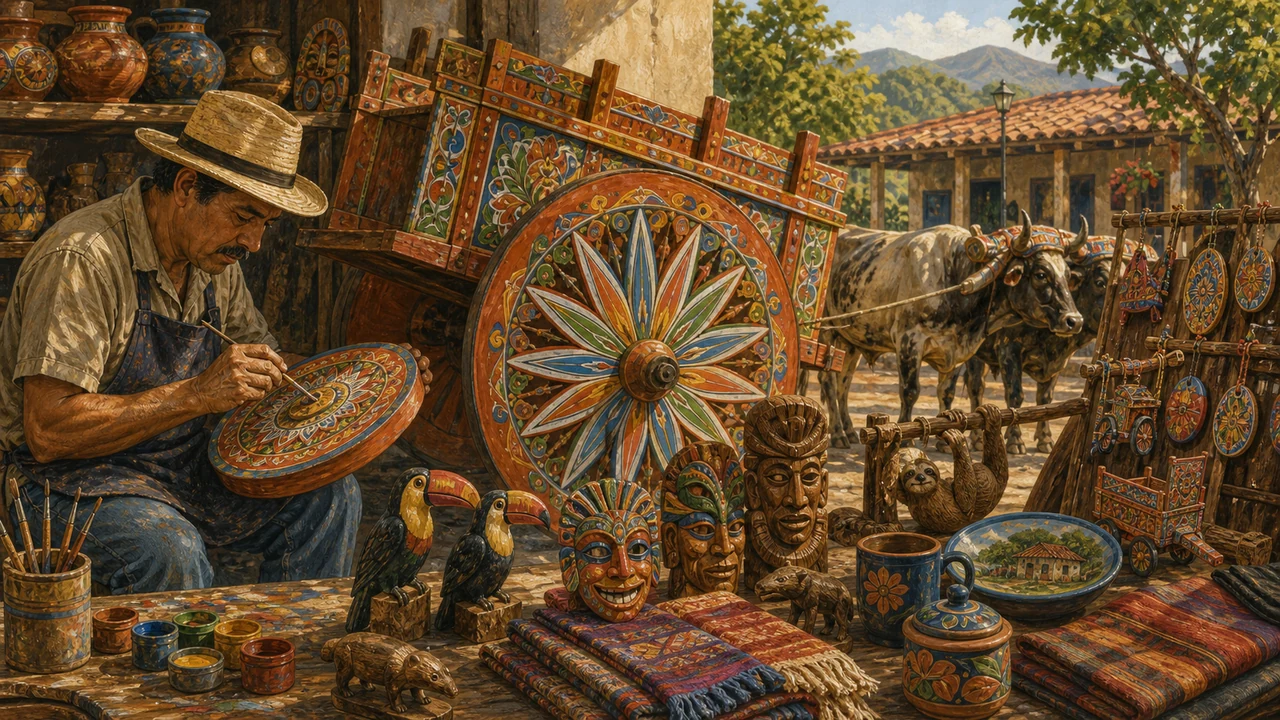
Costa Rica has a compact but highly distinctive craft culture. Rather than an endless list of mass-produced souvenirs, the country offers a small set of traditions that are worth seeking out because they are still made by hand, still tied to place, and still supported by working communities.
The best known examples are the painted oxcarts of Sarchi, the Chorotega pottery of Guaitil, the Boruca masks of the southern Pacific zone, and careful woodwork from artisans who work with tropical hardwoods and coffee wood. These are the pieces that tell the story of Costa Rican identity in a form you can actually bring home.
Sarchi and the painted oxcart tradition
No craft is more emblematic of Costa Rica than the carreta sarchiceña, the hand-painted oxcart produced in the mountain town of Sarchi northwest of San Jose. The tradition is so deeply embedded in national identity that UNESCO recognized it as Intangible Cultural Heritage of Humanity.
Painted oxcarts made in Sarchi are decorated with geometric medallions and floral motifs in bright oranges, whites, reds, and blues. The original purpose was practical, not decorative. Farmers used color to identify carts at a distance, and over time that functional marking system became an art form.
Today visitors can buy miniature carts, wall pieces, serving trays, furniture, and full-size carts built to order. The best workshops are open to the street, so you can see the painting and assembly process while you shop.
Chorotega pottery in Guaitil
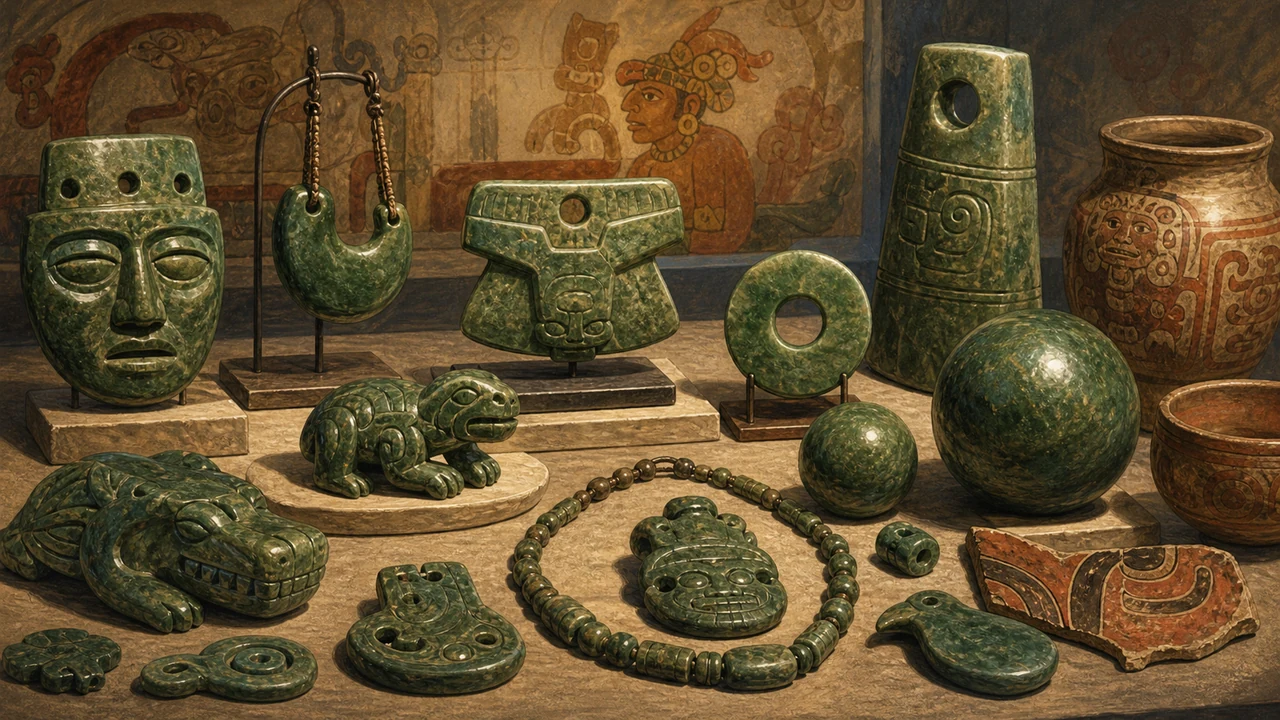
On the Nicoya Peninsula, the village of Guaitil keeps one of the strongest pottery traditions in Central America alive. Chorotega artisans build vessels by hand, using local clay, coiling methods, burnishing, and outdoor firing in ways that connect directly to pre-Columbian techniques.
The best pieces are not just decorative. They carry the visual language of ancient Costa Rican ceramics and still feel rooted in daily use. Guaitil is an easy place to understand how a craft tradition can remain culturally serious while still serving visitors well.
Boruca masks and indigenous craft
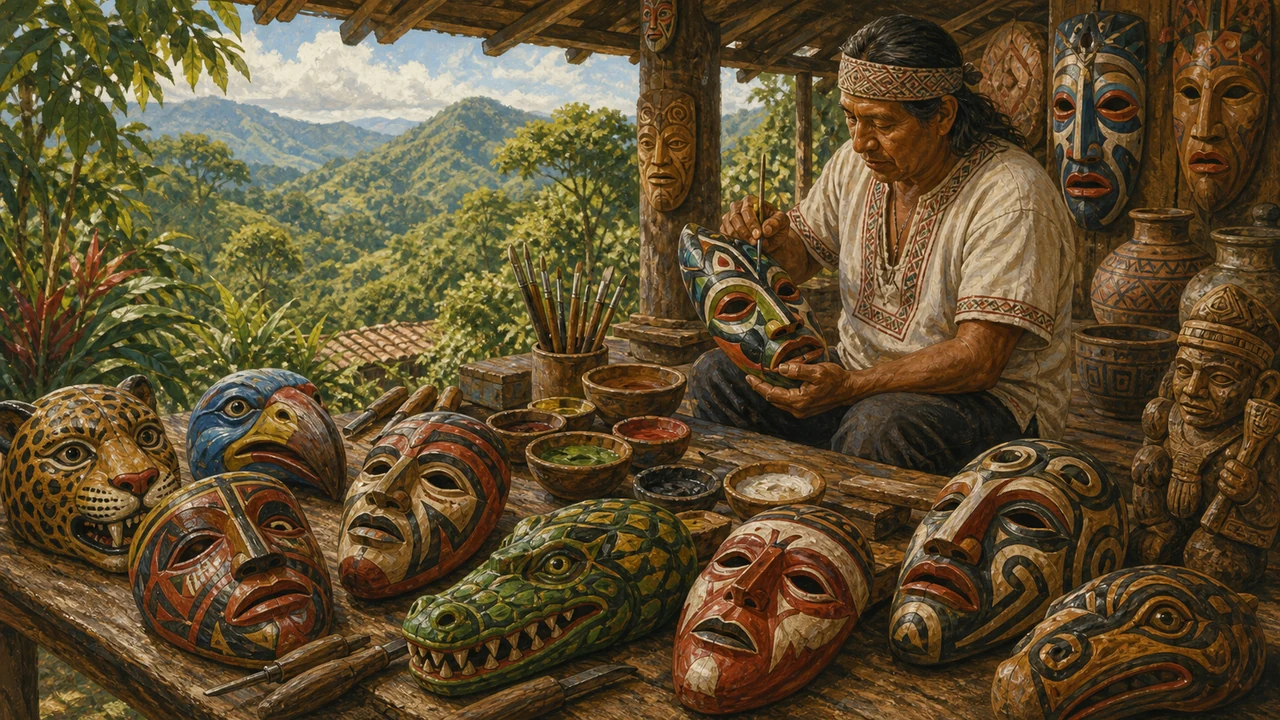
The Boruca people of the southern Pacific zone produce some of the country’s most distinctive indigenous art. Their carved masks are linked to the Fiesta de los Diablitos, a ritual that blends history, resistance, and community memory.
Authentic masks are made by hand and are best purchased directly from Boruca artisans or from trusted indigenous cooperatives. The same region also produces gourds, small carved figures, and other handmade items.
Woodwork, leather, and coffee wood
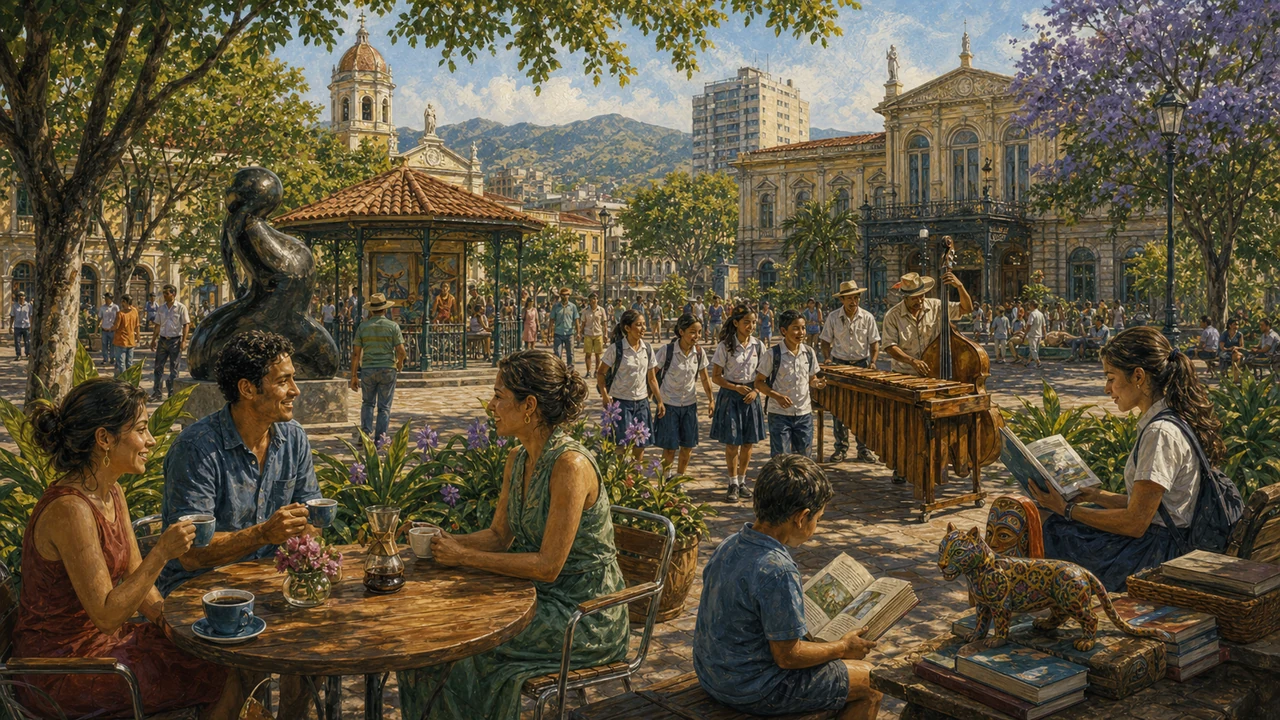
Costa Rican crafts also include woodturning, leather goods, and practical home items. Cocobolo is the best-known hardwood, but coffee wood products are often more accessible and tie directly to the country’s agricultural life. Reputable sellers should be able to explain where the wood came from and how it was sourced.
Leather belts, bags, wallets, and hand-tooled accessories are widely available in the Central Valley and can be a practical purchase if the workmanship is good.
Where to shop
- Sarchí — the definitive stop for painted oxcarts and tropical woodwork. Workshop visits are free and informative.
- Guaitil — best Chorotega pottery; combine with a Guanacaste itinerary.
- Moravia, San José — leather goods, general artesanía, convenient from the capital.
- Plaza de la Democracia market, San José — open-air stalls with a wide variety of crafts; quality varies, but bargaining is expected and prices are competitive.
- Boruca community — for authentic indigenous masks; best accessed as part of a southern Pacific road trip.
- Airport shops — limited selection and higher prices, but useful for last-minute purchases of miniature oxcarts and coffee-wood items.
For a broader cultural itinerary, explore the art and culture section and plan around villages rather than shops whenever possible. Buying at the source keeps the money local and gives you a much better sense of how these traditions are made.
Frequently asked questions
What is Costa Rica's most iconic craft?
The painted oxcart from Sarchi is the country's best-known folk object. It is both a national symbol and a strong example of living artisan tradition.
Where should I buy authentic Chorotega pottery?
Guaitil in Guanacaste is the most important place to buy Chorotega pottery directly from artisans who still use hand-building methods and traditional motifs.
Are Boruca masks authentic?
Yes. Genuine Boruca masks are carved by indigenous artisans, usually in the Boruca community or through trusted cooperatives. Buying direct supports the people who keep the tradition alive.
What is cocobolo wood used for?
Cocobolo is a dense hardwood used for bowls, boxes, furniture, and decorative pieces. Responsible sellers should be able to explain where the wood came from.
Where is the best craft shopping near San Jose?
Moravia, downtown San Jose, and the Plaza de la Democracia area are the easiest places for general craft shopping. For the strongest cultural experience, go directly to Sarchi, Guaitil, or Boruca.