Birdwatching in Costa Rica: 900+ Species Guide
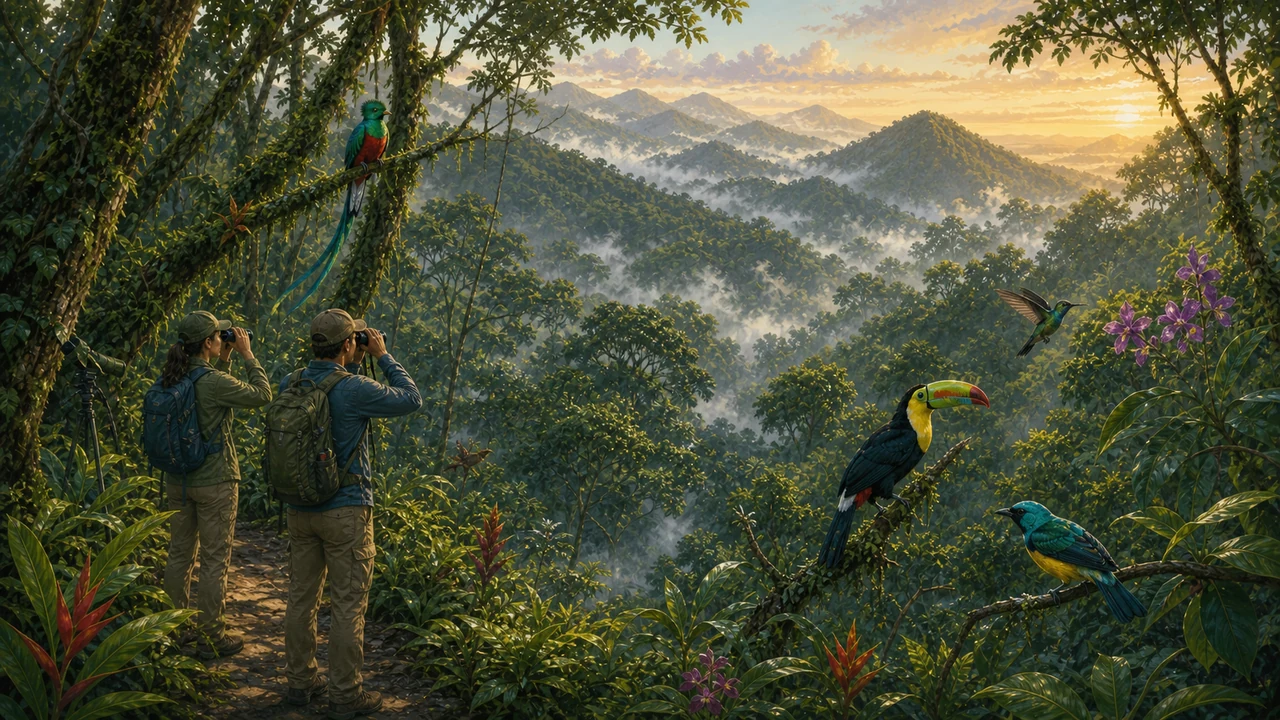 Costa Rica is one of the world’s premier birdwatching destinations, recording more than 900 species in a country roughly the size of West Virginia — more than the United States and Canada combined. That staggering density of avian life, packed into a mosaic of cloud forests, rainforests, mangroves, wetlands, and dry savannas, is why serious birders from every continent put Costa Rica at the top of their life-list trips.
The country protects more than 25% of its territory in national parks, wildlife refuges, and biological reserves, giving birds — and birders — room to thrive. Whether you spend a morning at a cloud-forest lodge or a week exploring multiple Costa Rica national parks, the rewards are extraordinary.
Iconic Species to Look For
Costa Rica’s avian highlights are genuinely spectacular. No trip feels complete without ticking a few of these signature birds.
The resplendent quetzal (Pharomachrus mocinno) is the crown jewel. The male’s iridescent emerald plumage and long, flowing tail feathers have inspired awe for millennia. Found only in highland cloud forests, the quetzal is elusive but reliably present in a handful of well-known sites.
The scarlet macaw is equally unforgettable — crimson, gold, and blue, with a raucous call that echoes through the forest. Pairs and flocks are commonly seen along the Pacific coast.
 Toucans are practically the symbol of Costa Rican wildlife. Five species occur here: the keel-billed toucan, chestnut-mandibled toucan, fiery-billed aracari, collared aracari, and yellow-eared toucanet. All five are routinely spotted at feeders and forest edges. Hummingbirds are equally dazzling — Costa Rica hosts more than 50 species, from the violet sabrewing to the tiny coppery-headed emerald (endemic to Costa Rica’s Caribbean slope).
Other sought-after species include:
- Three-wattled bellbird — the eerie, loud call of cloud-forest canopies
- Bare-necked umbrellabird — a dramatic crested rarity of Caribbean lowlands
- Sunbittern and sungrebe — gems of quiet rivers and streams
- Harpy eagle — rare but possible in old-growth Osa Peninsula forest
- Dozens of tanagers, manakins, antbirds, motmots, and flycatchers
Top Birding Regions
Monteverde Cloud Forest
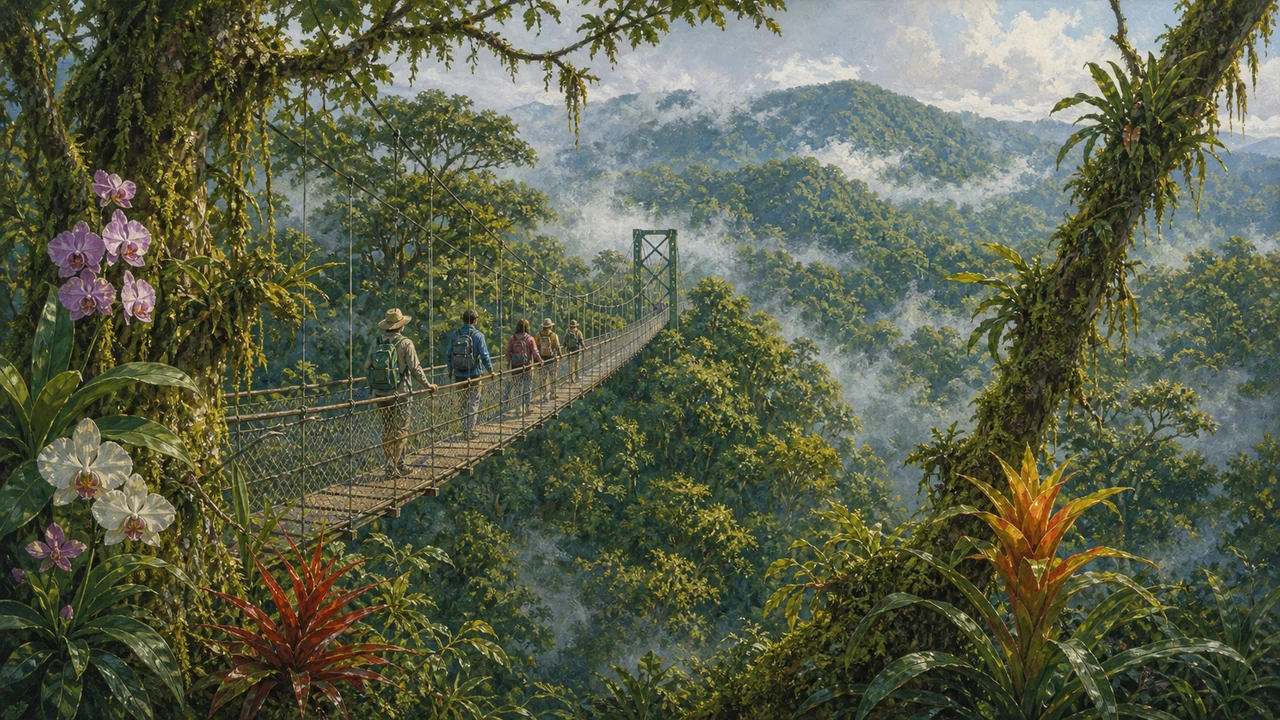 The Monteverde Cloud Forest Reserve and the surrounding private reserves are among the most studied bird habitats in the Western Hemisphere. More than 400 species have been recorded here, including the resplendent quetzal (especially January–June), three-wattled bellbird, bare-necked umbrellabird, and an extraordinary variety of hummingbirds at the feeders maintained by many lodges. Dawn walks through the misty forest with a local guide routinely produce 60–80 species before breakfast.
Savegre Valley / San Gerardo de Dota
The San Gerardo de Dota valley in the Chirripó highlands — home to Los Quetzales National Park — is widely regarded as the best place in Central America to see the resplendent quetzal. The valley sits at around 2,200 meters elevation along the Pan-American Highway. Several family-run lodges here specialize in guided birding and have decades of experience finding quetzals, black guans, and highland endemics like the large-footed finch. Early mornings along the Savegre River are legendary.
Carara National Park
Carara National Park sits at the transitional zone where the dry North Pacific meets the humid Central Pacific — a biological crossroads that produces exceptional bird diversity. It is the closest excellent birding site to San José (approximately 90 minutes), making it ideal for a day trip. Carara is the most reliable place in Costa Rica to see scarlet macaws in large numbers, especially during morning and evening roost flights. The park also hosts crocodiles along the Tárcoles River bridge — a famous roadside wildlife stop just before the park entrance.
Caribbean Lowlands
 The Caribbean slope offers a completely different palette of species. Tortuguero National Park and Barra del Colorado Wildlife Refuge protect vast lowland rainforests and canal systems where species like the great green macaw, snail kite, and boat-billed heron thrive. The Puerto Viejo / Cahuita area is excellent for Afro-Caribbean specialties. Braulio Carrillo National Park, bisected by the highway northeast of San José, gives access to mid-elevation Caribbean forest with minimal travel time.
Osa Peninsula & Corcovado
The remote Osa Peninsula harbors the most intact lowland rainforest in Central America. Corcovado National Park is a genuine frontier birding destination where harpy eagles, scarlet macaws, black-cheeked ant-tanagers (endemic), and yellow-billed cotingas can all be found. The isolation and primary forest quality make this a bucket-list destination for serious listers.
Palo Verde & the Northern Wetlands
Palo Verde National Park protects the largest wetland system in Central America and is a critical stopover for migratory waterfowl. During the dry season, thousands of ducks, herons, ibises, and roseate spoonbills concentrate here. The Cano Negro Wildlife Refuge and the Arenal region add further wetland and forest species to round out a northern itinerary.
Best Seasons for Birding
Birdwatching in Costa Rica rewards visitors year-round, but the two seasons offer different experiences:
- Dry season (December–April): Easier to navigate trails, better visibility with fewer leaves obscuring views, and North American migrants are present (warblers, flycatchers, shorebirds). This is also prime quetzal nesting season (January–May).
- Rainy season (May–November): Resident species breed actively and are more vocal. The forest is lush and atmospheric. Some species — including bellbirds and manakins — are most active and visible during these months. Fewer tourists mean more personal experiences at lodges and in parks.
Planning a Birding Trip
Most dedicated birding itineraries follow a circuit combining 2–3 habitat zones. A classic week might include Carara, Monteverde, and Savegre — covering Pacific coast macaws, cloud-forest quetzals, and highland endemics in one loop.
For the Caribbean slope, a separate itinerary linking Tortuguero, Braulio Carrillo, and the Caribbean lowlands provides a contrasting species set. The Osa Peninsula deserves its own trip if time allows.
Professional nature guides are a major asset. Hiring a certified Costa Rican bird guide makes the difference between a walk in the forest and a deeply educational experience; guides know calls, behavior, and where specific species feed and roost.
For context on Costa Rica’s extraordinary biodiversity — home to roughly 5% of all species on Earth — see our full ecotourism section. You can also read about specific species in our Birds of Costa Rica guide, or explore the wider range of activities and sports available across the country.
Frequently asked questions
How many bird species does Costa Rica have?
Costa Rica has recorded more than 900 bird species — more than the entire continental United States and Canada combined, packed into a country roughly the size of West Virginia. The number continues to grow as new species are confirmed each year.
Where is the best place to see the resplendent quetzal in Costa Rica?
The San Gerardo de Dota valley (Savegre) in the Chirripó highlands is widely considered the premier quetzal destination. Los Quetzales National Park protects much of this cloud forest. Monteverde and the Talamanca Range are also reliable sites, especially during the January–May nesting season.
What is the best time of year for birdwatching in Costa Rica?
Birdwatching is rewarding year-round, but December through April (dry season) is generally easiest because bare branches improve visibility and many migrant species from North America are present. The rainy season (May–November) brings breeding activity and lush forest, and some endemic species are more vocal and visible then.
Do I need a guide for birdwatching in Costa Rica?
A professional naturalist guide is strongly recommended, especially for beginners or anyone targeting specific species. Guides know local bird calls, forest trails, and reliable sighting locations — dramatically increasing what you see. Many lodges in hotspot areas offer dawn birding walks with on-site guides.
Can I see scarlet macaws near San José?
Yes. Carara National Park on the Central Pacific coast, about 90 minutes from San José, is the most accessible site for reliable scarlet macaw sightings. The macaws roost communally and can be seen flying in large, noisy flocks at dawn and dusk. The Osa Peninsula also hosts a large, healthy macaw population.