Santa Rosa National Park: Dry Forest, History & Surf
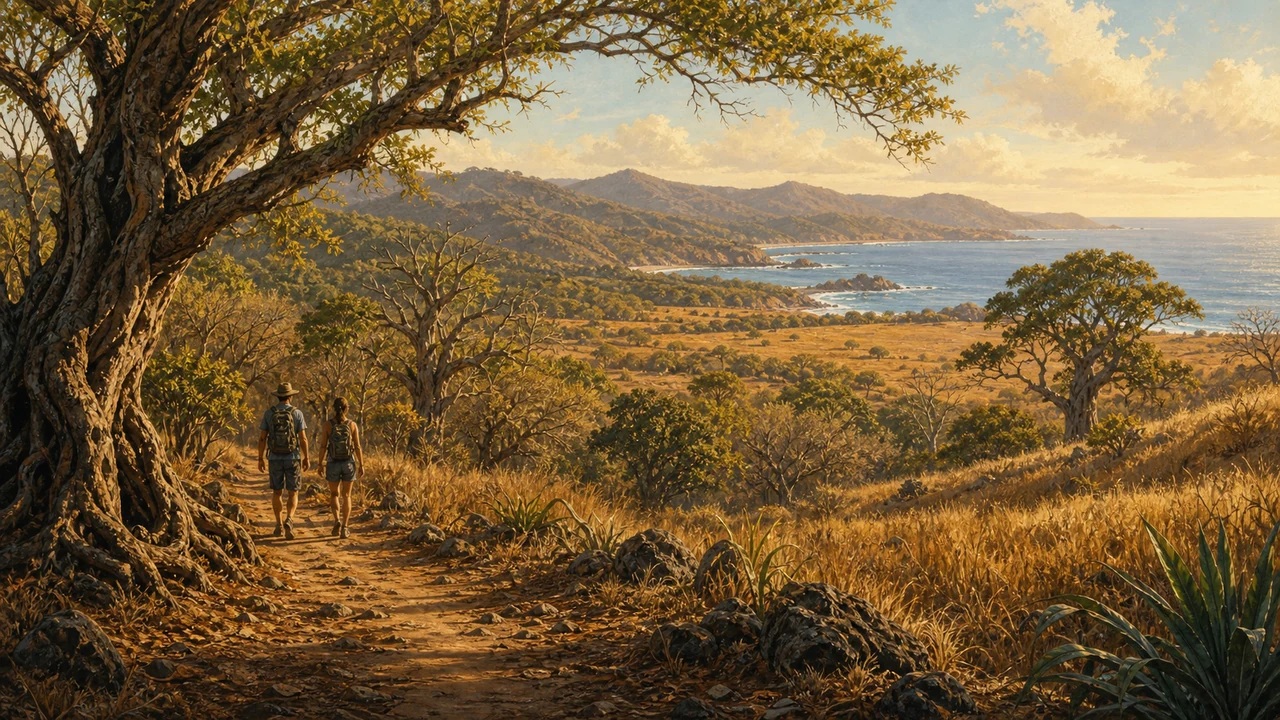
Santa Rosa National Park, anchored in the Guanacaste province of northwestern Costa Rica, protects the largest surviving tract of tropical dry forest in Central America and holds more than four centuries of human history within its boundaries. Part of the UNESCO-recognized Área de Conservación Guanacaste, the park covers roughly 49,500 hectares of savannah, forest, coastline, and wetland — a mosaic of habitats that supports extraordinary biodiversity alongside one of the most storied battlefields in Costa Rican history.
A Battlefield That Shaped a Nation
La Casona, the colonial hacienda at the heart of the park, is where Costa Rica defined itself as a sovereign nation — twice. On March 20, 1856, Costa Rican forces routed the mercenary army of American filibuster William Walker, who had seized Nicaragua and harbored ambitions of annexing Central America to the slave-owning United States. The battle at La Casona stopped Walker’s advance and triggered a broader campaign that eventually led to his defeat and execution.
Nearly a century later, in January 1955, another invasion force crossed from Nicaragua — this time backed by Nicaraguan dictator Anastasio Somoza and a faction of Costa Rican political exiles opposed to President José Figueres Ferrer. A decisive confrontation again occurred at the hacienda, where Costa Rican militia (the army had been formally abolished in 1948, making Costa Rica one of the few countries in the world without a standing military force) repelled the mercenaries after a fierce engagement lasting nearly three hours.
La Casona was rebuilt after a devastating arson fire in 2001 and today houses a small museum. The Monument to the Heroes of 1856 and 1955 stands nearby. Visiting this site is not just a historical detour — it is a window into Costa Rica’s identity as a peaceful democracy that abolished its army and has defended itself through civic will rather than military might.
Two Park Sectors, One Remarkable Landscape
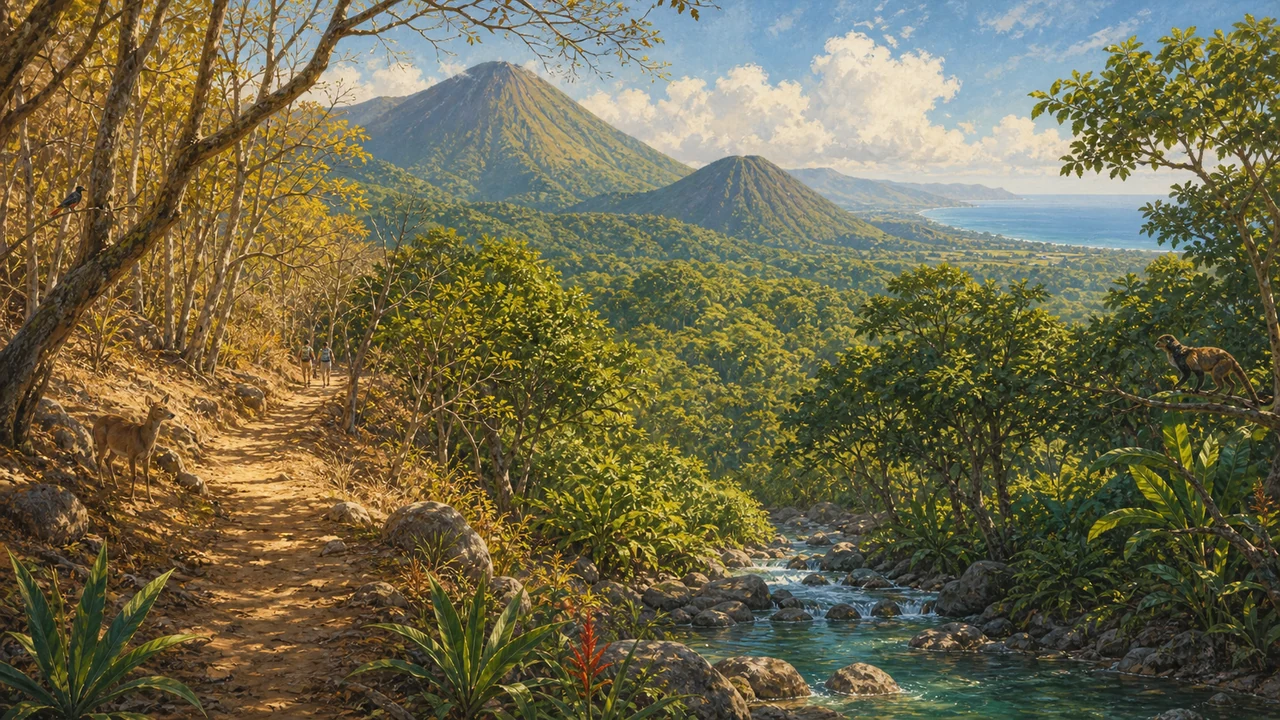
Santa Rosa is divided into two main sectors that together span dramatically different terrain.
Santa Rosa Sector — the original core — is home to La Casona, the main park administration, and the bulk of the protected dry forest. Visitor infrastructure here includes parking, picnic areas, bathrooms, drinking water, camping facilities, and a network of trails and lookout points. From the administration area, a dirt road (4WD strongly recommended in the dry season) leads down to the coast.
Murcielago Sector lies to the north on the Santa Elena Peninsula, accessed from the town of Cuajiniquil. This rugged sector of rocky peaks and hidden valleys is far less visited, which means a more solitary experience. Several secluded beaches — including El Hachal, Danta, Coquito, Santa Elena, and Playa Blanca — are accessible only by dirt track or on foot. The sector is a focus of active ecological restoration after decades of agricultural deforestation.
Tropical Dry Forest: A Rare Ecosystem
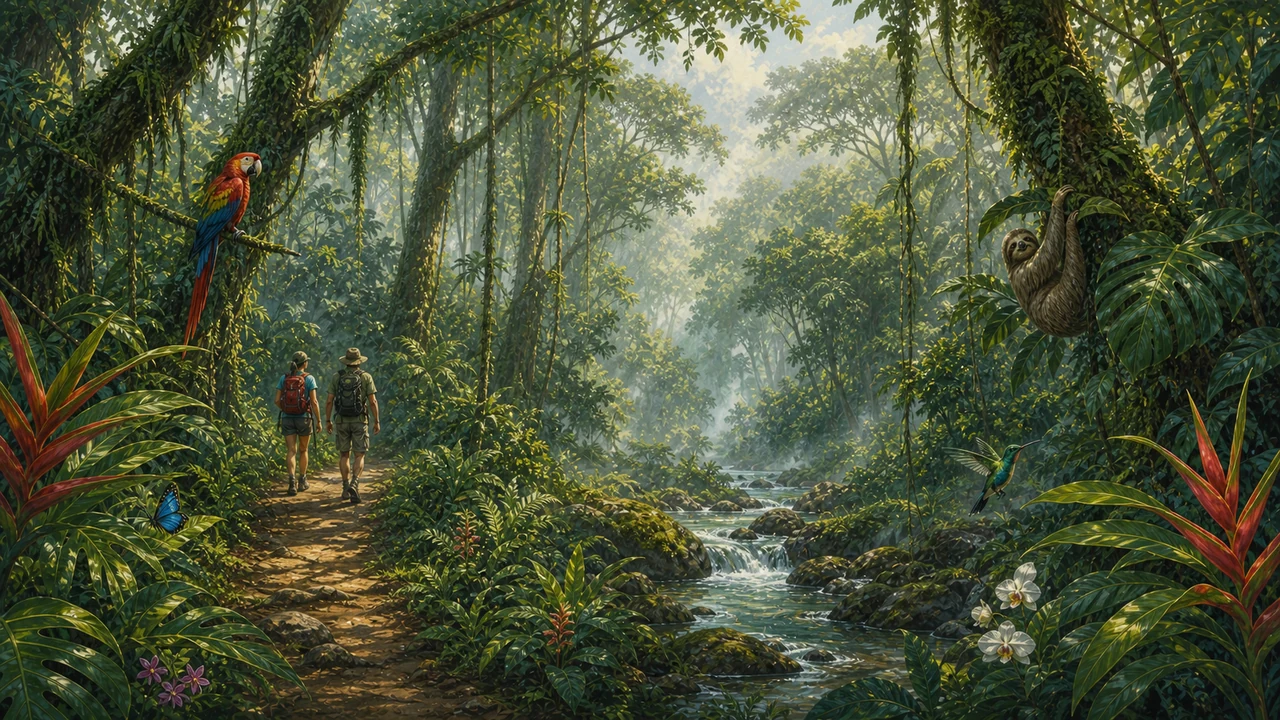
Tropical dry forest is one of the most threatened ecosystems on Earth — much of it was cleared for cattle ranching and agriculture long before conservation took hold. Santa Rosa preserves the largest remaining expanse of this biome in Central America, making it a living laboratory of global significance.
The defining characteristic of dry forest is seasonality. During the six-month dry season, deciduous trees drop their leaves to conserve water, transforming the landscape into an open, sunlit woodland where wildlife watching is remarkably easy. When the rains return, the forest explodes into vivid green almost overnight.
Habitats within the park include tropical dry forest, oak woodland, savannah, mangrove swamp, mesquite-nacascol wetland, riparian forest, coastal scrub, and rocky littoral woodland. This diversity underpins the park’s exceptional species counts: more than 250 birds, 115 mammals (over half of them bats), and 100 species of amphibians and reptiles. More than 10,000 insect species have been recorded, including over 3,400 moths and butterflies.
Commonly spotted wildlife includes howler and white-faced capuchin monkeys, white-tailed deer, collared peccaries, white-nosed coatis, common raccoons, and the armored ctenosaur lizard — a large iguana that basks conspicuously on rocks and tree trunks. Boa constrictors move quietly through the understorey. Notable birds include the magpie jay, orange-fronted parakeet, elegant trogon, rufous-naped wren, and crested caracara.
Santa Rosa has become an important international research center for tropical dry forest ecology precisely because of this biological richness combined with its accessibility from Liberia. Scientists from around the world base long-term studies here.
Witch’s Rock and Playa Naranjo

Playa Naranjo, reached by a rough 4WD road or by boat, is famous beyond Costa Rica’s borders for one reason: Witch’s Rock (Roca Bruja), a dramatic volcanic monolith rising from the sea just offshore that creates one of the most consistent and powerful point breaks in all of Central America.
Surf here is best suited to intermediate and advanced surfers — waves can reach well overhead under ideal swell conditions, and the rock itself demands respect. The waves break over a mixture of sand and rock bottom, and the ride can be long and hollow. Most surfers arrive by boat from Playa del Coco or Playa Ocotal, which is the practical route when the inland track is washed out. Camping is permitted on the beach, making a multi-day surf trip possible.
Even non-surfers find Playa Naranjo rewarding. The beach is wild and virtually undeveloped, sea turtle nesting occurs here seasonally, and the backdrop of dry forest meeting the Pacific is unforgettable. See activities and sports for more on surfing in Costa Rica.
Sea Turtle Nesting at Nancite
Nancite Beach, a few kilometers along the coast from Playa Naranjo, is one of the most biologically significant turtle nesting sites in the Americas. Olive ridley turtles descend on Nancite in mass nesting events called arribadas, in which thousands — sometimes tens of thousands — of females haul ashore simultaneously to lay eggs. These events, concentrated from August through December, represent some of the largest olive ridley arribadas in all of Tropical America.
Leatherback and Pacific green sea turtles also nest at Nancite, though in smaller numbers. Because of its scientific importance, Nancite is managed as a restricted biological research station. General tourism access is limited; visitors wishing to observe the nesting should contact park administration well in advance to understand current access protocols.
Planning Your Visit
Santa Rosa is open year-round. The main entrance gate on the Inter-American Highway is the standard arrival point for the Santa Rosa sector. Flying into Daniel Oduber International Airport (LIR) in Liberia puts you roughly 40 minutes from the park — one of the practical advantages of visiting Guanacaste by air rather than driving four-plus hours from San José.
A 4WD vehicle is essential if you plan to reach the coastal beaches during or after the rainy season. Bring plenty of water — facilities in the interior of the park are limited, and the heat during the dry season can be intense. For general travel logistics, see Costa Rica travel tips.
Park entry fees apply; check current rates with SINAC (Sistema Nacional de Áreas de Conservación) or at the park entrance, as fees are subject to change. Camping is available in designated areas; register in advance when possible, especially during dry-season peak months.
Frequently asked questions
How do I get to Santa Rosa National Park?
Santa Rosa sits about 37 kilometers north of Liberia on the west side of the Inter-American Highway (Route 1), roughly 260 kilometers from San José. Flying into Daniel Oduber International Airport (LIR) in Liberia is the most convenient option; from there it is a short drive north.
What is the best time to visit Santa Rosa National Park?
The dry season from December through April is the most popular window — roads are passable, wildlife concentrates near water sources, and the forest sheds its leaves giving you clear sightlines. The rainy season (May–November) turns the landscape lush and green, but some dirt roads to the beaches can become impassable without 4WD.
Can I surf at Witch's Rock (Playa Naranjo) inside the park?
Yes. Witch's Rock is one of Costa Rica's most celebrated point breaks and it sits within the Santa Rosa sector. Access is by boat from Playa del Coco or Playa Ocotal, or by a long 4WD track through the park (dry season only). Camping is permitted at Playa Naranjo.
When do olive ridley turtles nest at Nancite Beach?
Massive arribada nesting events at Nancite occur primarily from August through December, with peak activity in September and October. Nancite is managed as a biological research station; visitor access is limited and requires advance coordination with park staff.
What wildlife can I expect to see in Santa Rosa National Park?
Santa Rosa protects more than 250 bird species, 115 mammal species (more than half of them bats), and 100 amphibian and reptile species. Howler monkeys, white-faced capuchins, white-tailed deer, collared peccaries, coatis, and ctenosaur lizards are commonly seen. Jaguars, pumas, and tapirs also roam the park, though sightings are rare.