Las Baulas Marine National Park: Leatherback Turtles
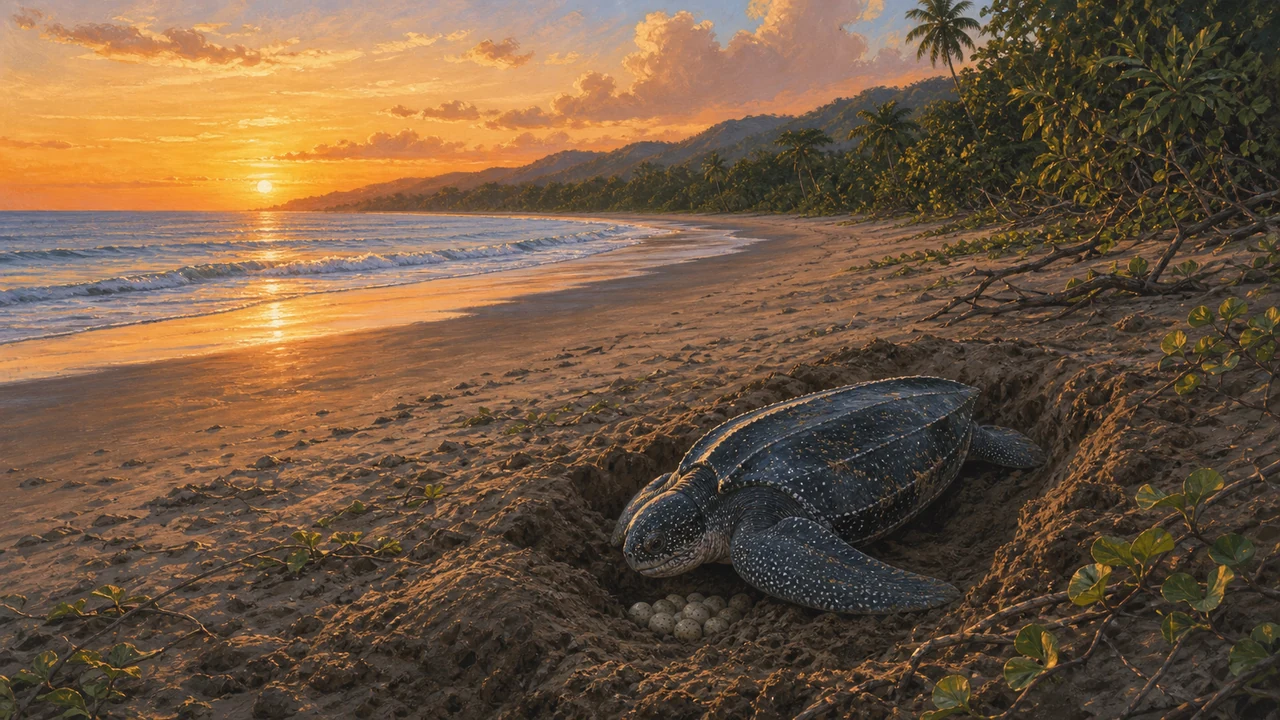 Las Baulas Marine National Park, on the northern Nicoya Peninsula in Guanacaste, protects one of the most critical leatherback sea-turtle nesting sites on Earth. Every year these prehistoric giants haul themselves ashore at Playa Grande under cover of darkness, making a guided night tour here one of the most unforgettable wildlife experiences in Costa Rica — or anywhere.
The park covers roughly 550 hectares of terrestrial habitat and an additional 22,000 hectares of ocean, encompassing three beaches — Playa Grande, Playa Ventanas, and Playa Langosta — along with the broad Tamarindo mangrove estuary that separates Playa Grande from the bustling resort town of Tamarindo.
The Leatherback Sea Turtle
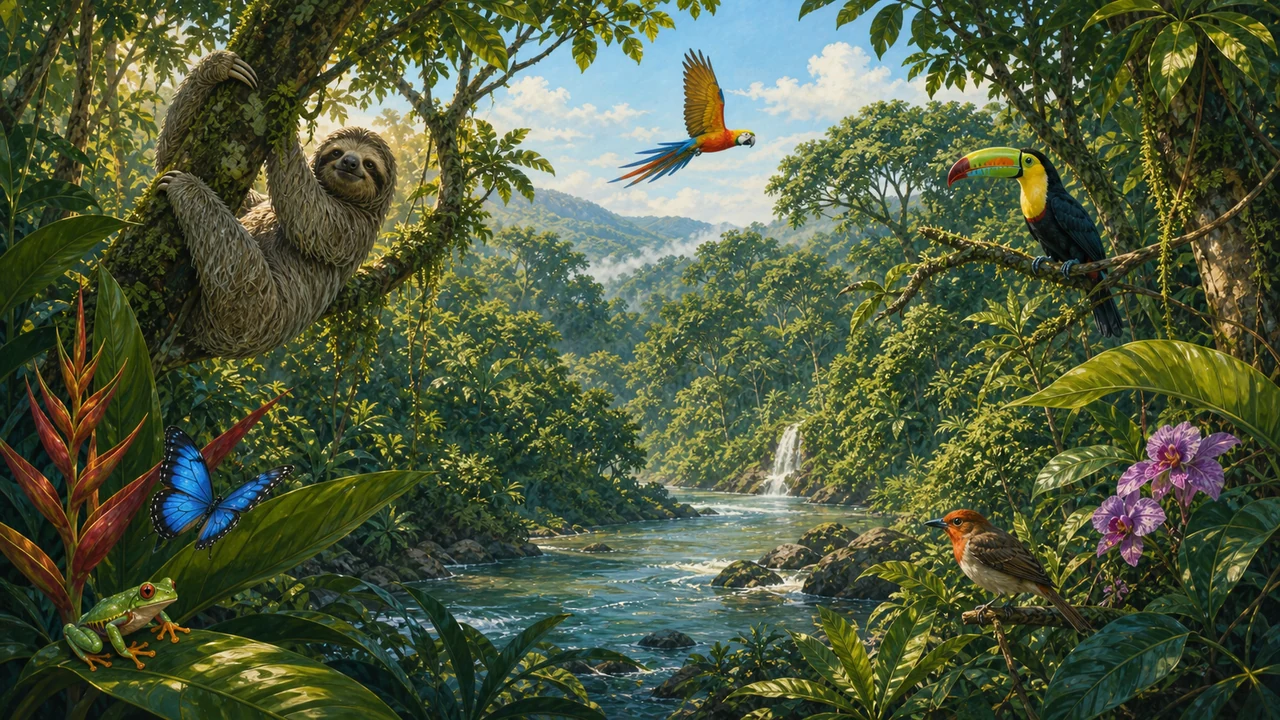 The leatherback (Dermochelys coriacea) is the largest of the world’s seven sea-turtle species, regularly exceeding 1.5 meters in length and 350 kilograms in weight. Unlike every other living sea turtle, it has no hard shell — instead its back is covered by a thick, flexible skin reinforced with thousands of tiny bone fragments, giving it the distinctive ridged, almost rubbery appearance that inspired the name “baula” in Spanish.
Leatherbacks have roamed the oceans for more than 100 million years. They feed almost exclusively on jellyfish and can dive deeper and tolerate colder water than any other sea turtle, migrating thousands of kilometers between feeding grounds and nesting beaches. Despite this extraordinary range, females return faithfully to the same stretch of sand where they were born to lay their eggs — a behavior that makes places like Playa Grande irreplaceable.
Nesting season runs from October through February, with the greatest concentration of animals arriving in November and December. A single female may nest several times in one season, each time laying around 80 viable eggs buried roughly half a meter beneath the sand. Hatchlings emerge about two months later and face an immediate gauntlet of predators as they scramble toward the ocean.
The leatherback is listed as Vulnerable globally and faces ongoing pressure from fishing bycatch, ocean plastic pollution (mistaken for jellyfish), and coastal development. Las Baulas was established in 1991 specifically to reverse the decline of this population, and park rangers and researchers monitor every nest throughout the season.
Guided Night Tours
 Access to the nesting beach after dark is tightly regulated. Visitors must join a small authorized tour group led by a certified park guide. Groups wait at the ranger station until scouts radio that a turtle has come ashore and begun nesting — only then do visitors proceed to the beach in silence, without flashlights or camera flash. The entire experience is designed to minimize stress on the animal.
Tours typically last two to three hours, including the wait. On a good night you will stand a few meters from a 300-kilogram turtle as she digs her nest chamber, deposits her eggs, and slowly covers them before returning to the sea — a process that can take well over an hour. It is genuinely humbling.
Booking in advance is strongly recommended. Capacity is deliberately small. If you are staying in Tamarindo, most hotels can arrange transportation and reservations; alternatively, check current procedures directly with SINAC (the national park service). The short boat-taxi crossing from Tamarindo to Playa Grande is part of the experience and takes only a few minutes.
Mangroves and the Tamarindo Estuary
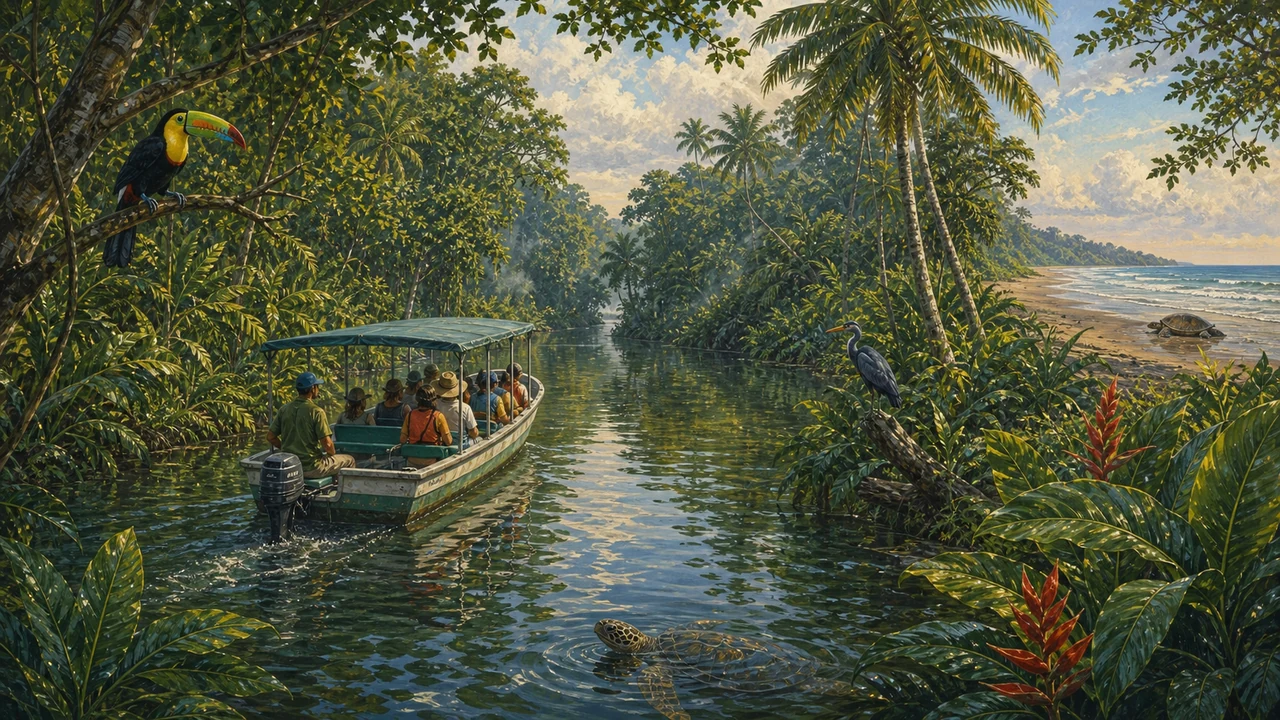 The Tamarindo mangrove system adjoining the park is one of the most intact estuaries on Costa Rica’s Pacific coast. All five Pacific mangrove species found in the country grow here — red, black, white, tea, and buttonwood — with red mangrove dominant along the water’s edge, its arching prop roots providing nursery habitat for juvenile fish, crustaceans, and invertebrates.
A boat trip through the estuary offers a completely different perspective on the park. Caimans bask on mudflats, American crocodiles patrol the deeper channels, and white-nosed coatis and howler monkeys pick through the vegetation overhead. The birdlife is exceptional: more than 57 species have been recorded, including roseate spoonbill, great blue heron, great and cattle egrets, white ibis, brown pelican, frigate bird, and laughing gull. Dawn and dusk are the best times to paddle or motor through.
Boat tours into the mangrove can be arranged through guides and operators in Tamarindo, and kayaking independently in the estuary (outside the nesting-beach zone) is generally permitted during daylight hours.
Playa Grande and the Daytime Park
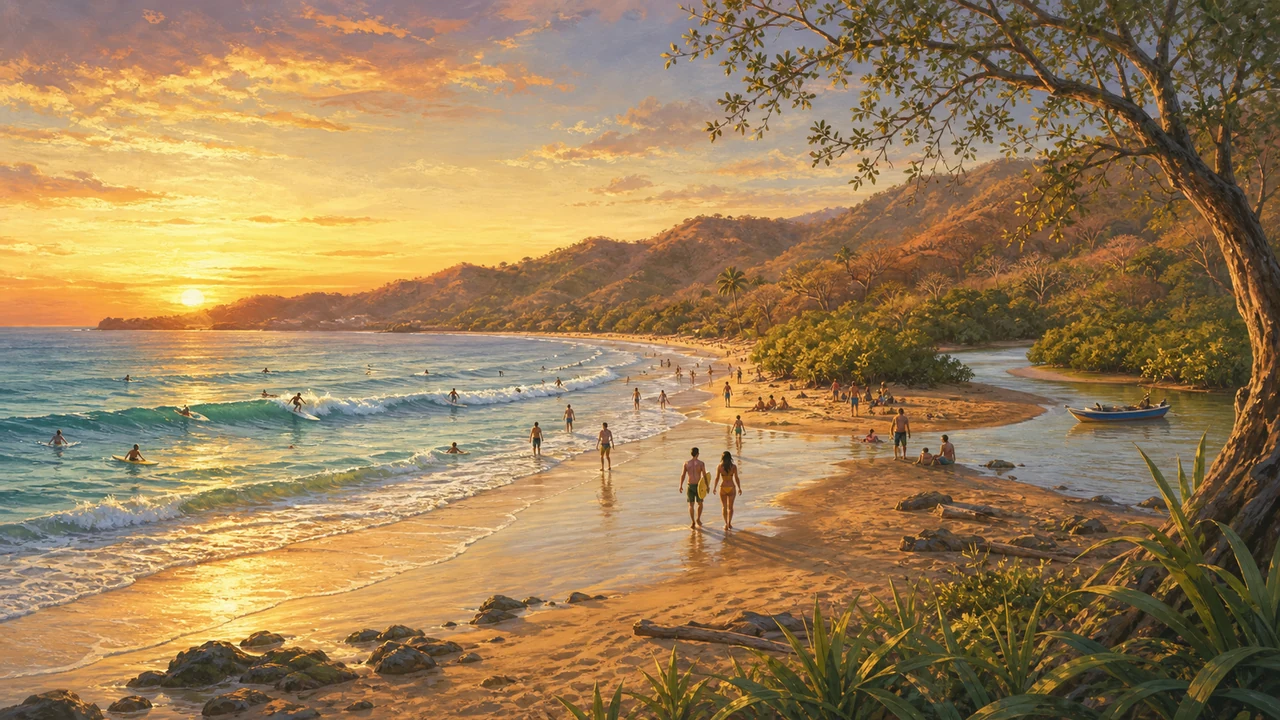
At low tide, Playa Grande reveals a broad, firm-sand beach ideal for long walks. The 3.6-kilometer stretch of protected shoreline is quiet during the day — there is no commercial development on the beach itself. Ghost crabs scuttle across the sand, hermit crabs drag their borrowed shells along the tide line, and sandpipers probe the surf for invertebrates. The beach is also a well-regarded surfing spot with a consistent beach-break that draws experienced surfers, particularly in the dry season from December through April.
Beyond the turtle-nesting zone, the park’s terrestrial habitat includes dry-forest patches that support the park’s mammal and reptile populations. Ctenosaurs (black spiny-tailed iguanas) are common near the forest edge, and roosterfish, snapper, and snook can be found in the surf.
Getting There and Practical Tips
 Las Baulas sits about 320 kilometers from San José, most conveniently reached via the Daniel Oduber International Airport in Liberia (LIR), roughly 70 kilometers away — a far easier journey than driving from the capital. Liberia has direct flights from several North American and European gateways, which makes Guanacaste an excellent first stop on a Costa Rica itinerary.
From Tamarindo, regular boat-taxis cross the estuary to Playa Grande in minutes. By road, Playa Grande is accessible through Villareal and Huacas. There is no camping allowed within the park. Tamarindo has a full range of accommodation from budget to luxury, and several smaller hotels sit directly at Playa Grande.
A few things to keep in mind:
- Night tours only during nesting season — no independent beach access after dark year-round; rangers enforce this strictly.
- No flash photography on the beach at night — ever. Lights disorient both adult turtles and hatchlings.
- Dry season (December–April) brings the clearest weather; the shoulder months see fewer crowds and lower prices.
- Respect the estuary — stay on established boat paths and do not approach animals, particularly crocodiles.
Las Baulas is part of Costa Rica’s broader commitment to conservation — the country protects more than 25% of its territory and harbors roughly 5% of global biodiversity. A visit here connects directly to that mission. For more national parks and protected areas across the country, see our full guide, or explore the wider world of ecotourism and nature that makes Costa Rica one of the planet’s top wildlife destinations.
Frequently asked questions
When is leatherback turtle nesting season at Las Baulas?
Leatherbacks nest primarily from October through February, with peak activity in November and December. Night tours are only offered during the nesting season and must be booked through the park or an authorized guide — independent access to the beach at night is prohibited.
How do I visit Las Baulas Marine National Park?
The park entrance is at Playa Grande, a short boat-taxi ride or drive north of Tamarindo. Daytime visits to the mangrove estuary and beach are possible year-round; authorized night tours to see nesting turtles operate only during nesting season. Check current SINAC regulations for fees and booking procedures.
What other wildlife can I see besides turtles?
The park shelters howler monkeys, white-nosed coatis, caimans, and American crocodiles. The Tamarindo estuary mangroves host more than 50 bird species, including roseate spoonbill, great blue heron, white ibis, and frigate birds. Olive ridley and Pacific green turtles occasionally nest here as well.
Can I swim or surf at Playa Grande?
Playa Grande is a surf break popular with experienced surfers, and swimming is possible, though the beach has strong currents — take local conditions seriously. The section of beach where turtles nest is restricted at night during nesting season to protect the animals.
Is Las Baulas near Tamarindo?
Yes. Playa Grande, the park's main beach, sits just across the Tamarindo estuary from the resort town of Tamarindo. A short boat-taxi connects the two. Several hotels in Tamarindo and Playa Grande organize guided turtle tours and mangrove excursions.