Guanacaste National Park: Volcanoes, Dry Forest & Wildlife
Guanacaste National Park anchors one of the most ambitious forest restoration projects in the Americas — a living laboratory where tropical dry forest, volcanic cloud forest, and wildlife corridors merge into a single protected landscape in northwest Costa Rica.
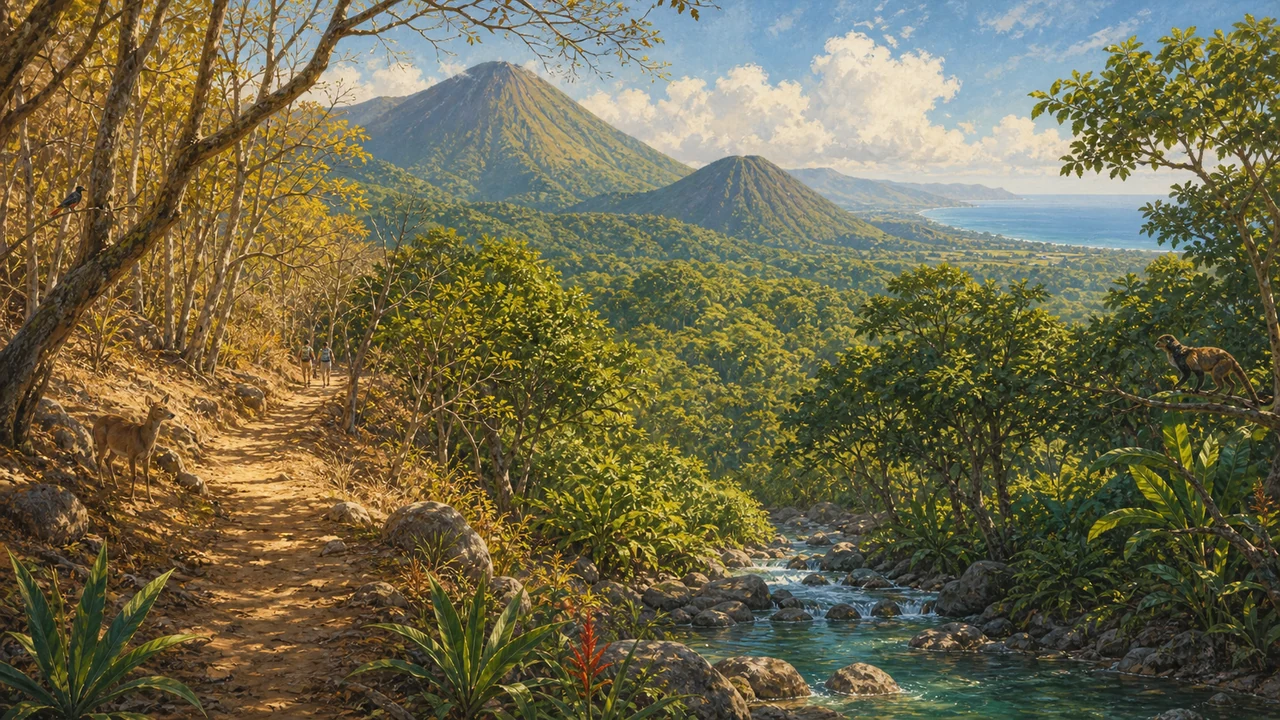 Created in 1989, the park was established specifically to protect the seasonal migratory routes of wildlife using the adjacent Santa Rosa National Park. Together with Santa Rosa, Rincón de la Vieja, and a network of private reserves, it forms the Área de Conservación Guanacaste (ACG) — a UNESCO World Heritage Site recognized for its extraordinary biodiversity and ongoing ecological restoration. More than 32,000 hectares of protected land span sea-level dry plains, mid-elevation transition forests, and cloud-shrouded volcanic peaks rising above 1,600 meters.
Dry Forest Restoration and UNESCO Status
The ACG is home to one of the last large remnants of tropical dry forest in Central America, a habitat that once blanketed the Pacific coast but was largely cleared for cattle ranching during the twentieth century. Since the 1980s, pioneering ecologists and local communities have worked to restore these landscapes by allowing natural regeneration — a project now considered a global model for tropical forest recovery.
UNESCO inscribed the ACG as a World Heritage Site in recognition of this living restoration effort and the extraordinary concentration of biodiversity the ecosystem supports. Guanacaste National Park sits at the heart of this conservation corridor, providing the critical upland habitat that migrating animals need to complete their seasonal movements between coast and volcano.
The Three Sectors
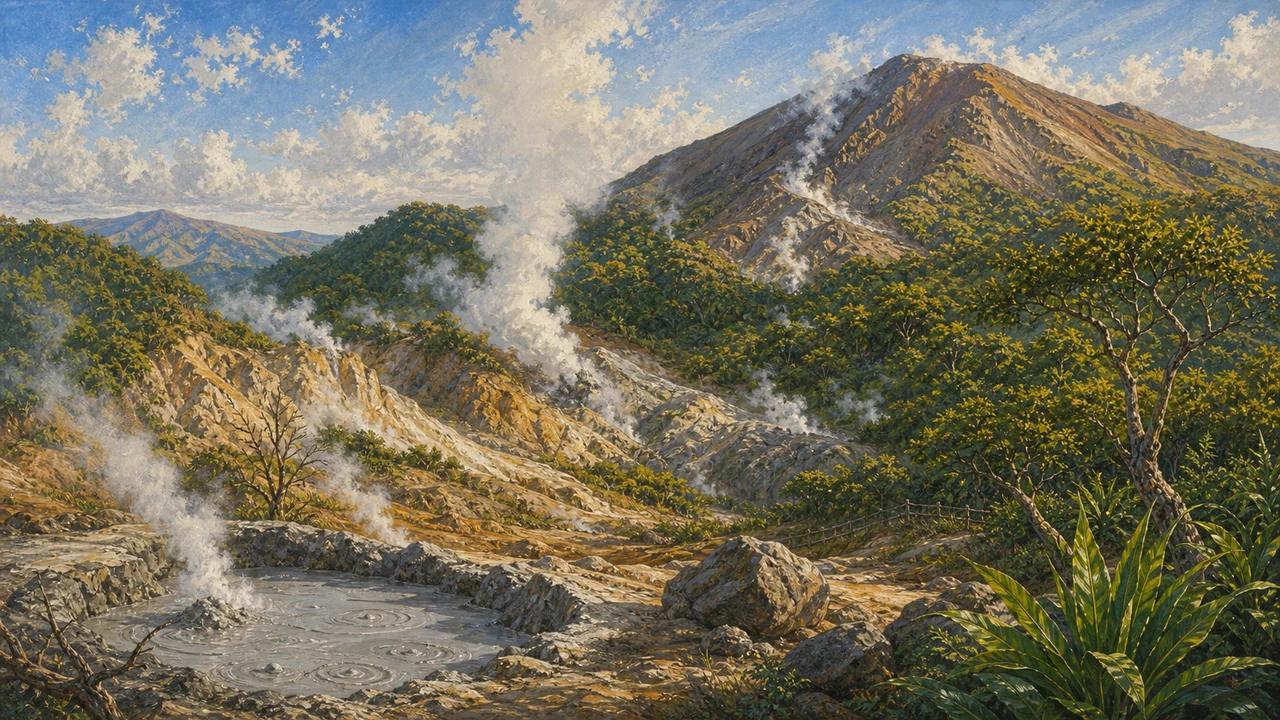 Guanacaste National Park is divided into three distinct sectors, each managed around a biological research station.
Maritza Sector sits on the northwestern slopes of Orosí volcano at roughly 650 meters above sea level. The landscape here transitions from dry forest in the lower reaches to wetter, cloud-influenced forest higher up, a mosaic that feeds rivers and streams flowing down toward the coast. Collared peccaries are abundant, and the sector is excellent for birdwatching, particularly raptors and forest-interior species. Trails are well-maintained and horses can be arranged for deeper exploration. Camping and rustic dormitory accommodation are available at the station.
Pitilla Sector lies one kilometer south of the town of La Cruz near the Nicaraguan border. Unlike the other two sectors, Pitilla protects a predominantly wet forest environment with year-round rainfall that sustains a rich canopy. Trails wind through tall forest where monkeys, toucans, and forest raptors are regularly observed. On clear days, views extend north to Lake Nicaragua. This sector also serves as an important research site for biological inventories.
Cacao Sector climbs the flanks of Cacao volcano to approximately 1,100 meters elevation. Trails here traverse a striking ecological gradient — dry forest at the base gives way to mid-elevation wet forest and finally to cloud forest near the summit. With a permit from ACG administration, visitors may hike to the volcanic peak, where panoramic views reach both the Pacific coast and the lowlands toward Nicaragua.
Volcanoes: Orosí and Cacao
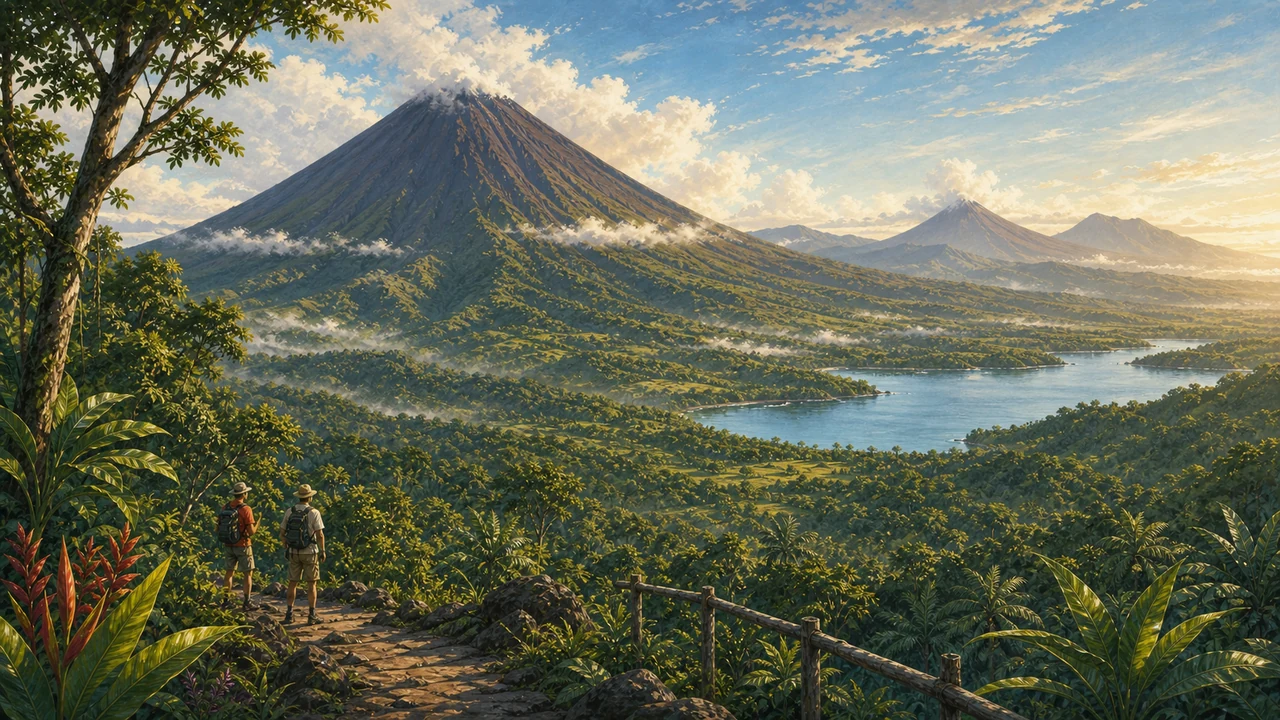 The two volcanic peaks define both the geography and the ecology of Guanacaste National Park. Orosí (approximately 1,440 m) and Cacao (approximately 1,659 m) are considered dormant rather than extinct, and both are heavily forested on their upper slopes — a contrast to the more dramatic lava fields found at nearby Rincón de la Vieja.
The orographic effect of these mountains is central to the park’s ecological value. Moisture-laden Pacific trade winds rise against the volcanic slopes, cooling and releasing rainfall that sustains the cloud forests at elevation. This water then flows down into the dry lowlands, making the entire gradient habitable for wildlife that would otherwise struggle to survive the long Guanacaste dry season.
Hiking to the Cacao summit requires a permit and is best done with a guide available through the research station. The trail to the peak passes through multiple distinct forest types within a single day’s walk — a rare experience for those interested in tropical ecology.
Wildlife Corridors and Biodiversity
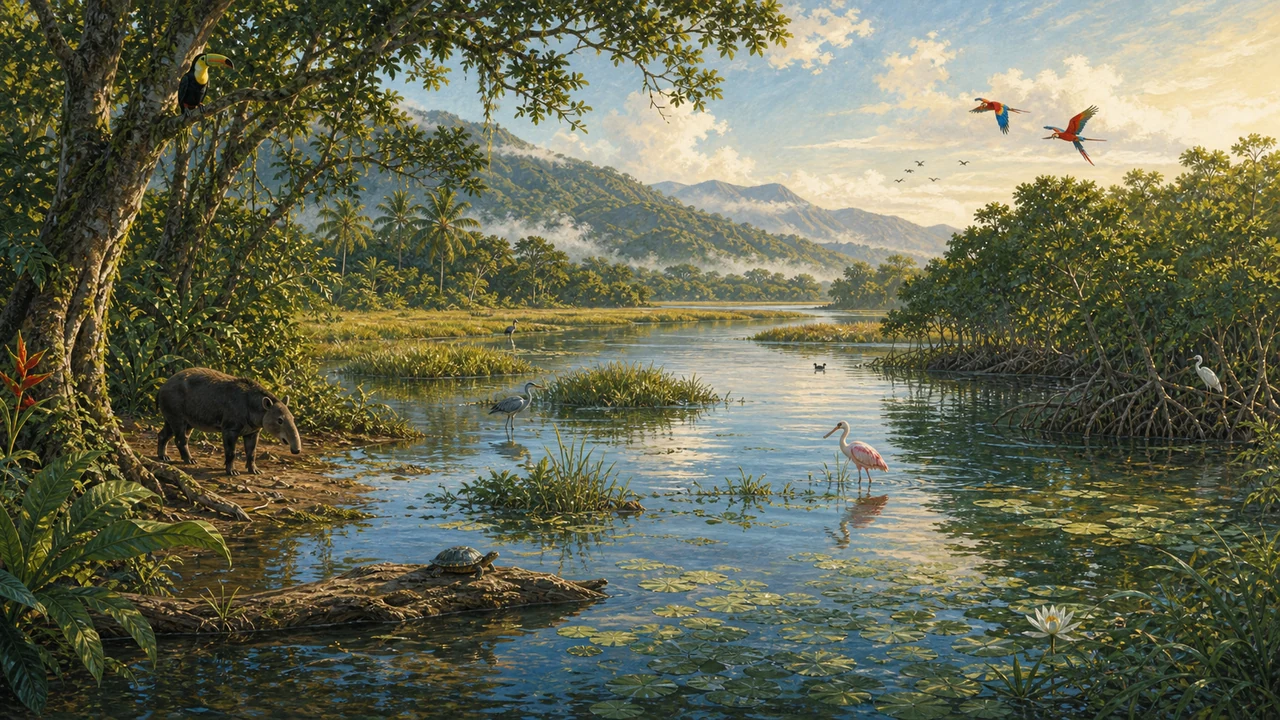 One of Guanacaste National Park’s most important ecological roles is as a wildlife corridor linking separate protected areas into a functioning landscape. Jaguars, pumas, tapirs, and white-tailed deer move seasonally between the dry forest lowlands and the cooler volcanic highlands, following routes that cross both public and private land within the ACG.
The park is also remarkable for its insect diversity. The ACG hosts one of the most intensively catalogued biological inventories in the world — tens of thousands of species of insects, plants, fungi, and other organisms have been identified through decades of work at the research stations. This ongoing biodiversity research makes Guanacaste National Park as significant for science as it is for conservation.
Birdwatchers will find both the dry and wet forest zones productive. Species typical of the dry Pacific lowlands (such as white-throated magpie-jay, turquoise-browed motmot, and various parakeets) share the landscape with cloud-forest species (resplendent quetzal sightings have been recorded at higher elevations during the right season). Over 300 bird species have been documented in the park.
Research Stations and Visitor Services
The three biological stations — Maritza, Pitilla, and Cacao — serve dual roles as research bases and visitor entry points. Accommodation is dormitory-style and simple; visitors should bring their own food or confirm meal arrangements in advance. Facilities at each station include drinking water, basic bathrooms, and trail information.
All visits require advance registration through the Área de Conservación Guanacaste. Given the remote nature of the stations and the limited capacity, this is not a park to show up at unannounced. Trail difficulty ranges from moderate walking paths to more demanding hikes that require a reasonable level of fitness, especially in the heat of the dry season. Horses can be arranged at Maritza for those who prefer not to hike.
Planning Your Visit
Guanacaste National Park is most easily accessed from Liberia, which has its own international airport (Daniel Oduber Quirós, LIR) with direct flights from North America — making it a convenient base for exploring the wider region without traveling through San José. The park entrance points are reached by four-wheel-drive vehicle; road conditions vary by season.
For visitors interested in a broader Guanacaste experience, the park pairs well with Santa Rosa National Park (for sea turtle nesting at Playa Nancite) and the beaches of the North Pacific coast. The region is one of Costa Rica’s driest, so pack sun protection and carry more water than you think you will need.
Explore Costa Rica’s broader network of national parks and protected areas, dive deeper into ecotourism and nature, read about the country’s volcanoes, or check general travel tips before heading out.
Frequently asked questions
Is Guanacaste National Park part of a UNESCO World Heritage Site?
Yes. Guanacaste National Park is a core component of the Área de Conservación Guanacaste (ACG), which UNESCO inscribed as a World Heritage Site for its exceptional dry forest ecosystem and ongoing restoration work.
What are the three sectors of Guanacaste National Park?
The park is divided into the Maritza sector (on the slopes of Orosí volcano), the Pitilla sector (wet forest near La Cruz), and the Cacao sector (on the slopes of Cacao volcano). Each offers distinct ecosystems and trail networks.
Can visitors stay overnight inside the park?
Yes. Three biological research stations — Maritza, Pitilla, and Cacao — offer basic accommodations for visitors and researchers. Facilities are rustic; advance reservations through the ACG administration are essential.
What wildlife can I expect to see in Guanacaste National Park?
The park protects jaguars, pumas, white-tailed deer, white-faced and howler monkeys, collared peccaries, and hundreds of bird species. Wildlife corridors connecting the park to Santa Rosa and Rincón de la Vieja allow animals to move freely between habitats.
When is the best time to visit Guanacaste National Park?
The dry season (December through April) brings easier trail access and reliable wildlife sightings near water sources. The wet season (May through November) turns the dry forest lush and green, and is excellent for birding as migratory species arrive.