Carara National Park: Scarlet Macaws & Crocodiles
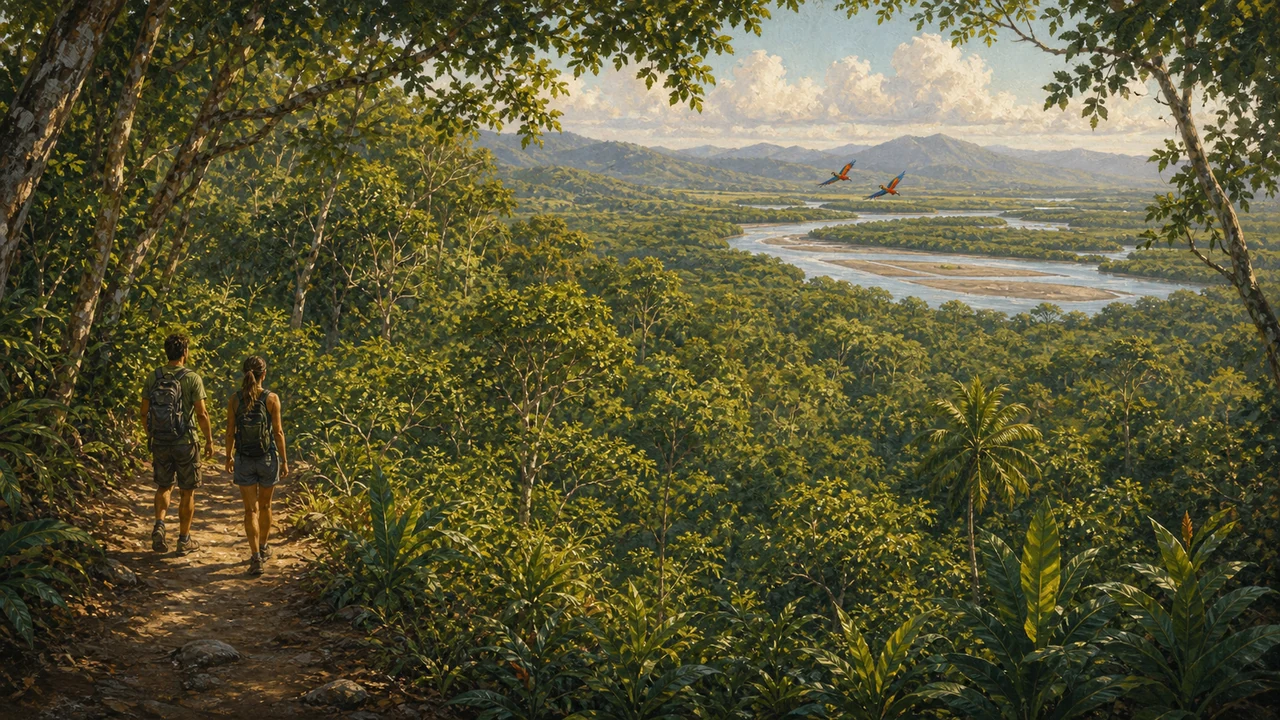
Carara National Park protects one of the most biodiverse corridors on Costa Rica’s Central Pacific coast and is widely regarded as the single best place in the country to see wild scarlet macaws up close. Located where the dry forests of Guanacaste give way to the wet forests of the southern Pacific, Carara occupies a rare ecological transition zone that concentrates an extraordinary range of species within a compact, visitor-friendly area. It is also the gateway to the Tárcoles River, where American crocodiles regularly sun themselves below a highway bridge that has become a classic Costa Rica roadside stop.
A Forest at the Edge of Two Worlds
The ecological story of Carara begins with its location. The park sits at the boundary between Costa Rica’s Pacific dry forest and its wetter tropical forest zones — a transition biologists call a ecotone. Three distinct life zones overlap here, producing a forest that mixes tree species normally found hundreds of kilometers apart. Towering hardwoods such as guanacaste, ojoche, cristóbal, and purpleheart form the upper canopy; beneath them, a dense understory thrives in the humidity generated by the Tárcoles River drainage.
This overlap effect is what makes Carara’s biodiversity numbers so striking. The park protects around 5,242 hectares, yet it harbors wildlife from both the dry north and the wet south, along with species that require primary forest rarely found this close to a major highway. More than 25% of Costa Rica’s land area is under some form of environmental protection, and Carara represents one of the most accessible examples of why that investment matters.
Scarlet Macaws: The Star Residents
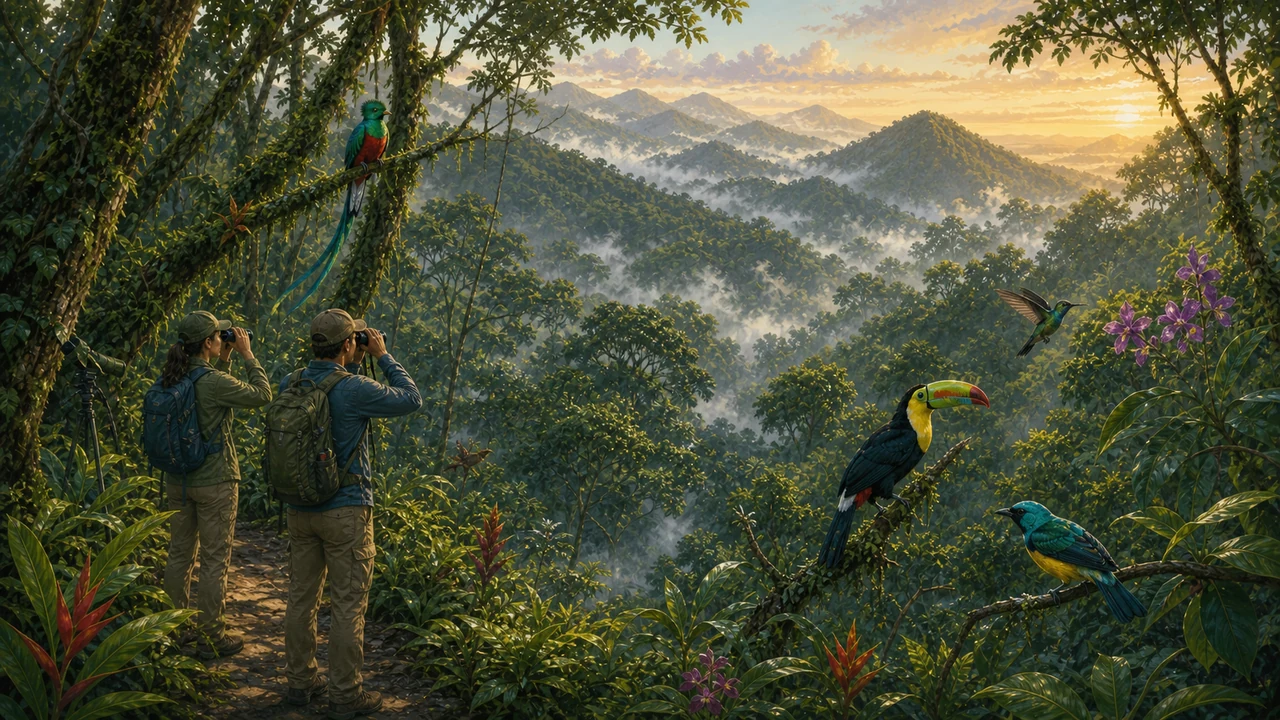
Few wildlife encounters in Central America rival watching a pair of scarlet macaws glide through a forest clearing, their crimson, yellow, and blue plumage catching the morning light. Carara is home to one of the largest and most stable populations of scarlet macaws on Costa Rica’s Pacific side. Decades of protection have allowed the population to grow, and today macaws from the park have begun recolonizing areas of the Central Pacific coast where they had disappeared entirely.
The best strategy for a sighting is simple: arrive early. Macaws are most active in the first two hours after sunrise, when they move noisily between roosting trees and fruit sources. Listen for their raucous calls before you see them. The Las Araceas trail, a flat loop of about 1.2 kilometers through primary forest, is one of the most reliable spots. Macaws are also frequently spotted flying over the Tárcoles River bridge in the morning and late afternoon as they commute between forest patches.
Beyond macaws, serious birders will find Carara exceptional. Over 400 bird species have been recorded in and around the park, including toucans, fiery-billed aracaris, kingfishers, parrots, motmots, and a variety of raptors. The wetlands and mangroves near the river mouth add shorebirds and wading species that push the total even higher, making this one of the richest single-day birding destinations in Central America.
The Tárcoles River Crocodiles
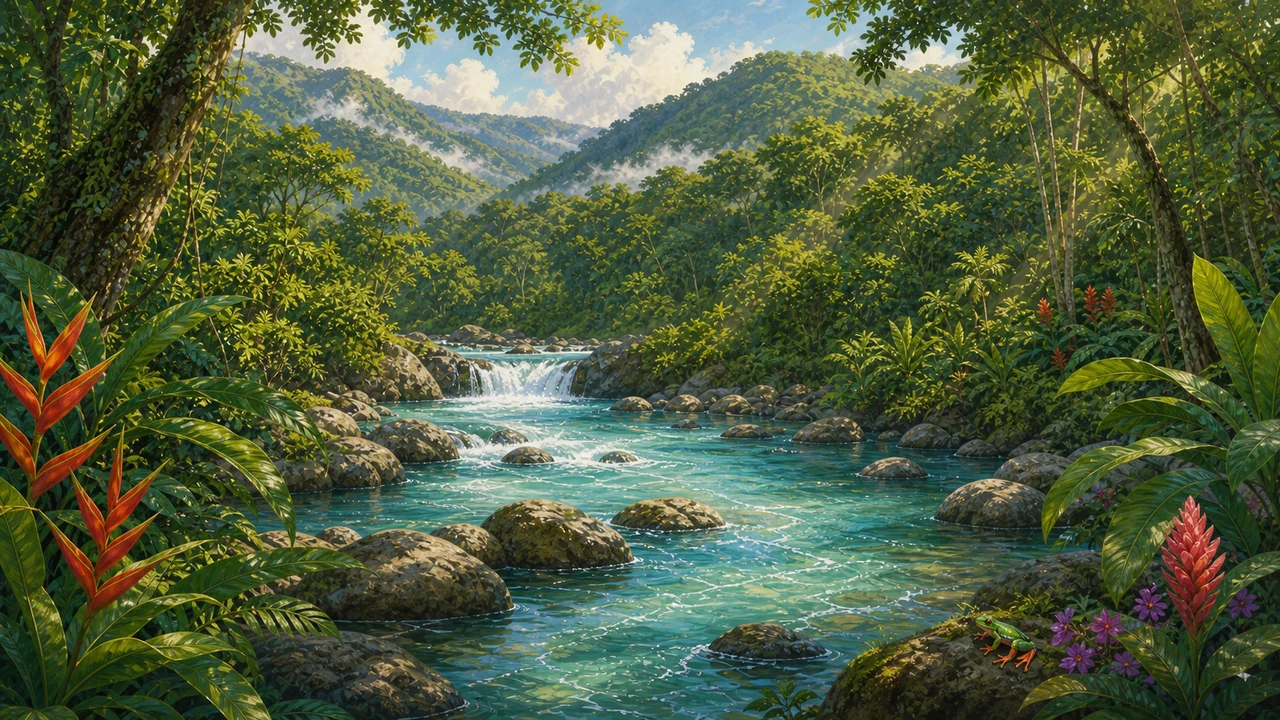
Before or after entering the park, nearly every visitor stops at the Tárcoles River bridge on Route 34. The American crocodiles here are among the largest in Costa Rica — some individuals are several meters long — and they congregate on the sandy banks visible from the bridge railing in numbers that can be genuinely impressive. This is a free stop: you simply pull over in the designated area, walk to the railing, and look down.
Crocodile numbers and visibility vary by time of day and season, but there is almost always at least one visible from the bridge. Early morning and late afternoon tend to bring more animals out to bask. Boat tours on the Tárcoles River offer a closer perspective and are operated by local guides from the nearby village — these trips typically last one to two hours and include birds and other wildlife in addition to crocodiles.
The Tárcoles estuary and adjacent mangroves are a protected wetland system, and the health of this habitat is closely linked to the park’s overall ecosystem. Conservation measures that protect the park interior also benefit the river corridor and the communities that depend on wildlife tourism along it.
Trails and Visiting the Park
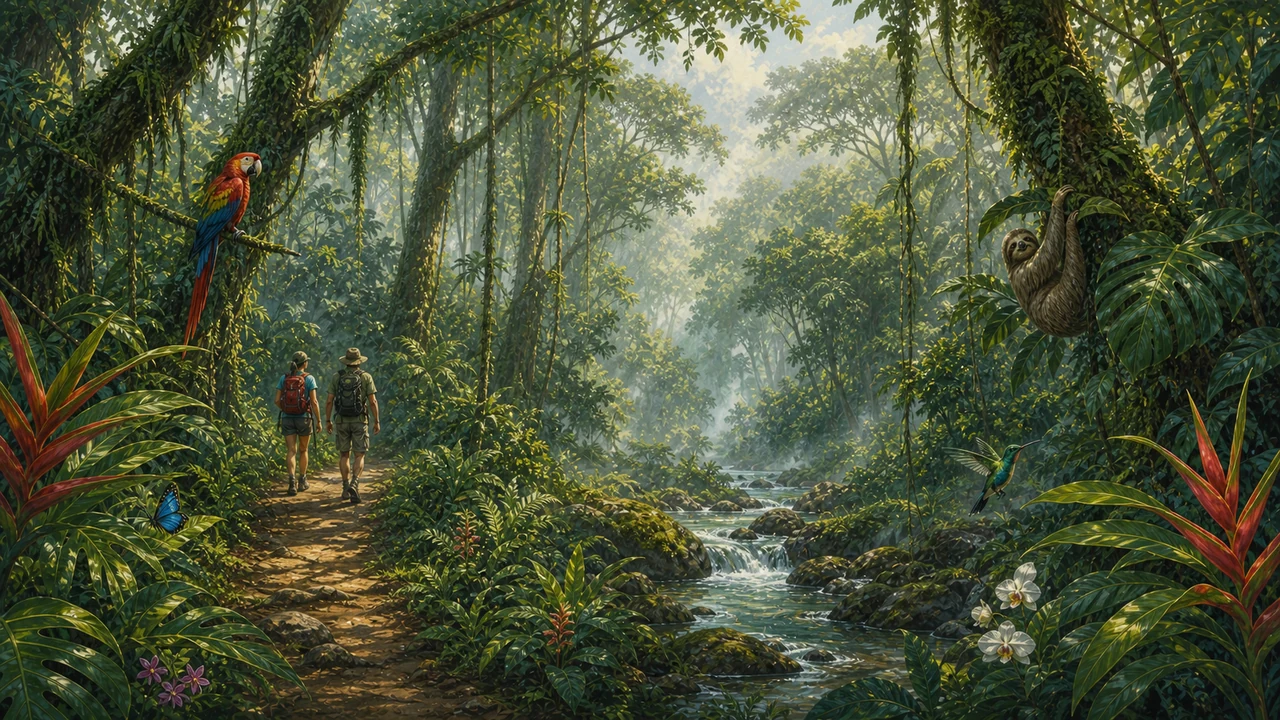
One of Carara’s practical strengths is its accessible trail system. Unlike many Costa Rican parks that require strenuous hikes or guided access, Carara’s primary trails are flat and well-maintained, suitable for most fitness levels and age groups.
The main options:
- Las Araceas loop — approximately 1.2 km through primary forest; this is the most popular route for macaw and monkey sightings.
- Quebrada Bonita trail — approximately 1.5 km; passes through primary forest along a seasonal stream and offers excellent birding.
- Universal Access trail — a shorter, paved path near the entrance designed for visitors with mobility limitations.
Along the trails you are likely to encounter white-faced capuchin monkeys, howler monkeys, and occasionally spider monkeys. Coatis forage openly near the trailhead. Ocelots and peccaries are present in the park but far less commonly seen. Poison-dart frogs and several lizard species are reliably spotted by patient observers.
The park has full visitor services at the entrance: parking, a ranger station, restrooms, drinking water, picnic areas, and interpretive signage. Rangers are knowledgeable and can point you toward areas of recent macaw activity. Arrive early — the park opens at dawn — both for wildlife activity and to beat the midday heat.
Getting There and Practical Tips
Carara lies approximately 90 km southwest of San José via the coastal Route 34. The drive takes roughly 90 minutes from the capital under normal conditions and passes through the town of Orotina before reaching the Tárcoles bridge and park entrance. Jacó, the nearest major beach town, is about 20 km south and offers a wide range of accommodation options for those spending multiple days in the area.
Public buses between San José and Jacó pass the park entrance, making Carara reachable without a rental car, though service times may not align perfectly with the early-morning wildlife activity window. A rental car or shared shuttle gives you the most flexibility.
What to bring:
- Binoculars (essential for macaws and treetop wildlife)
- Light, moisture-wicking clothing in neutral tones
- Insect repellent and sunscreen
- Water — though drinking water is available at the entrance, the trails can be warm
- A rain jacket during the wet season (May–November)
Carara pairs naturally with a beach stay in Jacó or Herradura, a visit to the Central Pacific coast, or a broader itinerary covering national parks across the country. For those interested in birdwatching and wildlife, it belongs on the same itinerary as Corcovado or Monteverde. Check current entry fees and hours with the SINAC system before visiting, as these are updated periodically.
If Carara sparks a deeper interest in Costa Rica’s extraordinary protected-area network — which covers more than a quarter of the national territory and shelters roughly 5% of the world’s biodiversity — the country’s ecotourism and nature resources offer many more destinations worth exploring.
Frequently asked questions
What is Carara National Park best known for?
Carara is best known for its large, stable population of wild scarlet macaws. The park sits at the ecological boundary between dry and wet forest, making it one of the most biodiverse patches on the Central Pacific coast. The Tárcoles River bridge just outside the park entrance is also famous for American crocodile sightings.
Where is Carara National Park located?
Carara sits on the Central Pacific coast of Costa Rica, roughly 90 km southwest of San José. It borders the Tárcoles River to the north and lies just north of the town of Jacó, making it an easy day trip from the capital or from beachside hotels in the area.
Are the trails at Carara difficult?
No. Carara's main trails are flat, well-maintained, and clearly marked, which makes the park accessible to most visitors including families with children. The Las Araceas loop (about 1.2 km) and the Quebrada Bonita trail (about 1.5 km) are the primary routes through primary forest.
When is the best time to visit Carara to see scarlet macaws?
Scarlet macaws are resident in the park year-round, but early morning is consistently the best time to spot them as they move between roosting and feeding areas. Arriving at opening time gives you the best light, the least crowded trails, and the highest macaw activity.
Can I see crocodiles at Tárcoles River without entering the park?
Yes. The highway bridge over the Tárcoles River (Route 34) is right at the park entrance and is a famous free stop where large American crocodiles are almost always visible basking on the riverbanks below. Pull over safely, walk to the railing, and look down — no park fee required for the bridge itself.