Costa Rican Art Museum: La Sabana's Crown Jewel
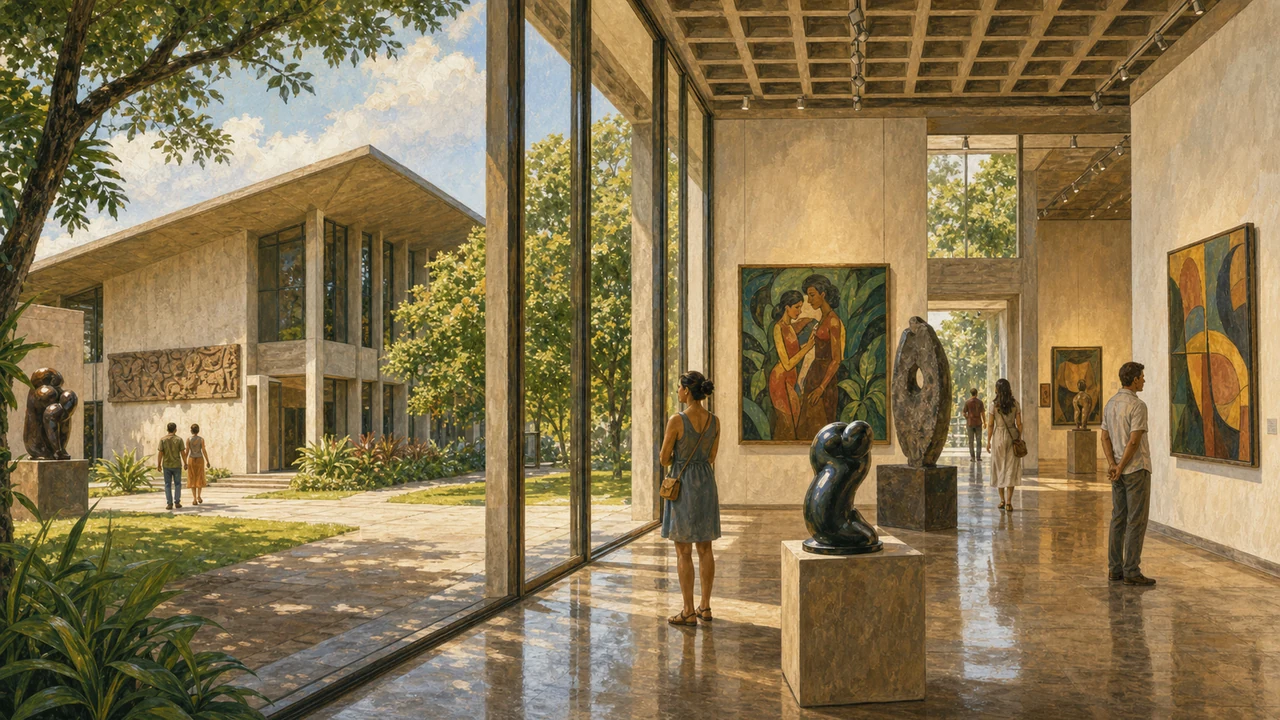
The Museo de Arte Costarricense (Costa Rican Art Museum) is San José’s premier fine-arts institution — a place where more than a century of national painting, sculpture, and printmaking comes together inside one of Central America’s most distinctive museum buildings. Perched at the eastern edge of Parque La Sabana, it is one of the most rewarding cultural stops in the capital for any traveler who wants to understand what Costa Rica looks like through its own artists’ eyes.
A Former Airport Terminal Reborn
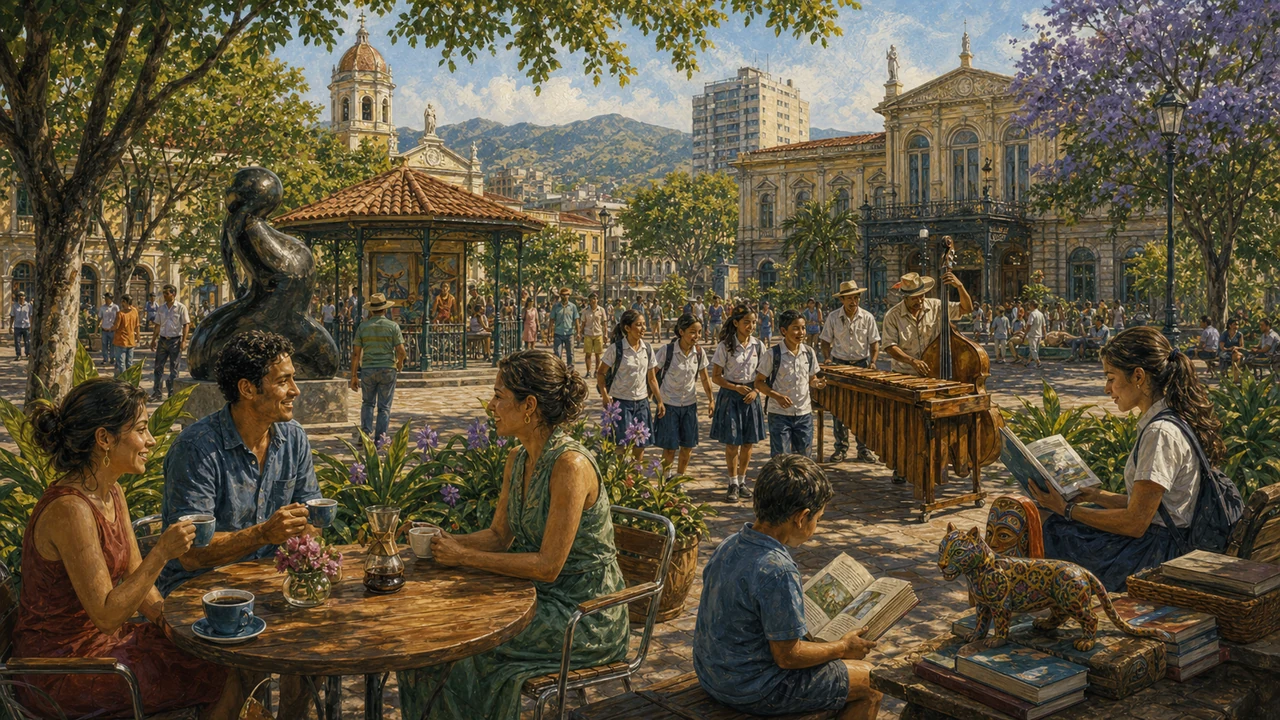
The building that houses the museum carries a story as compelling as anything hanging on its walls. It was originally built in the mid-twentieth century as Costa Rica’s first international airport terminal — the very first stop on Costa Rican soil for generations of arriving passengers.
When air traffic shifted to Juan Santamaría International Airport (SJO) in nearby Alajuela, the old terminal was saved from demolition. The surrounding airfield was converted into Parque La Sabana — today the largest urban park in San José — while the elegant Spanish-Colonial terminal was repurposed as the national art museum. The arched colonnades, measured proportions, and warm stonework give the building a contemplative authority that sets the tone long before you enter. Walking in, you are simultaneously stepping into architectural history and into the story of Costa Rican art.
The National Painting and Sculpture Collection
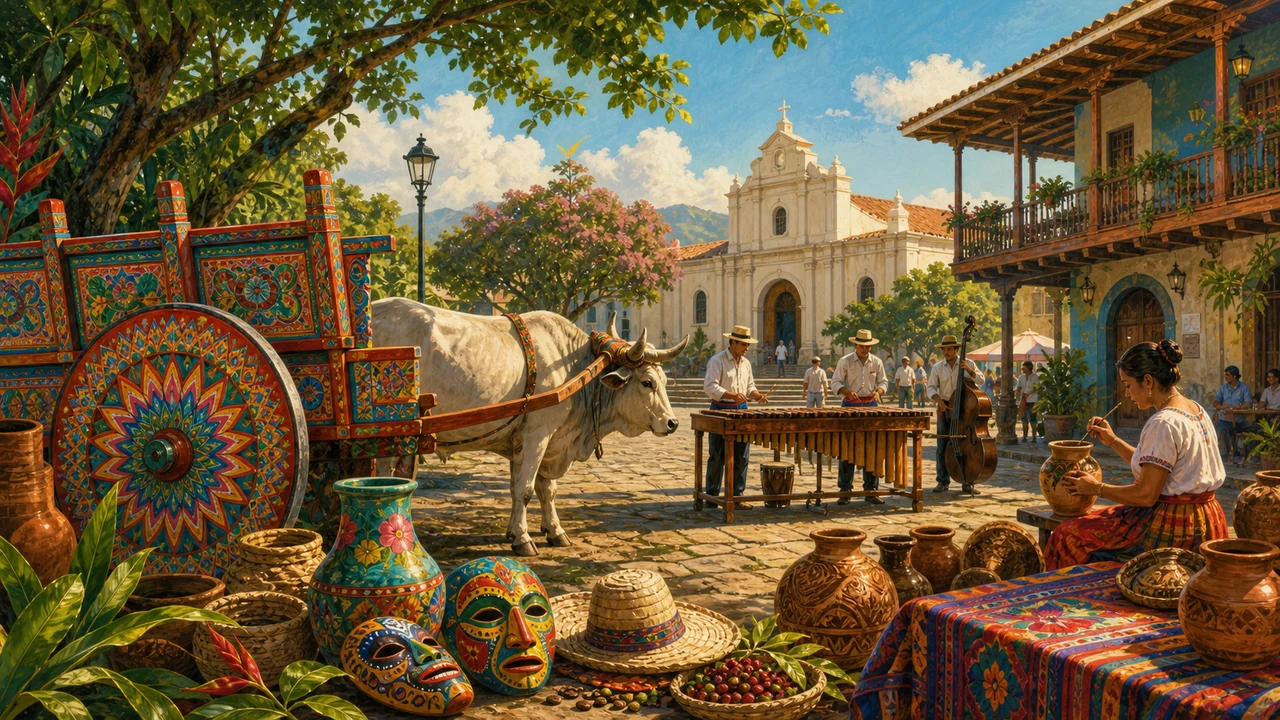
The permanent national collection of Costa Rican fine arts spans well over two thousand pieces and covers more than a century of creative output. Oil paintings, watercolors, woodcuts, ceramics, and carved wooden sculptures form the core, tracing how Costa Rican artists absorbed European influences in the nineteenth century and gradually developed a voice that is unmistakably their own.
Landscape painting dominates the earlier galleries: the country’s volcanic mountains, coffee estates, and dense rainforest provided enduring subjects for the first generation of formally trained Costa Rican painters. As the twentieth century unfolded, the collection charts a decisive turn toward Costa Rican abstract art and modernist experimentation — bold color fields, geometric structure, and expressionist figure work that compare favorably with what was happening across Latin America at the same time.
The wooden sculpture and printmaking tradition is equally impressive. Carved forms that blend indigenous aesthetics with contemporary formal concerns sit alongside mid-century graphic works whose clean lines and social commentary still resonate today. Taken as a whole, the permanent collection functions as a visual history of the nation — not political history alone, but the subtler story of how a society sees itself.
The Salón Dorado
The museum’s undisputed centerpiece is the Salón Dorado (Golden Hall) on the second floor. French sculptor Louis Ferón created the hall’s monumental mural during Costa Rica’s muralist period — an era when civic ambition expressed itself through large-scale narrative art that could speak to an entire nation.
The mural unfolds as a panoramic chronicle in stucco and bronze patina: pre-Columbian life, Spanish colonization, the colonial era, independence, and the consolidation of the modern republic all appear in sequence. The warm golden tone of the patina gives the hall its name and its atmosphere. Standing beneath it, you feel the weight of national memory without the coldness that formal monuments sometimes carry.
The Salón Dorado as a venue for live performance is an added dimension worth knowing about: the museum occasionally hosts chamber music concerts and cultural events in this space, sometimes free of charge. If your visit coincides with one, the combination of gilded mural art and live music is genuinely extraordinary.
The Outdoor Sculpture Garden
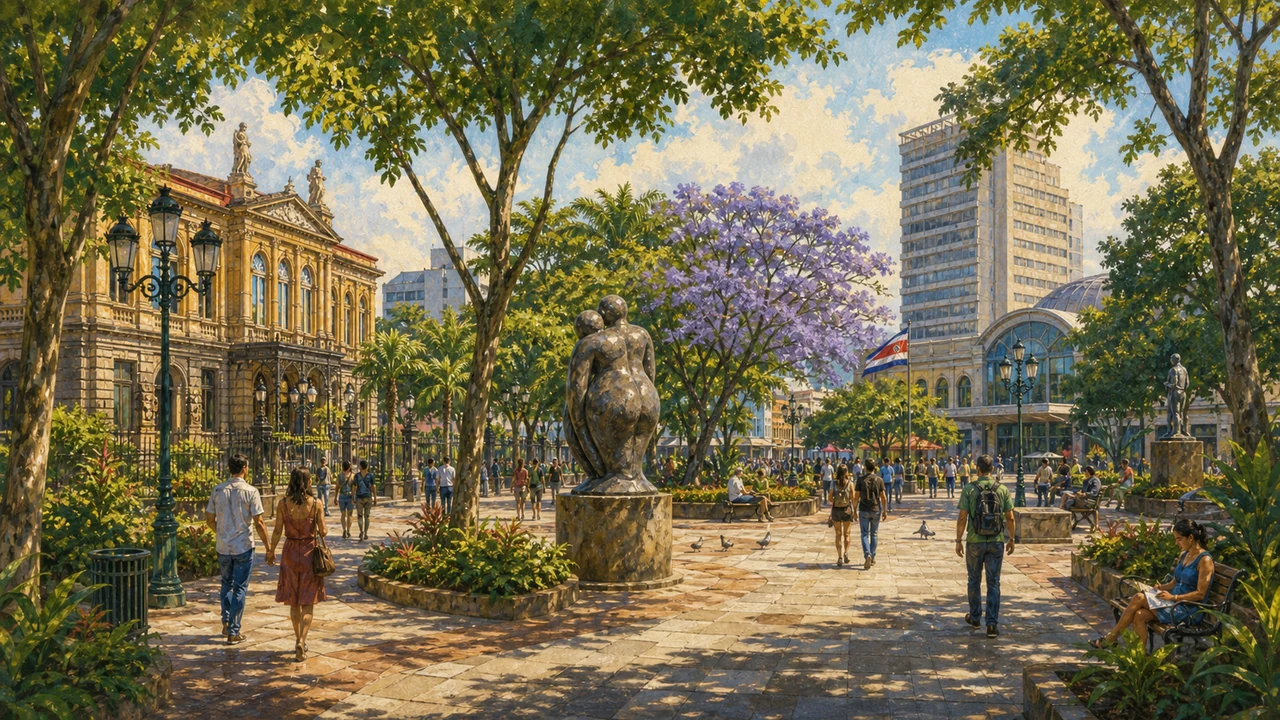
The museum does not end at its walls. The outdoor sculpture garden at the Museo de Arte Costarricense extends the collection into the open air of Parque La Sabana, with works by leading Costa Rican sculptors placed along paths and beneath the park’s mature trees. A slow walk through the garden is a gallery experience in its own right — and unlike indoor galleries, it changes with the light, the weather, and the season.
The park that surrounds the sculpture garden is worth extra time on its own merits. Parque La Sabana’s broad lawns, walking and cycling paths, a lagoon, and sports facilities make it the green heart of the capital, beloved by josefinos of every age. A morning that starts with the museum’s permanent collection and the Salón Dorado can easily extend into an afternoon of park exploration without ever feeling rushed.
Temporary Exhibitions and Contemporary Programming
The museum actively supplements its historical holdings with rotating exhibitions of contemporary Costa Rican and international artists. The curatorial program has spotlighted women artists, indigenous creative traditions, and interdisciplinary work that challenges the boundaries of what a national art museum can be. Checking the museum’s current exhibition schedule before your visit is always worthwhile — even on a return trip there is usually something new.
For travelers interested in the broader arc of Costa Rican artistic tradition, the museum’s holdings connect naturally with the themes explored in the site’s art and folklore section, which covers everything from pre-Columbian influences to the oxcart-painting tradition — a cultural thread that runs through the fine-arts collection as well.
Planning Your Visit
The museum is straightforward to reach from anywhere in central San José. Taxis and rideshares deliver you directly to the park entrance closest to the museum. Westbound city buses along Paseo Colón pass nearby.
- Admission: Free on Sundays; a nominal fee on other days. Verify current rates directly with the museum.
- Hours: Generally open Tuesday through Sunday; confirm schedules before you go as holiday hours may vary.
- Photography: Usually permitted in the permanent galleries without flash; temporary exhibitions may have restrictions — ask at the entrance.
- Accessibility: Ground-floor galleries are accessible; the Salón Dorado on the second floor involves stairs — check with staff about lift availability if needed.
For a fuller picture of the capital, see our guide to San José and explore the wider Costa Rica art and culture offerings. Visitors combining a cultural day in the city with nature excursions will find practical planning advice in our Costa Rica travel tips.
Frequently asked questions
Where is the Costa Rican Art Museum located?
The Museo de Arte Costarricense stands at the eastern entrance to Parque La Sabana in San José. It is easily reached by taxi, rideshare, or westbound city buses along Paseo Colón.
Was the building really an airport?
Yes. The Spanish-Colonial style building served as Costa Rica's first international airport terminal. When flights transferred to Juan Santamaría Airport in Alajuela, the terminal was converted into the national art museum and the surrounding airfield became Parque La Sabana.
What is the Salón Dorado?
The Salón Dorado (Golden Hall) is the museum's most celebrated interior, housed on the second floor. French sculptor Louis Ferón created its sweeping stucco-and-bronze-patina mural, which traces Costa Rican history from pre-Columbian times through the mid-twentieth century.
Is admission to the Costa Rican Art Museum free?
Admission is free on Sundays. A nominal fee applies on other days. Check the museum's official channels for current rates, as pricing may change.
Does the museum have an outdoor sculpture garden?
Yes. The sculpture garden on the museum grounds extends the collection into the open air of Parque La Sabana, with works by leading Costa Rican sculptors placed among the park's trees and walkways.