Costa Rica Culture: Pura Vida, Tico Identity and Traditions
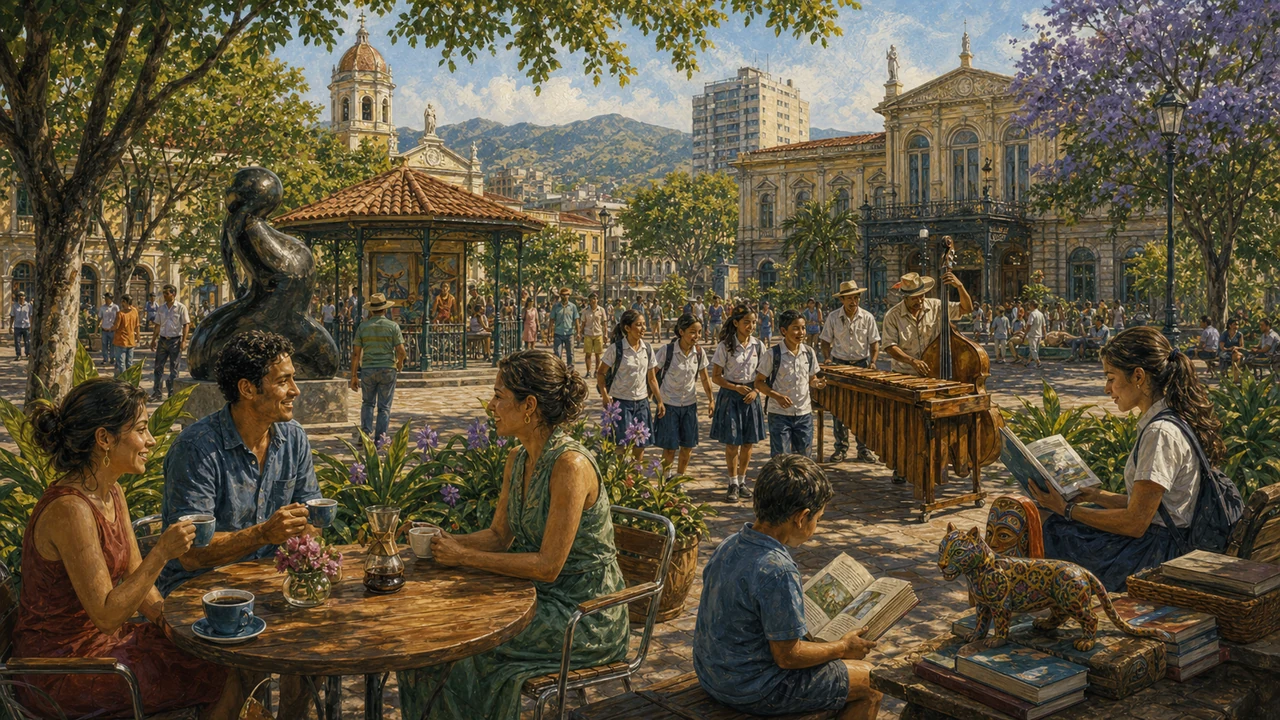
Costa Rican culture is a blend of Spanish colonial roots, indigenous heritage, African influence, and a strong civic ideal built around peace, education, and everyday warmth. Visitors often notice the same things first: people say pura vida with ease, families are central to social life, and the country feels proud of the choices it made after 1948.
That cultural identity shows up everywhere, from food and festivals to music, religion, and regional traditions.
Pura vida and Tico identity
Pura vida is more than a phrase. It is a way of signaling optimism, gratitude, and ease. It is one of the clearest expressions of Tico identity and one of the quickest ways to understand the tone of the country.
Costa Ricans are generally warm, welcoming, and community-oriented. That is not a slogan. It is the social default in most parts of the country.
Religion and public life
Catholicism still shapes the calendar and many family traditions, but Costa Rica is also home to Protestant, Jewish, and other faith communities. Holy Week, the Virgin of Los Angeles, Christmas tamales, and local saints’ festivals all form part of the national rhythm.
Food and daily life
Gallo pinto and the casado are the two dishes most tied to everyday life. One marks breakfast, the other a typical lunch. Together they say a lot about Costa Rican food culture: practical, generous, and rooted in the home.
Music, dance, and regional identity
The marimba, folk dance, and Guanacaste traditions occupy a special place in national identity. On the Caribbean coast, Afro-Caribbean communities in Limón preserve a distinct cultural style through cuisine, music, and language.
Why this matters
Costa Rica’s culture is not a static heritage display. It is a living civic culture that keeps changing while holding onto a few core ideas: peace matters, family matters, the land matters, and daily life should carry a sense of dignity and joy.
For more context, explore Costa Rica Art and Folklore, Costa Rica Music and Dance, and Costa Rica History.
Frequently asked questions
What does pura vida mean in Costa Rica?
Pura vida literally means pure life, but Costa Ricans use it as a greeting, farewell, thank-you, and general expression that life is good.
What is the main religion in Costa Rica?
Catholicism remains the official religion, but Costa Rica protects freedom of worship and has well-established Protestant, Jewish, and other communities.
What is a typical Costa Rican meal?
The casado is the classic lunch, while gallo pinto is the best-known breakfast dish. Both are central to everyday Costa Rican food culture.
What music and dance are traditional in Costa Rica?
The marimba and the Punto Guanacasteco are the best-known traditional forms, while the Caribbean coast adds calypso and reggae to the country's soundscape.
What makes Guanacaste culturally distinct?
Guanacaste has a strong ranching heritage, corn-based cuisine, marimba traditions, and a proud regional identity shaped in part by its annexation from Nicaragua in 1824.