Ancient Art of Costa Rica: Stone Spheres, Jade, and Gold
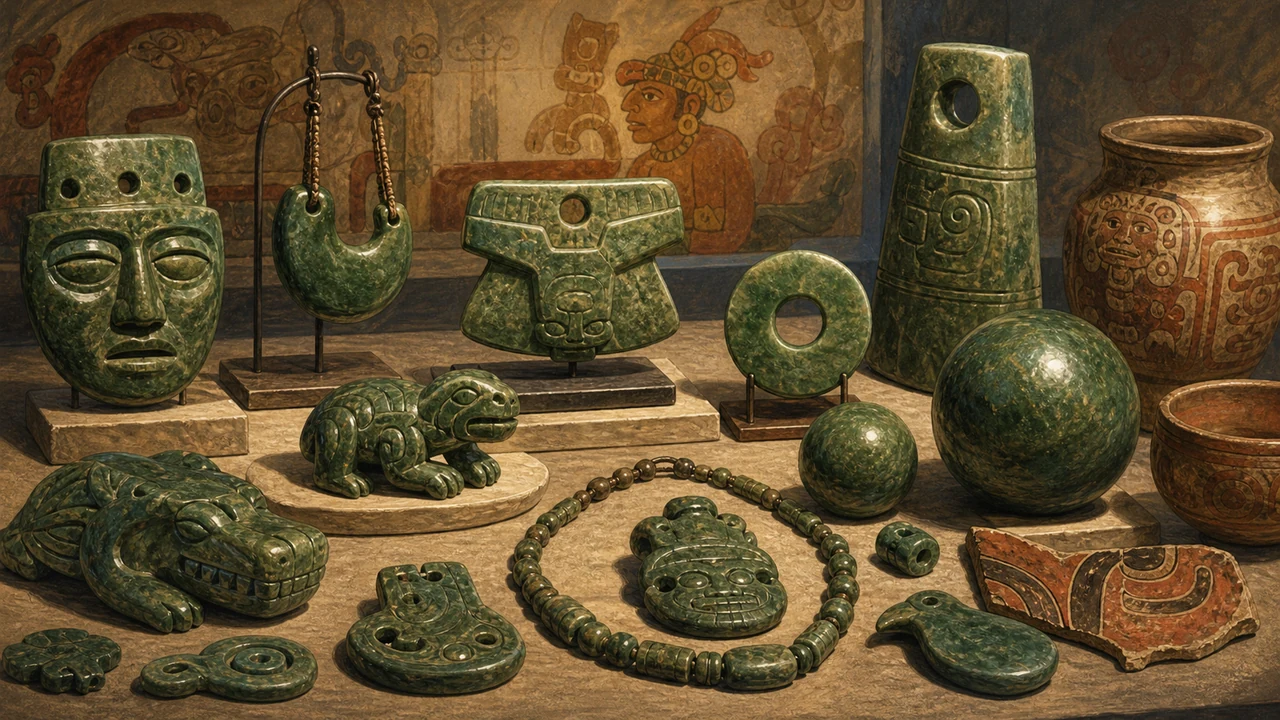
Costa Rica’s pre-Columbian art is not a side note in the country’s history. It is one of the clearest ways to understand how deeply rooted Costa Rican identity is in indigenous creativity, trade, ritual, and skilled craft. Long before the republic, the region produced stone spheres, jade carvings, gold ornaments, ceramics, and carved stone objects that still feel remarkably alive when you see them in person.
For travelers interested in art, archaeology, and museums, San Jose is the best starting point. The National Museum, the Jade Museum, and the Pre-Columbian Gold Museum together form a compact circuit that explains the scale and sophistication of Costa Rica’s ancient cultures.
The stone spheres
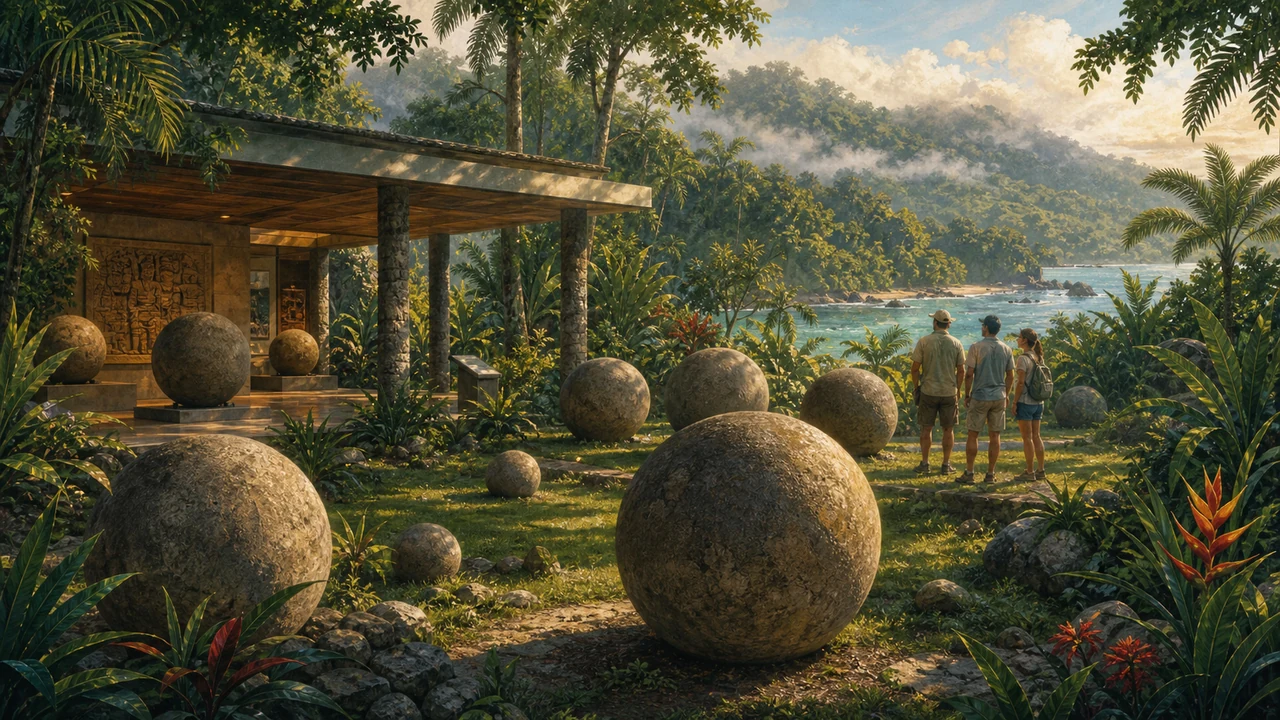
The Diquis stone spheres are Costa Rica’s most famous archaeological mystery. Some are small enough to hold in your hands, while others reach more than two meters in diameter and weigh many tons. They were carved by pre-Columbian societies in the southern Pacific region, likely between 600 and 1500 CE.
Their purpose is still debated. They may have marked status, territory, or ceremonial space. What matters most today is that they show extraordinary control over form, symmetry, and material. UNESCO recognized the Diquis archaeological landscape as World Heritage in 2014, and the best preserved public examples are still found in the south of the country.
Jade as sacred material
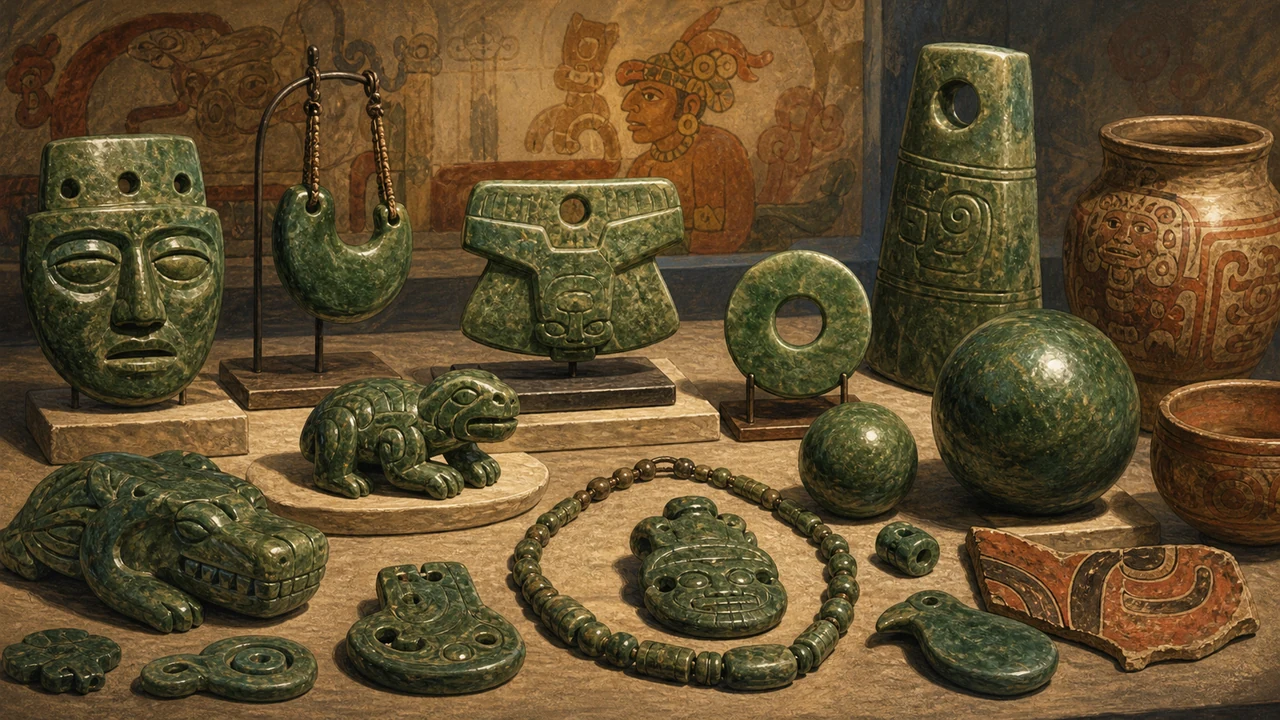
In ancient Costa Rica, jade carried spiritual and social importance. Artisans carved pendants, axes, figurines, and ritual objects from the stone, often using animals and hybrid beings to express ideas about power, life, and transformation. Many of the finest pieces came from the same broad cultural world that connected Costa Rica to Panama and Nicaragua through trade and shared symbolism.
The Jade Museum in San Jose is the best place to understand this tradition. Its collection places the objects in context, showing how jade related to burial customs, religious practice, and elite identity.
Gold, ceramics, and carved stone
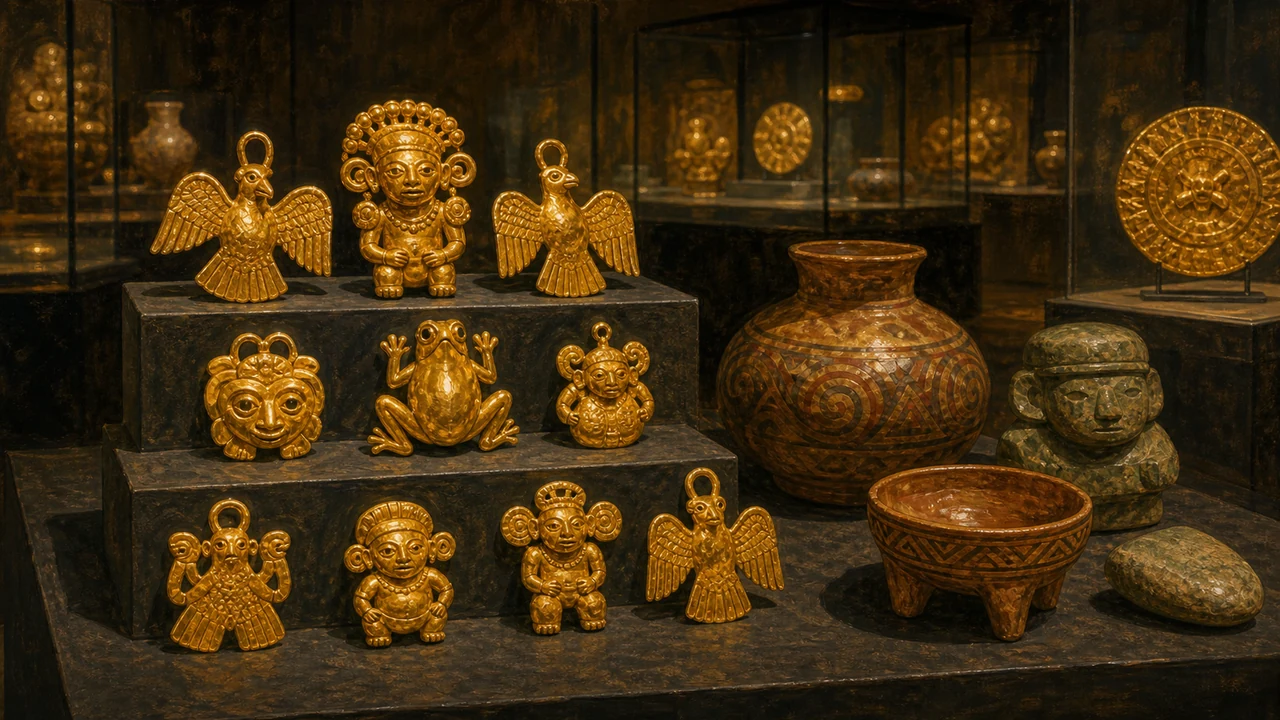
Gold work reached a very high level in southern Costa Rican cultures. Through lost-wax casting and other metalworking methods, artisans created frogs, birds, bells, shamanic figures, and ornaments that combined technical mastery with symbolic meaning. The Pre-Columbian Gold Museum is the strongest single place to see that heritage.
Ceramics were equally important. Polychrome vessels from the Nicoya region, metates carved with animal forms, and ritual objects decorated with geometric patterns all show that ancient Costa Rican art was not limited to precious materials. Everyday life also became a field for visual expression.
Where to go in San Jose
Three museums define the experience:
Together they give visitors a clear picture of how art, ritual, and power worked in ancient Costa Rica. If you are planning a wider trip, pair them with nearby Costa Rica museums and the broader Costa Rica art and folklore section.
Living connections
Ancient art is not trapped behind glass. Communities such as the Boruca and the Chorotega continue to make masks, pottery, and other handcrafted objects that keep older symbolic languages alive. Visiting those communities or buying directly from artisans is one of the most direct ways to connect the past with the present.
For a trip focused on culture, start in San Jose, spend time in the museums, and then move outward to the places where these traditions are still being made.
Frequently asked questions
Where can I see the stone spheres of Costa Rica?
The best place to see them is the National Museum of Costa Rica in San Jose, which displays spheres in its courtyard and explains their archaeological context. Important in situ examples also remain in the Diquis Delta, especially near the Finca 6 archaeological site in the south.
What makes the Diquis stone spheres important?
The Diquis spheres are one of Costa Rica's most distinctive archaeological legacies. They were carved by pre-Columbian societies in the southern Pacific region and remain famous for their near-perfect shape, impressive size, and uncertain original purpose.
Where is the best museum for pre-Columbian jade in Costa Rica?
The Jade Museum in San Jose has one of the country's strongest collections of pre-Columbian jade, including pendants, axes, figurines, and ceremonial pieces. It is the most focused stop for understanding jade as a sacred material in ancient Costa Rica.
What does the Gold Museum in San Jose show?
The Pre-Columbian Gold Museum beneath the Plaza de la Cultura presents gold figures, ornaments, frogs, bells, and ceremonial objects from ancient Costa Rican cultures. It is one of the most important museums in Central America for this subject.
Are there living traditions connected to ancient Costa Rican art?
Yes. Communities such as the Boruca and the Chorotega keep related traditions alive through masks, pottery, and other forms of craft that echo pre-Columbian materials and symbols.