Heredia Real Estate: City of Flowers & Coffee Country
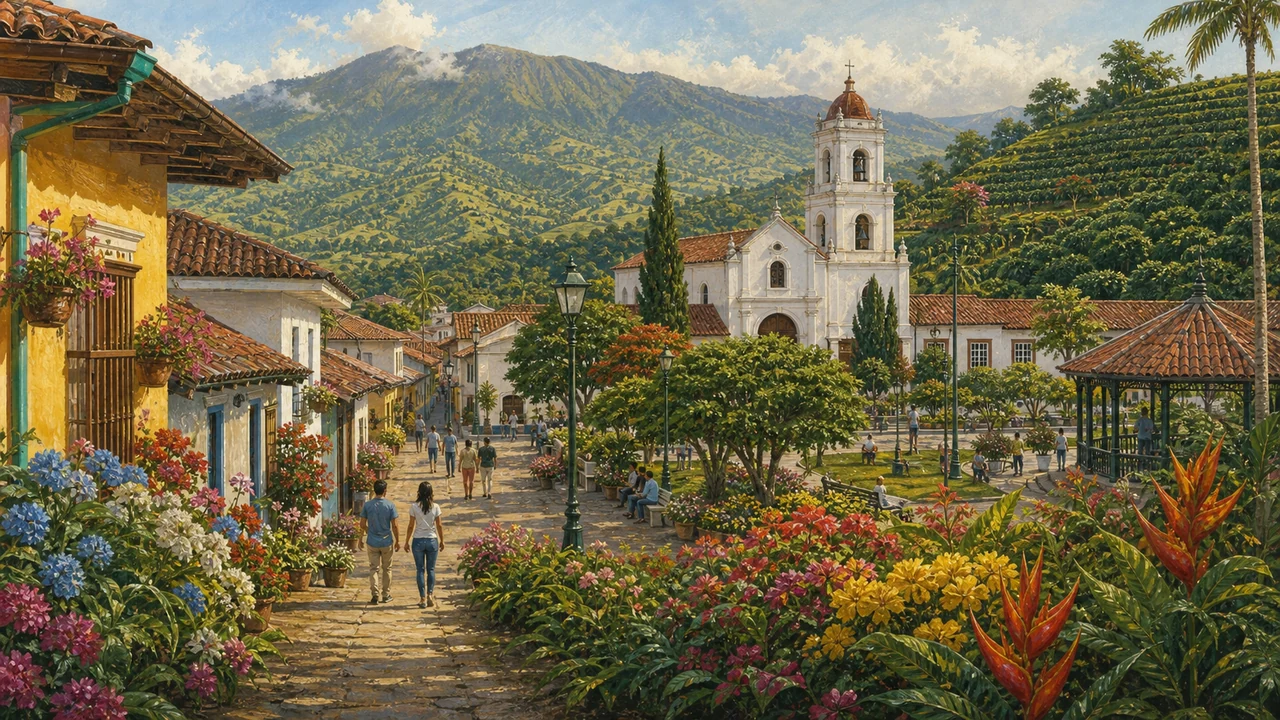 Heredia real estate offers one of the most compelling combinations in Costa Rica: a true Central Valley spring climate, green coffee-country hillsides, family-oriented neighborhoods, and a location that puts San José and the international airport within easy reach. Nicknamed the Ciudad de las Flores — the City of Flowers — Heredia province sits just north of the capital and delivers the convenience of urban life against a backdrop of highland farms and volcano views. For families, professionals, retirees, and expats who want a settled, residential lifestyle rather than a beach-resort scene, it consistently ranks among the most attractive provinces in the country. This guide covers everything you need to know about buying property here — from the best areas and property types to the investment case and practical logistics.
Why buy real estate in Heredia
The appeal of Heredia is grounded in concrete, day-to-day advantages rather than hype.
Quality of life without sacrificing convenience. Heredia gives you quiet, green neighborhoods with lower traffic than central San José, while keeping major hospitals, international schools, shopping centers, and the airport within a short drive. That balance — tranquility without isolation — is exactly what many buyers are searching for.
A stable, residential market. Unlike coastal provinces where the market can be driven by vacation-rental cycles or speculative development, Heredia is anchored by genuine residential demand: Costa Rican professionals, established expat communities, faculty and staff at the Universidad Nacional (UNA), and employees of the multinational and tech companies clustered in the nearby Belén free-trade zone. That breadth of demand supports steady property values.
Safe, family-friendly communities. Heredia has a long-standing reputation as one of the safer, more established residential zones in Costa Rica. Gated communities, walkable neighborhoods with parks and plazas, and good public and private schools make it a natural choice for families.
Foreigner-friendly ownership. As with all of Costa Rica, foreigners purchase titled property here with the same legal rights as citizens — no restrictions, no residency requirement. For a deeper look at national ownership rules and the buying process, see the full Costa Rica Real Estate guide.
Location, climate & lifestyle
Heredia is one of Costa Rica’s seven provinces, occupying the Central Valley highlands directly north of San José. The province extends from the densely settled urban valley floor up into the coffee-growing hillsides around Barva Volcano and further into the northern lowlands, though the residential real estate market is concentrated in the central and south-facing parts of the province.
Climate: At elevations typically ranging from about 1,100 to 1,500 meters above sea level in the main residential communities, Heredia enjoys what Costa Ricans call a primavera eterna — an eternal spring. Daytime temperatures hover in the low-to-mid 20s Celsius (roughly 70–77°F) year-round, nights are pleasantly cool, and the green season (May–November) brings reliable afternoon rains that keep the hillsides intensely green. There is no extreme heat, no humidity comparable to the coast, and no cold winters.
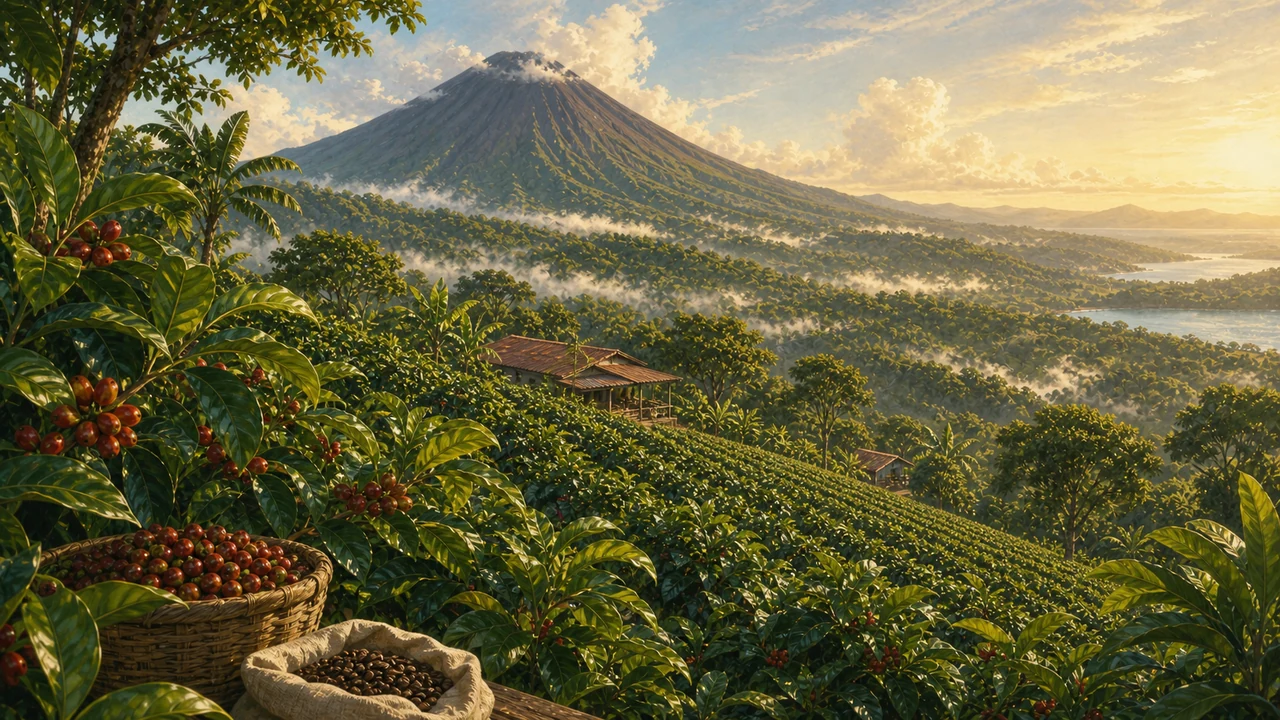
Coffee country character. Much of Heredia’s hillside land is historic coffee-growing territory, and that agricultural history shapes the landscape and the culture. Driving through communities like San Rafael or Barva, you pass working coffee farms, roadside sodas, and century-old stone churches — a texture that buyers consistently describe as distinctly Costa Rican. For more on the province’s famous crop, the Costa Rica coffee page covers the history and culture of this defining industry.
Lifestyle amenities. Heredia city itself has a compact, walkable downtown with a historic central park, good restaurants, banks, and markets. The surrounding communities have modern supermarkets, medical clinics, hardware stores, and fitness centers. San José’s full range of hospitals, malls, and cultural venues is 20–30 minutes away by car. The Universidad Nacional campus in Heredia city adds an academic energy to the province and keeps the area young and intellectually active.
Where to buy: top areas in Heredia
 Heredia province contains dozens of distinct communities. These are the areas that consistently draw the most interest from families, professionals, and international buyers.
San Rafael de Heredia is arguably the most sought-after address in the province. Perched on the slopes above Heredia city, San Rafael offers hillside homes with sweeping views of the Central Valley, cooler temperatures, and a relaxed residential atmosphere. Gated communities with security, pools, and shared green space are common here, alongside larger standalone homes on private lots. The area has excellent infrastructure and a well-established expat presence.
Santo Domingo de Heredia sits at the southeastern edge of the province, essentially adjacent to San José’s upscale Rohrmoser and Sabana districts. It has long attracted Costa Rican professionals and is increasingly popular with expats who want Heredia’s residential character with even faster access to the capital. The streets are quiet, the architecture is a mix of traditional and modern, and the central park area retains a genuine village feel.
San Isidro de Heredia offers good value relative to San Rafael, with hillside properties at a somewhat lower price point and a community of established Costa Rican families. Buyers here tend to be looking for more land or a larger home than the same budget would secure in the prime areas.
Barva is one of the oldest settlements in Costa Rica — its colonial church and town center are among the most intact in the country — and it sits slightly higher and further north than the other communities. It attracts buyers who want a genuine sense of local history and a slightly more rural pace, without losing proximity to the city.
San Joaquín de Flores is a well-organized, safe residential town popular with Costa Rican middle-class families and a growing number of expats drawn by its convenience to both the airport and San José. Properties here tend to be competitively priced for the Central Valley market.
Types of property available
The Heredia market is predominantly residential and covers a wider range than most buyers expect.
- Gated-community homes (condominios cerrados): This is the dominant format in San Rafael and parts of Santo Domingo. Developments range from modest townhome clusters to luxury estates with valley views, and typically include guardhouse security, common areas, and sometimes pools or tennis courts.
- Standalone hillside homes: Independent houses on private lots with open-air terraces and panoramic views of the valley and, on clear days, multiple volcanoes. These tend to sit on larger lots and offer more privacy than condominium developments.
- Condominiums and apartments: Found more commonly in the flatter parts of Heredia city and Santo Domingo, condos serve the professional and student rental market and can offer strong yield relative to purchase price.
- Traditional family homes in established neighborhoods: Solid, often well-maintained homes in long-established residential streets — typically more affordable than gated communities and appealing to buyers who prefer integration with local life over resort-style amenities.
- Coffee fincas and agricultural parcels: The hillsides above the main residential belt still hold working coffee properties, some of which come to market with a mix of farmable land, mature plantings, and a farmhouse. These appeal to buyers seeking a productive agricultural asset, a distinctive lifestyle property, or eventual development potential. Costa Rica’s agricultural heritage — including its famed coffee tradition — is discussed further on the Costa Rica coffee page.
Investment and rental potential
Heredia is not a vacation-rental market in the way Guanacaste or Jacó are. The province serves a different investment thesis — one built on consistent, year-round residential demand rather than seasonal tourism peaks.
Universidad Nacional rental demand. UNA is one of Costa Rica’s leading public universities, with a large student and faculty population that generates steady demand for apartments and small homes near campus. Properties within easy distance of the university tend to lease quickly and maintain high occupancy.
Multinational employment corridor. The Belén area — at the western edge of Heredia province, adjacent to Alajuela — is home to a significant concentration of free-zone companies, technology firms, and multinationals. The employees of these companies, many of them Costa Rican professionals or international assignees with families, are a core rental and buyer demographic throughout Heredia. This employment base provides a structural underpinning for residential demand that is independent of tourism cycles.
Airport proximity as a value driver. Proximity to Juan Santamaría International Airport is a concrete, measurable advantage that buyers consistently rank highly — particularly retirees and part-time residents who travel frequently. Properties in communities with easy airport access carry a demonstrable lifestyle premium.
Long-term appreciation potential. Heredia’s combination of stable demand drivers — a major university, a growing professional employment corridor, proximity to the capital and airport, and a reputation for safety and quality of life — supports a conservative long-term appreciation thesis. This is not a market for speculative flipping, but it is a reliable market for buyers who want a well-located, quality-of-life-driven asset that holds value. For a national-level overview of the investment landscape, the Costa Rica Real Estate guide covers ownership structure, taxes, and due-diligence steps in detail.
Getting there and infrastructure
By road from San José: Heredia city is approximately 11 kilometers north of downtown San José, making it one of the most accessible provincial capitals in the country. The main Heredia highway is well-maintained and heavily traveled by commuters. Rush-hour traffic from and into San José is a real daily consideration for buyers — communities with good secondary-road access or proximity to expressways are noticeably more convenient.
Juan Santamaría International Airport: The airport sits roughly 8–12 kilometers southwest of central Heredia (distances vary by specific community), making Heredia arguably the most airport-convenient province for frequent travelers. This is a practical daily-life advantage that rarely shows up in listing descriptions but matters enormously for retirees, remote workers, and part-time residents.
Healthcare: Heredia province is served by the national CAJA public health network, and the greater Central Valley has Costa Rica’s highest concentration of private hospitals and clinics — institutions such as Hospital CIMA and Clínica Bíblica in San José are within 20–30 minutes of most Heredia communities.
Schools: Both the public school system and a range of well-regarded private and bilingual schools serve the province, making it a natural landing point for families. Several international schools in the broader Central Valley are accessible from Heredia in under 30 minutes.
Infrastructure overall: Heredia has reliable electricity, municipal water, internet connectivity (including fiber in many urban and suburban areas), and good road coverage in the main residential communities. As with anywhere in Costa Rica, it is worth asking specifically about road quality and rainy-season accessibility for properties on steeper hillside lots.
For broader context on daily life, culture, and what to expect when relocating, the Costa Rica general information section covers the fundamentals.
Frequently asked questions
Is Heredia a good place to buy real estate in Costa Rica?
Yes. Heredia is consistently one of the most sought-after residential provinces in Costa Rica among families, professionals, and expats. Its combination of a spring-like Central Valley climate, proximity to San José and the international airport, strong infrastructure, and safe, green neighborhoods makes it a durable choice for both primary residences and long-term investment.
Can foreigners buy property in Heredia, Costa Rica?
Yes. Foreigners own titled (fee-simple) property in Costa Rica with exactly the same rights as citizens. No residency is required to purchase, and you can hold title in your own name or through a Costa Rican corporation. An independent attorney and title search at the National Registry are essential steps before closing.
What are the best neighborhoods to buy in Heredia?
The most popular areas for buyers seeking a combination of safety, amenities, and value include San Rafael de Heredia, Santo Domingo de Heredia, San Isidro de Heredia, Barva, and San Joaquín de Flores. Each offers a slightly different character — from hillside homes with Central Valley views to quiet, walkable village-style streets — while remaining close to San José.
What types of property are available in Heredia?
Heredia offers a broad property mix: gated-community homes, hillside houses with valley and volcano views, modern condominiums, traditional family homes in established neighborhoods, and agricultural or coffee properties (fincas) on the surrounding hillsides. The market is predominantly residential rather than vacation-rental oriented.
How far is Heredia from San José and the international airport?
Heredia city is approximately 11 kilometers north of downtown San José and roughly 8–12 kilometers from Juan Santamaría International Airport, depending on the specific community. The proximity to both the capital and the airport is one of the province's most consistently cited advantages among buyers.