History of Costa Rica: From Ancient Peoples to Modern Democracy
Costa Rica’s history spans tens of millions of years of geological drama, millennia of indigenous civilization, three centuries of Spanish colonial rule, and nearly two centuries of independent democracy — making it one of the most remarkable stories in the Americas.
The Land Before People
 Some 60 million years ago, the territory that would become Costa Rica did not exist. During the Tertiary Period, the ocean floor folded and thrust a mountain range above sea level. Intense volcanic activity — still visible today in the country’s active cones — formed the Central American Isthmus, a narrow land bridge connecting North and South America. This bridge proved decisive for the planet’s biodiversity, allowing species to migrate between two continents, which is why Costa Rica today shelters roughly 5% of the world’s biodiversity in a territory the size of West Virginia.
Pre-Columbian Peoples and the Cacicazgo Era
Between 12,000 and 8,000 BCE, the first human inhabitants arrived, hunting large animals — giant sloths, mastodons — that are now extinct. Over millennia they shifted from nomadic hunting to settled agriculture, cultivating corn, yucca, sweet potatoes, and beans across the tropical highlands and coastal lowlands.
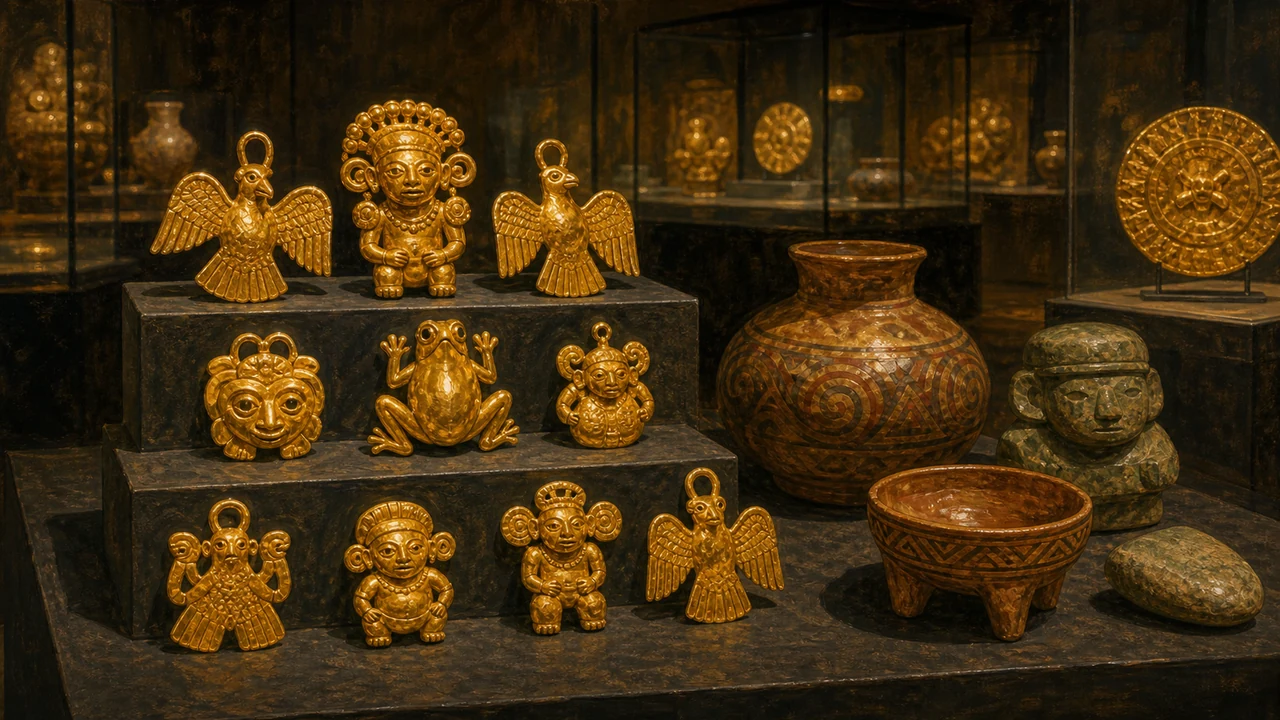
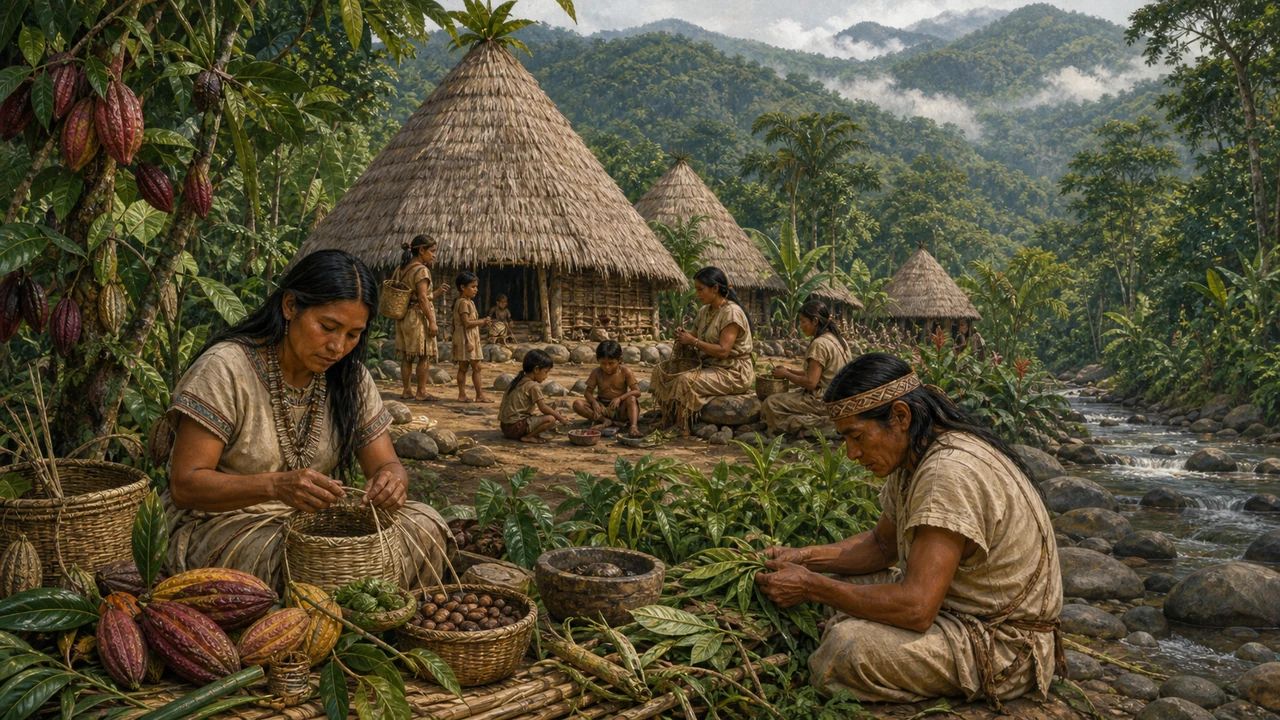 By the early centuries of the Common Era, pre-Columbian peoples of Costa Rica were organized into cacicazgos — chiefdoms led by a hereditary Cacique (headman). Power passed through the maternal line, a distinct feature that set these cultures apart from those to the north. Trade networks stretched from Mexico and the Maya world in the north to Ecuador and Colombia in the south; jade and later gold were prestige goods that moved along these routes. The beautifully worked pre-Columbian gold and jade artifacts displayed in San José’s Museo del Oro and Museo del Jade offer a vivid window into this era.
Architecture varied by region. People of the North Pacific built rectangular wooden structures, while Central Valley communities preferred circular dwellings. Along the Atlantic and South Pacific coasts, large communal palenques — thatched log houses sheltering hundreds of people — were protected by wooden palisades. Spiritual life was guided by shamans who mediated between the natural and supernatural worlds, conducting ceremonies in temples larger than ordinary homes.
At the start of the 16th century, roughly 400,000 people lived in Costa Rica, speaking many languages and organized into politically diverse, largely autonomous communities.
Spanish Conquest and the Colonial Period
In 1502, Christopher Columbus arrived on his fourth voyage to the Americas, landing on the Caribbean coast near present-day Limón. What followed was catastrophic for the indigenous population: European diseases — smallpox, measles, influenza — swept through communities with no immunity. Within a century, the indigenous population had collapsed from around 400,000 to roughly 10,000. This demographic disaster profoundly shaped Spanish colonization of Costa Rica: the colonizers found almost no large labor pool to exploit, making the colony one of the poorest and most remote in the empire.
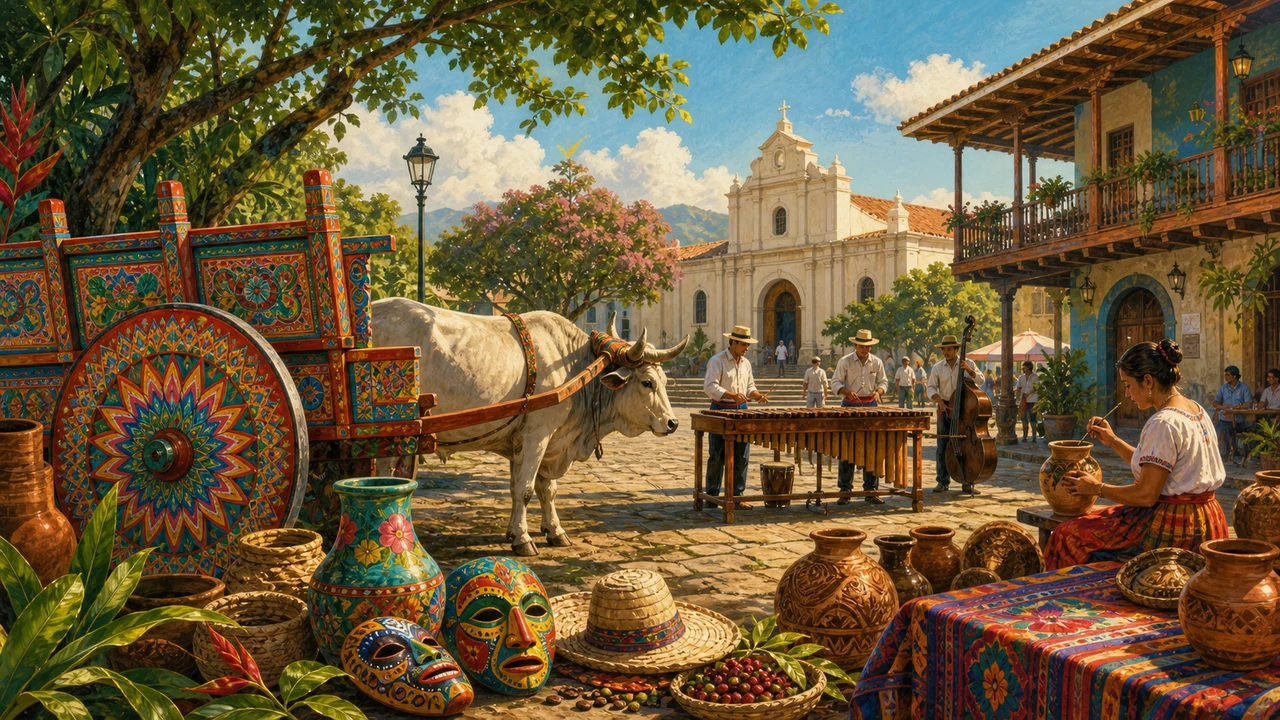
 By the 17th century, a small, impoverished settler population had concentrated in the Central Valley, farming to survive. Unlike wealthier colonies to the north, Costa Rica had no great mineral wealth to mine and no large captive workforce. Most colonists worked their own land — a circumstance historians credit with fostering the egalitarian, smallholder culture that later defined Costa Rican society.
The 18th century brought growth. Cities were founded in the Central Valley — Heredia (1706), San José (1736), and Alajuela (1782) — and the population slowly climbed. Tobacco and aguardiente (cane liquor) became commercial products. The Atlantic province of Talamanca remained largely outside Spanish control, its indigenous communities fiercely resisting conquest; a major uprising led by Cacique Pablo Presbere in 1709 symbolized that resistance.
For the full story of the colonial period and the banana enclave era, see Costa Rica History, Part 2.
Independence and the Coffee Republic (1821–1900)
On September 15, 1821, the Central American provinces declared independence from Spain simultaneously. Costa Rica learned of independence a month later by mail — a telling detail about just how remote it was from the centers of colonial power. The years immediately after independence brought internal disputes over which city should govern, resolved after the Battle of Ochomongo in favor of San José. The annexation of the Nicoya Peninsula from Nicaragua in 1824 fixed the country’s borders roughly as they are today.
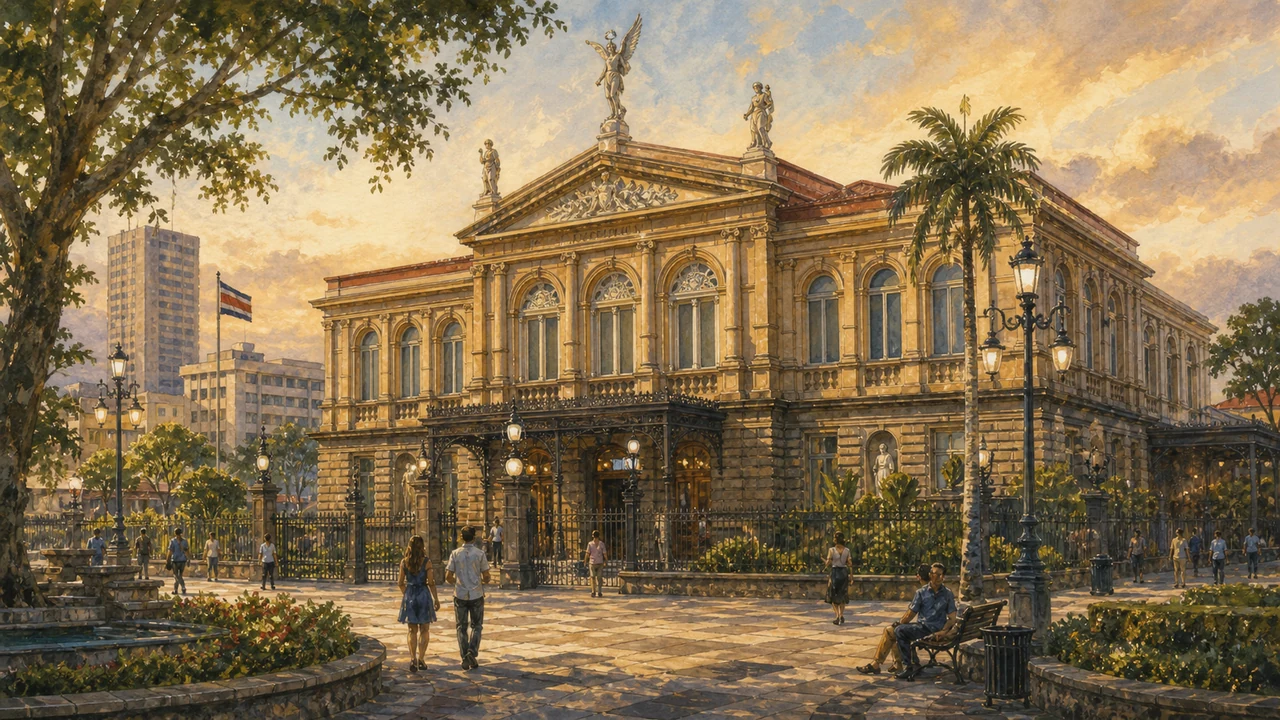
The transformation that truly built modern Costa Rica was coffee cultivation in the 19th century. By the 1840s, coffee exports were bringing real wealth for the first time, financing roads, schools, and eventually the spectacular National Theater in San José (inaugurated 1897). Costa Rican coffee found eager markets in Europe, and the trade created a prosperous smallholder class distinct from the plantation oligarchies that dominated neighboring countries.
The mid-century was not without crisis. The North American mercenary William Walker, who had seized power in Nicaragua, threatened to absorb all of Central America. Costa Rican president Juan Rafael Mora raised a volunteer army of farmers and craftsmen. This unlikely force defeated Walker at the battles of Santa Rosa (1856) and Rivas (1857). The hero of those battles, Juan Santamaría — a young, humble volunteer who torched an enemy stronghold at the cost of his own life — became Costa Rica’s greatest national hero. His sacrifice is commemorated every April 11, a national holiday.
The 20th Century: Democracy, Civil War, and Peace
 The early 20th century brought social and political awakening. The banana industry, driven by the United Fruit Company along the Caribbean coast, drew Caribbean and Chinese workers and created the multicultural, Afro-Caribbean community centered on Limón. Free elections for men were introduced in 1913. The University of Costa Rica was founded, a Social Security system established, and a Labor Code enacted — all before the defining crisis of 1948.
Political tensions between competing factions boiled over into a brief civil war in 1948 — the most violent episode in Costa Rica’s modern history. In roughly six weeks of fighting, more than 2,000 people died. When the fighting ended, José Figueres Ferrer’s victorious junta made a decision that would define Costa Rica forever: in December 1948, the military was abolished. The 1949 constitution enshrined this in law. The money previously spent on soldiers was redirected to education and healthcare.
The result was dramatic. While neighboring countries fell into dictatorships and civil conflicts throughout the Cold War decades, Costa Rica became the oldest stable democracy in Latin America, with no standing army — a point of deep national pride. Women gained the right to vote in 1949. Life expectancy climbed steadily.
Modern Costa Rica and the Peace Legacy
In the 1980s, when Central America was convulsed by civil wars in Nicaragua, El Salvador, and Guatemala, Costa Rica’s role as a neutral, peaceful nation became a regional asset. President Óscar Arias Sánchez crafted the Esquipulas II Peace Accord in 1987, a blueprint for ending the regional conflicts. It earned him the Nobel Peace Prize that same year, connecting Costa Rica’s identity with peaceful diplomacy on the world stage.
The late 20th century also saw the rise of ecotourism and nature conservation as defining pillars of the economy. Costa Rica now protects more than 25% of its territory in national parks and reserves, a global model for conservation. High-tech manufacturing, medical tourism, and sustainable agriculture have diversified an economy once almost entirely dependent on coffee and bananas.
Today Costa Rica is a vibrant democracy of about five million people, consistently ranking among the happiest and most environmentally sustainable nations on earth. Its national symbols — the guaria morada orchid, the clay-colored thrush, the guanacaste tree — reflect a culture that takes pride in nature as much as in history. The story of how a remote, poor Spanish colony became one of Latin America’s success stories is one worth understanding before you visit.
Dive deeper into Costa Rica’s past:
- Part 2 — Spanish Conquest, Colonial Era & the Banana Enclave
- Part 3 — 20th-Century Democracy, Civil War & the Nobel Peace Prize
- Why Visit Costa Rica — how history shaped a destination
- Costa Rica National Symbols — flag, anthem, and more
- Costa Rica Coffee — the crop that built modern Costa Rica
Frequently asked questions
When did Costa Rica gain independence?
Costa Rica declared independence on September 15, 1821, along with the other Central American republics, ending Spanish colonial rule. San José eventually became the seat of government after a brief internal power struggle.
Why does Costa Rica have no army?
After the brief but deadly 1948 civil war, president-elect José Figueres Ferrer dissolved the military in December 1948. The 1949 constitution made this permanent, redirecting defense spending into education and healthcare.
Who were the original indigenous peoples of Costa Rica?
Before European contact, Costa Rica was home to several distinct groups organized as cacicazgos (chiefdoms), including the Bribri, Cabécar, Boruca, Maleku, and Chorotega. Around 400,000 people lived here at the start of the 16th century.
What role did coffee play in Costa Rica's history?
Coffee transformed Costa Rica in the mid-1800s, funding infrastructure, expanding the middle class, and connecting the country to world trade. It financed the construction of the National Theater and helped establish the stable, educated society Costa Rica is known for today.
Did Costa Rica win a Nobel Peace Prize?
Yes. President Óscar Arias Sánchez won the Nobel Peace Prize in 1987 for his efforts to end civil conflicts throughout Central America, building on Costa Rica's tradition as a neutral, peace-seeking nation.