Costa Rica Government Bureaucracy and Public Administration
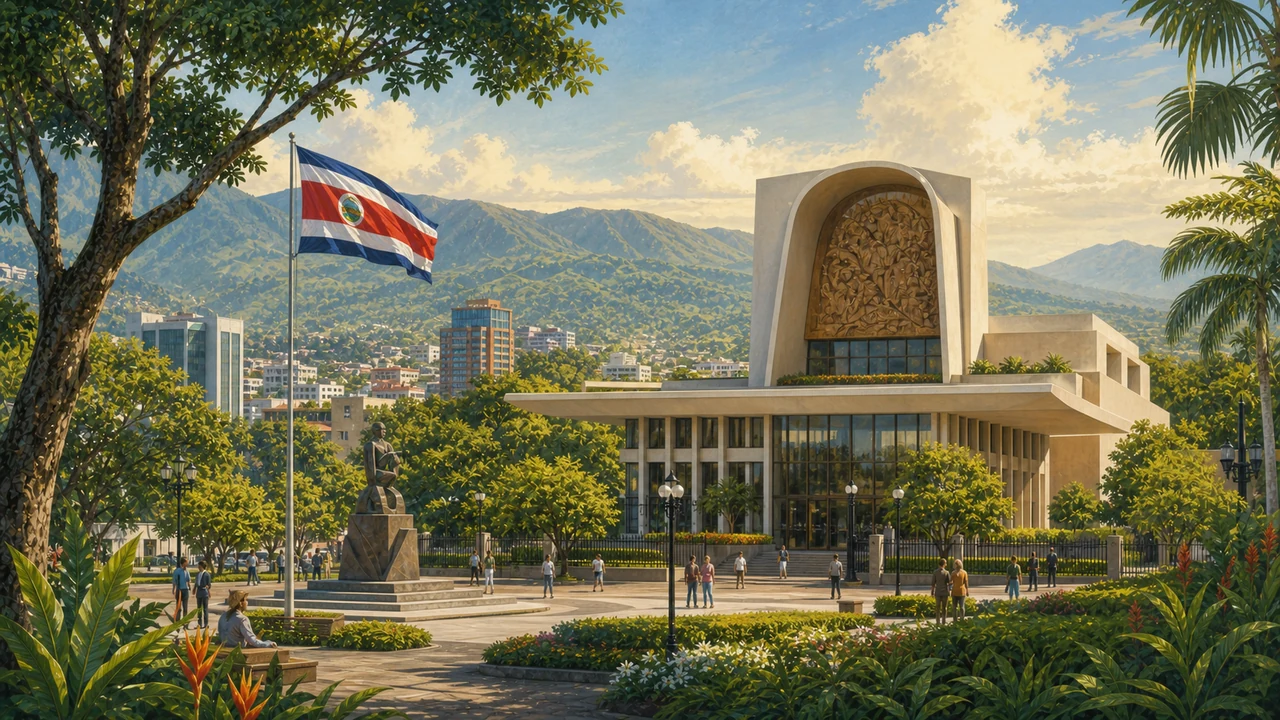
Costa Rica’s bureaucracy is often more visible than visitors expect, but it is also one of the reasons the country feels orderly and institutionally mature. The state is not minimalist. It is organized, layered, and built around a long democratic tradition that has emphasized civilian government, strong institutions, and public services that reach deep into daily life. For residents, that means paperwork, offices, and formal processes. For travelers, it means a country where institutions tend to work, even if they sometimes work slowly.
If you want broader background on the country, the Costa Rica general information section and the page on why Costa Rica has no army are good places to start.
The three branches of government
Costa Rica follows the standard presidential model found across much of Latin America, but with a particularly strong commitment to separation of powers.
The Executive Branch is led by the President, who is elected for a four-year term and appoints a cabinet of ministers. The executive oversees national policy, the ministries, and the state-owned enterprises that handle essential services.
The Legislative Branch is the 57-seat Legislative Assembly. Deputies are elected by province through proportional representation, and the assembly passes laws, approves budgets, and monitors the executive.
The Judicial Branch is headed by the Supreme Court of Justice, supported by lower courts and specialized chambers such as the Constitutional Chamber. The courts have a serious role in public life, and constitutional review is part of the country’s everyday civic architecture.
Costa Rica also has an independent electoral authority, the Supreme Electoral Tribunal, which helps explain the country’s reputation for stable, credible elections.
Autonomous institutions
One of the most distinctive parts of Costa Rica’s public administration is the network of autonomous institutions that operate with significant independence from the central government.
- CCSS manages the public health system and pensions. It is central to the country’s social model and to the way most residents access health coverage.
- ICE handles electricity generation and, historically, telecommunications infrastructure. It has played a major role in Costa Rica’s renewable energy development.
- AyA manages water and sewer systems across much of the country.
- Public universities such as the UCR support a strong educational system that feeds into the country’s literacy and civic culture.
This structure can feel dense to newcomers, but it also helps explain why Costa Rica has such reliable basic services compared with many countries in the region.
Provinces, cantons, and districts
Costa Rica is divided into 7 provinces: San Jose, Alajuela, Cartago, Heredia, Guanacaste, Puntarenas, and Limon. Provinces matter for geography and some electoral representation, but the real day-to-day level of local government is the canton.
There are 82 cantons, each with its own elected municipal council and mayor. Cantons manage local infrastructure, building permits, waste collection, and many local fees. Beneath cantons are districts, which are administrative subdivisions used for census and location purposes.
If you are renting, buying property, or dealing with zoning and permits, the municipality is usually the office that matters most. That is why local knowledge matters so much in the Costa Rica real estate and business sectors.
What public administration feels like
Costa Rican bureaucracy is not especially casual. It expects documentation, patience, and attention to process. That can frustrate newcomers, but it also produces consistency.
Most public offices operate on weekday schedules. Original documents and copies are often required. Foreign documents may need apostilles or certified translations. Some procedures can begin online, but many still require a visit to a government office or a notary.
The Registro Nacional is a key institution for property, vehicles, business registrations, and civil records. It is one of the best examples of how formal and structured Costa Rican administration can be.
For practical matters, a gestor or administrative assistant can help navigate filings, residency steps, and vehicle transfers. For straightforward requests, however, the online portals and in-person offices are usually enough if you arrive prepared.
Why the system matters
Costa Rica’s bureaucratic structure is not just paperwork for its own sake. It reflects a political choice. After abolishing the army in 1948, the country invested heavily in health, education, water, electricity, and democratic institutions. The result is a public sector that reaches deep into society and helps sustain a high quality of life.
That choice still shapes how the country works today. Roads, schools, clinics, utilities, and elections all sit inside a civic framework that values continuity over improvisation. It is one reason many visitors find Costa Rica easier to trust than they expected.
Practical tips
- Bring more documents than you think you need.
- Keep both originals and copies on hand.
- Check current requirements with the institution directly.
- Expect queues at busy offices, especially near month-end.
- Use online services when available, but do not assume every process is fully digital.
- Keep colones available for fees and small administrative payments.
For a broader introduction to the country, the Costa Rica travel tips page is useful for visitors, while the country details section adds more background for readers who want the full picture.
Frequently asked questions
How is the Costa Rican government structured?
Costa Rica is a presidential republic with three branches of government: the Executive, the Legislative Assembly, and the Judiciary. A separate electoral tribunal oversees elections, and autonomous institutions handle many public services.
Why is Costa Rica's public sector so important?
Autonomous institutions such as the CCSS, ICE, and AyA play a central role in health care, electricity, water, and pensions. They are a defining feature of Costa Rica's public administration and explain much of the country's institutional stability.
Does Costa Rica have an army?
No. Costa Rica abolished its army in 1948 and has relied on civilian police and diplomatic institutions ever since. The country redirected resources toward education, health, and social services.
How is Costa Rica divided administratively?
The country has 7 provinces, 82 cantons, and districts beneath them. Local government happens mainly at the cantonal level, where elected municipal councils and mayors manage permits and local services.
What should visitors know when dealing with government offices?
Bring original documents and copies, expect weekday office hours, and allow extra time for queues. Many procedures now have online steps, but in-person paperwork is still common for residency, vehicles, and property matters.