Limón: Afro-Caribbean Culture, Cuisine & Carnival
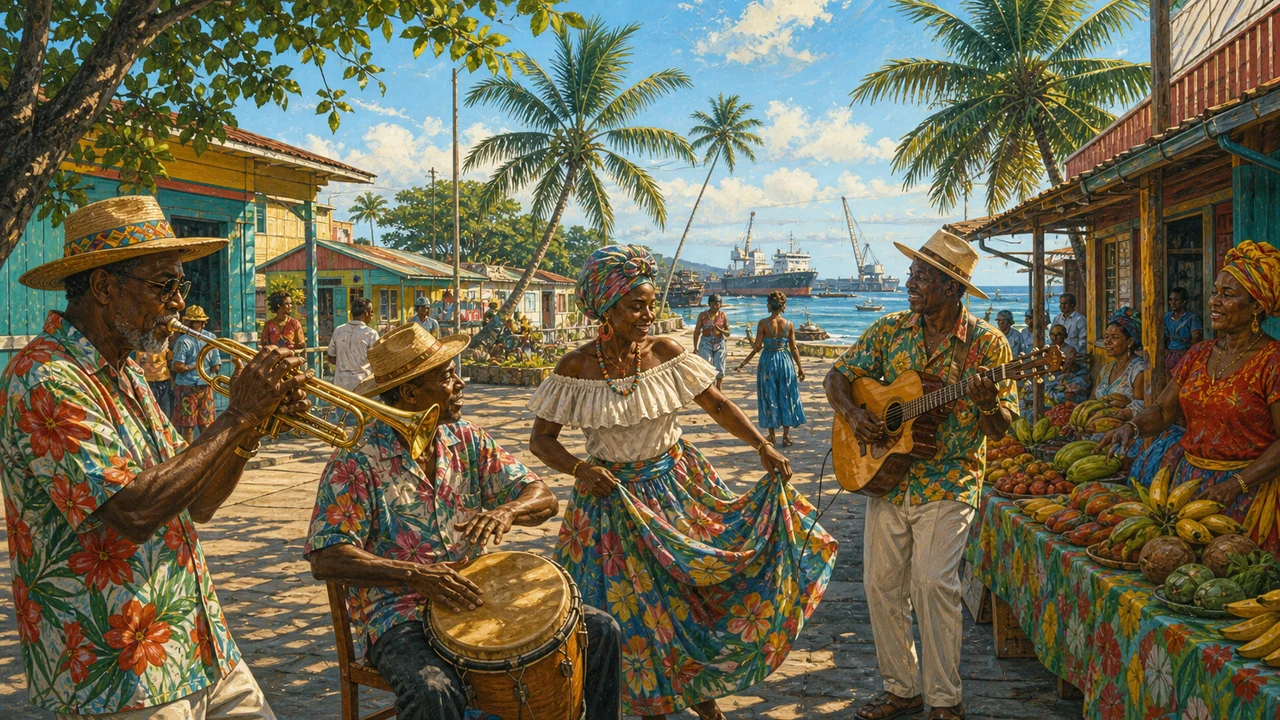
Limón province is the beating heart of Costa Rica’s Afro-Caribbean identity — a place where calypso rhythms drift from open doorways, coconut milk perfumes every kitchen, and a living Creole language bridges Africa, Jamaica, and Central America. Stretching nearly 200 kilometers along the Caribbean coast and bordering both Nicaragua and Panama, this colorful province offers a cultural experience unlike anywhere else in the country.
A Heritage Born from Two Continents
The Afro-Caribbean identity of Limón traces directly to the late 19th century, when thousands of Jamaican and West Indian laborers were recruited to carve the Atlantic Railroad through dense jungle. They brought with them a rich cultural toolkit: West African oral traditions, Baptist and Methodist faith, calypso music, cricket, and a style of cooking inseparable from coconut.
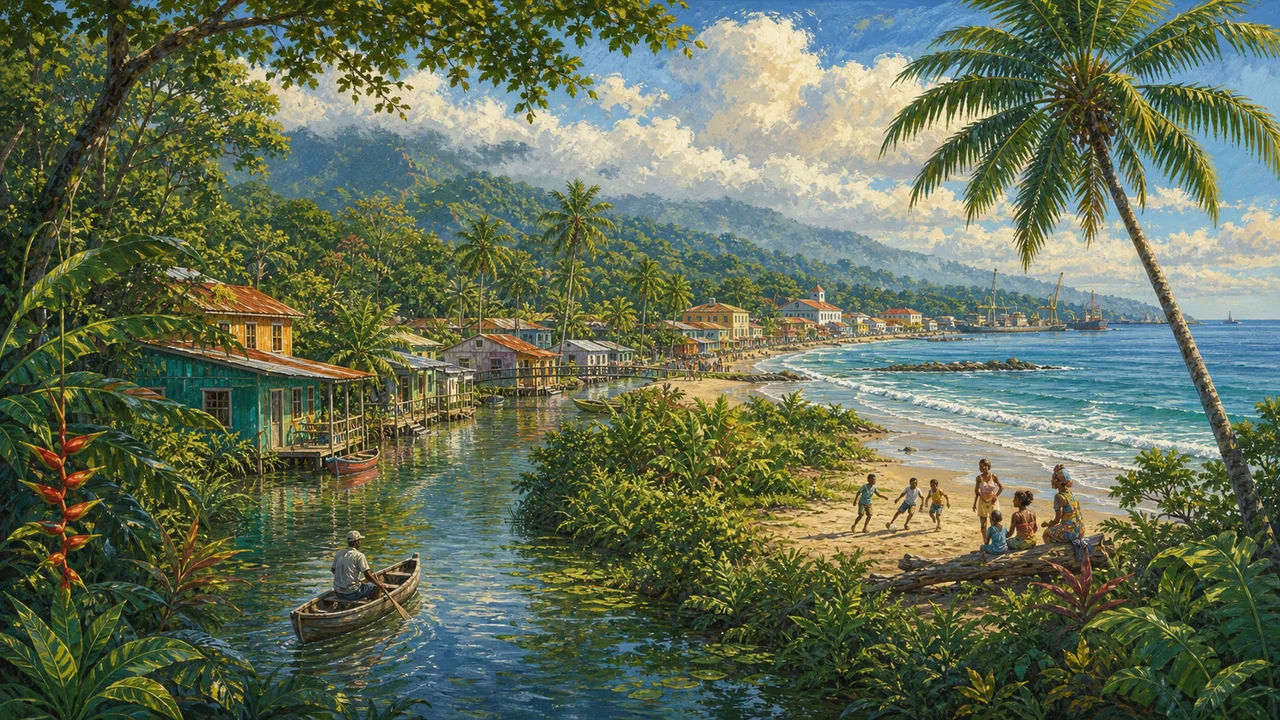
Most Limonenses who descend from those original workers identify strongly with their Jamaican and West Indian heritage in Costa Rica. Family recipes, folk remedies, proverbs, and musical forms passed orally through generations remain vibrantly alive. African-origin ingredients — ackee, okra, breadfruit, plantain — still appear in daily cooking alongside aromatic herbal teas whose names echo Yoruba and Twi roots. This layered heritage is what gives Limón its unmistakable energy: warm, syncretic, and deeply proud.
Chinese immigrants also arrived during the railroad era and stayed, enriching the local palate with their own culinary traditions. The result is a port city whose menus reflect Asia, Africa, Jamaica, and the Americas all at once.
Mekatelyu — The Living Creole Language
Walking through Puerto Limón’s market or sitting in a neighborhood soda, you will hear a language that sounds like English filtered through centuries of tropical sun: Mekatelyu, the English-Creole of Costa Rica’s Caribbean coast. The name derives from the Creole phrase “me can tell you,” and the language itself evolved from the Jamaican patois the original railroad workers spoke.
Mekatelyu blends West African phonology, English vocabulary, and Spanish loanwords into a melodic vernacular that linguists classify as a distinct creole. Older generations may use it as a primary language; younger speakers often code-switch fluidly between Mekatelyu, Spanish, and standard English. Hearing it spoken is one of the most memorable sensory experiences of a visit to the Caribbean coast — a reminder that this corner of Costa Rica has always faced the wider Atlantic world.
The Rhythm: Calypso, Reggae, and Steel Drum
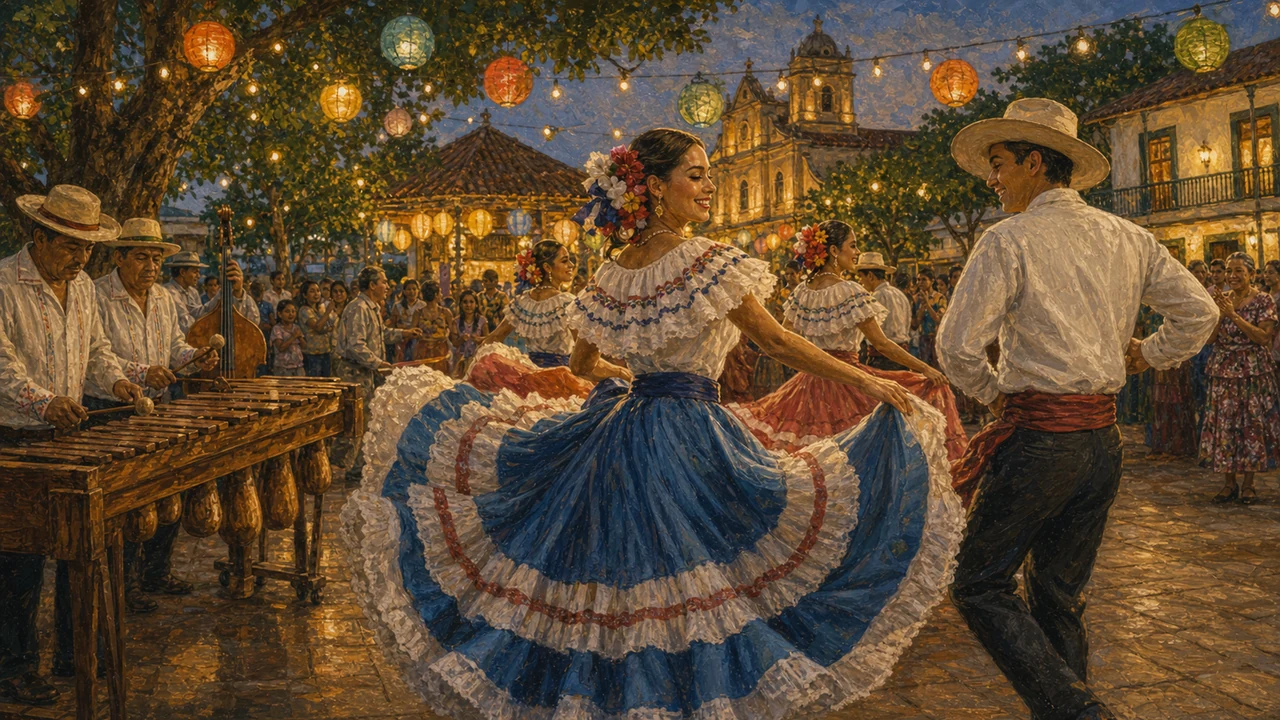
Music is inseparable from daily life in Limón. Calypso music of the Costa Rican Caribbean developed its own local character in the early 20th century, with lyricists who used the genre’s traditional wit and social commentary to narrate life on the banana plantations and in the port. Legendary figures like Walter Ferguson — dubbed the “King of Calypso” — recorded dozens of songs in Mekatelyu that are now considered cultural treasures.
Reggae arrived later and found equally fertile ground, blending with calypso, soca, and cumbia in the bars and open-air venues that line the coast from Puerto Limón south to Puerto Viejo. Live music is a constant presence, especially on weekends and during the October Carnival season. If you want to understand the Caribbean soul of Costa Rica, follow the sound of the steel drum.
The Limón Carnival — October’s Big Week
One of the most exhilarating events on Costa Rica’s cultural calendar, the Limón Carnival in October transforms the provincial capital into a sea of color, drumbeats, and dancing for an entire week. The celebration is traditionally timed to coincide with Columbus Day — marking the date in 1502 when Christopher Columbus made landfall off this very coast — and was revived in its modern form in 1949, championed by local barber and community leader Alfred Henry King.
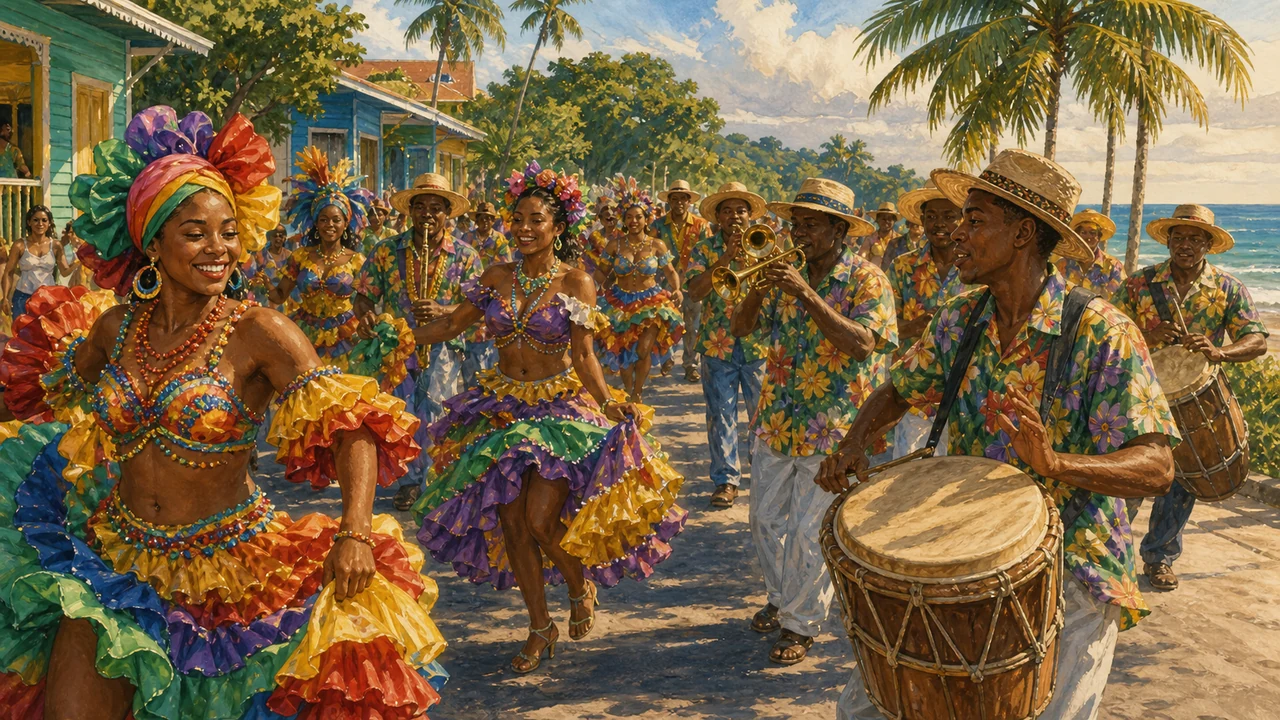
The Carnival’s roots reach back to African masquerade traditions that evolved in the Caribbean islands into John Canoe (Jonkonnu) festivals — colorful, satirical street performances blending music, masks, and dance. Those traditions crossed to Limón with the railroad workers and kept alive through community celebration. Today the streets fill with elaborate costumed parades, steel-drum and calypso bands, reggae sound systems, and the infectious energy of tens of thousands of participants and visitors. It is one of the most celebrated carnivals in all of Central America and a highlight for anyone visiting the Caribbean coast.
Flavors of the Caribbean Kitchen
To know Limón is to eat Limón. The Afro-Caribbean cuisine of Costa Rica’s Caribbean coast is defined by a handful of essential techniques and ingredients — above all, coconut milk, which enters everything from the breakfast plate to the Sunday stew pot.
Rice and beans cooked in coconut milk is the emblematic dish: red kidney beans simmered with thyme, peppers, and creamy coconut milk, then combined with rice. It looks similar to the Central Valley’s gallo pinto but tastes entirely different — richer, more aromatic, distinctly Caribbean. Do not make the mistake of calling them the same thing within earshot of a Limonense.
Rondón (from the English “run down”) is the region’s great stew: fish, yuca, plantain, and other root vegetables slowly simmered in coconut milk seasoned with chile and herbs. The name reflects the method — you “run down” the coconut milk to a thick, fragrant sauce. Pati are savory pastries filled with spiced meat, a direct descendant of Jamaican paties, sold warm from bakeries and market stalls.
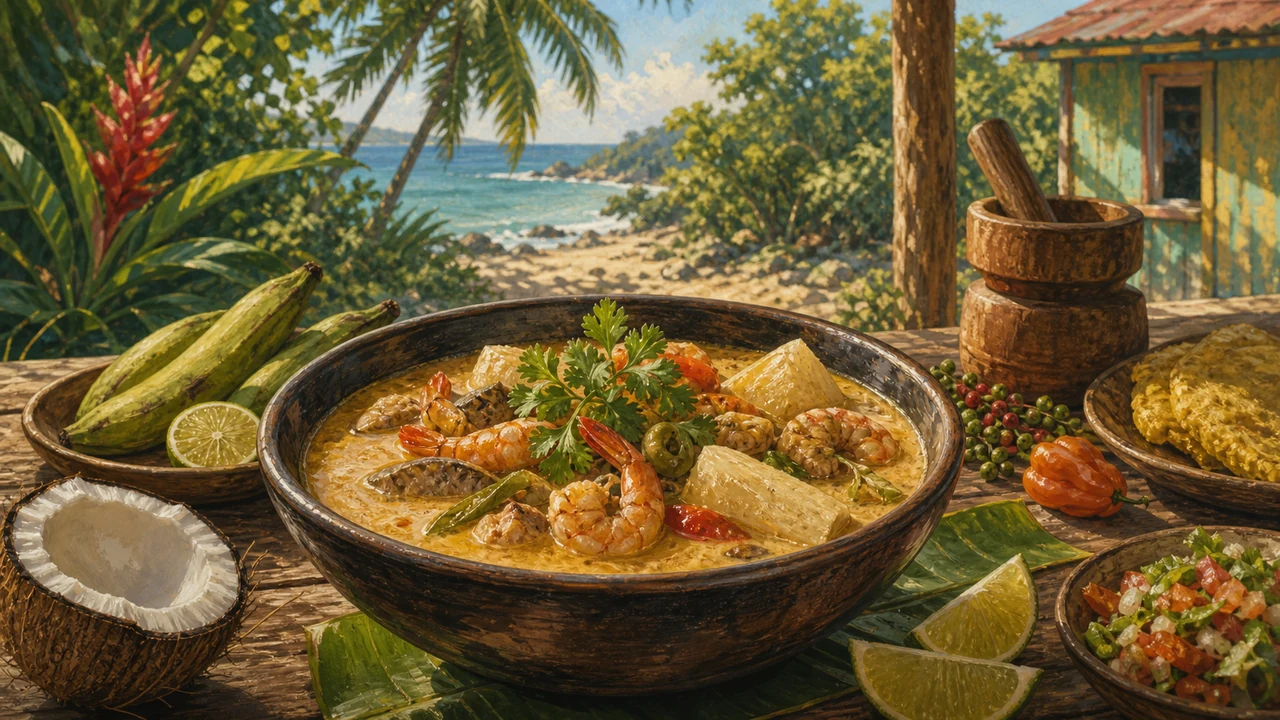
Other traditional foods include:
- Tie-a-leaf (taya lif) — a small green plantain tamale wrapped and steamed in a leaf
- Dokunu — a sweet tamale of corn flour and coconut milk, also called “blue dress”
- Johnny cake — a round coconut milk bread (the name derives from “journey cake”) that stays fresh for days, a legacy of working life on the plantations
- Agua de sapo — a bright, cooling drink of lemon juice, ginger, and molasses, the Caribbean coast’s answer to lemonade
Recipes in Limón pass from grandmother to grandchild the way songs do — orally, with pride. Even the youngest Limonenses know the authentic flavors of their food, and the region’s central market is the best place to taste all of them in one afternoon. Sodas (small local restaurants) throughout Puerto Limón serve these dishes daily.
The Railroad That Built a Culture
The story of why Limón is the way it is cannot be told without the Atlantic Railroad. In 1871, President Tomás Guardia contracted Minor Cooper Keith — a U.S. entrepreneur — to build a rail line connecting the Central Valley to Puerto Limón, so that Costa Rican coffee could reach world markets via the Atlantic rather than the Pacific. The route covered roughly 200 kilometers of rugged jungle and mountain terrain.
Construction was brutal. The project took nearly two decades, cost the lives of thousands of workers (many of them Jamaican and West Indian laborers), and buried the government in debt. The railroad was completed in 1890 and remained the primary connection between San José and Puerto Limón until the early 1970s. As part of payment for his work, Keith received land concessions and founded the United Fruit Company, which shaped the entire Caribbean lowlands — and the lives of its people — for generations.
A historic workers’ strike on the banana plantations in 1934 was one of the first major labor actions in Costa Rican history, cementing the Caribbean coast’s role in the country’s social development. The railway museum in San José and the port at Puerto Limón both preserve this memory. Traveling to Costa Rica gives you the context; Limón gives you the living legacy.
Visiting Limón Province
Puerto Limón is the provincial capital and a practical base for exploring the broader region. The city’s central market is an essential stop — stalls sell tropical fruits, Caribbean spices, handmade goods, and ready-to-eat local food. Accommodations range from budget guesthouses to comfortable lodges, all marked by the warmth and hospitality the Caribbean coast is known for.
From Puerto Limón, the rest of the province opens up: the turtle-nesting canals of Tortuguero National Park, the reef and jungle of Cahuita National Park, and the surf villages and wildlife refuges stretching toward the Panamanian border. The province is also home to Barra del Colorado Wildlife Refuge, one of the premier sportfishing destinations in the Americas.
The drive from San José takes roughly two and a half hours via the Braulio Carrillo National Park highway — a spectacular route through cloud forest, canyon, and waterfall country before descending into the warm lowlands. Plan for more time on long weekends. For broader trip planning, see Costa Rica travel tips and the full guide to Costa Rica ecotourism & nature.
Visiting Limón without eating its food, hearing its music, or at least catching some of its October Carnival energy is like visiting Costa Rica without going to the rainforest. This is where the country’s Caribbean soul lives.
Frequently asked questions
What makes Limón's culture different from the rest of Costa Rica?
Limón is home to a large Afro-Caribbean population descended mainly from Jamaican and West Indian workers who arrived in the late 1800s to build the Atlantic Railroad. The region has its own food traditions, a distinct Creole language called Mekatelyu, and a vibrant calypso and reggae music scene — all of which set it apart from the Spanish-influenced Central Valley.
What is the Limón Carnival and when does it take place?
The Limón Carnival is a week-long street festival held every October, centered on the anniversary of Columbus's arrival on the Caribbean coast. It features elaborate costumes, steel-drum and calypso music, and huge street parades. It is one of the most celebrated carnivals in Central America.
What should I eat when visiting Limón?
Must-try dishes include rice and beans cooked in coconut milk (distinct from the Central Valley's gallo pinto), rondón (a slow-cooked stew of fish or meat with root vegetables in coconut broth), and pati (a spiced meat pastry). Agua de sapo, a refreshing drink of lemon, ginger, and molasses, is also a local staple.
What is Mekatelyu?
Mekatelyu (also written Mekaytelyu) is the English-Creole language spoken by many Afro-Caribbean Limonenses. It evolved from the Jamaican patois brought by 19th-century workers and blends West African phonology with English vocabulary. The name itself comes from the phrase 'me can tell you.'
How do I get to Limón from San José?
Puerto Limón is roughly a two-and-a-half-hour drive from San José via the Braulio Carrillo highway, a scenic route that passes through cloud forest and dramatic canyons. Public buses also make the run regularly.