Tamarindo in Costa Rica: Fruit, Tree & Fresco
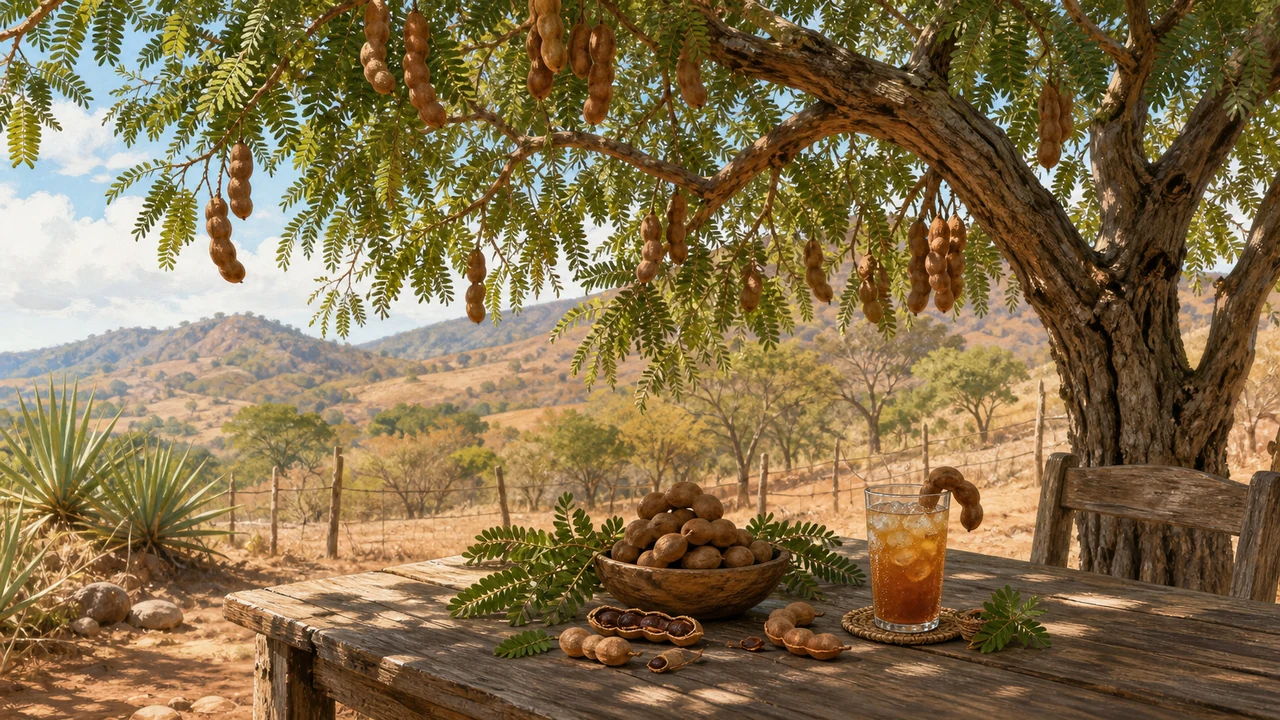 The tamarind tree (Tamarindus indica) is one of the most recognizable and beloved trees in Costa Rica, famous for the tangy brown pods it produces and the refreshing traditional drink those pods inspire. While the beach town of Tamarindo in Guanacaste shares the same name, the tree and the town are entirely different things — the town simply takes its name from the groves of tamarind that once thrived along that stretch of Pacific coast. The tree itself is a tropical workhorse: a dramatic shade tree, a food source, a medicinal plant, and a cornerstone of traditional Costa Rican cuisine all at once.
The Tamarind Tree: A Tropical Giant
Tamarind belongs to the legume family Fabaceae — the same broad family as beans and peas — and to the Caesalpinioideae subfamily, which also includes peacock flower, ice cream bean, and carob. The tree can grow impressively large, forming a broad, dense canopy of delicate, fern-like leaflets that create deep, welcome shade. That combination of beauty and practicality makes it a popular choice for parks, plazas, and roadsides throughout Central America.
The trunk is thick and slightly gnarled, with dark bark, and the tree is notably long-lived and drought-tolerant. It performs exceptionally well in hot, dry Guanacaste lowlands, where seasonal water stress would kill many other trees. During the dry season — when many trees shed their leaves and burst into flower — the tamarind holds on, fruiting reliably and providing shelter for wildlife and people alike. It also acts as an effective windbreak, prevents soil erosion, and protects crops and animals in exposed locations.
The Fruit: Pod, Pulp, and Seeds
 The tamarind fruit grows as a curved, lumpy pod roughly resembling a finger in shape — which likely gave rise to its name. The word tamarind traces back to the Arabic tamr hindi, meaning “Indian date,” and the finger-like shape of the pod echoes the Greek daktylos, or “finger-shaped.” Despite its common name in Arabic suggesting Indian origin, the tree is generally believed to have originated in tropical Africa before spreading widely through Asia, eventually arriving in Latin America with Spanish and Portuguese colonizers.
Inside the brittle outer shell, the pulp clings tightly to several hard, flat seeds. This pulp is the prize. Ripe tamarind pulp is deeply brown, sticky, intensely tangy, and pleasantly sweet — a combination that makes it useful in both savory cooking and dessert preparations. Young, unripe pods are sharply sour and used more like a souring agent.
When buying fresh tamarind pulp in Costa Rica, you will typically find it pressed around the seeds and wrapped in plastic. To use it, simply dissolve the block in hot water, work the pulp free from the seeds, and strain thoroughly — broken seed fragments are hard enough to chip a tooth.
Fresco de Tamarindo: Costa Rica’s Classic Thirst-Quencher
 Ask any Costa Rican what they drink on a scorching Guanacaste afternoon and the answer is likely fresco de tamarindo. This traditional Costa Rican tamarind drink is made by dissolving tamarind pulp in water, adding sugar to balance the tartness, and serving it cold. The result is deep amber, slightly cloudy, and remarkably refreshing — the sour-sweet tang cuts through heat in a way that few drinks can match.
Fresco de tamarindo has been a staple of the soda (a small, informal Costa Rican eatery) menu for generations. In recent decades it has crossed into mass production and is now sold bottled and canned in supermarkets across the country. But the best versions are still made fresh — either at home or poured out of a large glass jug at a roadside stand near Liberia or Nicoya.
The tamarind tree grows particularly abundantly in Guanacaste, Costa Rica’s hottest and driest province, which means the drink has deep roots in Guanacaste culture. A visit to the region without trying fresco de tamarindo would be like visiting without going to the beach.
Tamarind in the Kitchen
Tamarind’s role in cooking extends well beyond the drink. Tamarind pulp in Costa Rican cooking appears in rice dishes, marinades, sauces, and sweets. In global terms, tamarind is essential to Indian chutneys, pad Thai, and Worcestershire sauce (yes — that kitchen staple gets its distinctive tang largely from tamarind). Across Asia it acts as a souring agent in curries, dipping sauces, and street food.
In Latin America the ingredient is used somewhat more modestly than in Southeast Asian cuisine, but the tradition is real. Costa Rican home cooks use tamarind in rice dishes and meat sauces. Mexican tamarind candy — intensely sour and dusted with chili — has also made inroads across Central America. As chefs in the region look to native and regional ingredients, tamarind is finding its way into more adventurous preparations: glazes, vinaigrettes, slow-cooked stews, and even cocktail syrups.
Medicinal and Practical Uses
 Traditional Costa Rican and regional folk medicine has long used tamarind for digestive complaints. The pulp is understood to act as a mild laxative, ease gas and bloating, and soothe sore throats. These are properties acknowledged in traditional medicine systems across Asia, Africa, and Latin America, rooted in the fruit’s high content of organic acids and dietary fiber.
Beyond its fruit, the tamarind tree as a sustainable resource is sometimes compared favorably to the coconut palm — another tropical species that supplies food, medicine, wood, fiber, and shade from a single plant. Tamarind wood is hard and dense, suitable for furniture and construction. The bark, leaves, and seeds all have documented uses in traditional medicine and craft. This combination of drought resistance, food production, ecological benefit, and cultural significance makes the tamarind tree an impressive example of tropical biodiversity at work.
Costa Rica protects more than 25 percent of its land as natural reserves, and the country’s broader commitment to ecotourism and nature means that trees like the tamarind — beautiful, useful, and culturally embedded — are seen as part of the landscape worth preserving rather than removing. The Guanacaste lowlands, in particular, host a remarkable dry-forest ecosystem where the tamarind thrives alongside other leguminous giants.
Where to Encounter Tamarind in Costa Rica
The best region to see large, mature tamarind trees is Guanacaste, the hot, dry northwest province that borders Nicaragua. The trees line rural roads, shade town plazas, and grow on farms and ranches throughout the lowlands. The province also offers spectacular beaches and access to national parks where the dry tropical forest that tamarind calls home can be explored on foot.
In the Central Valley and elsewhere, tamarind trees are commonly planted as ornamentals and shade trees in parks and along streets. You will also find the fruit in nearly any market — fresh pulp wrapped in plastic, ready to be dissolved into your own batch of fresco de tamarindo. For more on what Costa Rica’s forests, flora, and wildlife have to offer, see the ecotourism and nature section of this guide, and check Costa Rica travel tips before you go.
No visit to Costa Rica is truly complete without a glass of fresco de tamarindo in hand — cold, tangy, and perfectly suited to the tropical heat.
Frequently asked questions
What is fresco de tamarindo and where can I try it in Costa Rica?
Fresco de tamarindo is a traditional Costa Rican drink made by dissolving tamarind pulp in water and sweetening it to taste. It is sold everywhere from roadside sodas to supermarkets — and it is especially popular in hot, dry Guanacaste, where the tamarind tree grows particularly well.
Is the tamarind tree the same thing as the town of Tamarindo?
No — the beach town of Tamarindo in Guanacaste takes its name from the tamarind trees that once lined the area, but the town and the tree are entirely separate things. The tree (Tamarindus indica) is grown throughout Costa Rica, while Tamarindo is a well-known surf and beach destination on the Pacific coast.
What does tamarind taste like?
The pulp inside a ripe tamarind pod is simultaneously sour and sweet — tangy and fruity, with a slightly sticky, date-like texture. Young pods are very acidic; fully ripe pods become sweeter and more complex in flavor.
Where does the tamarind tree grow in Costa Rica?
Tamarind thrives in hot, dry climates and grows best in Guanacaste and the North Pacific lowlands. It is also cultivated in other dry-valley regions and is a common shade tree in towns, parks, and along roadsides throughout the country.
Can I find tamarind in Costa Rican markets and grocery stores?
Yes. Fresh tamarind pulp — pressed around its seeds and wrapped in plastic — is widely available in markets, pulperías, and supermarkets. Bottled fresco de tamarindo is also mass-produced and sold throughout the country.