Playa Monte del Barco: Papagayo's Quiet Gem
Playa Monte del Barco on the Papagayo Peninsula is one of Guanacaste’s most peaceful coves — a small arc of sand tucked between two protective headlands that calm the Pacific swells and create a natural swimming haven inside the Gulf of Papagayo. If you crave a North Pacific beach that trades nightlife bustle for tranquility and raw beauty, Monte del Barco delivers.
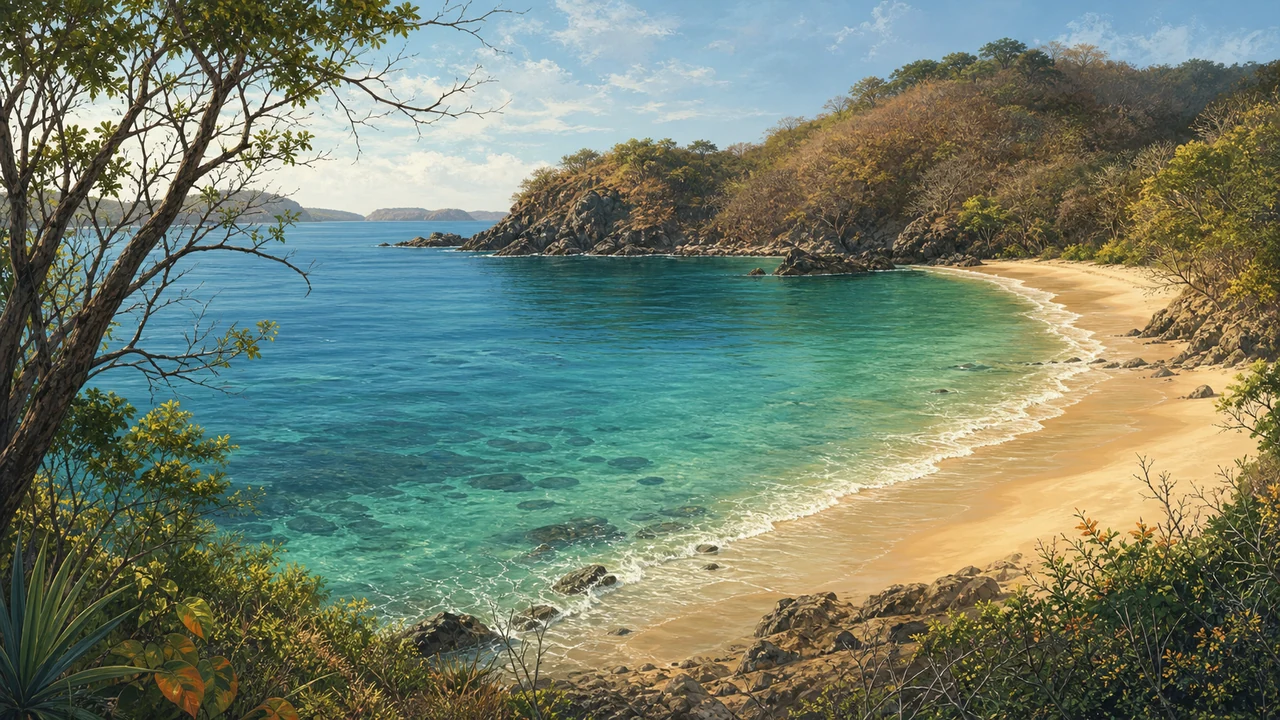 The beach sits within the broader Bahía Culebra area, a wide blue bay that anchors the Papagayo development zone — one of Costa Rica’s premier tourism regions. Unlike the livelier beaches further south along the North Pacific coast, Monte del Barco retains an unhurried character. The water is calm, the horizon is wide, and the only soundtrack tends to be lapping waves and birdsong drifting down from the forested slopes above.
A Sheltered Cove With Blue Flag Standards
The defining feature of Monte del Barco is its geometry. Two rocky points — low headlands covered in dry tropical scrub — reach out on either side of the beach, breaking incoming swells and keeping the water remarkably gentle. That sheltered profile makes it ideal for families, casual swimmers, and anyone who wants to float in clear, warm Pacific water without fighting surf.
Monte del Barco has earned Costa Rica’s Blue Flag ecological certification, which is awarded by a national committee and reflects measurable standards in water quality, beach cleanliness, environmental management, and community involvement. The designation is renewed annually, so it functions as an ongoing commitment rather than a one-time honor. When you see the Blue Flag flying, you can be confident the water meets tested cleanliness thresholds — a meaningful assurance for swimmers and snorkelers.
Costa Rica takes coastal ecology seriously: more than 25% of the country’s territory falls under some form of environmental protection, and that conservation ethic extends to the management of award beaches like this one.
The Hill Above the Beach
 The headland rising behind and beside the beach is part of what gives this spot its name — monte del barco translates loosely as “ship’s hill” or “hill of the boat,” evoking the silhouette the ridge cuts against the sky. A short, informal trail climbs through dry forest to the upper slopes, and the view from the top is genuinely spectacular.
From the ridge you can take in the full sweep of Bahía Culebra at sunset — a panorama that stretches across the blue-green gulf to distant volcanic peaks and the rugged Guanacaste coastline curving away in both directions. Sunsets here arrive in deep orange and gold as the light drops over the Pacific, unobstructed by cloud banks for much of the dry season. Even visitors who have explored many Costa Rican beaches rank this viewpoint among the most memorable in the region.
If you time the climb to reach the summit about 30 minutes before sunset, you will be well-positioned for one of the North Pacific’s signature experiences. Bring water — the dry forest terrain can be warm, and there are no facilities on the trail.
Swimming, Snorkeling, and Water Activities
The calm waters inside the cove are well-suited to several in-water activities. Visibility is often good enough for snorkeling along the rocky headlands at either end of the beach, where reef fish shelter among the boulders. The sandy bottom slopes gradually, so the entry into the water is gentle and suitable for children.
For those who want to venture further afield, the Gulf of Papagayo sailing and sport-fishing scene is centered just north of here. You can arrange sailing in Papagayo Gulf through operators in the area, as well as sport fishing in Costa Rica excursions targeting yellowfin tuna, dorado, and roosterfish in the deeper Pacific waters offshore.
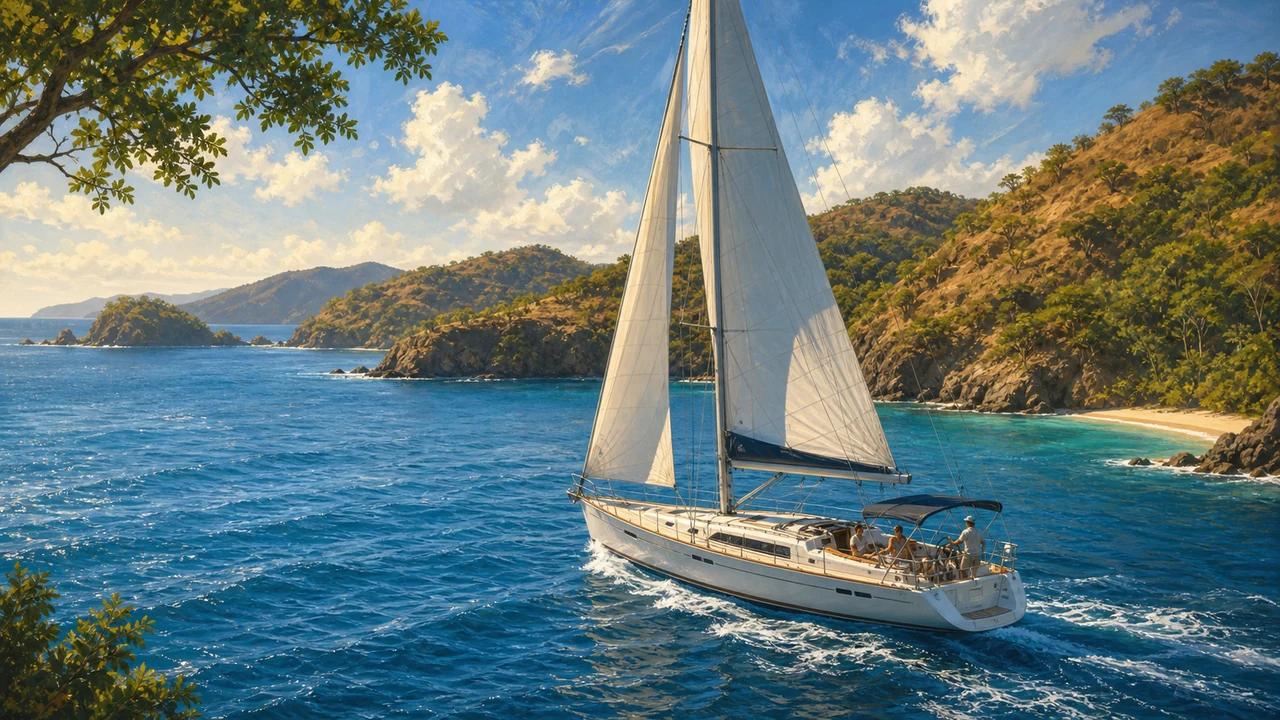 Sea kayaking is another popular option. The sheltered geometry of the cove makes it a natural starting point for paddling around the headlands to discover adjacent bays and rock formations. The dry tropical forest on the cliffs above harbors iguanas, howler monkeys, and various seabirds — making even a short paddle an unexpectedly rich wildlife encounter. For more on paddling in Costa Rica, see sea kayaking in Costa Rica.
The Papagayo Peninsula Setting
Monte del Barco sits within the Papagayo Peninsula — a rugged, hilly finger of land that separates Bahía Culebra from the open Pacific. The peninsula is home to some of Costa Rica’s most ambitious resort development, yet pockets of the coast remain quiet and relatively undisturbed. Monte del Barco is one of those pockets.
Visiting a secluded Guanacaste cove like Monte del Barco contrasts sharply with the experience at busier beaches such as Tamarindo or the resort strips further north. There are no bars on the beach, no vendors, no rentals to arrange on-site — bring everything you need. That simplicity is exactly the appeal for travelers who want a genuine escape rather than a packaged resort day.
Guanacaste as a province is worth exploring beyond the beach itself. The inland hills are cattle country with a distinct cowboy (sabanero) culture, and dry-season wildlife watching in the Guanacaste lowlands can be exceptional. White-faced capuchins, coatis, and a long list of shorebirds are common on and near the Papagayo coast. For a broader view of the region, the Guanacaste province page has useful context.
Getting There and Practical Notes
The nearest international air gateway is Daniel Oduber International Airport (LIR) in Liberia, which has direct flights from multiple North American cities — a major convenience for travelers targeting the North Pacific coast. From Liberia, the drive to the Papagayo Peninsula takes roughly 30–45 minutes depending on your exact destination.
Access to Monte del Barco itself involves road segments that can be rough, particularly after seasonal rain. A high-clearance vehicle makes the journey easier and more reliable. There are no facilities at the beach — no restrooms, no food vendors, no shade structures — so pack accordingly: water, sunscreen, snacks, and anything else you’ll need for the day.
The best swimming conditions align with the dry season on Costa Rica’s North Pacific coast, roughly December through April, when rainfall is minimal and the sea is at its calmest. That said, the green season brings its own rewards: the hills turn vivid green, the light is often dramatic, and uncrowded beaches in Guanacaste during the rainy season can feel genuinely private.
For broader trip-planning context, check the Costa Rica travel tips guide, and explore the full range of Costa Rica beaches if you want to compare options across the country’s diverse coastlines. For wildlife and nature beyond the shore, Costa Rica ecotourism & nature is a useful starting point.
Neighboring North Pacific beaches: ← Playa Hermosa | Playa Blanca & Virador →
Frequently asked questions
Where exactly is Playa Monte del Barco?
Monte del Barco Beach sits on the Papagayo Peninsula in Guanacaste, Costa Rica, tucked inside the Gulf of Papagayo. It is a small, sheltered cove flanked by two rocky headlands that shield it from strong open-ocean swells.
Is Monte del Barco safe for swimming?
Yes. The twin points on either side of the cove buffer wave energy, producing calm, protected waters well-suited for swimming and snorkeling. The beach holds Blue Flag ecological certification, which reflects high water-quality standards.
What is the best time of year to visit Monte del Barco?
The dry season (roughly December through April) brings the most reliable sunshine and the calmest sea conditions. However, the Gulf of Papagayo area can be visited year-round; the green season (May–November) sees fewer crowds, lush hillsides, and often brilliant late-afternoon light perfect for watching the sunset.
How do I get to Monte del Barco Beach?
Most visitors fly into Daniel Oduber International Airport in Liberia, then drive south toward the Papagayo Peninsula. A four-wheel-drive vehicle is recommended for the last stretch of road to the beach. Check local conditions before you go, as road quality can vary.
What can I do near Monte del Barco besides swimming?
The hill above the beach rewards a short hike with panoramic views of Bahía Culebra and the broader Gulf of Papagayo. The surrounding area also offers sailing, sport fishing, and snorkeling excursions. The nearby Papagayo resort corridor provides dining and rental facilities.