Best Surf Breaks in Costa Rica: Guanacaste & Nicoya Guide
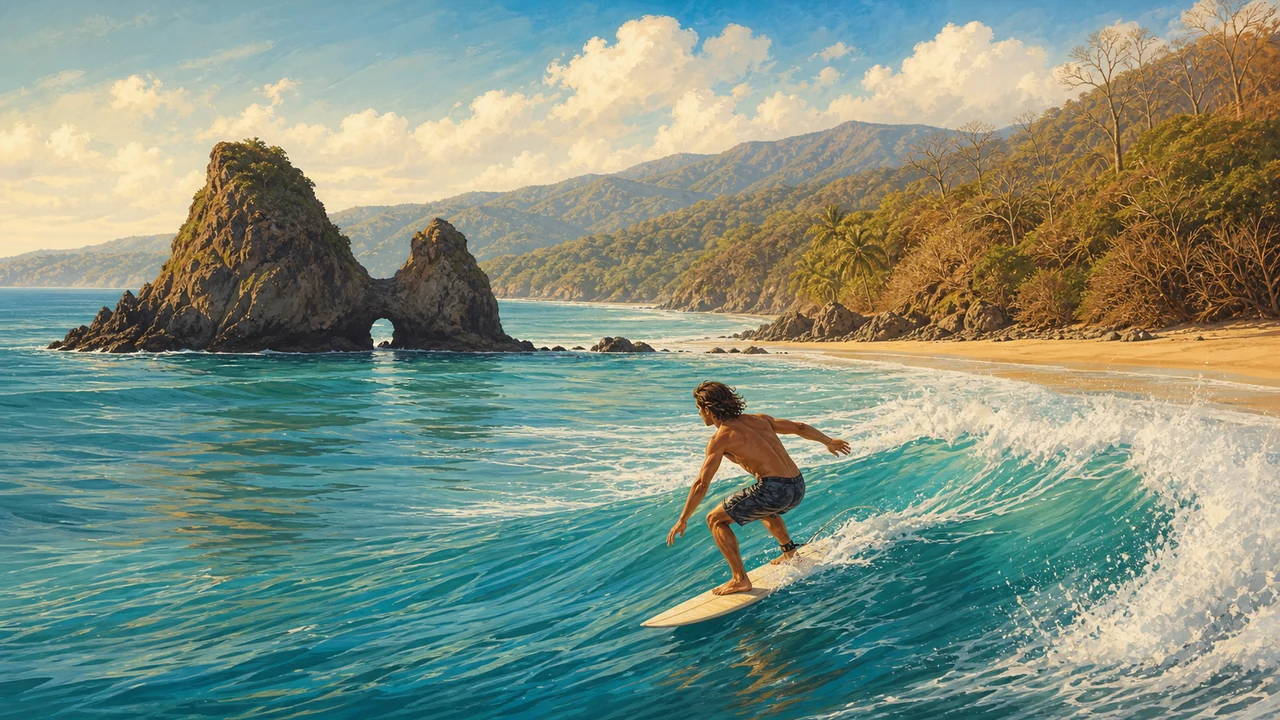
Costa Rica’s northwest coast packs some of the most consistently excellent surf in the Americas into a relatively compact stretch of coastline, making it possible to sample several world-class breaks in a single trip. The Guanacaste region and the Nicoya Peninsula together hold an extraordinary lineup: remote offshore reef breaks accessible only by boat, long point breaks that seem to peel forever, and beginner-friendly beach breaks where you can take your first lesson in the morning and watch pros shred at sunset.
This guide focuses on the best surf breaks along the Guanacaste and Nicoya coast and how to string them together logically. For a broader country-wide overview, see surfing in Costa Rica. The activities & sports hub covers other ways to stay active on your trip.
Witch’s Rock and Ollie’s Point: The Crown Jewels
No surf itinerary in Guanacaste is complete without at least one boat day to the offshore breaks inside Santa Rosa National Park. Access is by sea only, with Playas del Coco serving as the traditional launching point — roughly 90 minutes by panga.
Witch’s Rock (Roca Bruja) is a heavy beach break with multiple peaks spread across a soft sand bottom, which makes it more forgiving than its dramatic name suggests. It needs offshore winds to clean up, and when those conditions align — typically during the dry season — it fires on both sides, throwing short, fast tubes that reward surfers who can read the peaks quickly. During mid-tide (about two hours either side of the high or low), the break is at its most consistent. At low tide it speeds up considerably; at high tide it backs off. Nearby Laberinto is a step up in intensity: a rock-bottom slab break with no easy exit, suited to experienced riders only.
Ollie’s Point sits around the headland from Witch’s Rock and offers a completely different experience. This is a long, peeling right-hand point break — the kind of wave that keeps going long after you think it should stop. On a good swell it breaks clean over rock before transitioning to sand, with workable sections throughout. Intermediate surfers can enjoy it; better surfers can link sections all the way to shore. The park’s protected forests rise directly from the water, giving the whole setting an almost untouched atmosphere that makes a session here feel like a genuine adventure.
Boat charters typically stop at both breaks in a single day, which is the classic format.
Tamarindo: The Hub for All Levels
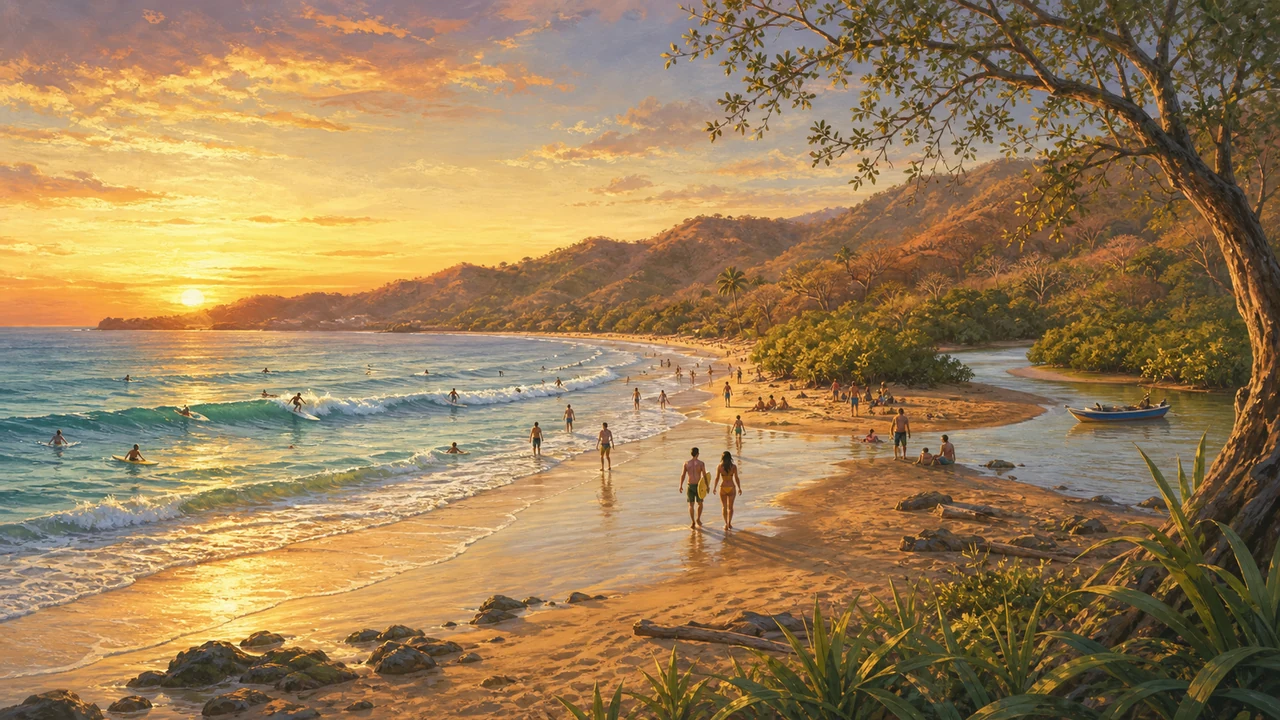
Tamarindo is the most accessible surf town on the Guanacaste coast, with direct international connections through Daniel Oduber Airport (LIR) in Liberia — just over an hour’s drive away. That convenience, combined with a long beach break that works at multiple tide stages, makes it the natural base for a Nicoya surf trip.
The main Tamarindo break is a consistent beach break that suits beginners and intermediate surfers. Several surf schools operate here, and the paddle-out is straightforward in typical conditions. More experienced riders tend to gravitate toward the river mouth at the south end of the beach, where the wave hollows out and the crowd thins. Playa Tamarindo at low tide during the dry season produces some of the most photogenic surf in the region.
Tamarindo also functions as a logistics hub: rentals, repair shops, board storage at guesthouses, and a full range of accommodation from budget hostels to boutique hotels. You can park here for a week, surf multiple nearby breaks on day trips, and never feel like you’re missing out.
Playa Avellanas and Playa Negra: The Hollow Right-Handers
About 20 minutes south of Tamarindo on dirt road, Playa Avellanas is home to one of Costa Rica’s most famous waves: Little Hawaii, a hollow right-hander that breaks over a shallow reef and can produce genuine barrel sections on a solid swell. It is not a beginner wave — the reef is unforgiving and the drop is steep — but for surfers comfortable in powerful, fast conditions it is a highlight of the entire coast.
Another 15 minutes south, Playa Negra offers a right-point break over a rocky reef that is considered one of the most technically demanding waves in the country. Long, powerful, and fast, it rewards precise footwork and committed cutbacks. When the swell is pumping, Playa Negra is as good as anything the Pacific has to offer. Both Avellanas and Negra are quieter than Tamarindo, with small communities and simpler accommodation options — ideal if you want to focus on surfing without distraction.
Nosara: Consistent Swells and a Low-Key Scene
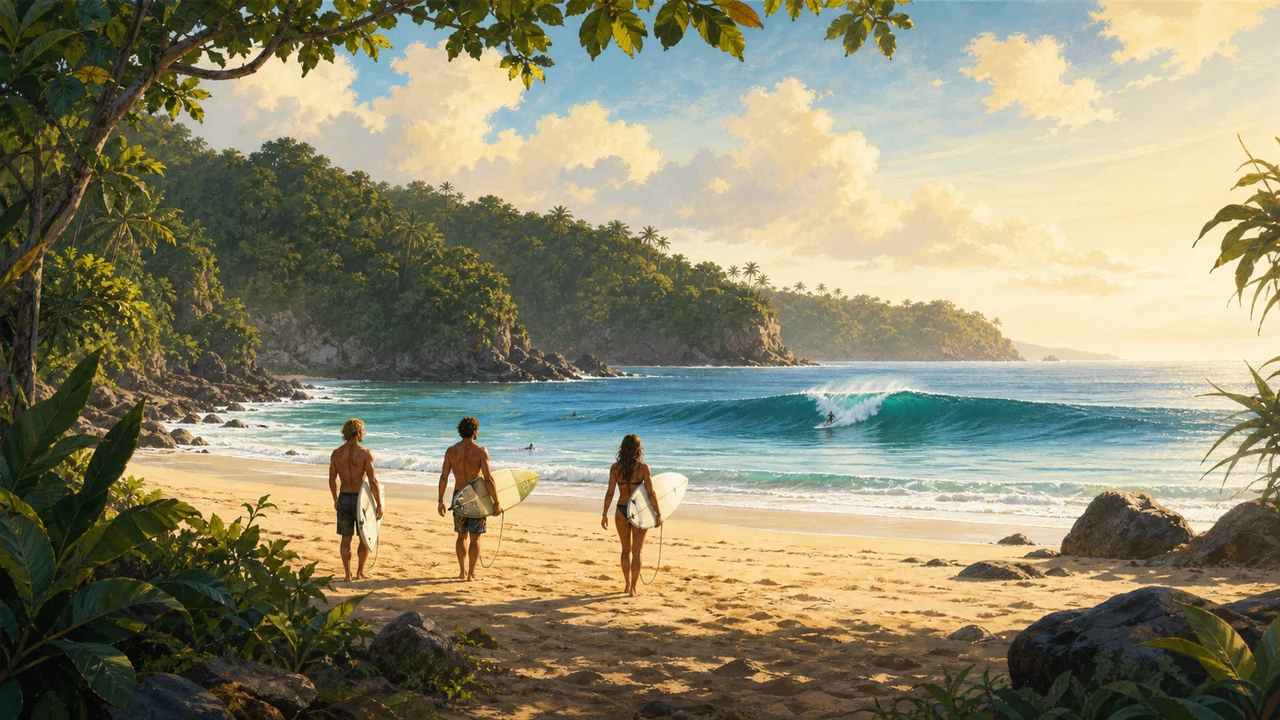
Further south down the Nicoya coast, Nosara has developed a loyal following among surfers who value consistent, uncrowded waves in a low-key setting. The main break at Playa Guiones is a wide, forgiving beach break that receives swell reliably throughout the year — some surf forecasters rank it among the most consistent beach breaks in Central America. The wave quality suits all levels: the outside peaks are powerful enough for experienced surfers to enjoy, while inside sections provide gentler rides for those still learning.
Nosara has also become a recognized wellness destination, with yoga retreats and health-focused lodges complementing the surf culture. The combination of morning sessions in the water and afternoon yoga classes has become something of a signature experience. The Nosara Yoga Institute and several smaller studios offer classes to walk-ins, making it easy to blend both activities into a stay.
The road from Tamarindo to Nosara runs along the coast and passes through small Tico towns — plan for unpaved stretches, especially during the rainy season. A 4WD vehicle is strongly recommended if you are self-driving the Nicoya Peninsula.
Santa Teresa and Mal País: The Southern Edge
At the southern tip of the Nicoya Peninsula, Santa Teresa and the adjacent Mal País area have grown rapidly in the last decade while still preserving a rougher, more independent character than Tamarindo. The beach at Santa Teresa faces southwest, which means it picks up swell from a slightly different angle and can be firing when spots further north are flat — or can be caught off-angle on swells that hit the north Nicoya coast cleanly.
The Santa Teresa beach break is energetic and fast, with a shore-pound that punishes hesitation. The best waves tend to be concentrated around rock formations at either end of the beach. Mal País, just to the south, is rockier and more exposed, attracting an experienced crowd who prefer raw conditions over convenience. Together the two towns offer a solid week of surfing with enough variety to keep things interesting — and the dramatic sunsets over the open Pacific give the area a genuinely wild edge.
Reaching Santa Teresa from the north typically means taking the ferry across the Gulf of Nicoya from Puntarenas to Paquera, then driving south. It is doable in half a day and adds an element of journey to the experience.
Planning Your Guanacaste–Nicoya Surf Trip
A well-structured surf trip through this region might look like this: fly into Liberia (LIR), base yourself in Tamarindo for a few days to get oriented and handle any gear logistics, then take a boat day to Witch’s Rock and Ollie’s Point. After that, drive south to Avellanas and Negra for a couple of nights, continue to Nosara, and wrap up with a few days in Santa Teresa before catching the ferry back to the mainland and flying home from San José (SJO).
Key practical notes:
- Dry season (December–April) brings offshore winds and clean, well-shaped swells — ideal conditions across the board. This is also peak tourist season, so accommodation books up early.
- Green season (May–November) produces powerful swells, cheaper prices, and fewer crowds. Roads get muddy; confirm rental car insurance covers the terrain.
- A mid-size SUV or 4WD is the right vehicle for the peninsula roads. Some routes between Tamarindo and Nosara involve river crossings.
- Boards can be rented in Tamarindo, Nosara, and Santa Teresa; serious surfers may prefer to travel with their own. Airlines generally allow surfboard bags as oversized luggage for an additional fee — check current policies when booking.
- Water temperature along the Pacific Northwest coast is warm year-round; a light shorty or rash guard is sufficient for most surfers.
- Sun protection matters: equatorial UV is intense, and long sessions in the water accelerate exposure. Reef-safe sunscreen is both a personal necessity and a local environmental expectation.
Costa Rica travel tips covers broader logistics for getting around. The north Pacific beaches section profiles the beaches themselves in more detail, and Guanacaste gives a fuller picture of the region beyond surfing.
Costa Rica’s Pacific coast offers something rare: a concentration of genuinely world-class waves within a few hours of each other, in a country where the infrastructure is solid, the people are welcoming, and the pura vida attitude makes even a flat day feel like time well spent.
Frequently asked questions
What are the best surf breaks in Guanacaste, Costa Rica?
Witch's Rock (Roca Bruja) and Ollie's Point inside Santa Rosa National Park are the most celebrated breaks in Guanacaste. Both are offshore and reached by boat from Playas del Coco. Tamarindo and Avellanas are easier to access and offer excellent waves for a range of skill levels.
When is the best time to surf in Guanacaste and the Nicoya Peninsula?
The dry season (December through April) brings consistent offshore winds and clean, well-shaped swells to the Pacific Northwest coast. The green season (May–November) also produces powerful swells, though conditions are less predictable. Many experienced surfers prefer the late green season for larger, less crowded waves.
Can beginners surf at Witch's Rock or Ollie's Point?
Ollie's Point is a long, relatively forgiving right-hand point break that intermediate surfers can enjoy. Witch's Rock has heavier shore break and rock sections that are better suited to experienced riders. Beginners are better served starting at Tamarindo beach break or taking lessons there first.
How do you get to Witch's Rock and Ollie's Point?
Both breaks sit within Santa Rosa National Park and have no road access. The standard approach is a boat charter from Playas del Coco, a roughly 90-minute trip each way. Captains and surf operators based in Coco run daily trips during the surf season.
How does this surf-trip itinerary differ from the main Costa Rica surfing guide?
The main surfing guide covers the full country coast to coast, from the Caribbean to the Southern Pacific. This page focuses specifically on planning a Guanacaste and Nicoya Peninsula surf trip — the breaks, the logistics, and the sequence for getting the most out of one region in a concentrated visit.