Costa Rica Horseback Riding: Beaches, Volcanoes & Cowboy Culture
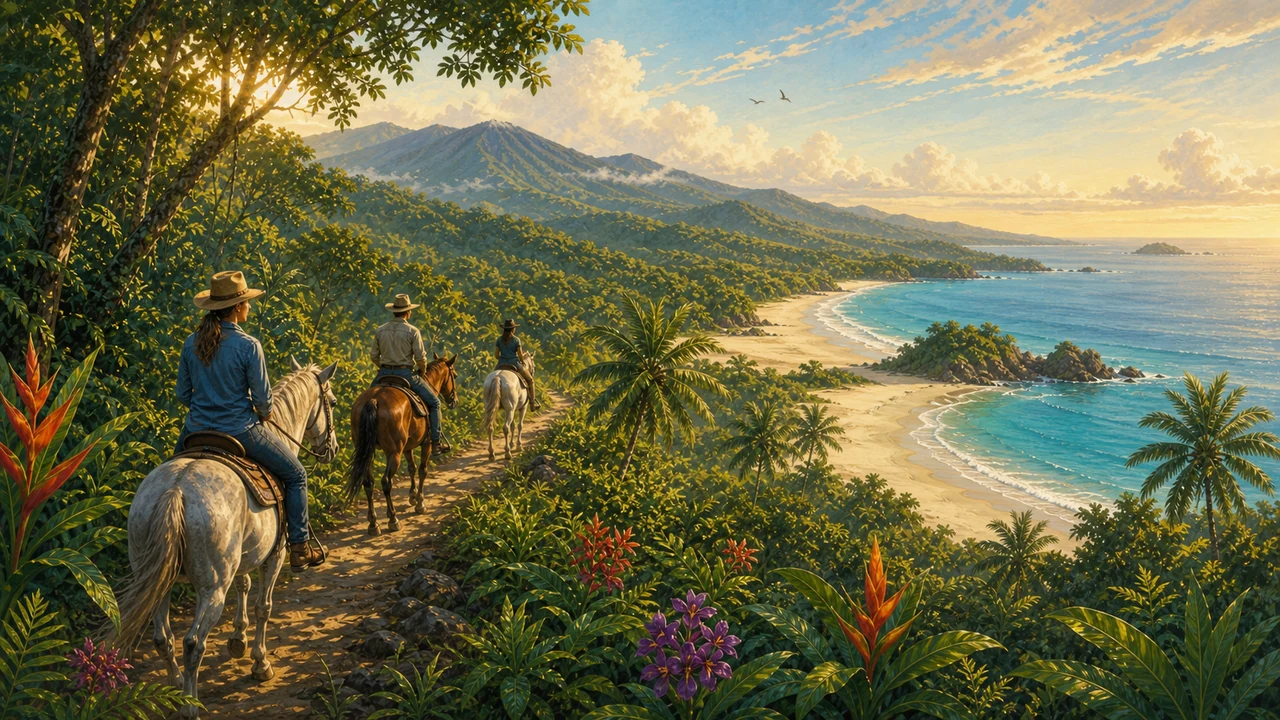
Horseback riding in Costa Rica puts you on the same trails that working cowboys have ridden for generations — across volcanic highlands, through dripping cloud forests, and along some of the most beautiful coastline in the Americas. It is one of the most versatile activities in the country’s adventure portfolio: gentle enough for first-time riders on a beach sunset ride, challenging enough for seasoned equestrians tackling a full-day mountain traverse. Whether you picture yourself splashing through surf on the Nicoya Peninsula or picking your way through the mist-draped canopy roads above Monteverde, Costa Rica delivers a ride for every level of experience and ambition.
Explore the full range of Costa Rica activities & sports — from whitewater rafting to birdwatching — alongside the country’s famous natural settings.
Sabanero Culture: Guanacaste’s Cowboy Heartland
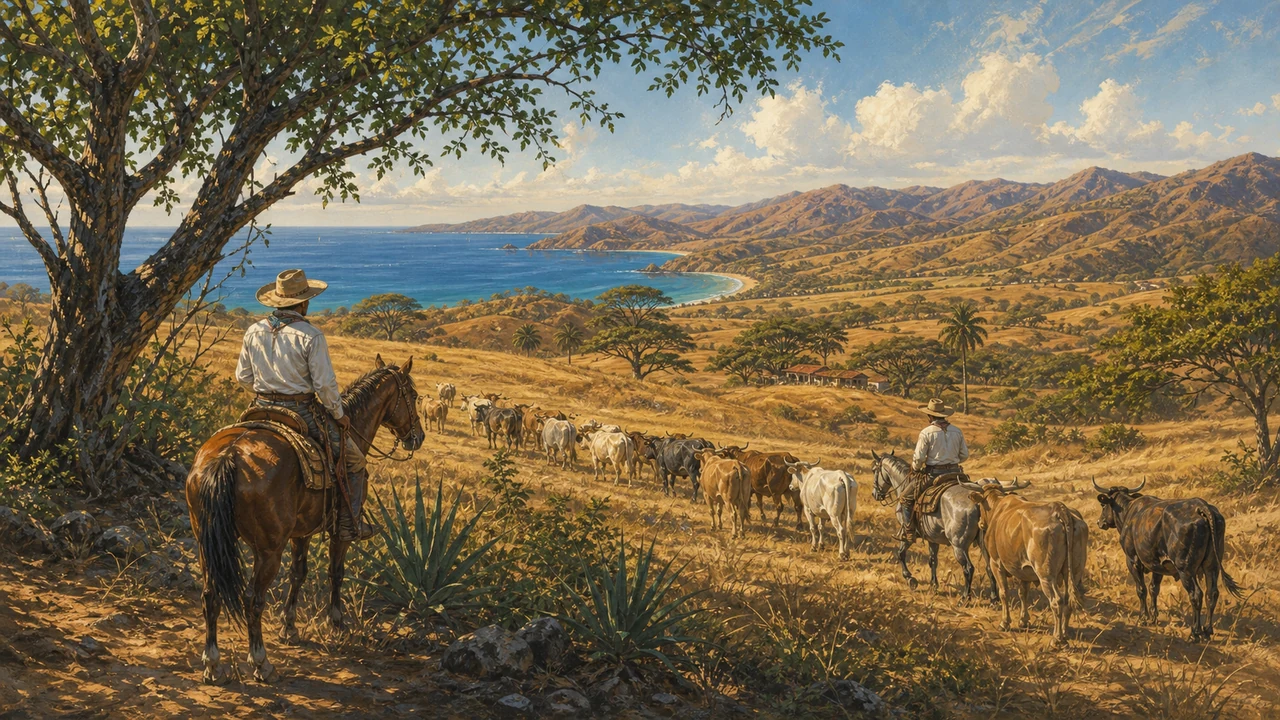
Guanacaste is where Costa Rica’s sabanero (cowboy) tradition runs deepest. Long before adventure tourism arrived, the province’s vast cattle ranches — haciendas — shaped its identity. The sabanero, with his decorated saddle, hand-braided tack, and horsemanship honed from childhood, remains a cultural icon celebrated during Guanacaste’s lively fiestas and the National Tope, the country’s great horse parade held each December in San José.
Riding through Guanacaste’s open savanna during the dry season (December–April) is an experience unlike any other in Costa Rica: broad skies, the scent of dry grass and guanacaste trees, and the sound of hooves on cracked earth. Operators here frequently offer multi-day hacienda riding tours that combine trail time with ranch hospitality, giving visitors an authentic window into rural Tico life. For wildlife enthusiasts, the open landscape is excellent for spotting howler monkeys, coatis, and dry-forest birds from the saddle.
The province is also home to Guanacaste National Park, and the adventure activities in Guanacaste extend well beyond riding — making it easy to combine equestrian excursions with other pursuits on the same trip.
Beach Rides: Sunset on Horseback
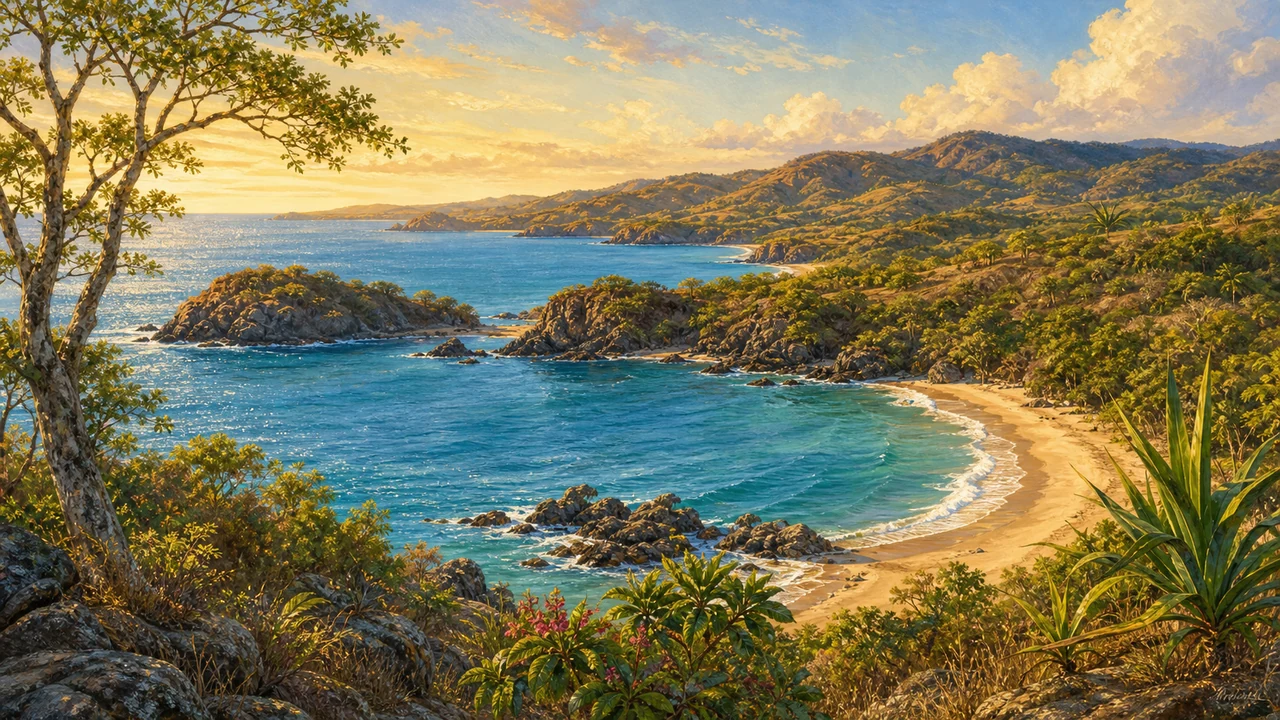
Horseback riding on Costa Rica’s Pacific beaches at sunset is one of the country’s signature tourism experiences, and for good reason. The North Pacific offers long, uncrowded stretches of dark volcanic sand — particularly around Tamarindo, Sámara, and the Nicoya Peninsula — where operators lead small groups through the surf as the light turns gold. The Central Pacific, around Jacó and Dominical, has equally dramatic scenery in a lusher, greener setting.
Most beach rides run one to two hours and are accessible to complete beginners. The horses used for coastal tours are typically well-seasoned in the environment — accustomed to waves, sand, and the noise of birds flushing from the shoreline. Families with children are well served here: patient animals, flat terrain, and spectacular scenery combine for a low-stress introduction to riding.
Costa Rica’s beautiful beaches are an attraction in their own right, and pairing a beach ride with snorkeling or a boat tour makes for a full day on the Pacific coast.
Volcano and Arenal Rides
The flanks of Arenal Volcano — now dormant but still visually dominant — offer some of the country’s most dramatic horseback riding near an active volcano. Trails through secondary forest and open grassland deliver views of the near-perfect cone across the lake, often with steam rising from the flanks on cooler mornings. The area around La Fortuna has a well-developed network of equestrian operators, many of whom combine riding with a visit to nearby hot springs or a waterfall stop.
A classic half-day itinerary in the Arenal zone rides to the base of the lava fields, skirts the forest edge, and returns via a creek crossing — giving riders a combination of landscape types that showcases why adventure activities in the Arenal region draw visitors year-round. The rainy season (May–November) keeps the vegetation intensely green and the waterfalls full, though trails can be muddy; the dry season offers clearer skies and easier footing.
Cloud-Forest Trails: Monteverde on Horseback
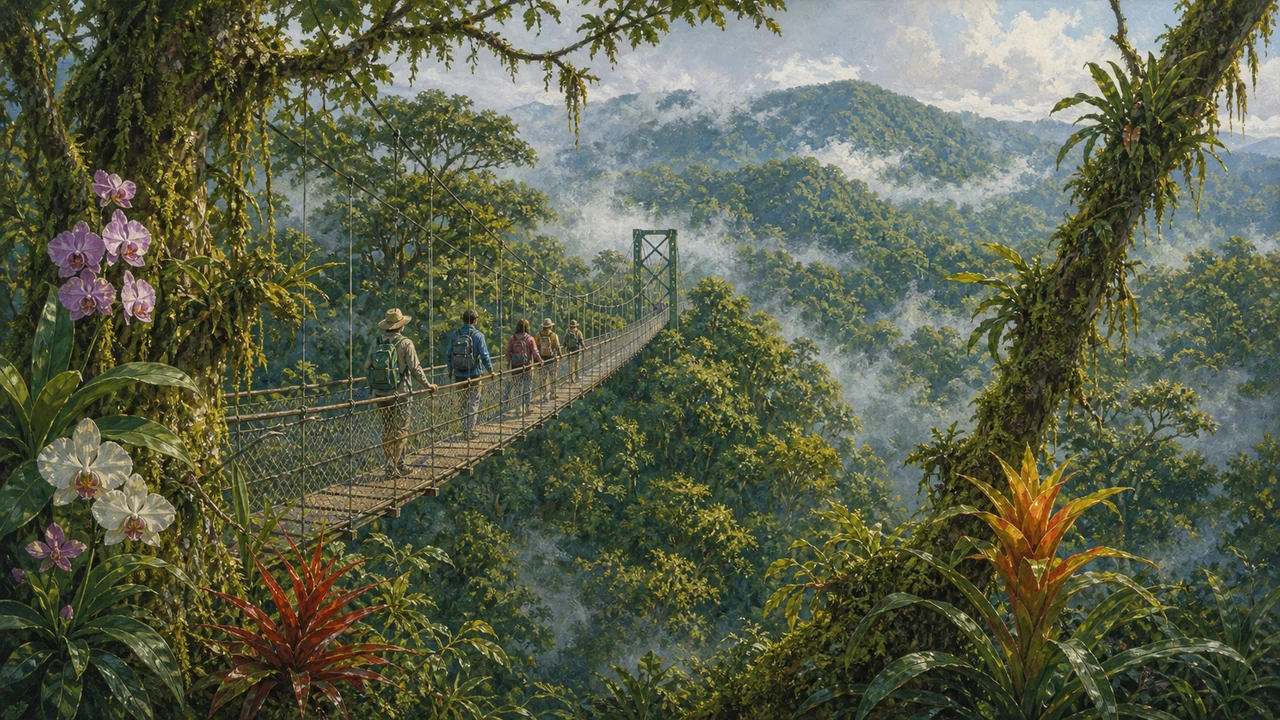
Monteverde’s cloud forest is one of the world’s great biological treasures, and riding through the Monteverde highlands on horseback is a genuinely different experience from hiking the same terrain on foot. The altitude (around 1,400–1,800 m) keeps temperatures cool, the canopy drips with moisture even in the dry season, and the chance to spot resplendent quetzals, emerald toucanets, and howler monkeys is excellent.
Several operators offer guided horseback tours in the Monteverde cloud forest, ranging from gentle two-hour loops on community farm trails to longer excursions descending toward the Gulf of Nicoya with sweeping Pacific views. The ride from Monteverde down to the lake (a route historically used before the road improved) remains a popular half-day adventure that combines equestrian travel with stunning scenery. Because trails can be steep and slippery, experience with horses is recommended for the more technical routes.
Monteverde is also an outstanding destination for Costa Rica ecotourism and nature, and combining a riding excursion with a guided night walk or a canopy tour adds significant depth to any visit.
Waterfall Rides and Rainforest Treks
One of the most rewarding formats for horseback travel in Costa Rica is the waterfall horseback riding tour — a half or full-day ride through tropical forest that ends at a secluded cascade. Operators in the Arenal zone, the Turrialba area, and along the South Pacific coast regularly run these excursions. The destination waterfall often allows swimming, making the ride feel like both an adventure and a reward.
Rainforest treks on horseback allow access to terrain that would take hours on foot. Horses can negotiate river crossings, root-tangled paths, and steep muddy climbs far more efficiently than most hikers, opening up sections of forest that seldom see visitors. This practical advantage is part of why multi-day pack-horse expeditions remain an authentic way to explore Costa Rica’s more remote highlands and protected zones. Read more about trekking in Costa Rica for routes that blend foot travel with equestrian sections.
What to Expect on a Typical Tour
Most established operators provide:
- Pre-ride orientation — basic commands, posture, and how to stop the horse
- Helmets (mandatory at reputable stables; always wear one)
- A guide who rides with the group throughout
- Water, and sometimes a snack stop at a scenic point
- Drop-off/pick-up from local hotels in many cases
Group sizes at quality operators are typically limited to keep the experience personal and reduce impact on the trail. Rides depart in the morning to avoid midday heat, and the duration is always stated upfront — confirm whether the advertised time includes transfer to the stable.
Choosing an Ethical Operator
Animal welfare standards in Costa Rica’s equestrian tourism sector vary. Here is what to look for:
- ICT certification — the Instituto Costarricense de Turismo licenses operators; certified stables meet minimum welfare standards
- Visible horse condition — well-fed animals, clean hooves, good coat, no visible sores under the saddle or girth
- Weight limits — responsible operators enforce limits; do not ride with a stable that ignores them
- Saddle fit — properly fitted saddles prevent sores; check that the saddle is not rocking or pinching
- Rest, water, and shade — horses should have access to all three between rides
If anything feels off before you mount, trust your instincts and walk away. The best stables are proud to answer questions about their animals’ care. Choosing responsibly protects both the horses and the long-term quality of the experience for future visitors — a core value of Costa Rica’s sustainable tourism ethos.
Practical trip-planning advice — including what to pack for active excursions — is covered in the Costa Rica travel tips guide.
Frequently asked questions
Do I need riding experience for horseback tours in Costa Rica?
Most tour operators cater to all skill levels. Beginner-friendly rides use calm, well-trained horses on flat beach or valley trails. Longer mountain or cloud-forest routes may require some riding confidence — always ask the operator before booking.
What is the best region in Costa Rica for horseback riding?
Guanacaste is the historic heart of Costa Rica's cowboy (sabanero) culture and offers dry-season ranch rides across open savanna. Arenal and Monteverde provide spectacular volcano and cloud-forest settings, while the Central Pacific coast combines beach sunsets with easy rides suitable for families.
How long do typical horseback tours last?
Options range from one-hour sunset beach rides to full-day waterfall excursions. Multi-day pack trips through remote highland areas are also available from specialist operators.
What should I wear for a horseback ride in Costa Rica?
Wear long pants to prevent chafing, closed-toe shoes or boots, and light layers. Bring sunscreen and insect repellent. A hat is essential in sunny Guanacaste; a light rain jacket is wise in cloud-forest zones.
How do I find an ethical horseback riding operator in Costa Rica?
Look for operators certified by the Instituto Costarricense de Turismo (ICT), ask about horse-to-rider weight limits, observe the animals' body condition before mounting, and choose stables that limit daily ride hours and provide adequate rest, water, and feed.