San José Real Estate: Central Valley & City Property Guide
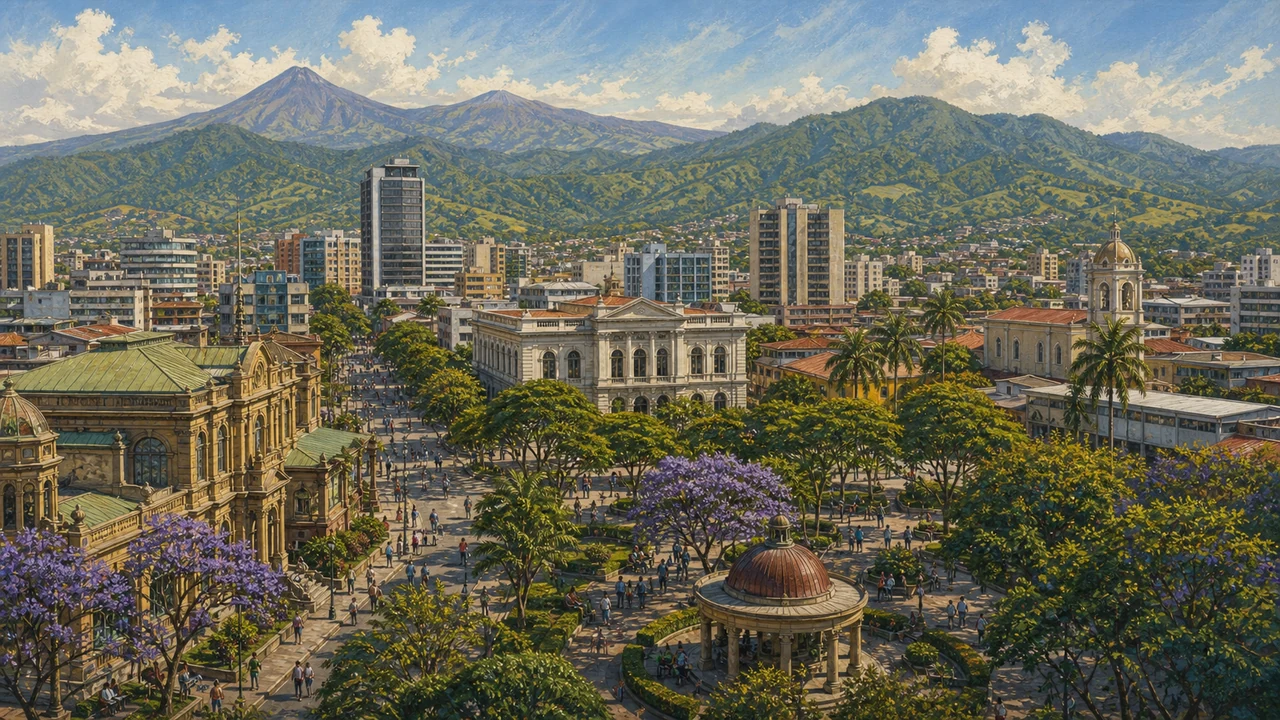 San José real estate sits at the center of Costa Rica’s most established and infrastructure-rich property market, offering urban convenience, world-class healthcare, and a spring-like climate that draws buyers from North America, Europe, and beyond. As the country’s capital and largest city, San José anchors the Central Valley — the economic, governmental, cultural, and business heart of Costa Rica — and its western suburbs consistently rank among the most desirable residential addresses in the entire country.
Why buy real estate in San José
For buyers who want more than a vacation bolt-hole, San José makes a compelling long-term case. The city and its surrounding cantons are home to the institutions that underpin daily life in Costa Rica: the country’s largest private hospitals, its most prestigious universities, a deep network of international and bilingual schools, and the corporate offices of the multinationals that have made Costa Rica one of Latin America’s strongest knowledge economies.
That economic engine creates durable property demand. Companies in technology, medical devices, financial services, and professional services continuously relocate executives and skilled workers to the metropolitan area, generating steady, qualified demand for both rental and owner-occupied housing. Unlike a vacation market that swings with tourism seasons, San José’s residential market is primarily driven by long-term residents — a stabilizing factor that many investors value.
The city also operates as Costa Rica’s transit hub. Juan Santamaría International Airport (SJO), technically in neighboring Alajuela, is roughly 30–45 minutes from most western suburbs by highway, with connections to North American, European, and South American destinations. That accessibility is part of why diplomats, development professionals, and corporate expats consistently choose the area.
Finally, San José offers something that coastal markets cannot: genuine urban amenities. World-class restaurants, theaters, museums, art galleries, farmers’ markets, and a lively food and coffee culture are all at hand. The mountains visible from nearly every vantage point are a constant reminder that nature is minutes away — national parks, cloud forests, coffee-farm tours, and river valleys are an easy weekend drive from almost any address in the metro area.
Location, climate & lifestyle
San José sits at approximately 1,150 meters (about 3,770 feet) elevation in the Central Valley, a broad highland basin ringed by volcanoes and cloud-forested ridges. That elevation gives the city and its suburbs a climate that is practically unmatched in the tropics: year-round temperatures hover between roughly 20°C and 24°C (the high 60s to mid-70s Fahrenheit), with no oppressive heat, no harsh winters, and no hurricanes. The rainy season (May through November) brings afternoon showers that refresh rather than flood, while the dry season (December through April) delivers clear skies and bright sunshine day after day.
This mild, spring-like climate is one of the top reasons retirees and families choose the Central Valley over Costa Rica’s hotter coastal regions. It also means that properties here rarely need air conditioning — a quality-of-life advantage and a meaningful reduction in utility costs.
Lifestyle quality in the metro area is exceptionally high. Multiplaza Escazú, Avenida Escazú, and Lindora are shopping and dining destinations in their own right. The private medical infrastructure — led by Hospital CIMA in Escazú and Clínica Bíblica in San José proper — is internationally recognized, attracting medical tourists and giving resident expats and retirees confidence that first-rate care is nearby. For families, a wide choice of accredited international schools covers the American, British, and International Baccalaureate curricula.
Day-to-day life benefits from a public bus network, expanding urban expressways, and Uber, which operates widely. The neighborhood of Escazú in particular has developed a walkable core around its mall district, where residents can handle most daily errands without a car.
You can read more about the country as a whole in our general Costa Rica information guide, which covers the broader context of living, traveling, and investing in Costa Rica.
Where to buy: top areas in San José
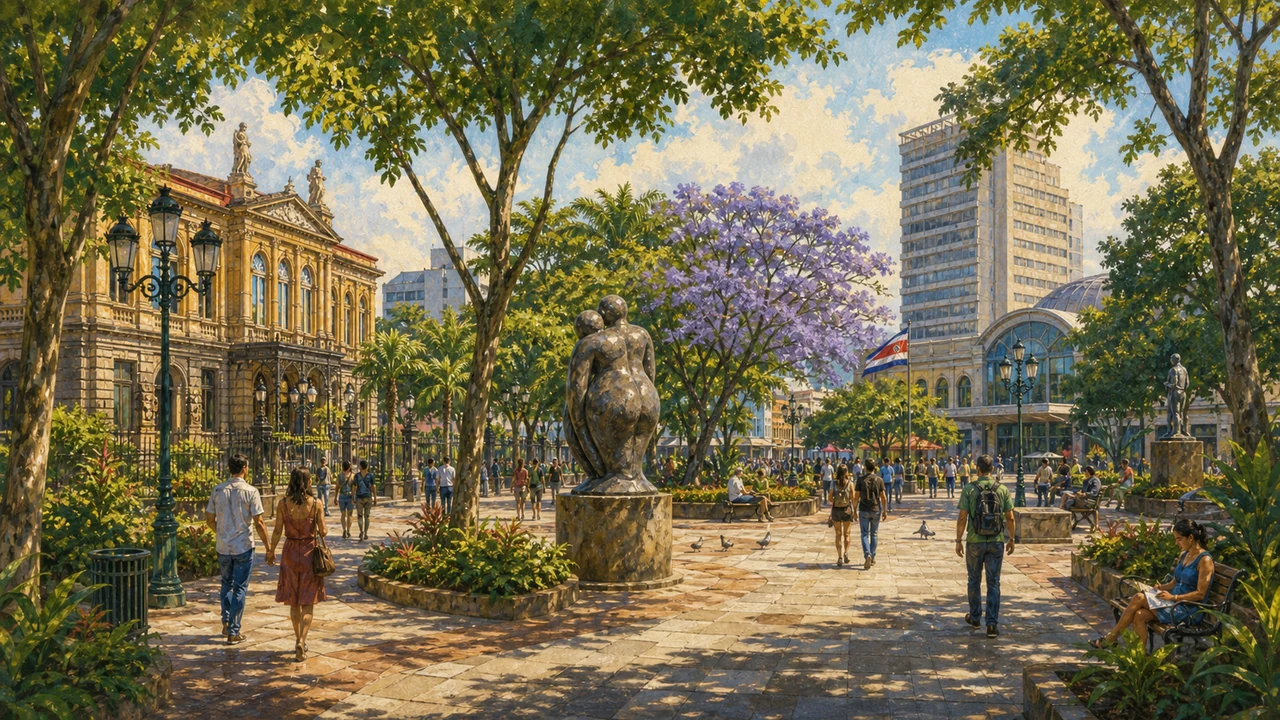 The San José metropolitan area spans multiple cantons, and the character of the real estate market varies considerably by neighborhood. Here are the areas that attract the most international buyer interest:
Escazú is the gold standard of San José-area residential real estate. An affluent western suburb, it hosts major shopping centers (Multiplaza and Avenida Escazú), Hospital CIMA, dozens of international restaurants and hotels, and the largest cluster of corporate offices in Costa Rica outside the capital’s historic core. The residential offering ranges from sleek high-rise condominiums in the flat commercial zone to large gated communities and hillside homes with sweeping valley views in the higher elevations of San Antonio de Escazú and Bello Horizonte. Escazú is also where many ambassadors and senior diplomats reside, which speaks to both its security profile and its services.
Santa Ana borders Escazú to the west and has grown rapidly in the past two decades into a preferred address for families and professionals who want more space and newer construction at values that can be slightly more accessible than comparable Escazú properties. Master-planned residential communities with community pools, gyms, and 24-hour security are the defining property type. The Lindora commercial strip offers restaurants, supermarkets, and retail without requiring a trip into heavier traffic.
Rohrmoser is an established, tree-lined neighborhood on the northwestern edge of San José proper, best known as the embassy district — the U.S. Embassy and several others are located here. Properties tend to be larger lots with older single-family homes alongside newer apartment buildings, at price points that can be attractive relative to Escazú. Its proximity to La Sabana Metropolitan Park (the city’s largest green space) is a consistent draw.
Curridabat and Pinares (part of the southeastern metro) are quieter residential enclaves popular with Costa Rican families and expats who want good schools and a neighborhood feel without the bustle of the Escazú corridor. Pinares in particular has developed a reputation for quality gated communities within a short commute of the tech-park zone.
San Rafael de Escazú and the hills above offer some of the most dramatic views in the metro area — panoramic vistas over the entire Central Valley at elevations where the air is notably cooler. Properties here skew toward larger hillside homes and have long attracted buyers looking for something distinctive alongside Escazú’s amenities.
Types of property available
San José and its western suburbs offer a wider variety of property types than any other market in Costa Rica:
Modern condominiums and apartments are the most abundant product type. Ranging from compact studio units popular with students and young professionals to full-floor residences with rooftop terraces and concierge service, condos in Escazú and Santa Ana appeal especially to buyers who want low-maintenance, lock-and-leave ownership. Many buildings include amenities such as pools, co-working spaces, and secured parking.
Gated-community single-family homes (condominios horizontales) are the dominant choice for families. These planned communities offer private streets, shared green space, clubhouses, pools, and 24-hour security within a single regulated environment. They are found throughout Escazú, Santa Ana, and neighboring Lindora, at a range of sizes and price points.
Hillside homes with valley views sit above the flat commercial zone in the upper elevations of Escazú and neighboring cantons. These properties often combine larger land parcels with dramatic panoramic outlooks, attracting buyers who want a sense of privacy and space without sacrificing access to city services.
Urban apartments and townhouses in San José proper — including neighborhoods like Barrio Escalante, Rohrmoser, and Sabana — appeal to buyers interested in the city’s cultural scene, the arts district, and pedestrian-friendly urban living.
Investment and rental potential
The rental market in metropolitan San José is among the most reliable in Costa Rica, and for a specific reason: demand is institutional as much as it is individual. Multinational companies with Costa Rican operations routinely house incoming executives in the Escazú and Santa Ana corridor, generating corporate leases that can command premium rates and tend to run on 12-month terms with dependable tenants. Diplomatic missions and international NGOs similarly place staff in the western suburbs.
Beyond corporate demand, the area benefits from a large population of university students, young professionals, and long-term expats who prefer renting modern, managed properties to owning outright. A well-positioned condo in Escazú or Santa Ana — near hospitals, schools, or the tech-park zone — faces relatively low vacancy compared with seasonal vacation-rental markets on the coast.
For buyers focused on capital appreciation, San José’s western corridor has delivered steady long-term value growth tied to the ongoing expansion of Costa Rica’s services economy. As the country continues to attract foreign direct investment in technology, medical devices, and financial services, the pipeline of incoming professionals sustains demand for quality housing near corporate campuses.
Costa Rica’s flat 0.25% annual property tax keeps carrying costs minimal, which is significant for investors who plan to hold for the medium or long term. Closing costs of roughly 3.5–4% of the purchase price — covering transfer tax, stamps, and notary fees — are comparable to or lower than most North American markets.
Because there is no nationwide MLS and listings can vary between agencies, working with an experienced local buyer’s agent and an independent attorney is essential to getting accurate market intelligence and verified pricing. See our broader Costa Rica Real Estate guide for detailed information on the buying process, title verification, and how to use escrow safely.
Getting there and infrastructure
San José is the best-connected city in Costa Rica by every measure. Juan Santamaría International Airport (IATA: SJO), located in neighboring Alajuela, is approximately 30–45 minutes from Escazú and Santa Ana by highway under normal traffic conditions. It serves direct flights from major North American hubs — Miami, Houston, Atlanta, New York, Toronto — and connects onward to Europe and South America. For property owners who split time between Costa Rica and their home country, this direct flight access is a practical advantage that coastal regions often cannot match.
Within the metro area, the Autopista Próspero Fernández connects the western suburbs to the city center and continues east toward Cartago. The General Cañas highway runs north to the airport and La Uruca. Traffic congestion during peak commuting hours is a real factor in daily life — one reason many buyers in Escazú and Santa Ana value properties close to their workplace or within walkable distance of the commercial strip.
Utilities and digital infrastructure in the metro area are reliable by regional standards. Fiber-optic internet is widely available and critical for the large community of remote workers and digital professionals who have chosen San José as their base. Backup generator systems are standard in most modern condo developments. Water and electricity service, operated by national utilities, is generally consistent throughout the western metro corridor.
Healthcare access is arguably the most powerful infrastructure argument for San José real estate. Hospital CIMA in Escazú is a JCAHO-accredited facility affiliated with Baylor University Medical Center, with emergency services, specialist clinics, and surgical suites meeting North American standards. Clínica Bíblica in the city center and Hospital La Católica in Guadalupe are similarly well-regarded private options. For residents with Costa Rican legal status, the national social-security healthcare system (CCSS, known as the Caja) provides an additional safety net. This concentration of medical capability in one metropolitan area is a defining factor for retirees choosing a base in Costa Rica.
Frequently asked questions
Is San José a good place to buy real estate in Costa Rica?
Yes, especially for buyers who prioritize urban convenience, healthcare, and infrastructure over beach access. San José and its western suburbs — Escazú and Santa Ana — offer the country's deepest selection of condos, gated communities, and executive rentals, supported by top private hospitals, international schools, and close proximity to the main international airport.
What are the best neighborhoods to buy property in San José?
The most sought-after residential areas are Escazú (luxury condos and gated communities near major malls and corporate offices), Santa Ana (newer master-planned communities and slightly more space at comparable values), and Rohrmoser (an established diplomatic enclave close to the city center). Curridabat and Pinares are also popular with families for their quieter streets and quality schools.
Can foreigners own property in San José, Costa Rica?
Yes. Costa Rica grants foreigners the same property rights as citizens. You can buy titled (fee-simple) property in your own name or through a Costa Rican corporation (sociedad anónima) — no residency required. This applies throughout the country, including San José and the Central Valley.
What types of property are available in San José?
The San José market is dominated by modern condominiums and apartments, which are especially popular with professionals, expats, and lock-and-leave buyers. Gated-community single-family homes are plentiful in Escazú and Santa Ana, and hillside properties with panoramic Central Valley views can be found in the hills above Escazú and in neighboring cantons.
What is the rental market like in San José?
Long-term rental demand in San José and its western suburbs is among the strongest in the country, driven by professionals working for multinationals, diplomats, embassy staff, and students at the area's universities. Modern condos in Escazú and Santa Ana are particularly easy to keep occupied at competitive monthly rates, making them a reliable choice for rental-income investors.