Costa Rica Northern Mountains: Cloud Forests & Volcanoes
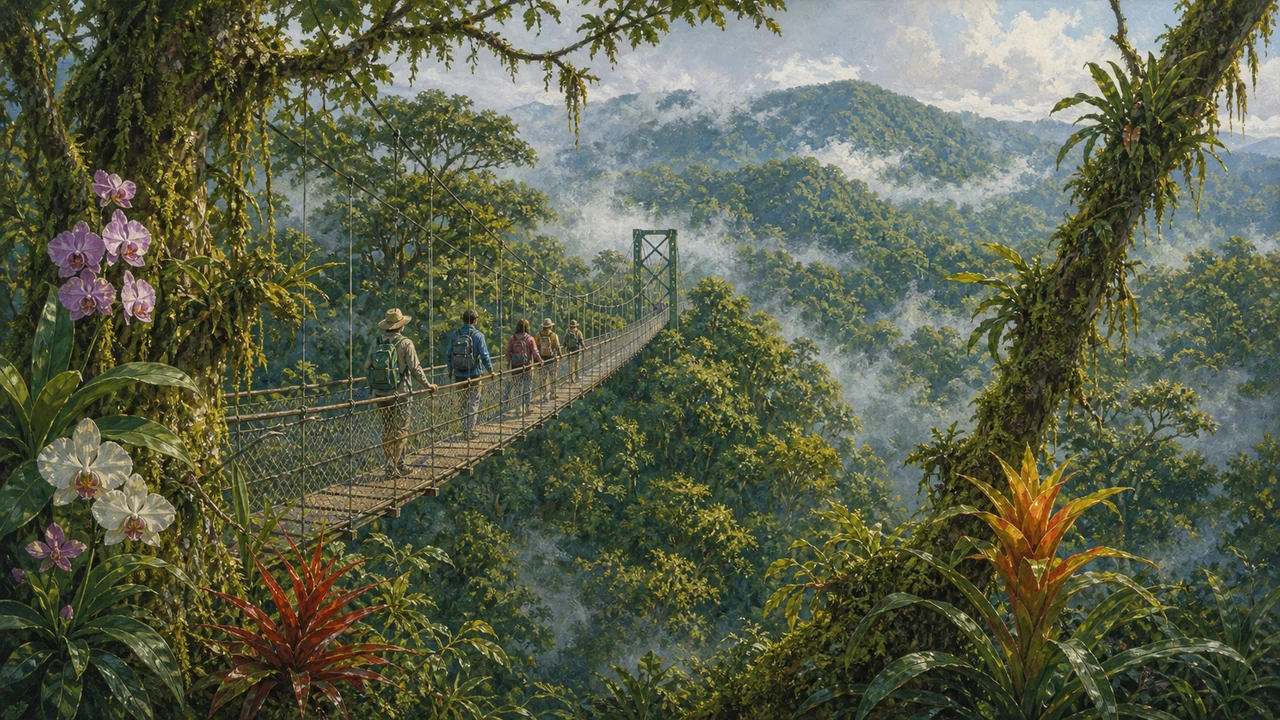 Costa Rica’s northern mountains form one of the most ecologically and scenically remarkable regions in Central America, drawing travelers from across the globe to mist-shrouded cloud forests, active volcanic landscapes, and highland coffee farms that have put the country on the world ecotourism map.
Stretching across the Tilarán, Central Volcanic, and Guanacaste mountain ranges, this zone encompasses everything from the celebrated Monteverde cloud forest to the rumbling cone of Arenal Volcano and the lush highland valleys in between. Whether you come for wildlife, adventure, or simply the drama of walking through a living cloud, the northern mountains deliver an experience that rewards every kind of traveler.
Monteverde and Santa Elena Cloud Forests
 The names Monteverde and Santa Elena have become synonymous with cloud forest ecotourism in Costa Rica. The Monteverde Cloud Forest Biological Reserve, established in the 1970s, protects more than 10,500 hectares of primary forest draped in bromeliads, mosses, and tree ferns. Its neighbor, the Santa Elena Cloud Forest Reserve, is community-managed and often less crowded — a great alternative for visitors who want a quieter trail experience.
The forests here host an extraordinary concentration of wildlife. More than 400 bird species have been recorded in the Monteverde zone, including the resplendent quetzal, three-wattled bellbird, and dozens of hummingbird species that gather at garden feeders throughout the village. Howler monkeys, two-toed sloths, and the elusive puma share the forest with over 100 mammal species.
Guided night walks reveal a nocturnal world of insects, reptiles, and sleeping birds that most daytime visitors never encounter. The experience of moving through a fog-wrapped forest by torchlight, surrounded by the calls of frogs and the drip of condensation from leaves the size of umbrellas, is one that stays with travelers long after they return home.
Canopy Adventures and Suspension Bridges
 The northern mountains pioneered the zip-line canopy tour, and the infrastructure built around Monteverde remains among the best on the continent. Zip-line tours through the Monteverde canopy launch visitors across forested ravines at treetop height, offering a perspective on the forest that no ground trail can match. Several operators run platforms connected by up to a dozen cables, with some reaching considerable heights and lengths above the forest floor.
For those who prefer a slower pace, hanging suspension bridges thread through the canopy at multiple levels across the region. Crossing a swaying bridge above a 50-meter drop — with toucans calling from the canopy and an iridescent blue morpho butterfly drifting past — is a reliable highlight for families and photographers. Check activities & sports for a full overview of what the region offers.
The area around Monteverde village itself has evolved into a genuine ecotourism hub, with a butterfly garden, a serpentarium, an amphibian center, a cheese factory (the original Quaker settlers helped establish a dairy tradition that continues today), and numerous small coffee operations offering tours and tastings.
Arenal Volcano and the La Fortuna Area
 On the northeastern flank of the Tilarán Range, Arenal Volcano looms over the town of La Fortuna in one of Costa Rica’s most iconic landscapes. Though Arenal entered a resting phase around 2010, its near-perfect cone remains the most photographed peak in the country, and the geothermal energy beneath it still heats dozens of natural hot springs that have made La Fortuna synonymous with relaxed, volcano-side soaking.
Adventure activities in the Arenal region are extraordinarily varied. The lake created by the Arenal Dam — Lago Arenal — is one of the best windsurfing and kitesurfing spots in the Americas, drawing enthusiasts during the windiest months of the year. Trails inside Arenal Volcano National Park cross hardened lava fields from past eruptions, offering close-up geology and excellent views of the cone. Hanging bridges, whitewater rafting on the Toro River, and guided hikes to La Fortuna Waterfall round out the options for active visitors.
The drive between La Fortuna and Monteverde — often done by boat across Lago Arenal and minibus up the mountain — is itself a highlight, with views across the water to volcanoes on the far shore and the highland farms climbing the Tilarán slopes.
The Tilarán Range and Coffee Highlands
The Tilarán mountain range serves as the backbone of this region, separating the dryer Guanacaste lowlands to the west from the wetter Caribbean-influenced slopes to the east. This climatic divide shapes everything: the windward slopes catch Pacific moisture and stay perpetually cloud-covered, while the leeward side supports dry forests and cattle ranches that feel completely different from the cloud forest world just a few kilometers away.
Coffee cultivation in the Costa Rica highlands thrives in these transitional zones. Small farms scattered across the upper slopes grow specialty arabica at elevations that produce bright, acidic coffees prized by roasters worldwide. Farm tours let visitors follow a coffee cherry from tree to drying rack, and many small operations sell beans roasted on-site — often the freshest cup available anywhere in the country. For more on the country’s coffee culture, visit Costa Rica coffee.
The highlands also support a growing community of artists, craftspeople, and small-scale farmers who have found a market in the steady flow of ecotourism visitors. Rural lodges and bed-and-breakfasts dot the road to Monteverde, offering authentic encounters with campesino life alongside the more polished reserve experiences.
Wildlife and Birdwatching
The ecotourism and nature opportunities in the northern mountains are anchored by biodiversity that rivals any region in Costa Rica. The cloud forest ecosystem is particularly rich in endemic and range-restricted species — plants and animals found nowhere else — because the cool, moist conditions above 1,500 meters create an island-like habitat isolated from surrounding lowland zones.
Birdwatchers making the northern mountains circuit can expect species from multiple altitudinal zones in a single trip. The lower slopes around La Fortuna host toucans, parrots, and tanagers typical of Caribbean lowland forests. Ascending toward Monteverde brings in cloud forest specialists: the bare-necked umbrellabird, the golden-browed chlorophonia, and the golden-bellied flycatcher are among the more sought-after targets. Guided birdwatching in the Monteverde cloud forest is best arranged through a local guide who knows the reserve trails and seasonal movement patterns of key species.
Planning Your Visit
 Most visitors to the northern mountains base themselves in either Monteverde/Santa Elena or La Fortuna, spending two to three nights in each before moving on. The two hubs are linked by a scenic route that most travelers do by boat and shuttle rather than the long road around the lake — a worthy journey in its own right.
Both bases are well-served by shuttle transfers from San José and from Guanacaste to the north. Liberia’s Daniel Oduber International Airport (LIR) is the closest major gateway for the Arenal-Tilarán corridor, cutting the drive significantly compared to arriving via San José. See our travel tips for entry requirements, currency, and getting around.
Accommodation ranges from budget guesthouses in the village of Santa Elena to luxury ecolodges perched in private forest reserves. Many properties have invested heavily in sustainable practices, and the region has been at the forefront of responsible tourism development in Costa Rica since the 1980s. Travelers who want to support community-based lodging and locally guided tours will find plenty of well-established options.
For a broader picture of Costa Rica’s regions and what makes them distinct, explore why visit Costa Rica and our guides to national parks and protected areas.
Frequently asked questions
What is the best time to visit Monteverde and the northern mountains?
The dry season (December through April) offers clearer skies and easier trails, though cloud forests can be overcast year-round — that moisture is what makes them magical. February and March tend to have the most stable weather for hiking and wildlife viewing.
How do I get from San José to Monteverde?
The most common route is a 3–4 hour drive via Puntarenas and the Tilarán road. Shuttle services run daily from San José hotels. Domestic flights to a nearby airstrip are also available, and some visitors combine a boat crossing of Lake Arenal with a connecting transfer for a scenic approach.
Can I see the resplendent quetzal in the northern mountains?
Yes. The cloud forests around Monteverde and the Tilarán Range are prime quetzal habitat. The best sightings occur during the breeding season from February through April when males display their brilliant tail feathers.
What activities are available beyond the cloud forest reserves?
The northern mountains region offers zip-line canopy tours, suspension bridge walks, horseback riding, hot springs near Arenal, whitewater rafting, birdwatching, coffee farm tours, butterfly gardens, and hummingbird feeders. The range of adventures suits families, solo travelers, and seasoned naturalists alike.
Is a 4WD vehicle necessary for the northern mountains?
For the road into Monteverde specifically, a high-clearance vehicle is recommended, especially in the wet season. Roads to La Fortuna and the Arenal area are well-paved and accessible by any vehicle. Check current road conditions before departure.