Costa Rica's World-Class Surf Breaks by Region
Costa Rica is one of the world’s premier surf destinations — a country whose Pacific and Caribbean coastlines combine to deliver championship-caliber waves nearly every month of the year. The international surf community recognized this long ago, selecting Costa Rican breaks to host major global competitions, and the surf breaks that earned that reputation are spread across distinct regions, each with its own personality.
Whether you’re chasing heavy barrels, long rights, or gentle rollers suited to a first lesson, understanding Costa Rica’s surf geography helps you choose the right break for your skill level and travel window. The full overview of the sport is at surfing in Costa Rica — this guide drills down into the specific breaks that define the country’s world-class standing, region by region.
Central Pacific: Power and Consistency Near Jacó
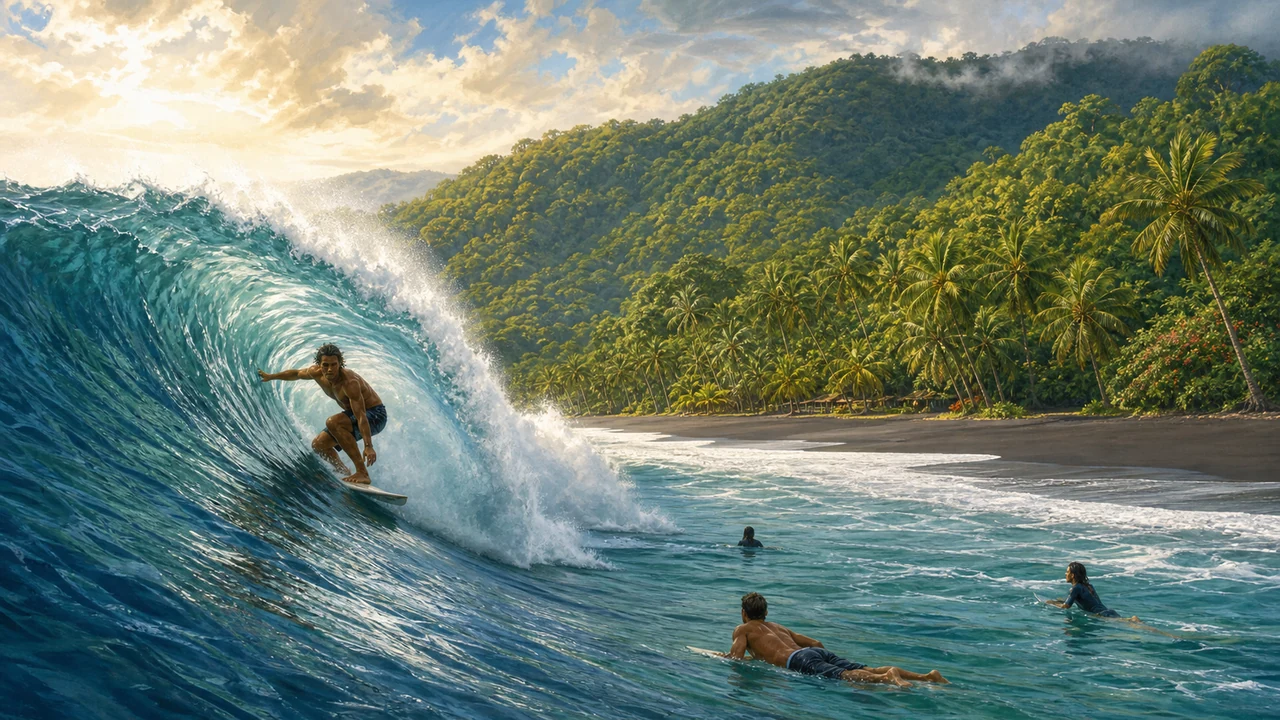 The Central Pacific coast — most accessible from San José — produces some of Costa Rica's most reliable and powerful surf. **Playa Hermosa near Jacó** is the marquee break of this region. A long stretch of dark-sand beach with multiple peaks, Hermosa generates steep, punchy waves that hold size well and can challenge even experienced surfers. The combination of consistent swell exposure, wave quality, and proximity to infrastructure has made it the natural home for major international competitions.
Hermosa’s peaks shift with the tide and the swell direction, so there is almost always a rideable section somewhere along the beach. Beginners should stick to the shallower, slower inside sections; intermediates and above will gravitate to the main peaks where the waves hollow out quickly.
Jacó town itself — just a few kilometers north — has surf shops, rentals, and board repair services, making the Central Pacific the most logistically straightforward region for first-time visitors to Costa Rica’s surf scene.
Guanacaste: The Remote and the Legendary
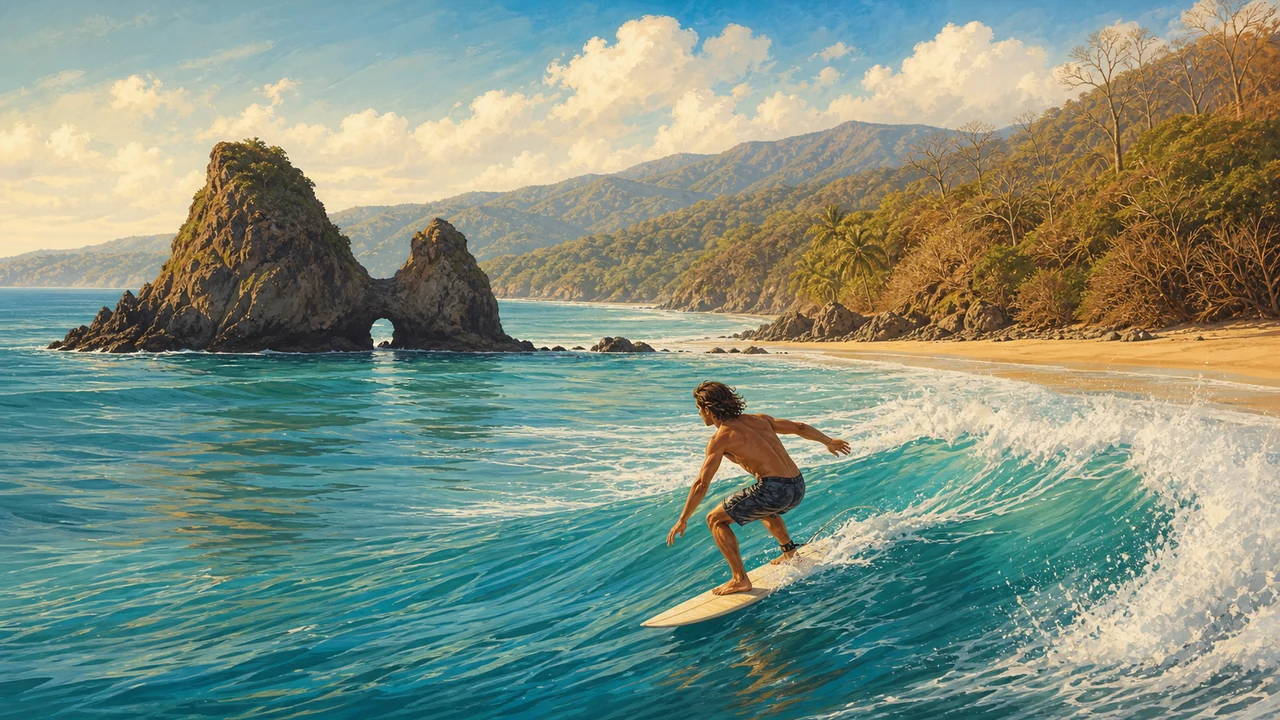 [Guanacaste](/costa-rica-general-info/knowing-costa-rica/guanacaste) in the North Pacific is home to some of Costa Rica's most celebrated remote breaks. **Witch's Rock (Roca Bruja)** sits inside [Santa Rosa National Park](/costa-rica-protected-areas/costa-rica-national-parks/santa-rosa-national-park) and is accessible only by boat from Tamarindo or Playas del Coco. The break — a hollow, powerful left and right over a sandy bottom — delivers long rides with minimal crowds. Because access is controlled by the park, the experience feels genuinely wild.
Ollie’s Point, a right-hand point wave found further up the coast inside the same protected area, is arguably even more coveted among long-boarders and experienced shortboarders. Its long, peeling rights are the kind of wave surfers plan entire trips around.
Tamarindo itself, one of Costa Rica’s most developed surf towns, offers a more accessible option: beginner-friendly waves at Playa Tamarindo alongside livelier nights and a full range of surf instruction. It is an ideal base for exploring Guanacaste’s many beach and reef breaks.
Southern Pacific: The Long Right at Pavones
The southern Osa Peninsula and Puntarenas region shelters what many consider one of the longest surfable left-hand waves in the Western Hemisphere — Pavones. Located near the Panamanian border in a lush, remote corner of the country, Pavones comes alive when a large south swell arrives, producing rides that can last for several minutes down the point. Getting there requires commitment — a long drive on rough roads — but surfers who make the journey rarely forget the experience.
Dominical offers a more accessible alternative on the South Pacific, with beach breaks suited to intermediate surfers and a small beach-town culture that feels relaxed and authentic. The nearby Marino Ballena National Park adds nature attractions that round out a longer stay in the region.
Caribbean Coast: Salsa Brava and the Winter Season
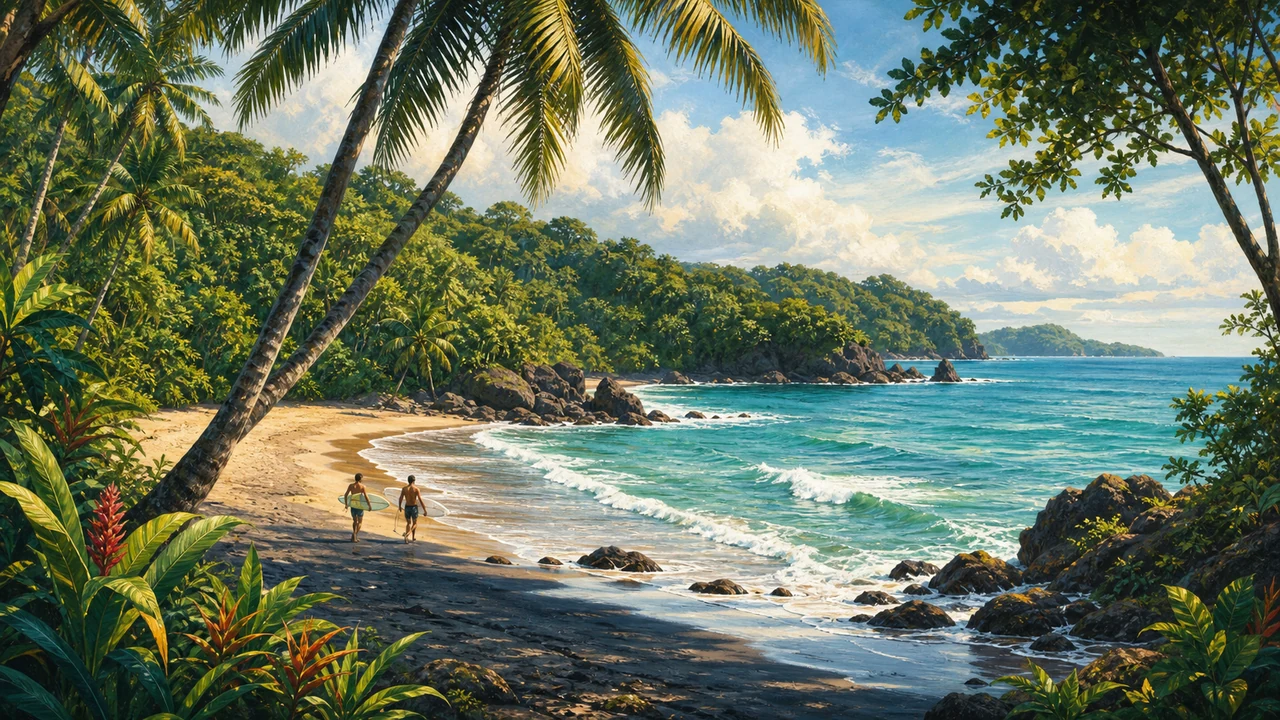 The Caribbean side of Costa Rica operates on a different seasonal clock. While the Pacific pumps through the Northern Hemisphere spring and summer, the Caribbean receives North Atlantic swells from November through March. Puerto Viejo de Talamanca, a laid-back Afro-Caribbean town in [Limón](/costa-rica-general-info/knowing-costa-rica/limon), is home to **Salsa Brava — a heavy, shallow reef break** that throws thick barrels over a coral shelf and is considered one of the most challenging waves in Central America. It is strictly for experienced surfers.
For those who want Caribbean atmosphere without Salsa Brava’s risk, Playa Cocles just south of Puerto Viejo offers a more forgiving beach break and consistent enough surf to keep most intermediates satisfied.
The Caribbean coast’s lush jungle backdrop, unique cuisine, and relaxed pace make it a worthwhile destination even beyond the waves — pairing a surf trip with a visit to Cahuita National Park is a natural combination.
What Makes These Breaks Championship-Caliber
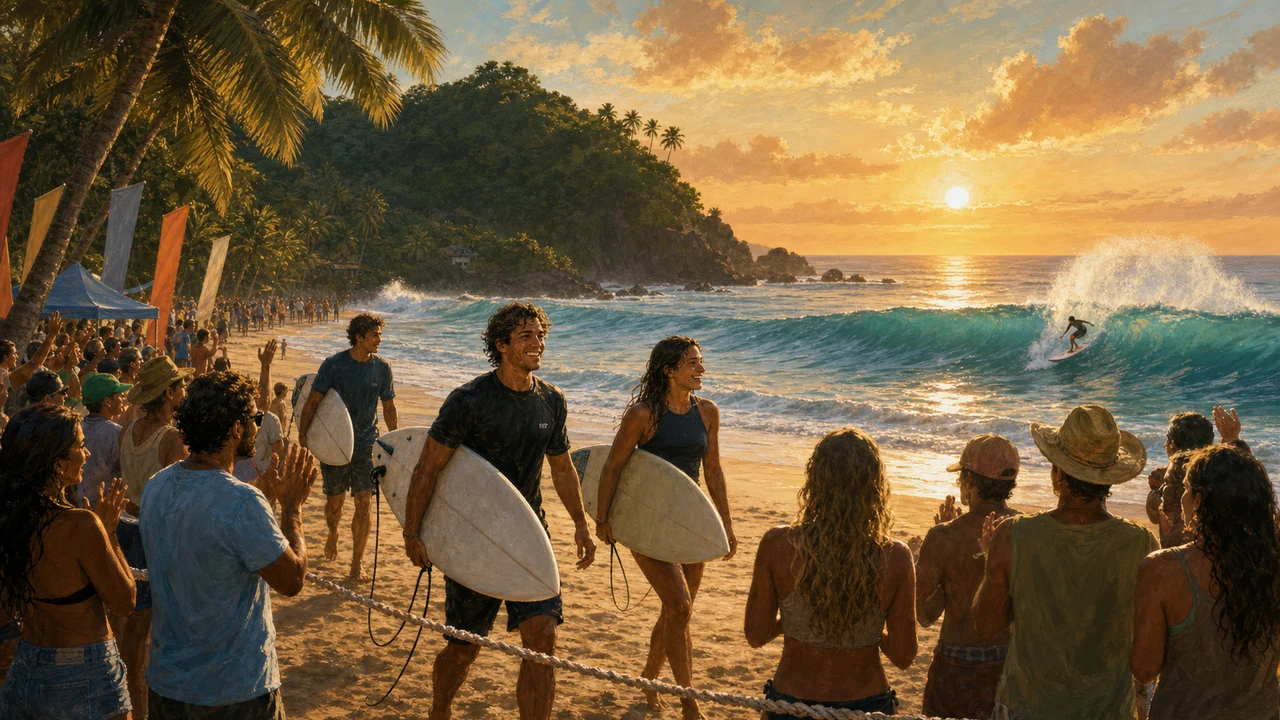 Surf break selection for international competition involves several factors: consistent swell window, wave shape and power, safety margins, and the logistical capacity of nearby towns to handle athletes, media, and spectators. Costa Rica's breaks — particularly Playa Hermosa — score well on all counts.
Year-round warm water (averaging around 27–29°C / 80–84°F on the Pacific) eliminates the need for thick wetsuits, making Costa Rica accessible to surfers from tropical nations who would struggle in colder surf destinations. The country’s two coastlines also mean its competition window can be extended or shifted depending on hemispheric swell patterns.
The Billabong World Surfing Games Costa Rica demonstrated that the country’s infrastructure, hospitality, and break quality meet the highest international standards — a distinction that continues to draw competitive and recreational surfers from across the globe year after year.
Planning Your Costa Rica Surf Trip
A well-planned surf trip accounts for both season and skill level. The Pacific is the default for most visitors — a broad window of April through October, reliable infrastructure, and breaks for all abilities. More advanced surfers chasing uncrowded perfection will want to research Witch’s Rock or Pavones timing carefully, ideally targeting peak swell months and building in flexibility.
Beyond the surf itself, Costa Rica rewards a slower pace. Pairing wave sessions with ecotourism and nature experiences — wildlife refuge visits, rainforest hikes, or national park days — is how most surfers extend and enrich their time in the country. Costa Rica travel tips covers the practical logistics of getting around between regions, many of which involve domestic flights or longer coastal drives that benefit from advance planning.
The combination of natural wave quality, warm water, biodiversity, and genuine tico hospitality is what keeps the global surf community returning — and what earned Costa Rica its place on the world championship map.
Frequently asked questions
What makes Costa Rica a world-class surf destination?
Costa Rica sits at the intersection of powerful Pacific swells and warm tropical water year-round. Its two coastlines — the Pacific and Caribbean — produce a huge variety of breaks, from heavy beach dumps to long point waves, giving surfers of every level something exceptional to ride.
Which is the most famous surf break in Costa Rica?
Playa Hermosa near Jacó is probably the most internationally recognized, known for its powerful, consistent beachbreak that has hosted major international competitions. Witch's Rock in the Guanacaste wilderness and Pavones in the far south are legendary among experienced surfers.
When is the best time to surf in Costa Rica?
The Pacific side peaks from April through October, when swells from the Southern Hemisphere arrive regularly. The Caribbean side — particularly Puerto Viejo — fires best from November through March when North Atlantic swells come in. That means Costa Rica has good surf somewhere almost every month.
Do I need to be an expert surfer to surf in Costa Rica?
Not at all. Costa Rica has beginner-friendly breaks like the long, mellow waves at Tamarindo or Jacó's beach breaks, as well as advanced spots like Salsa Brava and Witch's Rock. Surf schools are easy to find near every major surf town.
Can I surf Costa Rica's Caribbean coast too?
Yes — Puerto Viejo's Salsa Brava is one of the heaviest reef breaks in Central America and draws experienced surfers each winter. The Caribbean season is roughly November through March, the opposite of the Pacific, so a two-coast trip can extend your surfable time considerably.