Golf Course Architecture in Costa Rica
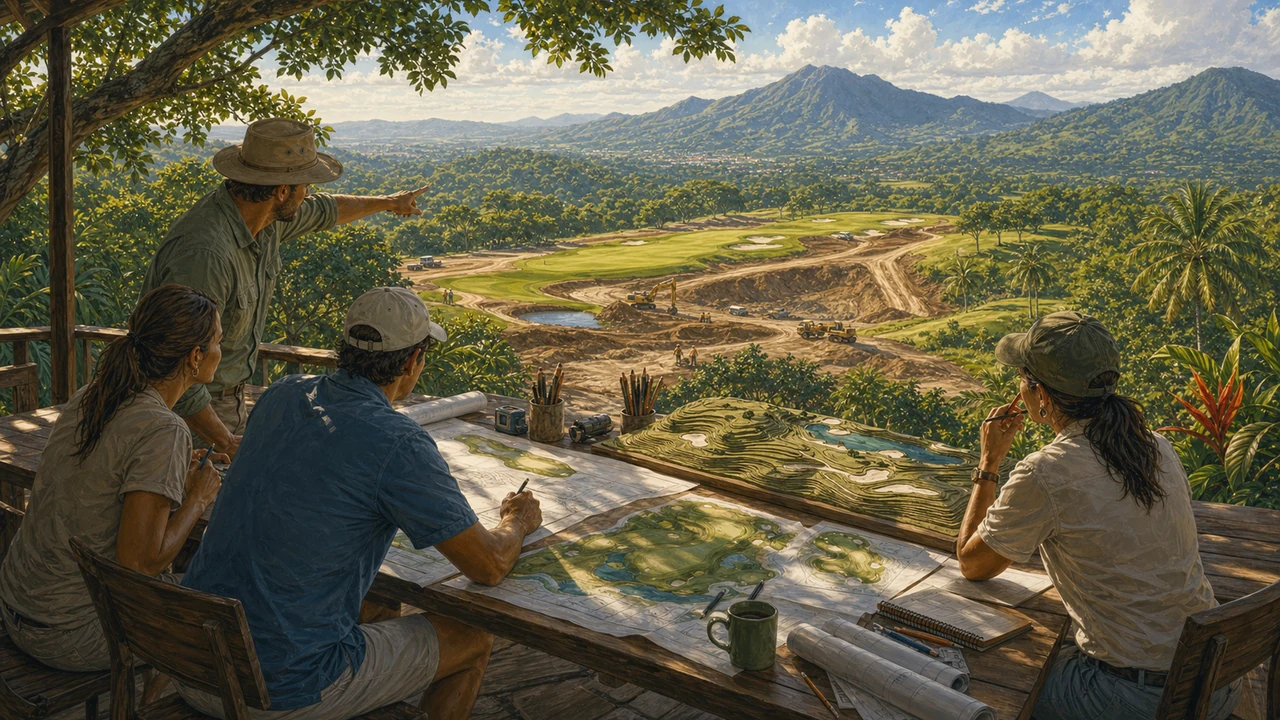
Golf course architecture in Costa Rica is shaped by one of the most compelling landscapes on the planet — a small country where jungle canyons drop toward Pacific beaches, howler monkeys cross fairways, and ocean trade winds rewrite the calculus of every approach shot. The result is a collection of courses that are as much ecological design achievements as they are tests of golf.
“Every golf course is uniquely different, just like every day of playing golf is distinctively different from another, even if playing on the same course,” explains five-time Central American Golf Champion and eleven-time National Champion Álvaro Ortiz. Wind shifts, green conditions, wet versus dry grass — every variable reshapes a course’s character. For Ortiz, knowing the design strategy behind a layout deepens the experience the same way understanding viticulture deepens a glass of wine.
The First Chapter: Cariari and the Fazio Legacy
The formal history of professional golf course design in Costa Rica begins at Cariari Country Club, where architect George Fazio introduced the concept of championship-grade layout design to the country. Construction of the 18-hole course was executed by his nephew Tom Fazio, starting in 1970 and completed over three years. Covering roughly 35 hectares, the course carries a slope rating that places it firmly in championship territory and has since hosted numerous national and international tournaments.
The course established a template that would define Costa Rican golf development: take an undulating piece of land, resist the impulse to flatten it, and let the natural topography create risk-reward decisions that reward course knowledge over raw power.
Ted Robinson Jr. and the Los Sueños Experience
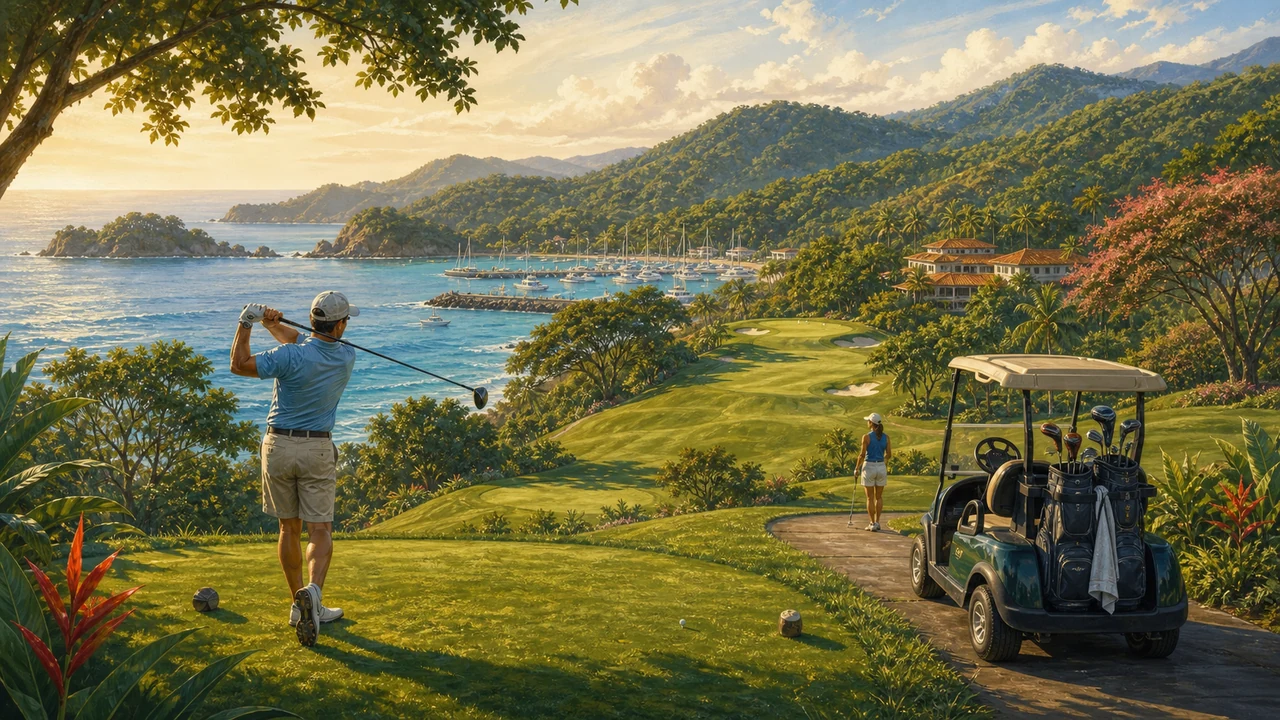
For prominent architect Ted Robinson Jr., the ability to envision a finished championship course from raw terrain is both inherited skill and learned discipline — his father was also a course designer, and Robinson grew up immersed in the craft.
His work on La Iguana Golf Course at the Los Sueños Marriott Ocean & Golf Resort in Playa Hermosa stands as one of the defining examples of Central Pacific golf design. Robinson describes the site’s drama vividly: “The course ranges from wide open ocean vistas to near-vertical canyon walls that rise up as if in a natural cathedral. Giant Sabo trees, Scarlet Macaws, and white-faced monkeys are all accents in a dramatic landscape.” For Robinson, those natural accents are not distractions — they are the identity of the course, and what separates it from anything a golfer will find outside Costa Rica.
Arnold Palmer Design at Peninsula Papagayo
The Four Seasons Resort at Peninsula Papagayo is home to an Arnold Palmer signature course, one that required 12 months of design work and 30 months of construction. The Palmer Course Design Company brings a global portfolio to every project, and the Papagayo layout reflects a particular sensitivity to its site.
Designers prioritized using already-deforested cattle-grazing land for the main playing area, limiting the clearing of endemic tree cover to the minimum necessary. A specialized grass variety capable of being irrigated with a blend of fresh and salt water was selected to reduce the course’s freshwater demand. Spread across roughly 48 hectares, the result is a layout celebrated for its undulating terrain and Pacific panoramas — a course that challenges finesse as much as power.
Manuel Ardor, who oversaw operations for the Papagayo development, frames the design philosophy simply: a successful course should deliver an enjoyable, entertaining experience to golfers of every skill level while also offering genuine challenge for those who seek it. The ocean views do the rest.
Robert Trent Jones Jr. and Reserva Conchal
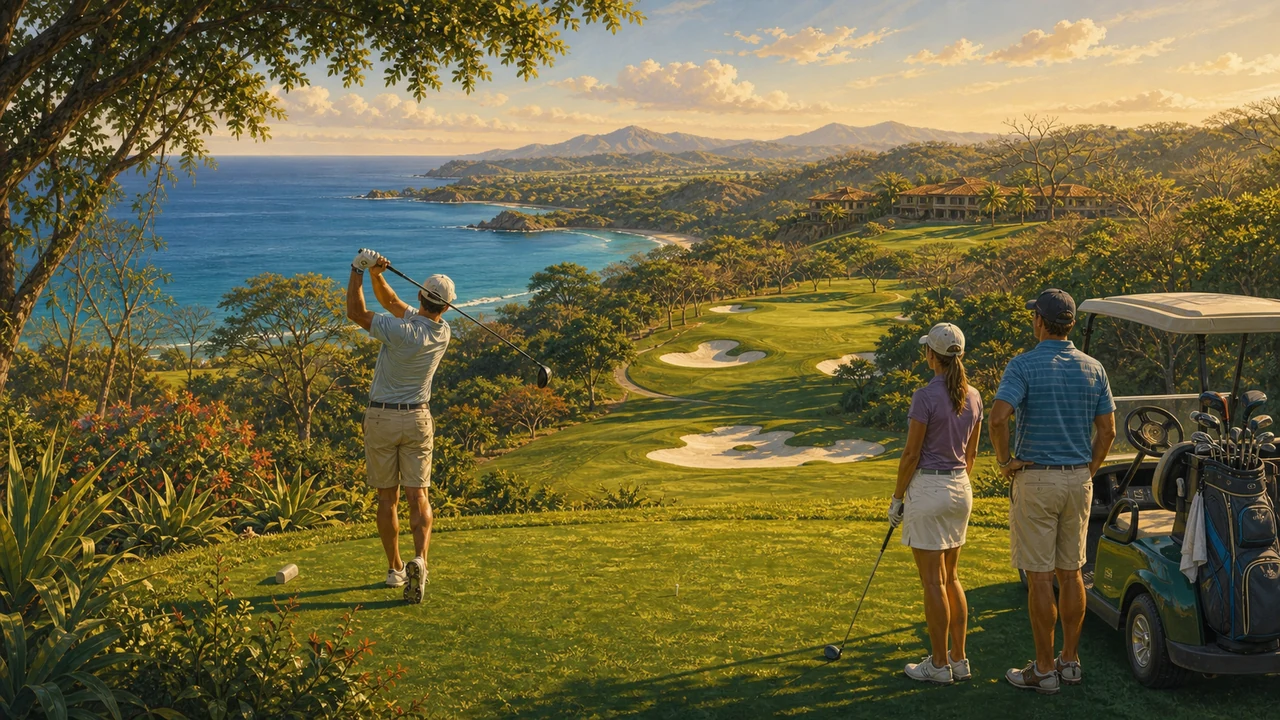
Among the most celebrated championship golf layouts in Guanacaste, the course at Reserva Conchal Golf Club was designed by Robert Trent Jones Jr., who has described the project as “environmentally sensitive golf at its best.” Jones Jr. followed the passion for course design established by his father, branching out independently in the 1960s to build a global portfolio.
The Reserva Conchal layout uses the site’s natural lakes and ravines as both strategic hazards and ecological assets. During construction, careful attention went into preserving and enhancing the native tropical dry forest, its wildlife, and the nearby mangrove systems. Phil Krick, golf director of the resort, puts it plainly: “People return from a day on the green and all they can talk about is their encounter with the animals that live along the course.” That interaction with Costa Rica’s extraordinary biodiversity is not incidental — it is central to what Guanacaste golf offers.
Krick also rates Costa Rica as “an emerging destination with an extraordinary future for golf course development,” a view shared widely among architects and resort operators across the country.
Tracy D. May and Valle del Sol
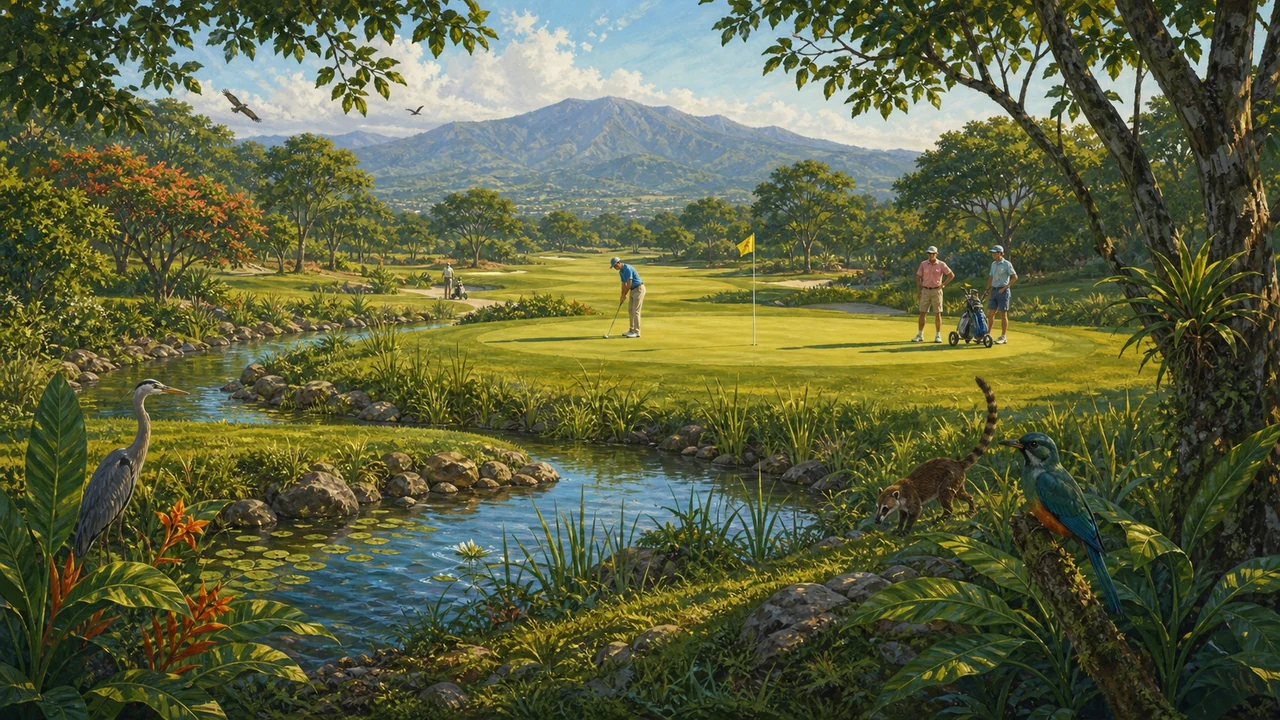
Not every notable Costa Rican course is carved into Pacific cliffsides. Valle del Sol, situated in the Central Valley, offers a mountain-framed alternative — scenic views of surrounding peaks from undulating greens, generous fairways, and 15 water hazard features that challenge players of every level.
Designer Tracy D. May of T.M. Golf Designs built her philosophy around enhancing existing wildlife habitats through course design. At Valle del Sol, the creek and lake systems integrated into the layout create active wildlife corridors rather than isolated features. The course sits roughly 20 minutes from Juan Santamaría International Airport and 35 minutes from downtown San José, making it the most accessible championship-caliber round in the country. Year-round temperatures in the high 70s Fahrenheit add to its appeal for visitors who want to play without scheduling around Guanacaste’s dry season.
Mike Young and the Links Spirit of Hacienda Pinilla
Mike Young, designer of the Hacienda Pinilla Golf Course on the Nicoya Peninsula, approaches Costa Rican golf with a perspective shaped by the land itself. The rolling farmland of the site — open and wide rather than dramatically hilly — suggested a links-influenced layout, wider and more exposed than the canyon-and-canopy courses found elsewhere along the coast.
Young sees the golfing experience here as genuinely different from resort golf elsewhere: “There is hardly a hole that you can see another hole from, and it looks very natural, like it has always been there. When playing it you really feel like you have the course to yourself.” That sense of solitude, framed by the Guanacaste landscape and the Pacific horizon, is a quality that no amount of course engineering can manufacture — it either exists in the land or it doesn’t. At Hacienda Pinilla, it does.
What Makes Costa Rican Golf Course Design Distinctive
The thread running through every significant tropical golf course design project in Costa Rica is the same: the landscape is not a problem to be solved but a resource to be revealed. Every designer who has worked here describes some version of the same process — reading the existing topography, wildlife, and hydrology, and then building a course that makes those natural elements central to the playing experience rather than peripheral to it.
From the canyon drama of Los Sueños to the open Pacific exposure of Hacienda Pinilla, from the dry-forest ecology of Reserva Conchal to the mountain-framed convenience of Valle del Sol, the courses share a commitment to letting Costa Rica be Costa Rica. That commitment — more than any signature designer’s name — is what draws serious golfers back.
Explore the full range of options through golf in Costa Rica and discover why the country continues to attract world-class design talent and discerning players from around the globe. For visitors who want more than a round of golf, Costa Rica’s activities and sports and ecotourism offerings extend well beyond the fairway.
Frequently asked questions
Who are some notable golf course designers who have worked in Costa Rica?
Several internationally recognized architects have designed courses in Costa Rica, including Robert Trent Jones Jr. (Reserva Conchal), Ted Robinson Jr. (La Iguana at Los Sueños Marriott), Arnold Palmer Design Company (Four Seasons at Peninsula Papagayo), Mike Young (Hacienda Pinilla), and George Fazio along with his nephew Tom Fazio, who designed the original Cariari course.
What makes Costa Rica's golf courses environmentally unique?
Costa Rica's top courses are designed with a strong eco-sensitivity mandate — preserving tropical dry forests, native wildlife corridors, and mangroves. Several courses use grass varieties that tolerate salt-and-freshwater blends to minimize consumption, and construction typically avoids cutting endemic trees wherever possible.
Which regions of Costa Rica have the most golf courses?
The Guanacaste province along the Pacific coast concentrates several resort and championship courses, taking advantage of dry-season weather and ocean views. The Central Valley — near San José — also hosts notable layouts with mountain scenery and year-round mild temperatures.
Is wildlife commonly seen on Costa Rican golf courses?
Yes. Scarlet macaws, white-faced monkeys, iguanas, and various tropical bird species are regular visitors on many fairways, especially in the Guanacaste and Central Pacific regions. Course designers often incorporate wildlife corridors and habitat preservation as core design principles.
How does tropical terrain affect golf course design in Costa Rica?
Designers must account for dramatic elevation changes, ravines, lake systems, ocean breezes, and seasonal rainfall patterns. The result is layouts that feel very different from North American or European courses — wider fairways, risk-reward holes that frame Pacific panoramas, and greens positioned to work with natural undulation rather than against it.