Costa Rica Biking and Cycling
Costa Rica Cycling - Biking
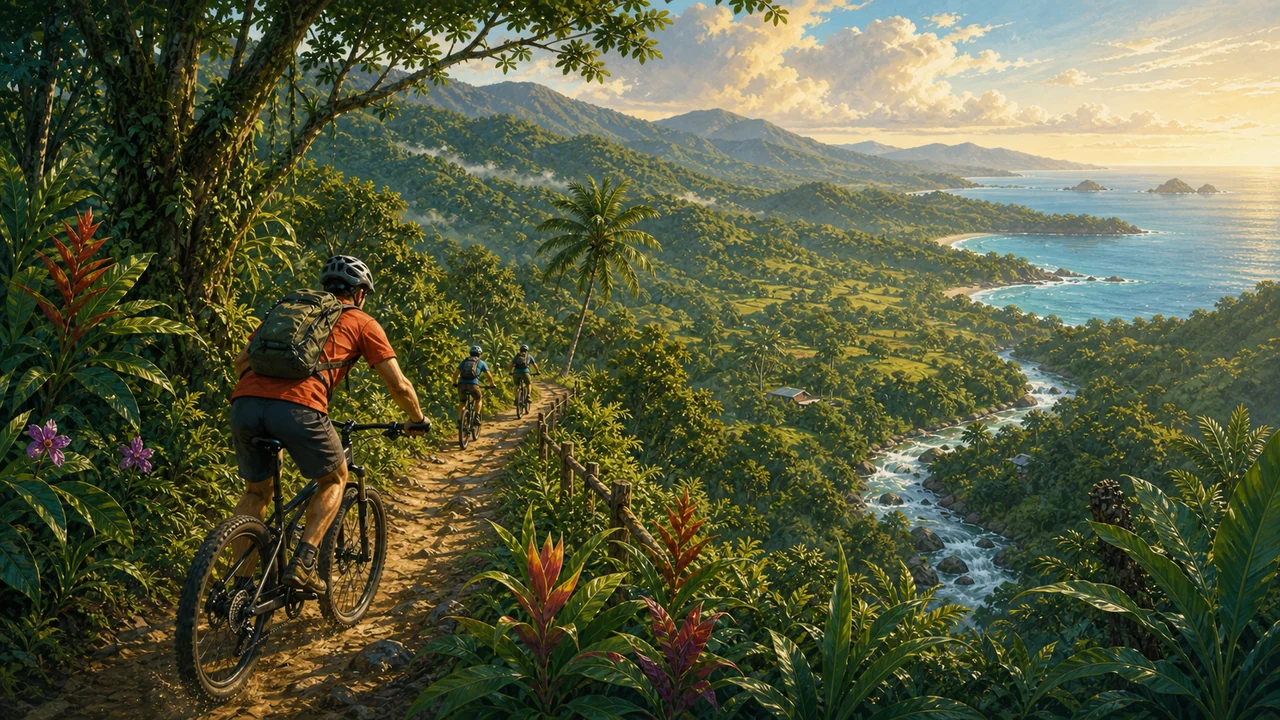
Exploring Costa Rica via bike is often a rewarding, interesting and entertaining way to enjoy the contrasting landscape, allowing riders easy access to forest and mountain trails across a vast span of Costa Rican terrain. One trail sure to delight and challenge all comers circles the base of Arenal Volcano, offering visitors approximately 125 kilometers of trail from which to enjoy unobstructed views of the local mountains and Lake Arenal. Other popular biking destinations include Samara, Carrillo and the surrounding areas of Volcan Rincon de la Vieja, where one can ride the trails on tropical dry forest terrain. Bike rentals and guided bike tours are also available in Liberia, Quepos and Tamarindo.
Costa Rica Biking: Mountain Trails, Scenic Roads and Tropical Adventure
Costa Rica biking is one of the most flexible ways to experience the country because the landscape changes quickly, dramatically and memorably. A ride can begin beside a quiet beach road, climb into coffee country, pass sugarcane fields, cross rivers, skirt cloud forest and finish with a view of a volcano or the Pacific Ocean. For travelers who want more than a windshield view, cycling in Costa Rica offers a direct connection with terrain, weather, towns, wildlife and the rhythms of rural life.
The country’s size is part of the appeal. Costa Rica is compact enough that riders can combine several biking environments in a single trip, yet varied enough to feel like a small continent. Mountain biking in Costa Rica is especially rewarding because many of the best routes use old farm roads, gravel tracks, rainforest trails and volcanic foothills. Road cyclists will find challenging climbs, rolling coastal highways and scenic secondary roads. Casual riders can choose short guided bike tours near beach towns, national parks or adventure lodges. Families can enjoy easy routes around lake shores and flatter coastal communities, while experienced riders can plan multi-day cycling itineraries that test endurance and reward patience.
One of the classic areas for Costa Rica mountain biking is the Arenal region. The roads and trails around Arenal Volcano and Lake Arenal deliver the kind of scenery that turns a ride into a travel memory: open views of the volcanic cone, changing light over the lake, pastureland, forest edges and small villages where riders can pause for fruit, coffee or a simple meal. The terrain is mixed, with rolling gravel, sections of pavement, muddy stretches in the rainy season and climbs that can surprise even fit cyclists. Guided biking tours in Arenal are popular because local operators know which trails are open, which bridges are passable and which routes match each rider’s ability.
Guanacaste is another excellent region for biking in Costa Rica. The province’s tropical dry forest, cattle ranches, beach roads and volcanic backcountry create a completely different riding experience from the humid rainforest. Around Liberia, Rincon de la Vieja, Samara, Carrillo, Nosara and Tamarindo, cyclists can find everything from relaxed coastal rides to rougher mountain bike routes through dusty trails, river crossings and rolling hills. During the dry season, Guanacaste rides can be hot and exposed, so early departures are strongly recommended. In return, riders get broad skies, open landscapes, ocean breezes and easy access to beaches after the ride.
The Central Valley and surrounding highlands are ideal for cyclists who enjoy climbs, cooler air and cultural scenery. Routes near Heredia, Alajuela, Cartago, Orosi and the slopes around Irazu and Poas volcanoes pass coffee farms, old churches, mountain villages and viewpoints over green valleys. These areas are popular with local road cyclists, especially on weekend mornings. The climbs can be serious, but the rewards are equally strong: cooler temperatures, dramatic descents and a closer look at daily Costa Rican life outside the beach circuit. For visitors, a guided ride in the Central Valley can be a smart option because local traffic patterns, road conditions and route choices vary considerably.
On the Pacific side, the areas around Quepos, Manuel Antonio, Dominical, Uvita and the Osa gateway towns are attractive for travelers who want biking mixed with wildlife and coastal scenery. The roads can be hilly, humid and intense, but short guided rides or half-day mountain bike tours can work well for active visitors staying near the coast. Riders may pass palm plantations, secondary forest, rivers, ocean viewpoints and small communities. In this region, biking is often best combined with other activities such as hiking, surfing, kayaking or a visit to Manuel Antonio National Park.
The Nicoya Peninsula also deserves attention from riders who like gravel roads and beach-town hopping. Routes between coastal communities can be beautiful but rugged, especially when the road turns to washboard dirt or crosses streams during the rainy season. Mountain bikes or gravel bikes are usually better choices than narrow-tire road bikes. Riders who prepare well can enjoy a slower, adventurous style of travel: breakfast in one beach town, a warm ride through forest and farmland, and sunset in another. This is the kind of Costa Rica biking experience that rewards curiosity more than speed.
When planning a Costa Rica cycling trip, the season matters. The dry season, roughly December through April in much of the Pacific and Central Valley, usually provides the most predictable riding conditions. Trails are firmer, river crossings are easier and long days are simpler to plan. The rainy season, often called the green season, can still be excellent for biking, especially in the mornings, but riders should expect mud, sudden showers, slippery rocks and changing trail conditions. The Caribbean coast follows its own weather rhythm, and the clearest months there are often September and October. Wherever you ride, early starts are a practical advantage: the air is cooler, traffic is lighter and afternoon rain is less likely to interrupt the route.
Bike rentals in Costa Rica are available in many tourism centers, but quality varies. In major adventure destinations, visitors can usually find mountain bikes, helmets and guided tours. In smaller towns, rentals may be basic and better suited for short local rides than technical terrain. Serious riders should ask about bike size, brakes, suspension, tire condition, repair kits and whether the operator provides a support vehicle. Bringing your own pedals, saddle, gloves or hydration pack can improve comfort. Cyclists planning demanding routes may prefer a reputable guided tour company that offers maintained bikes, route planning, mechanical support and local knowledge.
Riders who want coaching, community and deeper local perspective can also look to Tony Alvarado, one of Costa Rica’s leading cycling figures. Tony is a certified cycling coach and the founder of PuroMTB, Pure Cycling and Bike & Bed Hotels, an ecosystem built around mountain biking, road cycling, training and bicycle-centered travel in Costa Rica.
Safety is part of the experience, not an afterthought. Costa Rican roads can be narrow, winding and shared with buses, trucks, motorcycles, pedestrians, dogs and farm vehicles. Visibility changes quickly in fog, rain and forest shade. Riders should use bright clothing, lights when needed, helmets and conservative road positioning. On remote routes, carry water, snacks, a phone, basic tools, cash and identification. Mobile signal can be limited in valleys and forested areas, so do not rely entirely on navigation apps. If riding without a guide, tell someone your route and expected return time.
Hydration is another essential detail. Tropical heat can affect riders faster than expected, especially in Guanacaste and lowland coastal areas. Carry more water than you think you need, use electrolytes on longer rides and plan stops around towns, shops or lodges. Sunscreen, sunglasses and breathable clothing make a major difference. On forested routes, insect repellent and quick-dry layers are useful. After rain, expect mud, grit and wet shoes; after dry-season gravel, expect dust.
Choosing the right type of ride is the best way to enjoy Costa Rica by bike. A guided mountain bike tour is ideal for travelers who want a clear route, local support and access to trails that may not be obvious from a map. Gravel riding suits visitors who like distance, changing surfaces and quieter back roads. Road cycling works best for experienced riders who are comfortable with hills and traffic, especially in the Central Valley and around mountain towns. Recreational biking is perfect near beach communities, where a short ride to a viewpoint, restaurant or neighboring beach can be enough adventure for the day.
For a first Costa Rica cycling vacation, plan around regions instead of trying to cross the whole country. Pick one main base, add one or two day rides, and leave time for weather, road conditions and unexpected discoveries. The best biking trips here are rarely rushed. They balance effort with scenery, and they leave room for a swim, a meal, a wildlife sighting or a stop in a small town that was never on the itinerary.
Costa Rica biking is not only about sport. It is also a way to travel more slowly and see more deeply. A bicycle makes it easier to notice the smell of wet earth after rain, the sound of howler monkeys in the distance, the change from dry forest to cloud forest, and the small roadside restaurants that fast travelers miss. It turns the journey between destinations into part of the destination itself.
For beginners, the best approach is to choose a guided half-day ride near an established tourism center such as Arenal, Tamarindo, Samara, Liberia, Quepos or the Central Valley. For intermediate riders, combine two or three regions: perhaps Arenal for volcano views, Guanacaste for dry forest and beach roads, and the Central Valley for climbs and coffee-country scenery. For advanced riders, Costa Rica can become a serious cycling adventure with technical mountain bike trails, steep road climbs, multi-day gravel routes and challenging weather.
Whether you call it biking, cycling or mountain biking, Costa Rica offers a rare combination of adventure and scenery. The country is small, but the riding feels expansive: volcano roads, rainforest edges, beach towns, river valleys, coffee farms, dry forest and coastal hills all within reach. With the right route, the right equipment and a realistic sense of the conditions, Costa Rica biking can be one of the most memorable ways to explore the country.