Carlos Cruz: Costa Rican Watercolor Painter and Cultural Tourism Artist
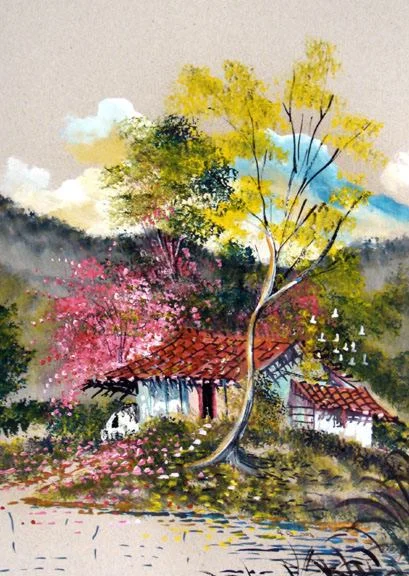 Carlos Cruz is a Costa Rican painter and watercolorist whose work captures the landscapes of Costa Rica within the country’s historical painting tradition. Working chiefly in watercolor (acuarela), he is known for canvases that dwell on rural farmhouses, tropical vegetation and the soft, humid light of the Costa Rican countryside.
This page tells his story — where he comes from, how he trained, and what makes his painting resonate with those who love the Costa Rican landscape. It also preserves the context of older Costa Rica art galleries and tourism directory links that pointed to top-rated cultural listings; today, Carlos Cruz is best understood as part of the country’s wider cultural tourism story, where travelers discover Costa Rica not only through beaches and national parks, but through painters, museums, galleries and regional memory.
Early life in Naranjo de Alajuela
Carlos Cruz was born on March 4, 1955, in Naranjo de Alajuela, in the heart of Costa Rica’s coffee-growing highlands. He completed his primary education at the Escuela República de Colombia in 1961, and in 1968 entered the Colegio de Naranjo. The rolling farmland and modest country homes of the Alajuela region — the world he grew up in — would later become the recurring subject of his art.
Artistic training
Cruz’s formal path into art began in 1974, when he enrolled at ESEMPI and studied under the painter Francisco Alvarado, a formative influence on his approach to color and composition. The following year, in 1975, he joined the Casa Gráfica, where he was introduced to the disciplines of lithography, serigraphy and printing — grounding his watercolor sensibility in a broader command of graphic technique.
That combination of fine-art training and hands-on printmaking shaped an artist comfortable both with the spontaneity of watercolor and with the precision of the print studio.
A decade on Costa Rican television
Beyond his own canvases, Carlos Cruz became a notable promoter of Costa Rican art. In 1990 he launched a program on Canal 38 that ran for roughly ten years. Over that decade he presented more than 350 Costa Rican visual artists to the public, turning his program into a lasting record of the country’s plastic arts and a platform that helped many painters and printmakers reach a wider audience.
The art of Carlos Cruz
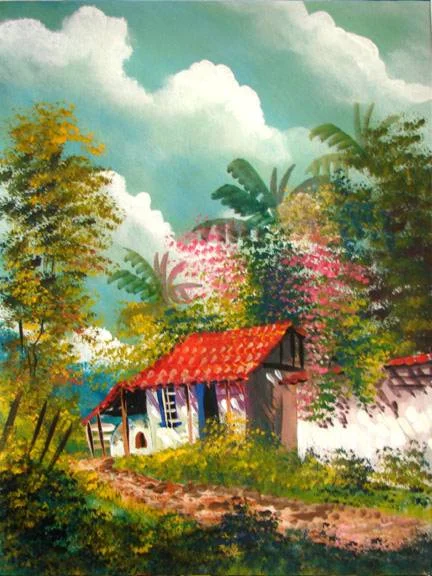
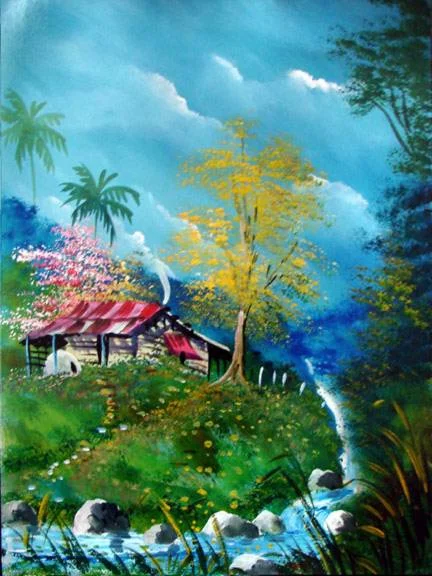
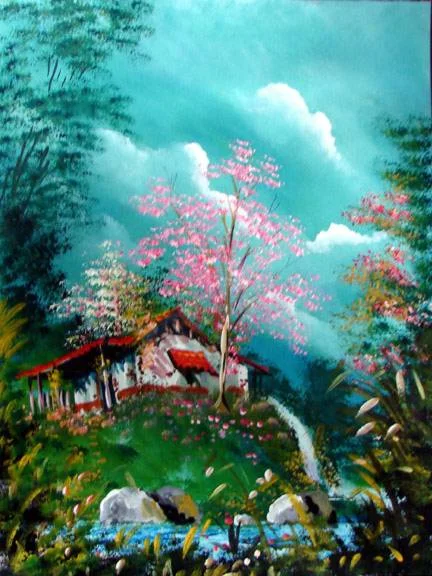
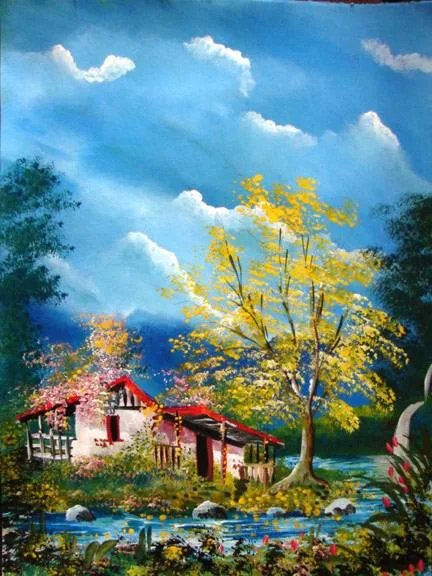
When Cruz paints the Costa Rican landscape, he works within the historical tradition of the genre, confirming with watercolor — colors diluted in water — what his eye finds in the country’s nature. Critics have singled out his love for the humidity of the tropical landscape that surrounds humble rural farmhouses, and the way he achieves an optical unity of image and reality through patient washes and patches of color.
The Costa Rican critic Luís Ferrero put it memorably: art is the “crossroads of life and of the world” — but it is nothing if it does not touch us, move us, provoke us. Cruz’s landscapes, Ferrero wrote, do exactly that, drawing the viewer in through their quiet power and their attraction. Working away from commercial noise, Cruz keeps “surprising things and ideas,” building his work with a craftsman’s mastery.
His painting belongs to the wider story of Costa Rican art and culture, alongside the country’s museums and galleries — including the national Costa Rican Art Museum — that preserve and showcase the nation’s visual heritage. For visitors interested in cultural tourism in Costa Rica, artists like Cruz add human scale to the landscape: the same coffee hills, rural houses and green valleys that appear on travel routes also appear in watercolor, filtered through memory and craft.
A gallery of his work
A selection of Carlos Cruz’s watercolors, capturing the rural landscapes, country houses and tropical light of Costa Rica.
Seeing his work
Travelers and collectors interested in Costa Rican watercolor will find his landscapes a window into the country’s rural soul — the coffee hills, the country houses and the green, humid light that defines the Central Valley. To understand why so many artists are drawn to paint this country, see why Costa Rica inspires its painters.
Frequently asked questions
Who is Carlos Cruz?
Carlos Cruz is a Costa Rican painter and watercolorist born on March 4, 1955, in Naranjo de Alajuela. He is known for capturing Costa Rica's landscapes in the historical tradition, working chiefly in watercolor.
What style does Carlos Cruz paint in?
He works mainly in watercolor (acuarela), painting Costa Rican landscapes — rural farmhouses, tropical vegetation and the humidity of the countryside — built up through layered washes of color in the historical landscape tradition.
Where did Carlos Cruz study art?
He trained at ESEMPI from 1974, studying under the painter Francisco Alvarado, and in 1975 joined the Casa Gráfica, where he learned lithography, serigraphy and printing.
Did Carlos Cruz work in television?
Yes. In 1990 he began a program on Canal 38 that ran for about ten years, during which he featured more than 350 Costa Rican visual artists — an important platform for the country's art scene.