Costa Rica Weddings & Honeymoons Guide
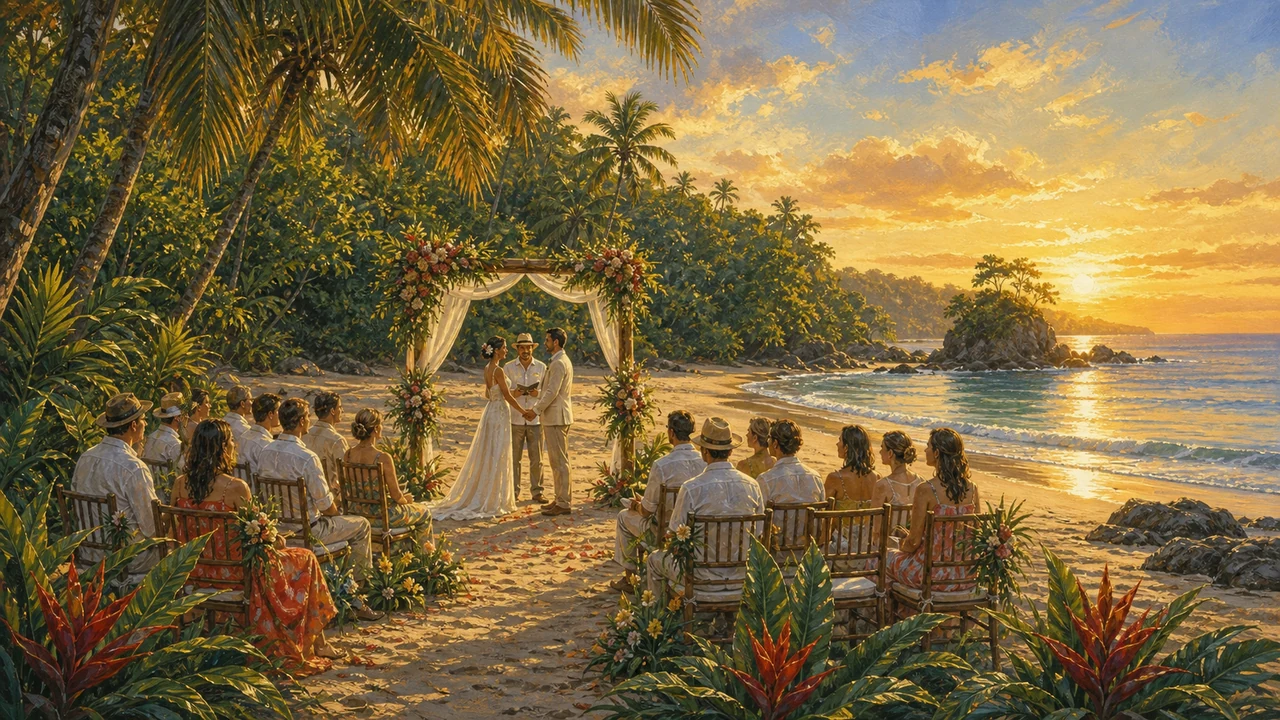 Costa Rica is one of the world’s most sought-after destination wedding locations, offering couples a backdrop of tropical beaches, cloud-forest canopy, and volcanic peaks — all within a politically stable, welcoming country that has been a peaceful democracy since 1948. Whether you envision barefoot vows at the water’s edge or a candlelit ceremony under a forest cathedral of ceiba trees, Costa Rica delivers settings that photographs could never fully capture.
Why Couples Choose Costa Rica
The country’s appeal goes well beyond scenery. Costa Rica packs extraordinary variety into a small area, so a couple can exchange vows on a white-sand Pacific beach and then spend their honeymoon days exploring a cloud forest or soaking in volcanic hot springs — all without a lengthy journey between stops.
Weddings here tend to feel intimate and unhurried. The local culture, shaped by the national philosophy of pura vida (“pure life”), is genuinely warm toward celebrating couples. Resort and boutique-hotel staff frequently go out of their way to make wedding days special, and vendors with international experience are plentiful in the main destination regions.
Practical advantages matter too: no mandatory residency waiting period for civil ceremonies, English-speaking bilingual attorneys are readily available, and two international airports (Juan Santamaría near San José and Daniel Oduber in Liberia, Guanacaste) make arrival easy for guests flying from North America and Europe.
Legal Ceremonies vs. Symbolic Celebrations
 Costa Rica offers two paths for destination couples.
Legal civil ceremony — A licensed Costa Rican attorney officiates and files the marriage with the Civil Registry. The marriage is legally binding in Costa Rica. To have it recognized at home, you will generally need an apostille stamp and an official translation of the certificate; check current requirements with your embassy. The paperwork sounds daunting, but experienced wedding attorneys handle it routinely and can mail completed documents to your home address. You will need valid passports, sworn declarations of your marital status, and two witnesses.
Symbolic ceremony — Many couples prefer to legalize their union at home (before or after the trip) and hold a purely personal celebration in Costa Rica. This removes every legal complexity and lets you focus entirely on the experience: the setting, the officiant’s words, and the people you love. Symbolic ceremonies can take place anywhere — on a beach at sunset, on a canopy platform, or on a private garden terrace — with no restrictions on venue or outdoor space.
The best choice depends on what matters most to you. If you want Costa Rica to be your official place of marriage, a bilingual attorney is the key contact. If you want maximum creative freedom and zero paperwork, a symbolic ceremony is the simpler path.
Best Regions for a Wedding
Costa Rica’s diverse geography means each region offers a distinct atmosphere.
Guanacaste and the North Pacific — The dry-season climate and dramatic Pacific sunsets make Guanacaste the country’s most popular wedding destination. Beaches such as Conchal, Tamarindo, and Flamingo have a concentration of upscale resorts with dedicated wedding coordinators. The Papagayo Peninsula hosts several all-inclusive luxury properties ideal for large wedding parties.
 Manuel Antonio and the Central Pacific — A lush, hilly coastline where primary rainforest meets calm Pacific beaches. Boutique hotels perched above the jungle offer ceremony platforms with panoramic ocean views. Manuel Antonio National Park is minutes away for post-wedding wildlife excursions.
Arenal and La Fortuna — Ceremonies beside a volcano carry a primal romance. The area has a range of eco-lodges and spa resorts set against the iconic conical profile of Arenal, with natural hot springs providing a built-in honeymoon luxury.
Monteverde Cloud Forest — For couples who picture a misty, ethereal setting, Monteverde’s cool highland forests are unlike anywhere else. Ceremony clearings open to sweeping views of the Gulf of Nicoya, and the sense of quiet seclusion feels genuinely otherworldly.
Caribbean Coast — The Afro-Caribbean culture, turquoise sea, and lush jungle of Cahuita and Puerto Viejo create a relaxed, colorful setting that attracts couples looking for something off the beaten path. Rainfall is more frequent here year-round, but the vegetation is correspondingly vivid.
Planning Your Wedding Logistics
The single most important step is working through the venue — a resort, boutique hotel, or dedicated wedding planner based in Costa Rica. Properties that host weddings regularly already have relationships with local vendors: florists, photographers, musicians, caterers, and officiants. This eliminates the stress of coordinating from abroad and ensures that timing, permits, and vendor arrivals are handled by people who know the territory.
If you are planning a legal ceremony, begin the attorney relationship at least three to four months before the date. Documentary requirements and processing timelines do change, so ask specifically about current procedures rather than relying on older information.
Guest transportation within Costa Rica is worth planning carefully. Domestic flights and charter connections from San José or Liberia make it practical to bring guests to remote beach or jungle venues. Rent-a-car and private shuttle services connect most popular wedding destinations.
Honeymoon Ideas
 Costa Rica is equally celebrated as a honeymoon destination. Its compact size — you can cross the country in a few hours — means couples can combine genuinely different experiences in a single trip.
- Rainforest immersion: Private eco-lodges in areas like Corcovado, Sarapiquí, or Tortuguero put you among primary jungle with guided wildlife walks, night tours, and the sound of howler monkeys waking you at dawn.
- Hot-spring relaxation: The Arenal region has a string of thermal pools fed by volcanic heat. Couples can soak in open-air pools at dusk, often with a volcano view.
- Sailing and snorkeling: The Papagayo Gulf and the Central Pacific both offer sunset sailing cruises, snorkeling reefs, and whale-watching (humpbacks are present in certain seasons).
- Spa retreats: World-class wellness facilities have grown alongside Costa Rica’s reputation as a health and wellness tourism destination. Many boutique properties offer couples’ massage, yoga, and farm-to-table dining.
- Adventure combination: Costa Rica’s activities and adventures — zip-lining, white-water rafting, horseback riding — add an adrenaline counterpoint to romantic down-time. Many couples split the honeymoon between an adventure base and a beach resort.
Working With Local Vendors
Costa Rica has a well-developed wedding industry, particularly in Guanacaste and the Central Pacific. Photographers familiar with tropical light, florists who source local orchids and heliconias, and musicians who can arrange anything from a marimba quartet to a full band are all available.
Ask your venue for vendor referrals first — they will have worked with these suppliers before and can vouch for reliability. Read reviews from recent couples, and clarify payment terms and contingency plans (for weather, travel delays) in any contract.
For a full picture of what to see and do beyond your wedding and honeymoon, explore Costa Rica’s ecotourism and nature offerings or browse the national parks that cover more than a quarter of the country’s land area. Costa Rica’s biodiversity and landscape — roughly five percent of the world’s species in one small country — are what make the celebration unforgettable long after the photographs are printed.
Frequently asked questions
Is it legal for foreign couples to get married in Costa Rica?
Yes, Costa Rica recognizes civil marriages performed by a licensed local attorney. The marriage is legally valid in Costa Rica, and most home countries will recognize it once you apostille and translate the certificate. Work with a bilingual attorney or your resort's legal contact to handle the paperwork.
What documents do foreign nationals need to get married in Costa Rica?
You will generally need valid passports, sworn declarations of current marital status (single, divorced, or widowed), parents' full names, and two witnesses with identification. Requirements can vary, so confirm the current list with your attorney well before your wedding date.
What is the difference between a legal and a symbolic ceremony?
A legal ceremony is performed by a licensed Costa Rican attorney and creates a binding civil marriage recognized by law. A symbolic ceremony—often held on a beach or in the rainforest—is a personal celebration without legal effect; couples typically complete the legal formalities at home before or after their trip.
When is the best time of year for a Costa Rica wedding?
The dry season (roughly December through April) is the safest bet for outdoor ceremonies, especially on the Pacific coast and in Guanacaste. The Caribbean side has a different rainfall pattern and can be beautiful in other months. The shoulder season (May and November) often combines good weather with fewer crowds.
What are the top honeymoon experiences in Costa Rica?
Couples love private eco-lodges in the rainforest, thermal hot-spring soaks near Arenal volcano, sailing sunset cruises in the Papagayo Gulf, snorkeling off Manuel Antonio, and spa retreats in Monteverde. Costa Rica's compact size makes it easy to combine a beach stay with a jungle adventure in a single honeymoon.