Juan Santamaría International Airport (SJO) — Your Guide
Juan Santamaría International Airport (IATA: SJO), located in Alajuela just northwest of San José, is Costa Rica’s primary international gateway — the first point of contact for the vast majority of visitors arriving by air.
 Named after Juan Santamaría, the young national hero who died defending Costa Rica against the filibuster William Walker at the Battle of Rivas in 1856, the airport carries a name that resonates deeply with Costa Rican identity. The city of Alajuela — birthplace of Juan Santamaría and just a few kilometers from the terminals — hosts a museum dedicated to him, making the surrounding area worth a brief visit in its own right.
Inaugurated in 1955 as the country’s first airport with a paved asphalt runway, SJO has grown substantially over the decades into a modern facility capable of handling millions of passengers per year. If you are planning a trip to Costa Rica, this is almost certainly where your journey begins.
Terminals and Facilities
 SJO operates with a main international terminal handling arrivals and departures for scheduled commercial flights. The terminal layout guides arriving passengers through immigration, baggage claim, and customs before exiting into the main arrivals hall, where transport providers, tour operators, and hotel representatives typically wait.
Inside the terminal you will find:
- Dining and coffee — cafés, fast-food outlets, and sit-down restaurants in the departures area; lighter options airside once you have cleared security.
- Duty-free shopping — a selection of liquor, tobacco, perfume, and Costa Rican crafts and souvenirs.
- ATMs and currency exchange — multiple ATMs dispensing colones and US dollars, plus currency exchange counters. USD is widely accepted throughout the airport and at most tourist destinations in Costa Rica.
- Wi-Fi — free airport-wide Wi-Fi is available throughout the terminal.
- Car rental desks — all major international and local car rental agencies maintain counters in the arrivals hall.
- Tourist information — the Instituto Costarricense de Turismo (ICT) operates an information desk in arrivals where staff can help with maps, accommodation questions, and general guidance.
Private lounge access is available for qualifying airline passengers or through day-pass programs.
Getting Into the City
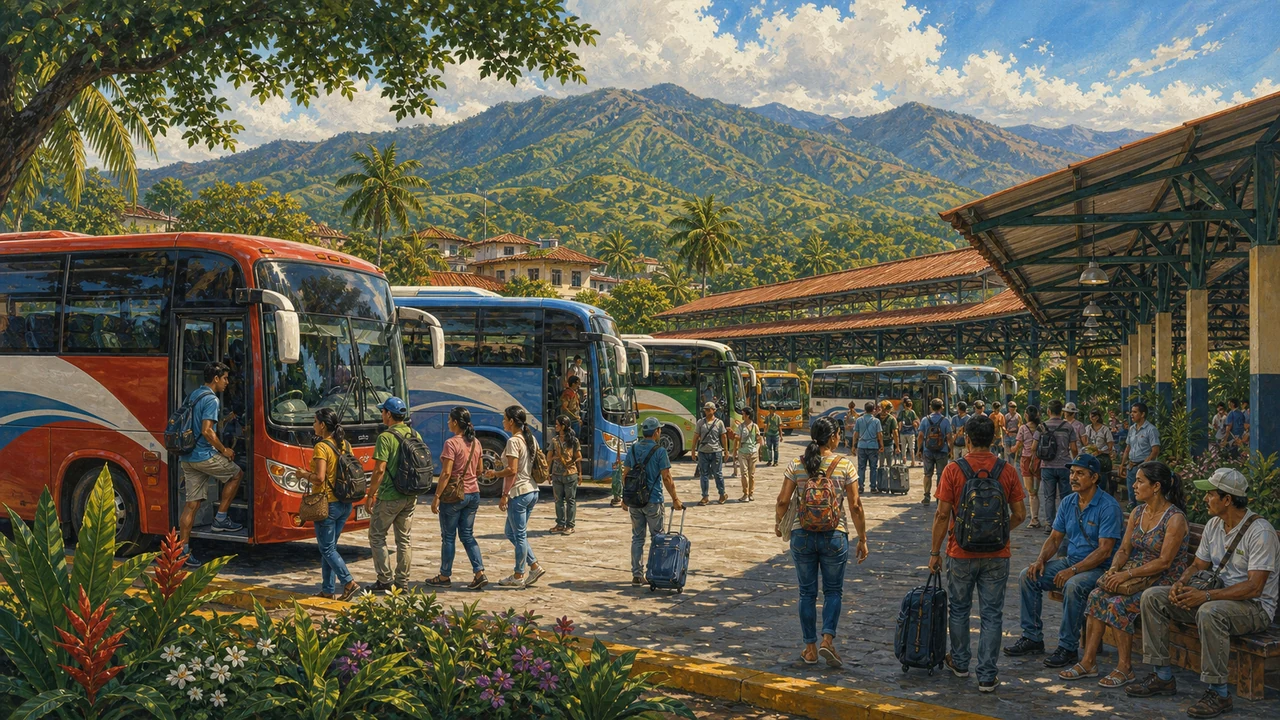 The airport sits about 18 km (11 miles) northwest of downtown San José via the General Cañas highway, and roughly 3 km from the center of Alajuela. Ground transport options range from budget to premium:
Official airport taxis are orange and metered. Stands are located immediately outside the arrivals exit. This is the safest and most straightforward option for most travelers. The fare to central San José typically takes 20–35 minutes under light traffic.
Shared shuttles connect SJO to hotels and destinations across the country, from Manuel Antonio to La Fortuna to the Nicoya Peninsula. These must generally be pre-booked; prices per person are lower than a private taxi for longer routes. Many hotels and tour operators can arrange these.
Private transfers — your hotel or tour operator can arrange a door-to-door pickup in an air-conditioned vehicle, often with a driver holding your name on a sign. This is the most comfortable option, especially after a long flight, and worth considering if you are traveling with family or heavy luggage.
Ride-hailing apps operate in Costa Rica and can be summoned from the airport, but pickups must follow specific airport-designated zones — check signage on arrival.
Public buses are the most economical option. Buses to Alajuela depart from a stop near the arrivals exit, and connections to San José are available from the Alajuela bus terminal. Travel times vary with traffic.
If you plan to drive yourself around Costa Rica, the car rental desks in arrivals make collecting a vehicle straightforward. Traffic on the General Cañas highway into San José can be heavy during rush hours; if your flight lands mid-morning or in the late afternoon on a weekday, factor in extra time.
Alajuela and the Central Valley
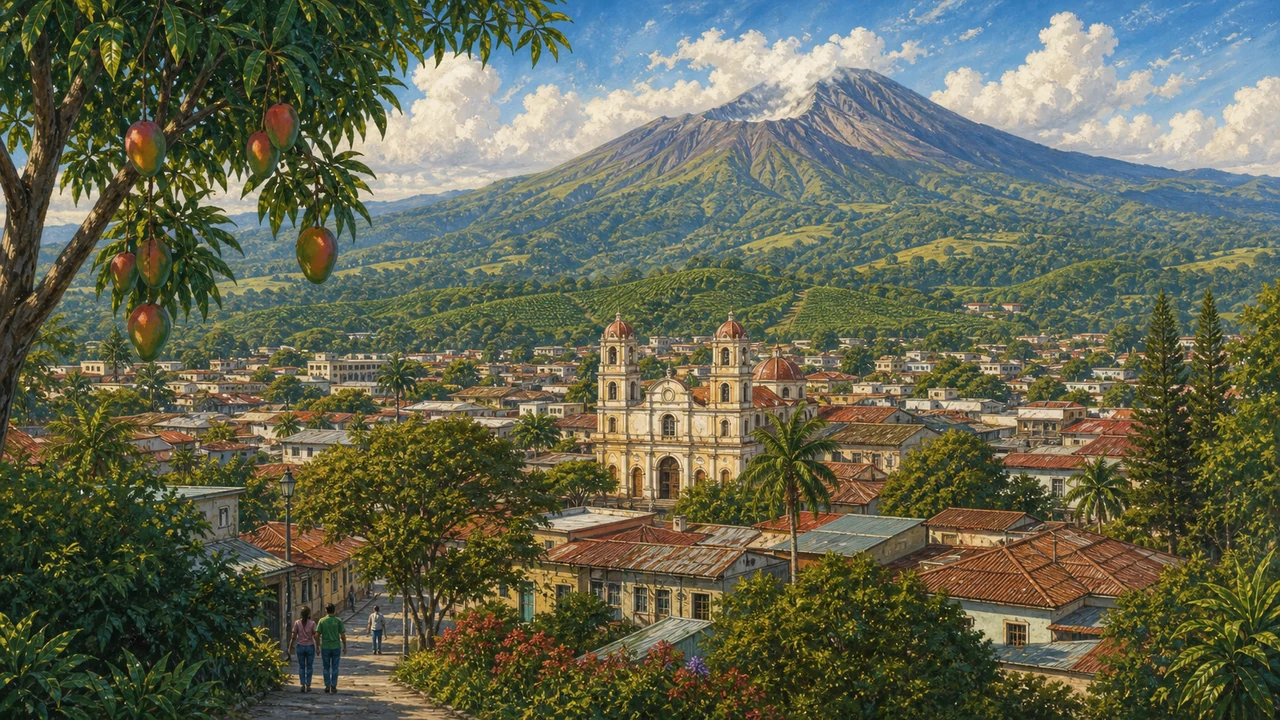 Many travelers treat SJO as a pass-through, but Alajuela and the Central Valley reward those who linger. The city of Alajuela has a pleasant central park, the Juan Santamaría Historical and Cultural Museum, and several good mid-range hotels popular with travelers catching early flights or arriving late.
The broader Central Valley is home to lush coffee country. Heredia and the highlands above Alajuela have coffee estates offering tours that walk you through cultivation, processing, and tasting — a quintessential Costa Rican experience that requires no long-distance travel from the airport.
Volcán Poás, one of the most accessible active volcanoes in Costa Rica, sits roughly an hour’s drive north of SJO in clear conditions. The road climbs through strawberry farms and dairy country before reaching the crater rim viewpoint. It is a popular day trip from San José or Alajuela and an excellent way to add a memorable natural highlight to a short stay. Explore more of the country’s remarkable volcanic landscapes at Costa Rica Volcanoes.
The capital, San José, is a short drive away and offers museums, restaurants, theaters, and nightlife that belie its reputation as merely a transit city. The Pre-Columbian Gold Museum, the National Theater, and the Jade Museum are among its cultural highlights.
Practical Tips for Arriving at SJO
 A few things to keep in mind when passing through Juan Santamaría International Airport:
- Immigration queues can be long on peak arrival days, particularly when several wide-body flights land within the same window. Build extra time into your plans if you have onward ground transport booked.
- Customs declarations — Costa Rica requires all arriving passengers to complete a customs declaration. The forms are available on the aircraft and in the immigration hall. Some items have quantity restrictions; check current rules before you pack.
- Luggage — the baggage claim area has carts available. Keep a close eye on your bags and carry your important documents and valuables in your carry-on throughout the terminal.
- Safety at exit — the arrivals exit opens directly into a busy area. Use official, marked transport. Avoid accepting unsolicited offers of rides from people approaching you inside the terminal.
- Currency — while USD is widely accepted at the airport, having some Costa Rican colones on hand for smaller purchases once you leave the airport area is useful. ATMs are the most convenient source.
- Cell service — SIM cards from local providers are available near the arrivals exit and at shops in the terminal. Local data plans tend to be inexpensive and coverage across Costa Rica’s main tourist routes is generally good.
Costa Rica abolished its standing army in 1948 and has maintained one of Latin America’s most stable democracies ever since — the warm, relaxed welcome you receive at SJO reflects that national character. Whether you are heading into San José, along the Pacific beaches, or deep into cloud forests and national parks, your adventure through one of the world’s most biodiverse countries starts the moment you step off the plane.
See also: Daniel Oduber International Airport (LIR) in Liberia — the gateway to Guanacaste and the North Pacific coast.
Frequently asked questions
What is the airport code for Juan Santamaría International Airport?
The IATA code is SJO. It is located in Alajuela, roughly 18 km northwest of downtown San José, and serves the entire Central Valley region.
How long does it take to get from SJO to San José?
Under normal conditions the drive from the airport to central San José takes about 20–30 minutes. Traffic on the General Cañas highway can extend that to an hour or more during morning and evening rush hours, so plan accordingly.
What ground transport options are available at SJO?
You can take official airport taxis (orange, metered), shared shuttle services pre-booked online, private transfers arranged through hotels or tour operators, or public buses into Alajuela or San José. Ride-hailing apps also operate in the area but pickups follow specific airport rules.
Are there ATMs and currency exchange at the airport?
Yes. ATMs dispensing Costa Rican colones (CRC) and US dollars are available in the arrivals and departures areas. Currency exchange counters are also present, though ATM rates are usually more favorable. USD is widely accepted at the airport.
Is there a separate domestic terminal at SJO?
Domestic and charter flights use Tobías Bolaños International Airport (SYQ) in Pavas, about 10 km west of San José, rather than SJO. If you are connecting to a domestic destination, confirm which airport your carrier uses.