Costa Rica Currency & Payments: Colón, USD & Cards
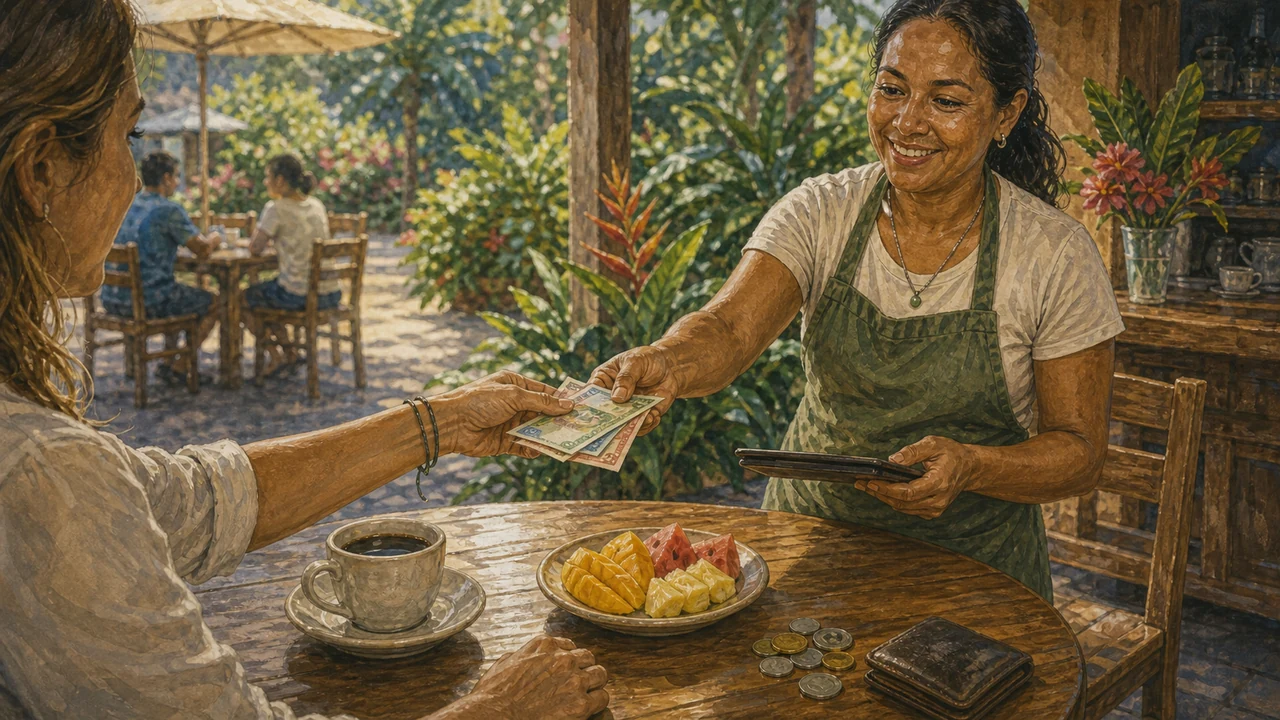 Costa Rica uses the Costa Rican colón (CRC) as its official currency, but the country runs on a practical dual-currency system that makes life easy for most visitors — US dollars are accepted almost everywhere tourists go. Understanding how money works here will help you avoid unnecessary fees, get fair exchange rates, and navigate everyday purchases from a beach soda to a national park entrance.
The Costa Rican Colón
The colón (symbol: ₡) is issued in banknotes of 1,000, 2,000, 5,000, 10,000, 20,000, and 50,000 colones, plus coins in smaller denominations. Prices in tourist areas are often quoted in both currencies, but the colón is the legal tender and smaller vendors — roadside fruit stands, local sodas, rural bus fares, and market stalls — deal exclusively in it.
Keeping a supply of colones in your wallet is simply practical. Paying for small purchases in Costa Rica with local colones saves you from rounding confusion and avoids the informal “tourist rate” that sometimes appears when paying large-denomination dollar bills for a small item.
US Dollars: When They Work and When They Don’t
 US dollars are so deeply embedded in Costa Rica’s tourism economy that many hotels, tour operators, and mid-range to upscale restaurants price everything in dollars and have no problem accepting them. Visa and entry fees at some national parks are also quoted in USD.
That said, there are situations where dollars are inconvenient or outright refused:
- Small local restaurants (sodas) and street vendors — colones preferred.
- City buses and inter-city buses — exact colón fare expected.
- Taxis — meters run in colones; paying with a large dollar bill creates change problems.
- Rural and remote areas — the farther you get from tourist infrastructure, the more you need local currency.
The simple rule: use dollars freely at hotels and tour operators, but have colones ready for daily street-level spending.
ATMs and Getting Colones
 The easiest and usually cheapest way to get colones is from an ATM (called a cajero automático). Using ATMs in Costa Rica to get local currency is convenient because most machines in tourist areas let you choose between dispensing colones or US dollars. Banco Nacional, BAC Credomatic, and Scotiabank machines are widely distributed and reliable.
ATMs are common in:
- San José and the Central Valley
- Airport arrivals areas (SJO and LIR)
- Beach towns including Tamarindo, Jacó, and Manuel Antonio
- Near major national parks
Before traveling to remote regions — cloud forests, Caribbean river lodges, or off-the-beaten-path areas — withdraw enough cash in advance. ATM coverage thins out quickly once you leave the main tourist corridors.
Check with your home bank before traveling about international withdrawal fees and daily limits. Many travelers find a card with no foreign-transaction fee saves a meaningful amount over a two-week trip.
Credit Cards
Visa and Mastercard work smoothly at most hotels, mid-range and upscale restaurants, car rental agencies, and tour operators. American Express has more limited acceptance. Using credit cards in Costa Rica is generally safe at established businesses, but always watch for skimmers at standalone ATMs and at gas stations — use machines attached to bank branches where possible.
A few practical notes:
- Always carry some cash as backup — card readers go down, signal drops in remote areas.
- Notify your bank before you travel to avoid fraud blocks.
- Some businesses add a small surcharge (typically 3–5%) for card transactions; ask beforehand.
- Contactless payments are increasingly available in San José and larger tourist towns.
Foreign Currency Exchange
 If you want to exchange foreign currency to colones, US dollars are by far the easiest to work with. Costa Rica’s commercial banks exchange USD without issue. Exchanging euros or British pounds in Costa Rica is significantly more complicated — many banks simply do not handle them, and those that do may offer poor rates or require you to visit the Central Bank. The practical advice: if you are traveling from Europe, convert to US dollars before departure or rely entirely on ATM withdrawals in-country.
Currency exchange desks at the international airports handle the basics but tend to offer less competitive rates than ATMs or banks in town. Street money changers (cambistas) operate in parts of San José — avoid them entirely. The rates look tempting, but the risk of receiving counterfeit bills or being shortchanged is real.
Banks typically operate Monday through Friday during business hours, with some branches open Saturday mornings. Hours vary by location, so check ahead if you need to visit a branch for a larger exchange.
The 10% Restaurant Service Charge
One of the most important money facts for visitors: Costa Rican restaurants are legally required to add a 10% service charge to every bill, on top of a 13% sales tax. This means your meal total will be approximately 23% above the menu price. The service charge goes directly to staff compensation and functions as a mandatory built-in gratuity.
You will see the charge listed as servicio on your receipt. You are not expected to add an additional tip on top of it, though leaving a few extra colones for exceptional service is always appreciated and welcomed.
Tipping Beyond Restaurants
Outside of restaurants — where the service charge covers it — tipping in Costa Rica follows informal but appreciated norms. See the dedicated tipping in Costa Rica guide for full detail, but the short version:
- Tour guides: tipping generously is customary and important — guides often depend on it.
- Hotel staff / housekeeping: a few hundred to a thousand colones per day is kind.
- Taxi drivers: rounding up the fare is common but not obligatory.
- Airport and hotel porters: a dollar or two per bag is standard.
Avoiding Bad Exchange Rates and Scams
Getting a fair currency exchange rate in Costa Rica comes down to a few habits:
- Use ATMs attached to reputable banks rather than standalone machines in tourist areas.
- Decline dynamic currency conversion — if an ATM or card terminal asks whether you want to be charged in your home currency instead of colones, always choose local currency. The conversion rate offered is almost always worse than your bank’s rate.
- Never exchange money on the street, no matter how good the rate appears.
- Check your receipt after every card transaction.
- Carry small bills — getting change for a 10,000-colón or $20 bill at a small vendor can be a genuine problem.
For broader planning and practical advice before your trip, the Costa Rica travel tips page covers safety, transport, health, and more. If you are exploring Costa Rica’s business environment more broadly — including taxes and incorporation — those topics are covered in the sections linked below.
Frequently asked questions
Can I use US dollars everywhere in Costa Rica?
US dollars are widely accepted at hotels, tour operators, larger restaurants, and many shops throughout the country. Smaller local businesses, markets, and rural vendors typically prefer or require Costa Rican colones, so it pays to keep some on hand.
Should I exchange money before arriving in Costa Rica?
Arriving with some US dollars is the easiest approach since they are accepted virtually everywhere that caters to tourists. Avoid exchanging to colones in advance at home — rates are poor. Use an airport ATM or a bank in-country for the best rates.
Is the 10% service charge at restaurants the same as a tip?
Yes. Costa Rican law requires restaurants to add a mandatory 10% service charge to every bill. This goes to staff wages, so the charge functions as a built-in tip. Leaving an additional amount is appreciated but not expected.
Are ATMs widely available in Costa Rica?
ATMs (cajeros automáticos) are plentiful in San José, tourist towns, beach areas, and near national parks. In very remote areas they can be scarce, so withdraw cash before heading into the countryside. Most machines dispense both colones and US dollars.
Which credit cards are accepted in Costa Rica?
Visa and Mastercard are accepted at the vast majority of hotels, restaurants, and tour operators that serve international visitors. American Express has narrower acceptance. Always carry some cash for small vendors, taxis, and rural stops where cards are not accepted.